 Bellingham Siding
 Metal Roofing Built for Sehome's Weather, Not Just Its Look
Sehome is one of Bellingham's older, denser neighborhoods — a mix of established homes, hillside lots, and heavy tree cover close to the city core. That combination is great for shade and character, and hard on a roof. Overhanging branches keep sections of the roof damp longer after every storm, hillside drainage means water moves fast off some slopes and pools on others, and the same marine air that keeps Whatcom County green corrodes cheap metal and degrades asphalt granules faster than most homeowners expect. We install metal roofing in Sehome because it holds up to that specific combination better than most alternatives, not because it's trendy.
This page covers what local homes actually need from a metal roof, what a correct installation looks like, and how we handle the job from first look to final walkthrough.
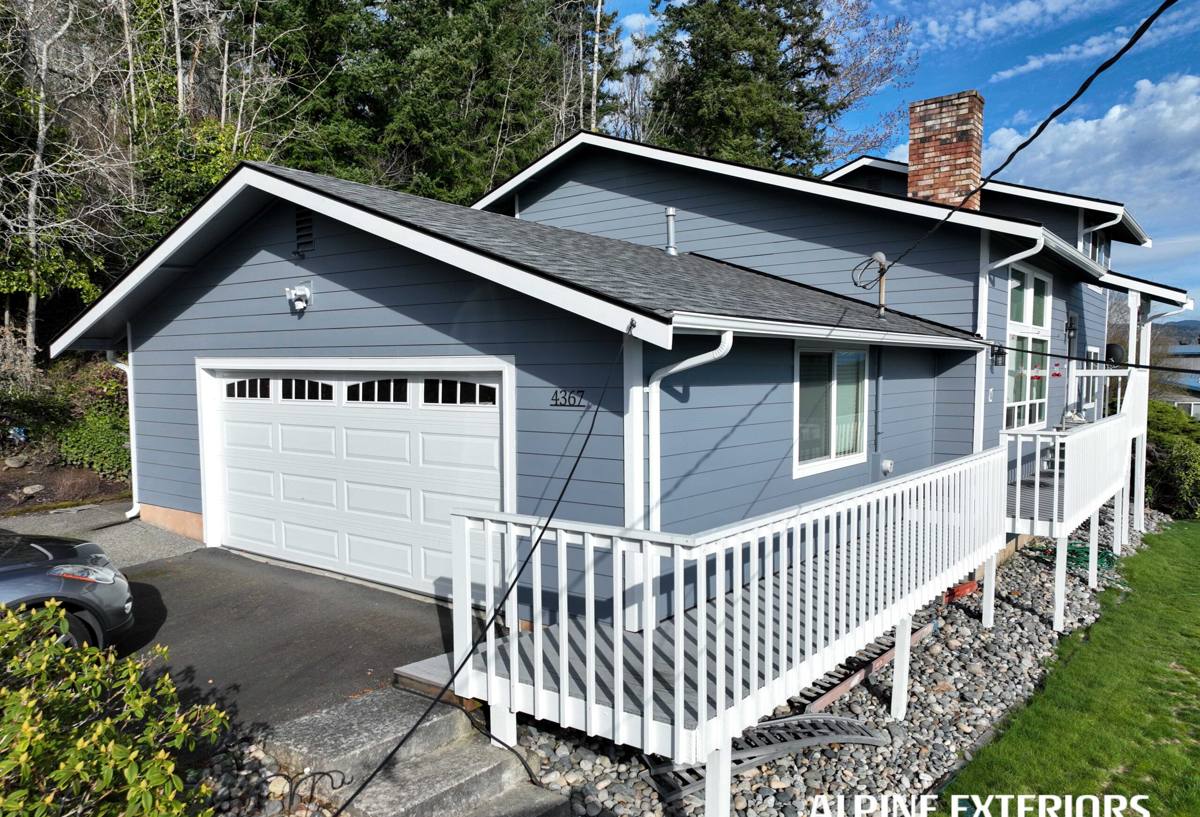
What Bellingham's Climate Does to a Roof Over Time
Salt Air and Slow Corrosion
Bellingham sits close enough to saltwater that airborne salt is a real factor in how fast metal fasteners, flashing, and uncoated edges corrode. It's slower and less dramatic than storm damage, so it's easy to ignore — until fasteners start backing out or streaking rust down a wall below a roof edge.
Driving Rain and Wind-Driven Moisture
Whatcom County doesn't just get steady rain — it gets rain pushed sideways by wind off the water, which finds every weak seam, under-lapped flashing, and improperly sealed penetration a roof has. A roof that only has to shed water falling straight down is a different, easier job than one that has to resist wind-driven moisture working its way uphill under a lap.
Moss, Shade, and a Long Growing Season
Sehome's tree cover means many roofs stay shaded and damp well after a storm has passed elsewhere in town. That's exactly what moss and moisture-loving algae need to take hold. On an asphalt shingle roof, moss lifts granules and traps water against the deck. On the wrong metal roof — or one installed without attention to drainage and airflow — debris still builds up in valleys and behind obstructions even though the panel itself won't rot.
Why Metal Roofing Fits Sehome Homes
Metal roofing doesn't solve every problem a Sehome home has, but it directly addresses the three issues above better than most roofing materials:
- A steep, slick metal surface sheds water and discourages the moss growth that thrives on rougher, more porous roofing materials in shaded, damp spots.
- Properly coated steel or aluminum resists the slow corrosion that salt-laden marine air causes faster than most homeowners realize.
- Standing seam and concealed-fastener systems handle wind-driven rain better than lapped materials with exposed fasteners, because there are fewer entry points for water pushed uphill by wind.
- A well-installed metal roof is a long-term investment — decades, not one or two decades — which matters on a hillside lot where re-roofing access and staging aren't simple.
Choosing the Right Metal Roofing System
"Metal roofing" isn't one product. The systems differ in appearance, cost, and how they handle Bellingham's rain and moss pressure. Here's how the common options compare for a home like the ones in Sehome:
| System | How it sheds water | Moss/debris behavior | Best fit |
|---|---|---|---|
| Standing seam (concealed fastener) | Raised seams, no exposed screws in the field | Smooth panel discourages moss; minimal snag points | Steep or complex rooflines, long-term ownership |
| Exposed-fastener corrugated/ribbed panel | Screws through the panel face with washers | Slightly more debris catch at fastener rows | Simpler rooflines, tighter budgets |
| Stone-coated steel shingle/shake profile | Interlocking panels mimic shingle or shake lines | More surface texture; needs periodic debris clearing in valleys | Homes wanting a traditional look with metal durability |
For heavily shaded, tree-covered lots like much of Sehome, we lean toward standing seam or a low-texture profile specifically because a smoother surface gives moss less to grip and makes seasonal debris easier to clear.
What a Correct Metal Roof Installation Actually Involves
Deck Prep and Underlayment
Metal roofing is only as good as what's underneath it. We check the deck for soft spots, rot, or inadequate nailing before anything goes down, and we use an underlayment rated for the panel type and climate — this is the layer that protects the home if wind-driven rain ever gets past the metal, and it's not a place to cut corners in a market with our rainfall totals.
Flashing and Penetrations
Valleys, chimneys, vent stacks, and wall transitions are where roofs actually fail, metal or otherwise. Correct flashing detail — properly lapped, sealed in the right order, and matched to the panel system — is what keeps wind-driven rain from working its way in at these transition points.
Fastening and Panel Layout
Panel layout has to account for thermal movement (metal expands and contracts more than shingles do), correct overlap direction relative to prevailing wind and water flow, and fastener spacing that matches the manufacturer's engineering — not just "close enough."
Ventilation
A roof deck that can't breathe traps moisture underneath it regardless of what's on top. We check and correct attic or roof-deck ventilation as part of the job, because a beautiful metal roof over a poorly ventilated deck still invites rot and condensation problems.
Our Process, Start to Finish
- On-site assessment. We look at your existing roof, deck condition, drainage patterns, tree cover, and any problem areas you've already noticed.
- System recommendation. We walk you through which metal system fits your roofline, budget, and how much moss/debris exposure your particular lot gets.
- Written estimate. Clear scope, materials, and pricing — no vague allowances you find out about later.
- Tear-off or overlay decision. We tell you honestly whether your existing roof can be built over or needs full removal, based on deck condition, not on what's easiest for us.
- Installation. Deck repair as needed, underlayment, flashing, panels, trim, and fastening done to manufacturer spec.
- Cleanup and walkthrough. Site cleared of debris and fasteners, and we walk the finished roof with you before calling the job done.
Maintaining a Metal Roof in a Neighborhood Like Sehome
Metal roofing is low-maintenance, not zero-maintenance — especially under tree cover. A short seasonal checklist keeps it performing the way it should:
- Clear leaves and needles from valleys and against any obstructions at least once a year, more often under heavy tree canopy.
- Check that gutters and downspouts are running clear so water isn't backing up under roof edges.
- Look (or have us look) for any fastener that's backed out or shows early rust streaking.
- After major windstorms, do a visual check for lifted trim or flashing rather than waiting for a leak to show up inside.
- Trim overhanging branches where practical to reduce shade, debris, and abrasion against the roof surface.
What Affects the Cost of a Metal Roof in Sehome
Every roof is different, but the same handful of factors drive most of the cost difference between jobs:
| Factor | Why it matters |
|---|---|
| Roof size and pitch | More square footage and steeper pitches mean more material and more labor/safety setup |
| Tear-off vs. overlay | Removing an old roof adds labor and disposal cost but is often necessary if the deck needs inspection or repair |
| Panel system chosen | Standing seam typically costs more than exposed-fastener panels; stone-coated shingle profiles fall in between |
| Roof complexity | Valleys, dormers, chimneys, and multiple roof planes all add flashing work and labor time |
| Deck condition | Rot or soft decking found during tear-off means repair costs beyond the original estimate |
| Access and staging | Hillside lots and tight tree-covered setbacks can affect how equipment and material get to the roof |
We give you actual numbers during the estimate rather than a rough figure over the phone, because the factors above genuinely change the price from one Sehome home to the next.
Why Hire a Crew That Already Works in Sehome
A roofing crew that regularly works Bellingham neighborhoods like Sehome already understands the practical stuff that doesn't show up in a brochure: how tree canopy and hillside drainage change moss and debris patterns street to street, what wind-driven rain actually does to flashing in this specific climate over a full winter, and how to stage a job safely on the tighter, sloped lots common in this part of town. That local pattern-recognition is the difference between a roof that's technically installed correctly and one that's installed correctly for where it actually sits.
If you're weighing a metal roof for your Sehome home, we're happy to take a look and give you a straight answer — including if metal isn't the right call for your situation. Reach out for a free, no-pressure estimate using the form below.