 Bellingham Siding
 Why Sehome Roofs Wear Differently Than Roofs Inland
Sehome sits close enough to Bellingham Bay that salt-laden air is a constant factor, not an occasional one. Add in the driving rain that comes off the Sound through fall and winter, plus the shade and needle drop from the wooded ridges around Sehome Hill, and you get a roofing environment that's harder on materials than most manufacturers' warranty testing accounts for. We see the same failure patterns repeat on Sehome roofs year after year, and most of them trace back to moisture that had nowhere to go, fasteners that corroded faster than expected, or moss that was left to do its work for one season too many.
None of this means Sehome homes need exotic roofing. It means the repair work has to account for the specific way this neighborhood's climate attacks a roof, rather than treating every leak or shingle problem as a generic fix.
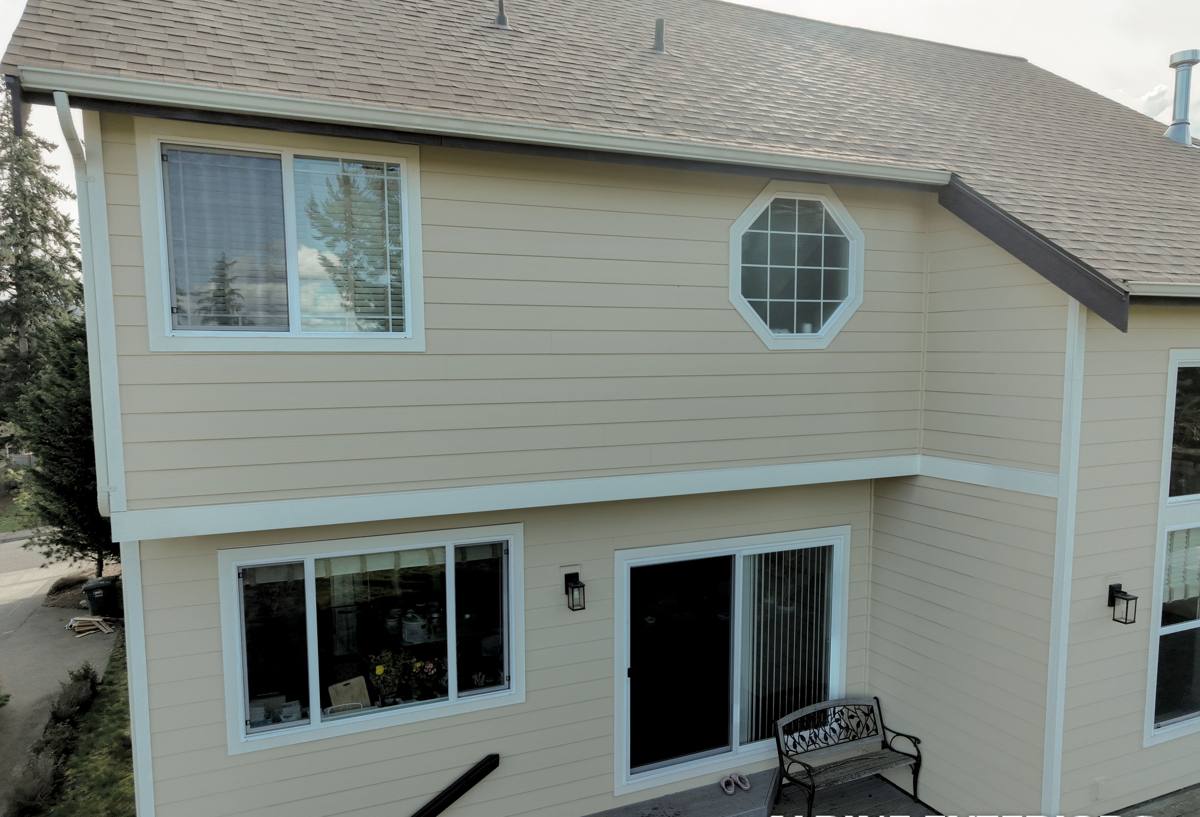
What Whatcom County Weather Actually Does to a Roof
Salt Air and Corrosion
Airborne salt accelerates corrosion on exposed metal — flashing, fasteners, gutter hardware, and any exposed roofing nails. On older Sehome roofs we often find fasteners that have rusted through the shingle around them, which lets water track down the nail shank into the deck long before there's a visible leak inside the house.
Driving Rain and Wind-Driven Water
Rain that comes in sideways off the Sound doesn't behave like straight-down rain. It gets pushed up under shingle laps, around chimney and skylight flashing, and into any gap in the underlayment that would be harmless in a calmer climate. Repairs that don't specifically address wind-driven water tend to leak again within a season or two, in the exact same spot.
Moss, Shade, and a Long Wet Season
Whatcom County's moss season runs long — the tree cover common around Sehome keeps roofs shaded and slow to dry, which is exactly what moss and algae need to take hold. Moss isn't just cosmetic. It lifts shingle edges, holds moisture against the roof deck, and works its way under laps where it keeps that section of roof wet for weeks after the rest has dried out.
Signs a Sehome Roof Needs Repair, Not Full Replacement
- A ceiling stain that appears only during heavy wind-driven rain, not in a steady straight-down downpour
- Moss concentrated on the north-facing or shaded slopes, with the sun-exposed slopes still relatively clean
- Granule buildup in gutters from a handful of shingles, not the whole roof
- Rust streaking below flashing points — chimneys, skylights, vent stacks
- Soft or spongy decking in one localized area rather than throughout
- Missing or lifted shingles after a windstorm, with the rest of the field intact
If the damage is localized and the decking underneath is still sound, a properly done repair can add years of service life for a fraction of a full replacement's cost. The trouble is that "properly done" is doing a lot of work in that sentence — a patch that only addresses the visible symptom, without fixing what let water in, is money spent on a problem that will resurface.
What a Correct Roof Repair Actually Involves
A repair that holds up in this climate isn't just swapping a few shingles. It's a short diagnostic process followed by work that matches the original roofing system:
- Find the actual entry point. Water often travels along the deck or rafters before it shows up as a stain, so the visible damage inside is rarely directly above the real problem outside.
- Check the decking. Any soft, delaminated, or rotted sheathing gets cut out and replaced — patching shingles over bad decking just delays a bigger repair.
- Correct the flashing. Chimneys, skylights, vent boots, and valleys are where the majority of Sehome leaks originate. Flashing gets re-bedded or replaced, not just caulked over.
- Match materials properly. New shingles are tied into the existing courses with correct overlap and nailing pattern so the repaired section sheds water the same way the rest of the roof does.
- Address ventilation if it's contributing. Poor attic ventilation traps moisture against the underside of the deck, which shows up later as rot or mold even after the leak itself is fixed.
- Clear moss and treat the surface. Any moss on or near the repair area gets removed before the repair is closed up, so it isn't lifting the new work within the year.
Roofing Materials Common in the Area — Repair Considerations
| Material | How It Handles Salt Air & Rain | Repair Considerations |
|---|---|---|
| Asphalt composition shingle | Good performance when fasteners and flashing are corrosion-resistant; the shingles themselves hold up well | Easiest to source matching shingles if the roof isn't too old; color and granule matching gets harder after 8-10 years of sun fade |
| Cedar shake/shingle | Natural material but slower to dry in shaded, humid conditions — more prone to moss and moisture retention | Requires ongoing maintenance to stay ahead of moss; individual shake replacement is a skilled, slower repair than composition |
| Metal roofing | Sheds rain fast and resists moss, but fasteners and flashing need to be corrosion-rated for salt air exposure | Repairs require matching panel profile and finish; improper fastener choice is the most common repair-triggering mistake |
| Torch-down / low-slope membrane | Common on additions and porches; performs well if seams stay sealed | Seam failures are the main repair issue; patching requires proper membrane welding, not just sealant |
We don't push homeowners toward one material over another for cosmetic reasons. What matters for a repair is whether the existing system was installed with the right flashing and fastener choices for this climate — and if it wasn't, that's often the actual root cause we're fixing, not just the leak itself.
Our Process, Start to Finish
- Initial call or estimate request. We ask what you're seeing — where the stain is, when it shows up, how old the roof is — so we show up prepared.
- On-site inspection. We get on the roof (not just a ladder-and-binoculars look) and check the attic side where accessible, since that's often where the real story is.
- Written scope and price. You get a clear explanation of what's actually wrong, what it takes to fix it correctly, and an honest price before any work starts.
- The repair itself. Most Sehome repair jobs are completed in a day; larger flashing or decking issues may take longer.
- Cleanup and walkthrough. We clear moss and debris from the work area and show you what was done and why.
Moss and Salt-Air Maintenance Checklist
Between repairs, a few habits go a long way toward keeping a Sehome roof out of trouble:
- Keep gutters clear so water isn't backing up under the lowest course of shingles
- Have moss physically removed rather than just power-washed, which can drive granules loose and force water under shingle edges
- Trim back branches that keep a section of roof shaded and slow to dry
- Check exposed metal — flashing, vent caps, gutter hangers — for early rust rather than waiting for a stain
- Have the roof looked at after any significant windstorm, even if nothing looks obviously wrong from the ground
Repair vs. Replace: What Actually Drives the Decision
| Factor | Favors Repair | Favors Replacement |
|---|---|---|
| Age of roof | Under roughly 15-20 years for asphalt, well within service life for other materials | Near or past the material's typical service life |
| Extent of damage | Localized to one slope, valley, or penetration | Multiple areas failing independently across the roof |
| Decking condition | Solid, dry decking outside the repair zone | Widespread soft spots or rot found during inspection |
| Moss history | First real moss problem, caught early | Chronic moss that's recurred despite past cleaning |
| Budget timing | Repair buys time toward a planned future replacement | Repair cost approaches a meaningful fraction of full replacement |
We'll tell you honestly which side of that table your roof falls on. A repair that's really just delaying an inevitable full replacement isn't a good use of your money, and we'd rather say so upfront than sell you a patch.
Why a Crew That Already Works Sehome Matters
A roof repair crew that regularly works this part of Bellingham has already seen how a given house type handles the local weather — where moss tends to build up first, which flashing details tend to fail, how a particular roof pitch sheds wind-driven rain off the Sound. That familiarity shortens the diagnostic step and means less guesswork on your roof.
It also matters for follow-through. A local crew is easy to call back if something needs a second look after the next hard rain, and stands behind its own work because it's still in the neighborhood, not passing through. For a trade where the real test of a repair is whether it holds up through Whatcom County's wettest months, that accountability is worth as much as the repair itself.
Ready for an Honest Look at Your Roof?
If you're seeing a stain, missing shingles, or moss that's gotten out of hand, it's worth having someone look before it turns into a bigger repair. We offer free, no-pressure estimates for Sehome homeowners — use the form below and we'll get back to you.