 Bellingham Siding
 Siding Repair in Barkley: What the Climate Actually Does to Your Walls
Barkley sits close enough to the water and the Cascade foothills that its homes take a different kind of weather beating than siding was designed for in most of the country. Salt-laden air off Bellingham Bay works into seams, fasteners, and any exposed wood or edge grain. Driving rain — the sideways kind that Whatcom County gets for months at a stretch — pushes moisture into laps and joints that were never sealed to handle wind-driven water. And because this part of Washington stays cool and damp for so much of the year, moss and algae get a long runway to establish themselves on north- and shade-facing walls, holding moisture against the siding surface long after a storm has passed.
None of that is exotic information to anyone who has lived in Bellingham for a winter. But it matters a lot when you're deciding whether a section of siding needs a patch, a full panel replacement, or something more serious behind the wall. Siding repair here isn't just cosmetic work — it's about catching moisture intrusion before it becomes rot, mold, or a much bigger repair bill.
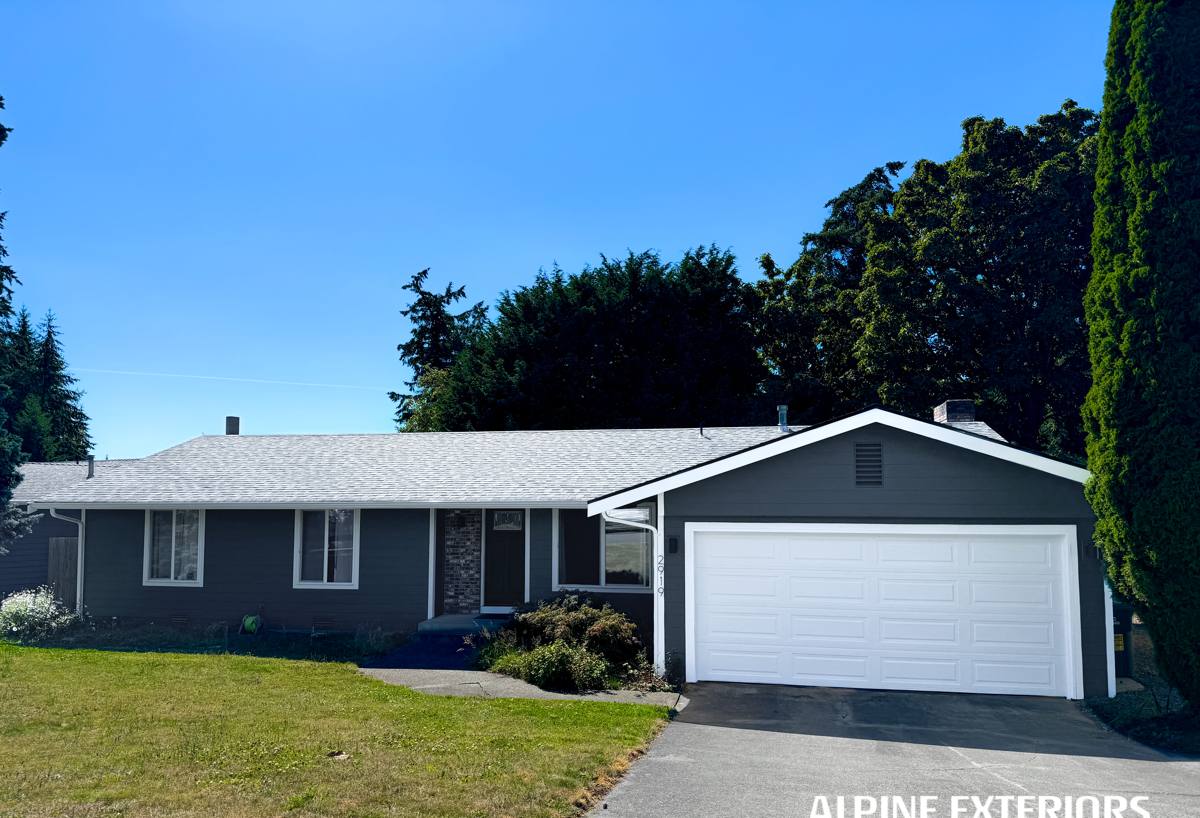
Signs a Barkley Home Needs Siding Repair Now, Not Later
Most siding damage we see in this neighborhood doesn't show up as a dramatic failure — it shows up as small signs that get ignored for a season or two until they aren't small anymore. Here's what we tell homeowners to watch for:
- Soft or spongy spots when you press on the siding, especially near the bottom of walls or under windows
- Persistent moss or algae growth that comes back within weeks of cleaning
- Cracked, split, or bowed boards, particularly on the north and west-facing elevations that catch the most wind-driven rain
- Paint that's peeling or bubbling in a pattern rather than just fading — usually a sign moisture is trying to escape from behind the siding
- Gaps opening up at butt joints, corner boards, or around trim where caulking has failed
- A musty smell in an interior room that backs up to an exterior wall
- Visible staining or streaking below seams, which usually means water is getting behind the siding and running down the sheathing
Any one of these on its own might be minor. Several at once, or any sign near a window or roofline, usually means water has already found a way in and the repair needs to happen before the next wet season, not after.
What a Correct Repair Actually Involves
It's Not Just Swapping a Board
A lot of siding "repairs" done around Bellingham amount to popping off a damaged piece and nailing up a replacement that matches the color reasonably well. That fixes the visible problem and does nothing for the reason it happened in the first place. A correct repair starts by figuring out why that section failed — a missing flashing detail, a caulk joint that was never sealed properly, a low spot where water pools, or a section of house wrap that tore during the original install.
What We Actually Check
Before we touch the visible siding, we look at what's behind it. That means pulling back the damaged material far enough to inspect the sheathing and house wrap underneath for soft spots, staining, or active moisture. If the sheathing is compromised, patching over it just traps the problem behind new siding. We also check flashing at windows, doors, and any horizontal trim, since those are the most common places water finds its way in on homes in this area.
Matching Materials the Right Way
Replacement pieces need to match not just in color but in profile, reveal, and material behavior. Mixing a different siding product into a repair — even one that looks close on the shelf — often leads to a visible seam or a spot that weathers differently within a year or two. Where the existing siding is fiber cement, we can typically match it cleanly. Where it's a different material entirely, we'll be straight with you about what a seamless match realistically looks like, and when it doesn't.
Repair vs. Replace: How We Make the Call
Not every damaged section needs full replacement, and not every home is worth patching indefinitely. We walk through a few factors with homeowners before recommending either path:
| Factor | Leans Toward Repair | Leans Toward Replacement |
|---|---|---|
| Extent of damage | Isolated to one or two sections | Recurring failures across multiple walls |
| Underlying material | Fiber cement or similar durable material still sound | Cedar, LP SmartSide, or vinyl showing widespread wear |
| Sheathing condition | Dry, solid wood behind the siding | Soft or stained sheathing found during inspection |
| Age of existing siding | Under 10-15 years, install was sound | Near or past expected service life |
| Moisture pattern | Single identifiable entry point | Moisture showing up in multiple, unrelated spots |
When repair makes sense, we do it right and stand behind it. When the underlying material or the extent of the damage means repair is just delaying the inevitable, we'll tell you that plainly instead of billing you for a patch that won't hold.
Why We Repair to a Hardie Standard — Even on Homes We Didn't Originally Build
We install exclusively James Hardie fiber cement siding on full replacement projects, and that standard shapes how we approach repair work too. If your home already has Hardie siding, repairs are usually straightforward — it's a stable, non-combustible material that holds up well to patching and matches cleanly years later.
If your home has cedar, LP SmartSide, vinyl, or another fiber cement brand like Cemplank or Allura, we'll still repair what can reasonably be repaired. But we're honest about the trade-offs of those materials in a wet, moss-prone climate like Barkley's: cedar needs ongoing maintenance to resist rot, engineered wood products like LP SmartSide can be sensitive to sustained moisture exposure at cut edges and seams, and vinyl can crack or warp with age and doesn't take paint if you ever want to change the color. None of that means those products are without merit — it means that when a home reaches the point where repair no longer makes sense, we recommend James Hardie for the replacement because of how it's engineered to handle exactly the conditions this area throws at it: moisture resistance, a factory-applied ColorPlus finish that doesn't need repainting on the same schedule as field-painted materials, and a warranty structure built around the product actually lasting.
Our Process for Barkley Repair Jobs
- On-site inspection. We look at the visible damage and check adjacent areas — flashing, trim, corners — since failure in one spot often points to a related issue nearby.
- Open it up. Where damage suggests moisture behind the siding, we pull back enough material to inspect the sheathing and house wrap before quoting the repair.
- Honest scope and quote. You get a clear explanation of what needs to happen, why, and what it costs — including whether repair or partial replacement is the right call.
- Correct the source, not just the symptom. We fix flashing, sealant, or drainage details that caused the failure, not just the board that showed it.
- Match and finish. Replacement material is matched for profile and color, installed to the same fastening and clearance specs as the rest of the wall, and finished cleanly at every joint.
- Walkthrough. We show you what we found, what we did, and what to watch for going forward — especially heading into the next wet season.
What Drives the Cost of Siding Repair
| Cost Factor | Why It Matters |
|---|---|
| Extent of hidden damage | Rot or soft sheathing behind the visible boards adds labor and material beyond the original scope |
| Height and access | Second-story or steep-roofline sections take longer and need more setup |
| Material match | Matching an existing product, especially an older or discontinued color, can affect sourcing time and cost |
| Flashing and trim work | Repairs that include correcting flashing details cost more upfront but prevent repeat failures |
| Number of separate areas | Several small isolated repairs across a home can cost more in total than one larger, more efficient repair area |
We won't quote a repair without seeing it in person — the range on any given job depends heavily on what we find once the damaged section is opened up. What we can promise is a straightforward, itemized explanation of what you're paying for and why.
Why a Crew That Already Works Barkley Matters
Repair work depends on knowing what's typical for a given area's homes and weather exposure — the elevations that take the worst of the driving rain, the shaded walls where moss builds up fastest, the age and construction style common to the neighborhood. A crew that regularly works Barkley and the surrounding parts of Bellingham has already seen the recurring failure points on homes like yours, which means less time diagnosing the obvious and more time on getting the fix right the first time.
There's also a practical side to it: local crews know the permitting expectations in Whatcom County, show up reliably for a follow-up inspection if one's needed, and are still around a year later if a question comes up about the work. Siding repair isn't a one-and-done transaction — it's worth working with a contractor who has a track record in the neighborhood, not just a quote in your inbox.
If you're seeing early signs of siding trouble on your Barkley home — or you just want a second opinion before a small issue turns into a bigger one — we're happy to take a look. Fill out the form below for a free, no-pressure estimate.