 Bellingham Siding
 Decks in Sunnyland Face a Different Kind of Wear
Sunnyland sits close enough to the water and low enough in the tree canopy that decks here take a steady beating most inland Whatcom County homes never see. Salt-tinged air off Bellingham Bay works into fasteners and metal connectors. Driving rain off the water gets pushed sideways under railings and through gaps that would stay dry in a calmer climate. And the long stretch of gray, damp months between fall and late spring gives moss and algae months at a time to take hold on any surface that doesn't drain and dry properly. A deck built without those specific conditions in mind will show it early — soft boards, rusted hardware, slick green film on the walking surface, and a substructure that's rotting quietly underneath a deck that still looks fine from the yard.
Replacing a deck the right way in this neighborhood isn't about using fancier materials than anyone else. It's about building the whole system — framing, flashing, fasteners, and surface — to shed water fast and keep it moving, because in Bellingham the question isn't whether your deck will get wet. It's how long it stays wet after it does.
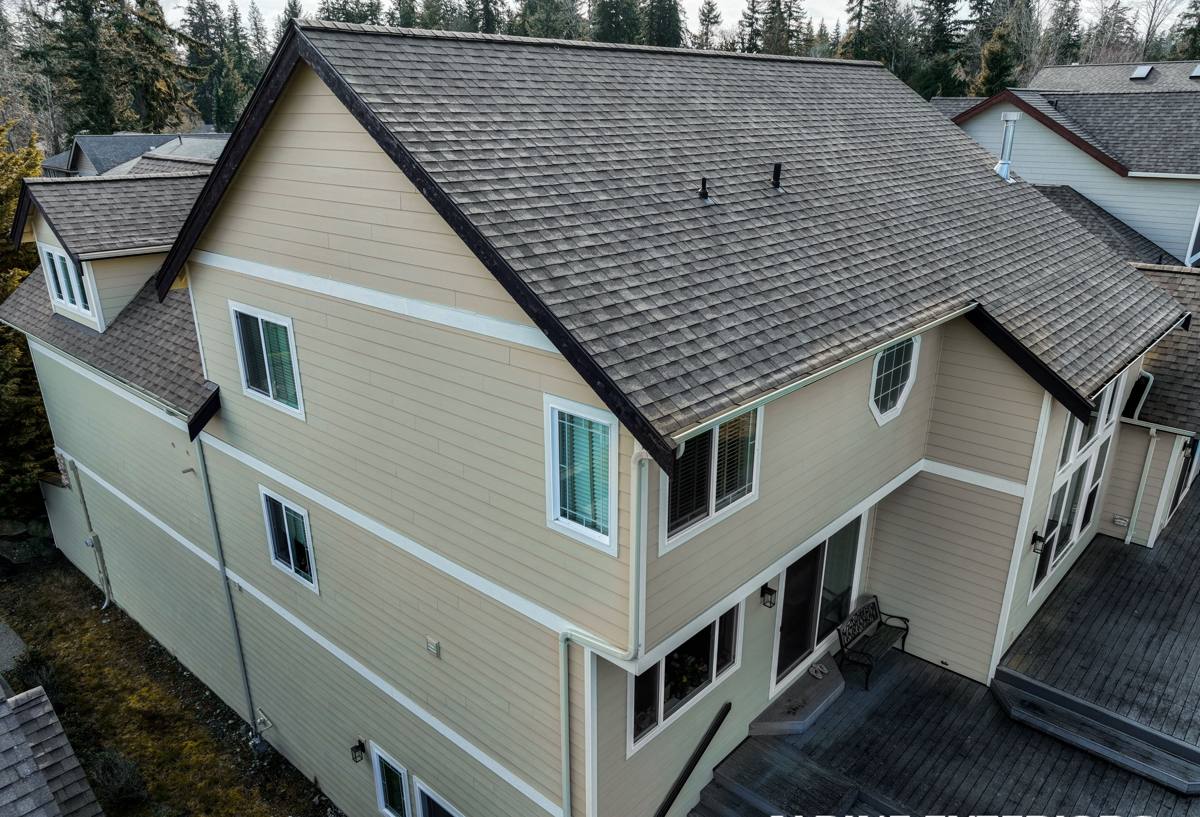
What the Climate Actually Does to a Deck Over Time
It helps to understand the mechanism, not just the symptoms. Three things drive most of the deck failures we see around Sunnyland:
- Moisture cycling. Wood and even composite substrates swell when wet and shrink when they dry. In a marine climate with short, unreliable dry spells, that cycle repeats constantly instead of settling into a seasonal rhythm, which loosens fasteners and stresses joints faster than in a drier region.
- Trapped moisture. Rain is manageable when it can run off and evaporate. It's damaging when it collects — under improperly flashed ledger boards, between boards installed too tight, or in end grain that was left uncapped. Trapped moisture is what turns a deck that "gets wet" into a deck that rots.
- Organic growth. Moss and algae need shade, moisture, and time — Bellingham's fall-through-spring stretch supplies all three. Beyond the slip hazard, moss holds water against the deck surface long after the rain stops, extending every moisture cycle above.
None of this means decks can't last in Sunnyland. It means the build details that get skipped in easier climates — proper flashing, drainage gaps, corrosion-resistant hardware — aren't optional here.
Repair or Replace? Signs to Look For
Not every tired-looking deck needs a full replacement, but in a marine climate, surface problems are often a preview of structural ones underneath. Before you decide, check for these:
- Boards that feel spongy or flex noticeably when you walk across them, especially near the house or stair landings
- Visible gaps opening up between deck boards, or boards that have cupped and no longer sit flat
- Rust streaks running down from screw heads or bracket hardware
- A ledger board area (where the deck meets the house) that stays damp longer than the rest of the deck, or shows staining on the siding above it
- Posts or stair stringers that feel soft when probed with a screwdriver, particularly at ground contact points
- Persistent moss or dark staining that returns within weeks of cleaning
- A deck older than 15-20 years that has never had the substructure inspected
One or two of these on a deck that's otherwise sound might mean a repair. Several at once — especially soft framing combined with hardware corrosion — usually means the structure has been compromised long enough that patching individual boards just delays the real cost.
What a Correct Replacement Actually Involves
Framing and Structure
Everything starts underneath the surface. Joists, beams, and posts need to be sized correctly for the deck's span and load, and in this climate we treat ground contact points and joist ends as the highest-risk areas — they're where water sits longest. Pressure-treated framing rated for ground contact where it touches soil or concrete, with hardware to match, isn't an upgrade — it's the baseline.
Ledger and Flashing
The ledger board connection to the house is the single most common failure point on decks in wet climates, because it's the one place water is guaranteed to run toward the house rather than away from it. Correct flashing — metal flashing under the siding, a water-resistant membrane, and proper fastening — keeps that joint dry through years of driving rain. This is also the step most likely to get shortcut on a low-bid job, because it's hidden once the deck is finished and it takes real time to do right.
Decking Surface
Board spacing matters more here than in dry climates — gaps that are too tight trap debris and slow drainage, while gaps that are too wide create a tripping and drainage-icing hazard in colder snaps. End cuts on wood decking should be sealed, since raw end grain is the fastest path for water into a board.
Fasteners and Hardware
Salt air corrodes standard fasteners faster than most homeowners expect. We use stainless steel or hot-dip galvanized hardware rated for coastal exposure, along with joist hangers and structural connectors matched to the same standard — mixing metals invites galvanic corrosion, which we avoid by keeping fastener and connector materials compatible throughout.
Choosing a Decking Material for This Climate
There's no single "right" material for every Sunnyland home — it depends on budget, maintenance appetite, and how the deck gets used. Here's how the common options compare under local conditions:
| Material | Moisture Behavior | Maintenance | Typical Lifespan Here |
|---|---|---|---|
| Pressure-treated wood | Good if sealed regularly; end grain and fastener holes are vulnerable points | Annual cleaning, re-sealing every 1-3 years | 15-20 years with upkeep |
| Cedar | Naturally rot-resistant but still needs sealing in this rainfall; grays without treatment | Sealing every 1-2 years to hold color and resist moisture | 15-20 years with upkeep |
| Composite decking | Doesn't absorb water like wood; still needs a well-drained substructure underneath | Periodic washing to prevent surface algae film | 25-30+ years, varies by product warranty |
| PVC/capped polymer | Fully sealed surface, minimal moisture absorption | Lowest of the group; occasional washing | 25-30+ years, varies by product warranty |
Composite and capped polymer products cost more up front but trade ongoing sealing and staining labor for periodic cleaning — worth weighing against how much time you actually want to spend maintaining the surface. Wood costs less initially but only performs as well as the maintenance schedule behind it; skipped sealing years show up fast in a climate this wet.
How Our Deck Replacement Process Works
- On-site assessment. We inspect the existing deck's framing, ledger connection, and posts to confirm what's actually failing versus what's cosmetic, and check for any moisture damage to the house at the ledger line.
- Plan and material selection. We walk through decking material and railing options based on your budget, how you use the space, and how much maintenance you want to take on long-term.
- Demolition and disposal. The old deck comes down, including any compromised framing, and we haul away debris.
- Structural rebuild. New framing, properly flashed ledger, and ground-contact-rated posts and hardware go in to current code.
- Decking and railing installation. Surface material and railings are installed with attention to board spacing, drainage, and fastener consistency.
- Final walkthrough. We go over the finished deck with you, including basic care guidance specific to whatever material you chose.
Permits and Whatcom County Requirements
Most deck replacements involving structural changes — new framing, altered footprint, or attached railings above a certain height — require a permit and inspection under local building code. We handle the permitting process as part of the job, including scheduling the required inspections, so you're not left navigating that on your own. Skipping permits on a structural deck rebuild can create real problems later, from insurance issues to complications at resale, so it's not a step worth cutting even when it adds a bit of time to the schedule.
What Affects the Cost of a Deck Replacement
Exact numbers depend on your deck's size, condition, and material choice, but the main cost drivers are consistent across most Sunnyland projects:
| Factor | Why It Matters |
|---|---|
| Deck size and footprint | More square footage means more framing, decking, and labor hours |
| Decking material | Pressure-treated wood costs less up front; composite and PVC cost more but reduce long-term maintenance |
| Substructure condition | Rotted framing, posts, or ledger connections add repair scope beyond a surface-only job |
| Railings and stairs | Custom railing styles, glass panels, or multiple stair sets add material and labor |
| Site access | Decks in tight side yards or with limited equipment access can take longer to demo and rebuild |
We provide a written estimate that breaks down these factors for your specific deck rather than a generic per-square-foot number, since a straightforward rebuild and a deck with structural rot underneath can carry very different scopes even at the same size.
Why a Local Crew That Already Works This Neighborhood Matters
A crew that regularly works Sunnyland and the surrounding Bellingham area already knows what this climate does to a deck over ten or fifteen years, because we've torn out and rebuilt enough of them to see the pattern repeat — the same ledger rot, the same corroded hardware, the same moss buildup on decks that never got proper drainage. That experience shows up in the details: which flashing approach actually holds up through a wet Whatcom County winter, which fastener grades hold their strength near the water, and where the cheap shortcuts on a deck rebuild tend to fail first. It also means we're accountable locally — this is where we work and where our name follows the job, so we build decks meant to hold up, not just pass a final walkthrough.
If your Sunnyland deck is showing its age, or you're just not sure whether it needs a repair or a full rebuild, we're happy to take a look. Reach out for a free, no-pressure estimate using the form below.