 Bellingham Siding
 Siding Installation for York, One of Bellingham's Older In-City Neighborhoods
York sits close to Western Washington University and the rest of central Bellingham, and it's one of the city's more established residential pockets — a mix of early-20th-century homes and mid-century additions, many sitting under a mature tree canopy that shades the roofs and walls year-round. That combination matters when it's time to replace siding. Shade holds moisture longer, older wall assemblies weren't built with today's weather barriers, and the houses themselves have enough character that a siding job needs to be done carefully, not just fast.
This page is about one thing: installing new siding on a York home, done to a standard that actually holds up in Whatcom County's marine climate. We install James Hardie fiber cement exclusively — no vinyl, no LP SmartSide, no primed wood — and everything below explains what that looks like in practice for this neighborhood specifically.
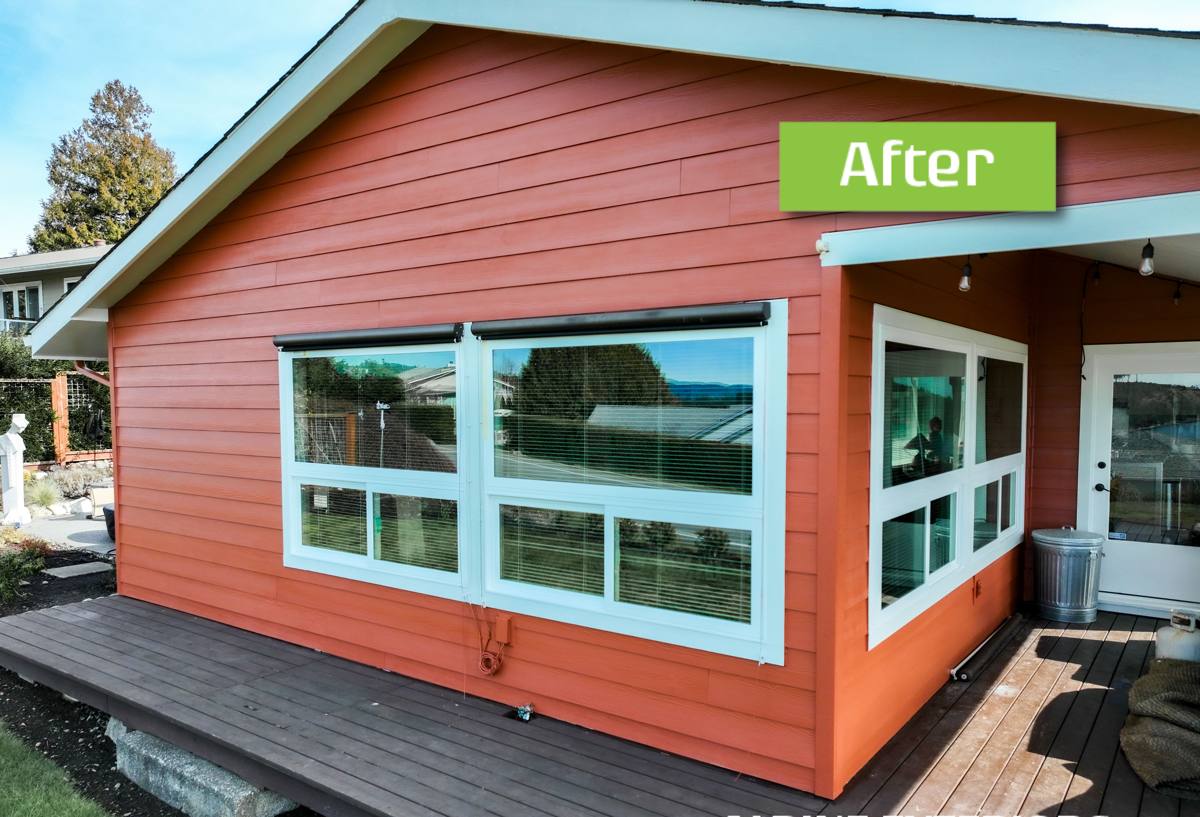
What Bellingham's Climate Actually Does to Siding
Bellingham Bay is close enough that salt-laden air reaches inland neighborhoods like York, especially on windy days. Salt air accelerates corrosion on fasteners, trim, and any metal flashing that isn't rated for it, and it slowly degrades cheaper paint and coating systems faster than manufacturers' published numbers assume. Layer on top of that the region's driving rain — storms that come in sideways off the water rather than falling straight down — and siding gets tested at every seam, corner, and window opening, not just on the flat wall surface.
Then there's moss. Whatcom County's long wet season, paired with shaded lots like many in York, keeps siding damp for extended stretches of the year. Moss and algae don't just look bad; they hold moisture against the wall longer than open sun-exposed siding does, which matters most at butt joints, under trim, and anywhere water can sit instead of shed. Products and installation details that ignore this reality tend to show problems within a handful of years, not decades.
The Three Things Local Siding Has to Handle
- Wind-driven rain — water pushed sideways into laps, joints, and penetrations, not just falling straight down
- Persistent shade and moisture — mature trees and close lot spacing common in York keep walls damp longer between dry spells
- Salt-influenced air — proximity to Bellingham Bay accelerates corrosion on fasteners and lower-grade coatings
What York's Housing Stock Needs From a New Install
Older homes in this neighborhood often have wall assemblies that were never designed around modern weather-barrier standards — sheathing, house wrap, and flashing details that were adequate when they were built but don't match what a 2026 building code or a manufacturer's install spec expects. That means a siding replacement here is rarely a pure like-for-like swap. It's usually a chance to correct the water-management layer underneath the siding, which is the part homeowners never see and the part that actually determines how long the new siding lasts.
Homes with additions or mixed-era construction also tend to have transition points — where an older section meets a newer one — that need extra attention to flashing and trim. A rushed crew treats these as cosmetic details. A crew that's actually installed siding across York's older stock treats them as the places most likely to fail first.
Why We Install Only James Hardie Fiber Cement
We made a deliberate decision not to install vinyl, LP SmartSide, Cemplank, Allura, or bare wood siding. That's not marketing — it's a standard we hold to because of what we've seen these products do, and not do, in exactly this kind of climate.
Vinyl expands and contracts more than fiber cement in temperature swings, can warp or crack in impacts, and doesn't hold paint the way a factory-finished product does if a homeowner ever wants a color change. Engineered wood products like LP SmartSide perform well in many climates but rely on an intact factory coating and careful field sealing at every cut edge; in a region with this much sustained moisture, any gap in that maintenance becomes the entry point for rot. Other fiber cement brands compete on price but don't offer the same factory-applied ColorPlus finish or the climate-specific engineering James Hardie builds into its HZ product lines.
James Hardie fiber cement is non-combustible, engineered specifically for Pacific Northwest moisture exposure (HZ5), and comes with a factory ColorPlus finish that's baked on rather than field-applied — which matters enormously in a market where field-applied paint has to fight rain nearly year-round. It also carries a strong transferable warranty, which is worth something to a homeowner who may sell the house within the warranty period. We install it because, installed correctly, it's the product we're comfortable putting our name behind in this climate.
What a Correct Siding Installation Actually Involves
The siding itself is only one layer of the system. Most siding failures we get called to diagnose — on any brand — trace back to what's underneath it, not the panels themselves. A correct install means getting every layer right, in order.
The Install Sequence
- Remove old siding and inspect sheathing for existing rot, soft spots, or prior water damage
- Repair or replace any compromised sheathing before anything else goes back on the wall
- Install a weather-resistant barrier (house wrap) with correctly lapped and taped seams
- Flash all windows, doors, and penetrations so water is directed out and down, never trapped behind trim
- Install James Hardie panels or lap siding to manufacturer fastening specs — correct nail placement, spacing, and clearance from grade and roof lines
- Caulk and finish per Hardie's published detail standards, not generic best guesses
- Final inspection of every joint, corner, and trim transition before we consider the job complete
Skipping or rushing any one of these steps is how a siding job looks fine for a year or two and then starts showing problems — usually right at a window head or a bottom-of-wall clearance gap, which are exactly the spots wind-driven rain finds first.
Installation Checklist We Hold Ourselves To
- Sheathing inspected and any damage repaired before new siding goes up
- House wrap installed with proper overlap and sealed seams, not just stapled on
- Flashing at every window, door, and penetration — no exceptions for "it probably won't leak there"
- Minimum clearance maintained between siding and grade, decks, and roof lines
- Fastener spacing and type matched to James Hardie's published specifications
- Caulking and touch-up done to Hardie's finish standards, not left to whatever's on the truck
- Job-site walk-through with the homeowner before we call it finished
Cost Factors for a York Siding Project
Every home is different, so we won't quote a number without seeing the house, but the factors that actually move the price on a York project are consistent. This is what we're weighing when we put together an estimate.
| Factor | Why It Matters |
|---|---|
| Condition of existing sheathing | Rot or moisture damage found during tear-off adds repair scope before new siding can go on |
| Home age and wall assembly | Older York homes may need updated flashing and weather-barrier details that newer builds already have |
| Wall complexity | Dormers, additions, and multiple roof-to-wall transitions each add labor and flashing detail |
| Siding profile chosen | Lap, panel, and shingle-style Hardie products differ in material and install labor |
| Access and lot conditions | Tree cover, narrow side yards, and sloped lots common in this neighborhood affect staging and crew time |
| Trim and finish scope | Full trim replacement versus reusing sound existing trim changes both material and labor cost |
Our Process, Start to Finish
We walk every home in person before quoting anything — photos and satellite measurements don't tell us what's actually happening at the sheathing or the flashing details, and those are the things that determine scope. From there:
- In-person assessment of existing siding, trim, and any visible moisture or moss issues
- Written estimate that spells out material, labor, and any sheathing-repair contingency
- Scheduled install with a defined timeline, weather permitting
- Daily site cleanup — no lingering debris or exposed wall sections overnight where it can be avoided
- Final walk-through and warranty paperwork before we consider the job done
Why a Crew That Already Works in York Matters
Siding work in an established, tree-shaded neighborhood is different from siding work on an open new-construction lot. Access is tighter, existing landscaping needs protecting, and older wall assemblies need a trained eye to know what's original construction versus a past repair. A crew that has already worked on homes in and around York knows what to expect before the tear-off even starts — what kind of sheathing condition is common for the age of home, where moss buildup tends to concentrate given the tree cover, and how to sequence work around narrower lots without damaging plantings or hardscaping in the process. That familiarity shows up in fewer surprises mid-project and a cleaner final result.
What to Expect After Installation
James Hardie siding installed to spec is genuinely low-maintenance, but "low-maintenance" doesn't mean "zero-attention." In Whatcom County's climate, we recommend homeowners periodically rinse siding to discourage moss and algae buildup, especially on shaded elevations, and do a visual check of caulking at trim joints every couple of years. The ColorPlus finish resists fading and holds up to the region's moisture far better than field-applied paint, but keeping gutters clear and vegetation trimmed back from the wall goes a long way toward protecting the investment long-term.
If you're weighing a siding replacement for a York home and want a straight answer about what your house actually needs — not a generic quote — we're glad to walk the property with you. The estimate is free, there's no pressure, and you'll get a clear explanation of what we find. Use the form below to get started.