 Bellingham Siding
 Sunnyland's Tree Canopy Creates a Different Siding Problem Than Most Neighborhoods
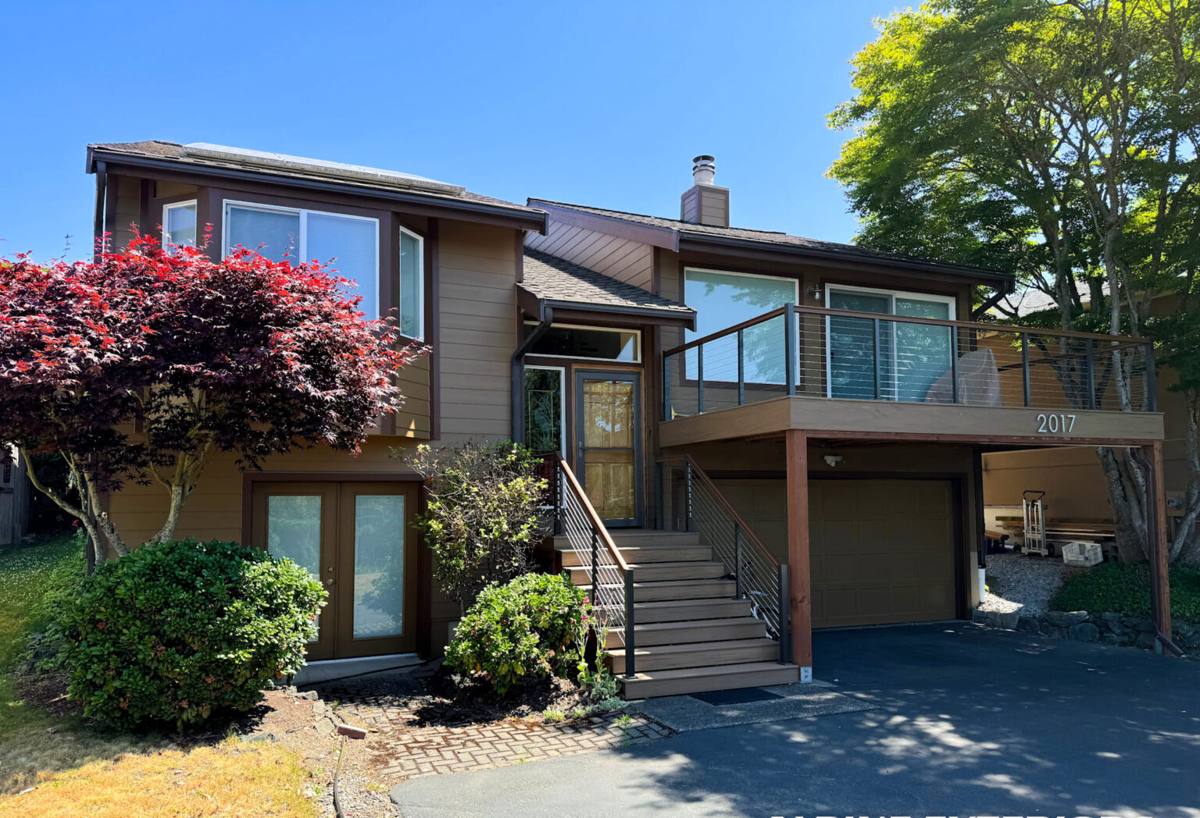
Sunnyland is one of Bellingham's more heavily wooded residential neighborhoods, and that mature tree cover is part of what makes it a desirable place to live. It's also the reason siding fails there differently than it does in more open parts of Whatcom County. Dense canopy means large sections of exterior wall — especially north- and east-facing walls, and anything tucked near a fence line or mature conifer — stay shaded and damp for much of the year. Siding in those spots doesn't get the sun exposure that dries it out between rain events, so moisture sits against the surface far longer than it should.
That's a problem for any siding material, but it's a bigger problem for the ones that rely on a painted or laminated surface to keep water out. Once that surface is compromised — by a scratch, a nail pop, a seam gap, or years of UV and moisture cycling — shaded, poorly-ventilated walls are exactly where trapped moisture does the most damage before anyone notices.
Salt Air, Driving Rain, and a Long Moss Season
Bellingham sits on Bellingham Bay, and even neighborhoods set back from the water get salt-laden air on windy days coming off the Sound. Combine that with Whatcom County's long wet season — driving, wind-blown rain that gets pushed sideways into wall assemblies rather than just falling straight down — and you get an exterior environment that's tougher on siding than most manufacturers' marketing photos suggest. Add Sunnyland's shade and you get a genuinely long moss season: algae and moss don't just grow on roofs here, they colonize north-facing siding, trim, and anything that stays damp for extended stretches.
None of that is unusual for Bellingham as a whole. What's specific to Sunnyland is how much longer the drying window stays closed compared to a sunnier lot, and that has direct consequences for which siding material makes sense and how it needs to be installed.
Signs a Sunnyland Home Actually Needs Siding Replacement
Not every issue calls for full replacement — some are repairable. But certain signs mean the siding system itself, not just a board or two, has reached the end of its useful life:
- Soft or spongy spots when you press on the siding, especially near the bottom courses or under windows
- Persistent moss or algae growth that returns within weeks of being cleaned off
- Visible swelling, delamination, or a "fuzzy" edge along panel seams (common on engineered wood and some fiber cement that wasn't factory-sealed)
- Paint that's failing across large areas rather than in isolated spots — a sign the substrate underneath is moving or absorbing moisture
- Cracking that follows a grid pattern rather than random impact damage, which usually points to a manufacturing or installation defect rather than age alone
- Rising utility bills paired with drafts near exterior walls, which can mean the water-resistive barrier behind the siding has failed
If you're seeing two or more of these, especially on shaded elevations, it's worth a proper inspection before deciding between repair and replacement.
What a Correct Siding Replacement Actually Involves
Siding replacement isn't just pulling off old boards and nailing up new ones. On a climate like Sunnyland's, what happens behind the siding matters as much as the material itself:
The water-resistive barrier
Every wall gets a new weather-resistive barrier installed correctly — lapped shingle-style so water sheds downward and outward, never trapped behind a reverse lap. This is the layer that actually keeps driving rain out of your wall assembly if the outer siding ever takes on water, which in a wet, shaded neighborhood it eventually will.
Flashing at every penetration
Windows, doors, hose bibs, light fixtures, deck ledgers — every point where something breaks through the plane of the wall needs proper flashing integrated with the water-resistive barrier, not just caulked over. Caulk fails; correctly lapped flashing doesn't depend on a sealant staying intact for twenty years.
Rainscreen and ventilation gaps
On shaded, damp walls especially, a ventilated gap behind the siding lets moisture that does get in dry out instead of sitting against the sheathing. This is one of the details that separates a siding job that lasts from one that looks fine for a few years and then fails from the inside out.
Fastening to spec
Fiber cement siding has manufacturer-specified nailing patterns, fastener types, and clearances from the ground and roofline. Skipping these to save time is one of the most common causes of premature siding failure — and it's invisible until the problem shows up years later.
Why We Only Install James Hardie Fiber Cement
We don't install vinyl, LP SmartSide, primed spruce, or cedar lap siding, and we're upfront about why. In a neighborhood like Sunnyland — long wet season, extended shade, salt air, moss pressure — the materials that depend on a factory or field-applied coating to stay watertight are the ones most likely to disappoint an owner ten or fifteen years in. Engineered wood products can perform well when kept dry and well-maintained, but Sunnyland's tree cover works against exactly that. Vinyl handles moisture fine but moves with temperature and can crack or warp, and it doesn't hold up structurally the way fiber cement does.
James Hardie fiber cement is cement, sand, and cellulose fiber — it doesn't rot, it isn't attractive to pests, and it's non-combustible. The ColorPlus factory finish is baked on under controlled conditions rather than field-applied, which matters in a climate where field-applied coatings rarely get the dry cure time they need. Hardie's HZ5 product line is engineered specifically for cold, wet climates like the Pacific Northwest. It costs more upfront than vinyl or engineered wood. We install it exclusively because, on homes in this climate, it's the material we're willing to stand behind long-term.
Our Process for a Sunnyland Siding Replacement
- On-site assessment. We look at moisture readings, existing damage, shade patterns on each elevation, and the condition of the sheathing once old siding starts coming off.
- Tear-off and sheathing check. We remove old siding and inspect the sheathing underneath for rot before anything new goes up — covering a compromised wall with new siding just delays the real problem.
- Water-resistive barrier and flashing. New barrier, correctly lapped, with flashing integrated at every window, door, and penetration.
- James Hardie installation to manufacturer spec. Correct fastening, clearances, and joint treatment, matched to the HZ5 climate zone.
- Final walkthrough. We go over the finished work with you before calling the job done.
Cost Factors for Sunnyland Siding Projects
Every home is different, and we'll give you real numbers after a walkthrough — not a phone estimate. In general, these are the factors that move the price on a Sunnyland job:
| Factor | Why It Matters Here |
|---|---|
| Sheathing condition | Shaded, damp walls are more likely to need sheathing repair or replacement once old siding comes off |
| Home size and wall complexity | Dormers, multiple gables, and cut-up elevations take more labor and trim work |
| Access and tree clearance | Mature trees close to the house can require extra care or scheduling around branch clearance |
| Siding profile chosen | Lap, shingle, and panel Hardie products differ in material and labor cost |
| Trim and detail work | Window and corner trim, especially on older homes with non-standard openings, adds time |
| Existing moisture damage | Rot found during tear-off adds repair scope that can't be fully known until walls are opened up |
Why It Matters That We Already Work in Sunnyland
A crew that's worked this neighborhood before knows which elevations tend to hold moisture, how much clearance to leave around mature landscaping, and what Whatcom County permitting and inspection typically expect on a residential re-side. That's not something you get from a general contractor who does one job in Bellingham a year. It shows up in the small decisions — where to add extra flashing, how to handle a wall that backs up to dense trees, which details actually matter in this climate versus which ones are just manufacturer boilerplate.
Living With Hardie Siding in a Shaded, Wet Neighborhood
Even the right material benefits from basic upkeep. A rinse-down once or twice a year knocks back moss and algae before it takes hold, especially on shaded elevations. Keep gutters clear so water isn't sheeting down the siding face, and trim back vegetation that's holding moisture against the wall. Hardie's factory finish means you're not repainting every few years the way you would with wood, but an occasional inspection — especially after a hard winter — catches small issues while they're still small.
If your Sunnyland home is showing signs of siding failure, or you're just planning ahead, we're happy to take a look and give you a straight answer about what your home actually needs. Reach out for a free, no-pressure estimate using the form below.