 Bellingham Siding
 South Hill's Siding Problem Isn't Like Other Neighborhoods'
South Hill sits up on the slope above downtown Bellingham, which means homes here catch weather that flatter parts of Whatcom County don't deal with the same way. You get more direct exposure to wind-driven rain coming off Bellingham Bay, more shade from mature trees and hillside terrain that keeps north-facing walls damp longer, and the same salt-laden marine air that works on every structure within a few miles of Puget Sound. None of that is unique to any one house on the hill — it's a pattern we see block after block. Siding that isn't built and installed for that combination fails in predictable ways: swelling at the bottom courses, moss creeping up from grade, and paint that chalks and peels years ahead of schedule.
This page is about one thing: installing James Hardie fiber cement siding correctly on a South Hill home. We don't install anything else, and we'll explain why as we go.
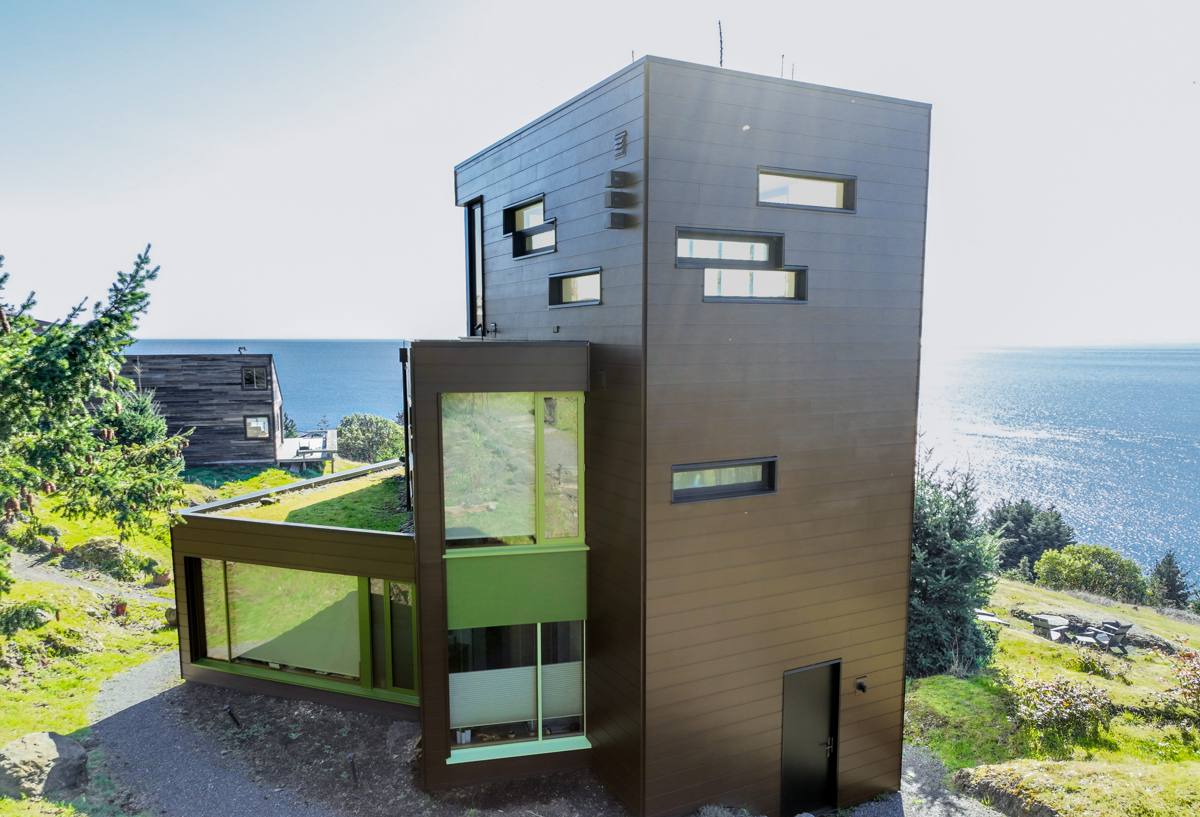
What Driving Rain, Salt Air, and Moss Season Actually Do to Siding
Moisture Intrusion
Wind-driven rain doesn't just wet a wall surface — it pushes water sideways into laps, seams, and butt joints. On a hillside lot with less wind break than a sheltered valley home, that lateral pressure is higher than most homeowners assume. Siding materials that absorb water and swell (or that rely on caulk alone to stay sealed at every joint) start failing at exactly those pressure points first.
Salt Air and Fasteners
Bellingham's proximity to the bay means airborne salt is a real factor, even set back from the water. Salt accelerates corrosion in fasteners, flashing, and any exposed metal trim. A siding job that uses the wrong fastener spec or skips proper flashing details will show rust streaks and loosening panels years before a job done to spec.
Moss and Algae Season
Whatcom County's wet season runs long, and shaded, north-facing walls on South Hill — especially under tree canopy — stay damp for weeks at a stretch. That's exactly the environment moss and algae need. Siding with a factory finish that resists organic growth holds its look; siding that depends on field-applied paint alone tends to green up in the shaded corners first.
Why James Hardie Is the Product We Standardize On Here
We install James Hardie fiber cement exclusively — not vinyl, not LP SmartSide, not Cemplank or Allura, not primed cedar or spruce. That's not a marketing preference; it's a decision based on how those other products actually perform over time in a climate like this one.
Fiber cement doesn't absorb and swell the way wood-based composite products can at cut edges and joints. It's non-combustible, which matters both for wildfire-adjacent code considerations and for straightforward peace of mind. Hardie's ColorPlus factory-applied finish is baked on under controlled conditions and backed by its own finish warranty, which means the color and the moss/algae resistance aren't dependent on how well a field-applied coat of paint went on in a wet spring. And Hardie engineers its HZ5 product line specifically for the Pacific Northwest's freeze-thaw and moisture cycle — it's not a one-size-fits-all national product.
Vinyl siding is cheap and low-maintenance in the short term, but it flexes, fades unevenly, and doesn't hold caulk or trim details the way fiber cement does — and on a wind-exposed hillside lot, that flexing matters more. Wood-based composite siding needs diligent paint maintenance to keep water out of the edges, which is a hard standard to hold on a shaded, damp wall for 20+ years. Cedar is a beautiful material but a high-maintenance one in this climate, needing regular refinishing to fight moss and moisture. We'd rather put a product on your house that we know holds up here without that maintenance burden, which is why Hardie is what we install.
What a Correct James Hardie Install Involves
The product is only half the equation. Most siding failures we get called out to inspect on the hill trace back to installation shortcuts, not the material itself. A correct job includes:
Water Management Behind the Siding
A weather-resistant barrier (housewrap) installed with proper lapping and taped seams, plus a drainage gap where conditions call for it, so any moisture that does get past the siding has somewhere to go besides your sheathing.
Flashing at Every Penetration
Windows, doors, hose bibs, light fixtures, and roof-to-wall transitions all need proper step and head flashing. This is where driving rain finds its way in if it's skipped or rushed — and it's invisible once the siding is up, which is exactly why it has to be done right the first time.
Correct Fastening
Hardie specifies fastener type, placement, and penetration depth for a reason — overdriven or underdriven nails, wrong fastener material, or incorrect spacing all shorten the life of the installation, especially with salt air accelerating any corrosion at a weak point.
Clearance and Grade Details
Siding needs proper clearance from grade, roof lines, decks, and hardscape so it isn't sitting in a wet zone. On hillside lots this sometimes means adjusting standard details to account for how water actually moves across the property.
Joint and Caulk Details
Butt joints, trim intersections, and penetrations get sealed with the right sealant, applied correctly — not as a substitute for good flashing, but as the last line of defense.
Our Process for a South Hill Job
Every South Hill property has its own combination of sun exposure, tree cover, and wind exposure, so we don't run a generic checklist — we look at your house specifically before we quote anything.
- Site walk and assessment. We look at existing siding condition, moisture damage, tree cover and shading, drainage patterns, and how the house is oriented to prevailing wind and rain.
- Scope and product selection. We determine whether HardiePlank lap, HardiePanel, or a mix with trim and accent details fits the home, and spec the right profile and ColorPlus finish.
- Tear-off and substrate check. Once old siding is off, we check sheathing for hidden moisture damage before anything new goes up — this is often where problems from a prior installation surface.
- Water barrier and flashing installation. Housewrap, flashing at every penetration, and drainage details go in before a single piece of siding is hung.
- Siding installation to spec. Correct fastening, clearances, and joint treatment throughout.
- Final walkthrough. We go over the finished job with you and cover care and maintenance specific to your home's exposure.
What Drives Cost on a South Hill Siding Job
Every job is different, but the same handful of factors move the price up or down on most South Hill homes. This isn't a quote — it's what to expect the estimate to weigh.
| Factor | Why It Matters |
|---|---|
| Home size and stories | More square footage and multi-story access both add material and labor time |
| Tear-off vs. new construction | Removing and disposing of old siding, and repairing any hidden damage underneath, adds a step new builds skip |
| Siding profile (lap vs. panel) | HardiePlank lap and HardiePanel systems price differently based on style and trim complexity |
| Trim and detail work | Corner boards, window/door trim, and accent details add labor beyond flat wall coverage |
| Site access and grade | Hillside lots, steep grades, and limited staging area can affect scaffolding and logistics |
| Existing moisture damage | Rotted sheathing found during tear-off needs repair before new siding goes on |
Living With Hardie Siding in a Wet Coastal Climate
A correctly installed Hardie job is genuinely low-maintenance, but "low-maintenance" isn't "zero-maintenance." A little seasonal attention keeps it performing the way it's designed to, especially given the moss and algae pressure a shaded South Hill lot deals with.
- Rinse siding periodically with a garden hose to keep dirt and organic buildup from settling in, especially on shaded or north-facing walls
- Keep gutters clear so overflow doesn't run down the siding face
- Trim back vegetation and tree limbs that keep a wall shaded and damp longer than it needs to be
- Inspect caulking at trim and penetrations every year or two and touch up as needed
- Address any paint chip or ding at cut edges promptly to keep the factory finish's protection intact
- Watch for moss starting at grade level or in shaded corners and address it early, before it spreads
Why It Matters That We Already Work in South Hill
A crew that already works this neighborhood knows which walls take the worst of the wind-driven rain, which lots hold moisture longer because of tree cover or hillside grading, and how the salt air factor plays out block by block — not just in general Pacific Northwest terms. That local pattern recognition shows up in the details: where we add extra attention to flashing, which sides of the house get the shaded-wall treatment in the maintenance conversation, and how we sequence a job around Whatcom County's wet season. It's the difference between a generic installation and one that's actually built for the specific spot on the hill your house sits on.
Ready to Talk About Your Siding?
If your South Hill home has siding that's showing moss, peeling paint, or soft spots near the bottom courses, or if you're planning ahead for a replacement, we're happy to take a look and walk you through what we'd recommend and why. Fill out the form below for a free, no-pressure estimate.