 Bellingham Siding
 Why South Hill Roofs Take a Different Kind of Beating
South Hill sits up above the rest of Bellingham, which means the same storms that roll through Whatcom County hit these roofs a little harder. The elevation and exposure add extra wind load during winter systems, and the salt-tinged air coming off Bellingham Bay works its way into fasteners, flashing, and any exposed wood over time. Add in the driving, sideways rain that's typical of a Pacific Northwest storm and a moss season that can run eight or nine months out of the year, and you've got a roof that's under more or less constant low-grade stress even when nothing dramatic happens.
Most storm damage up here isn't a single catastrophic event. It's usually a combination: wind lifts a few shingles or blows debris onto the roof, driving rain finds that opening and gets underneath, and moss that's already been growing in shaded, north-facing sections holds the moisture against the roofing material instead of letting it drain and dry. By the time a homeowner notices a stain on the ceiling, the actual damage has often been developing for weeks or months.
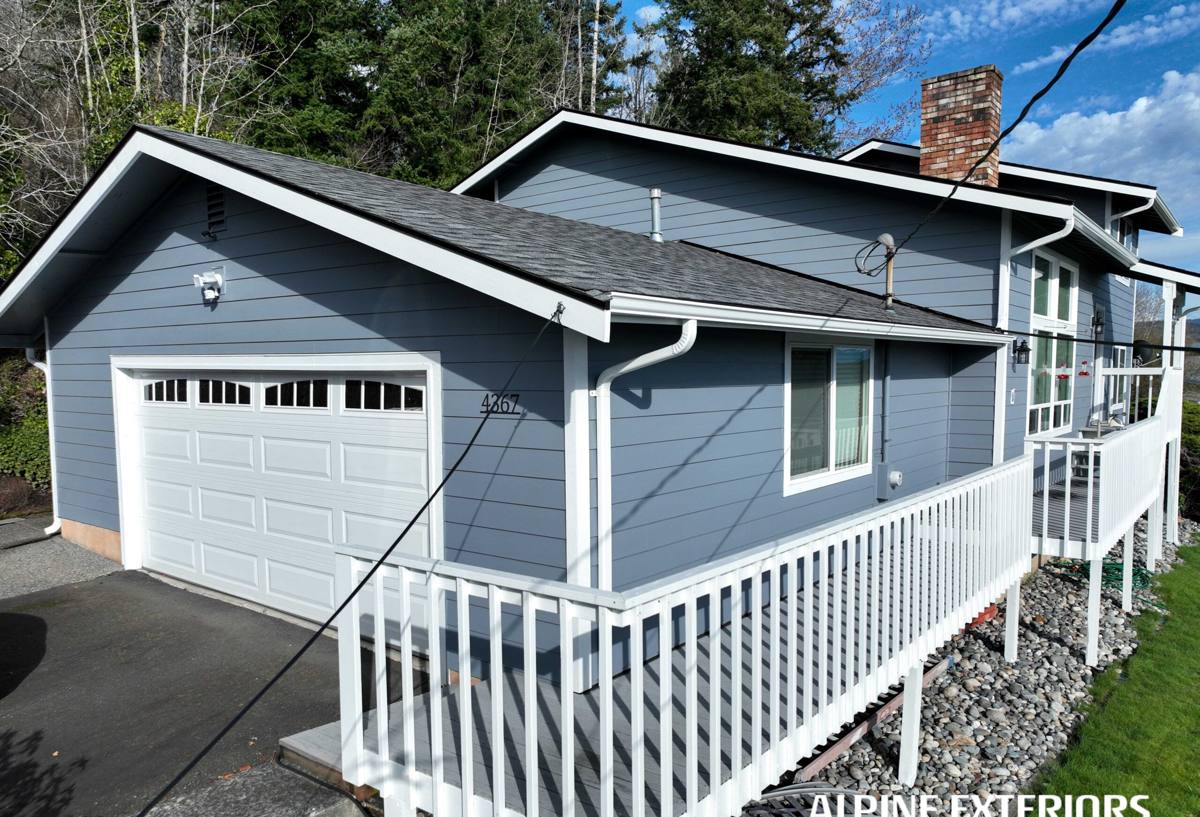
What Storm Damage Actually Looks Like on a South Hill Roof
Storm damage doesn't always look like missing shingles. On the roofs we work on around South Hill, the most common issues after a windstorm or heavy rain event fall into a few categories.
Wind Damage
Lifted, cracked, or torn shingles, especially along ridgelines and roof edges where wind uplift is strongest. Sometimes shingles aren't missing at all — they're just lifted and no longer sealed, which is easy to miss from the ground but leaves the roof open to water intrusion.
Water Intrusion
Driving rain doesn't need a big opening to cause a problem. Flashing around chimneys, skylights, and roof-to-wall transitions is a common failure point, especially on older homes where the flashing was installed decades ago and has since loosened or corroded.
Moss and Debris-Related Damage
Moss holds moisture against shingles and shakes, which accelerates granule loss and, over years, rot in the roof deck underneath. Storms also knock branches and needles into valleys and gutters, where they dam up water that should be draining freely off the roof.
Gutter and Edge Damage
Wind and falling debris frequently damage gutters, fascia, and drip edge before they touch the main roof field. Left unaddressed, this lets water run down behind the fascia and into the eaves instead of off the roof.
Our Storm Damage Roof Repair Process
We approach every storm damage call the same way: find out exactly what's wrong before we talk about fixing it. A roof that looks fine from the driveway can still have a compromised deck underneath, and a roof with a few missing shingles doesn't automatically need a full section replaced.
- Ground and roof-level inspection. We look at the whole roof system, not just the spot that's obviously damaged — wind and water problems are often connected to something happening a few feet away.
- Interior check. If there's any sign of a leak, we check the attic or ceiling from the inside to see how far water has traveled and whether insulation or framing has been affected.
- Written findings and options. We tell you what we found, what's actually storm-related versus general wear, and what your realistic repair options are — including the honest answer when a small repair is all that's needed.
- The repair itself. Depending on scope, this might mean replacing a section of shingles or shakes, resealing and re-flashing a vulnerable area, or repairing deck sections that got wet enough to soften.
- Final walk-through. We show you what was done and what to keep an eye on going forward, particularly if moss or drainage issues contributed to the original damage.
Repair, Patch, or Replace: How We Decide
Not every storm-damaged roof needs the same level of work. The right call depends on the roof's age, how localized the damage is, and what we find once we get a close look at the decking underneath.
| Situation | Typical Approach | Why |
|---|---|---|
| Isolated wind lift, roof under 10-12 years old | Spot repair / reseal | Surrounding material is still sound; no need to disturb it |
| Flashing failure with limited water entry | Flashing repair or replacement | Flashing is the point of failure, not the field roofing |
| Soft or spongy decking found during inspection | Section replacement, deck repair included | Shingles alone won't fix a compromised substrate underneath |
| Widespread granule loss plus storm damage | Full roof replacement discussion | Repairing a roof that's already near end of life is a short-term fix |
| Heavy, long-term moss coverage with rot found | Moss remediation plus targeted repair or replacement | Treating moss without fixing existing rot leaves the underlying problem in place |
We'd rather tell a homeowner their roof needs a $400 flashing repair than talk them into a replacement it doesn't need yet — and we'd rather be straight with you if a repair is genuinely just delaying a replacement you'll need in a year or two anyway.
Moss, Moisture, and the Long Game
Because Whatcom County's moss season runs so long, a storm repair that ignores moss is an incomplete repair. If moss contributed to the original failure — by holding water against the roofing material or lifting shingle edges as it grows — we address it as part of the job, not as an upsell afterward. That typically means clearing existing growth, treating the affected areas, and pointing out any spots where tree cover or shade is going to make regrowth likely so you know what to expect.
We're also careful about how we approach moss removal itself. Aggressive pressure washing can do more damage to aging shingles than the moss did, so we use methods appropriate to the roofing material and its condition rather than a one-size-fits-all approach.
Documenting Damage for Insurance
Many storm repairs on South Hill roofs are at least partially covered by homeowners insurance, particularly for sudden wind or impact damage. We provide clear documentation of what we find — photos, a written description of the damage, and our assessment of likely cause — so you have what you need if you decide to file a claim. We're not a public adjuster and we won't promise a claim outcome, but we can make sure the roofing side of your documentation is thorough and accurate.
Why It Matters to Hire a Crew That Already Works This Neighborhood
South Hill's homes span a wide range of ages and roofing styles, and elevation, tree cover, and roof orientation all vary block to block. A crew that regularly works in this part of Bellingham has a feel for which roofs in the area tend to hold moisture longer, which flashing details on older homes tend to fail first, and how the local wind exposure typically shows up as damage. That local familiarity doesn't replace a careful inspection, but it does mean we're not guessing at what's normal for this neighborhood versus what's a red flag.
It also means we're accountable locally. We're not a storm-chasing crew that shows up after a big weather event and is gone by summer — we're going to be working in Bellingham and Whatcom County long after your repair is finished, which is part of why we'd rather do the job right the first time.
What to Check After a Storm
You don't need to get on the roof yourself to do a basic post-storm check. Here's what we recommend homeowners look for from the ground and from inside the house:
- New stains, discoloration, or sagging on ceilings, especially near chimneys, skylights, or exterior walls
- Shingle or shake debris in the yard or gutters after a windstorm
- Gutters pulling away from the fascia or visibly damaged downspouts
- Visible daylight or gaps around roof vents, chimneys, or skylights if you can safely view the attic
- Musty odors in upper rooms or closets, which can indicate slow, hidden moisture intrusion
- Heavy moss buildup in shaded roof sections, particularly north-facing slopes
If you notice any of these, it's worth getting a roof looked at sooner rather than later. Small storm damage left through a second or third rain event tends to turn into a bigger, more expensive repair.
Get a Straight Answer About Your Roof
If a recent storm has you wondering whether your South Hill roof needs attention, we're happy to take a look and give you an honest read on what we find — no pressure, no inflated scope. Use the form below to request a free estimate and we'll get back to you to schedule a time.