 Bellingham Siding
 Roofing in York: A Neighborhood With Its Own Weather Habits
York is one of Bellingham's older, tree-shaded neighborhoods, and that character comes with a roofing tradeoff. Mature tree canopy keeps homes cool in summer and gives the streets their look, but it also means more shade, more falling debris, and slower drying after every storm that rolls off Bellingham Bay. Add in Whatcom County's marine climate — salt-tinged air, long stretches of driving rain, and a moss season that can run eight or nine months out of the year — and you get a roofing environment that punishes shortcuts. A new roof installed for York isn't just "a roof." It's a system that has to handle constant moisture cycling, organic growth, and coastal air without needing major attention for fifteen to twenty-plus years.
We install a lot of roofs in this part of Bellingham, and the patterns repeat: north-facing slopes that never fully dry out, valleys that collect needles and leaves, and fascia boards that rot from the inside before a homeowner ever sees a stain on the ceiling. A correct installation plans for all of that from day one instead of leaving it for the next owner to discover.
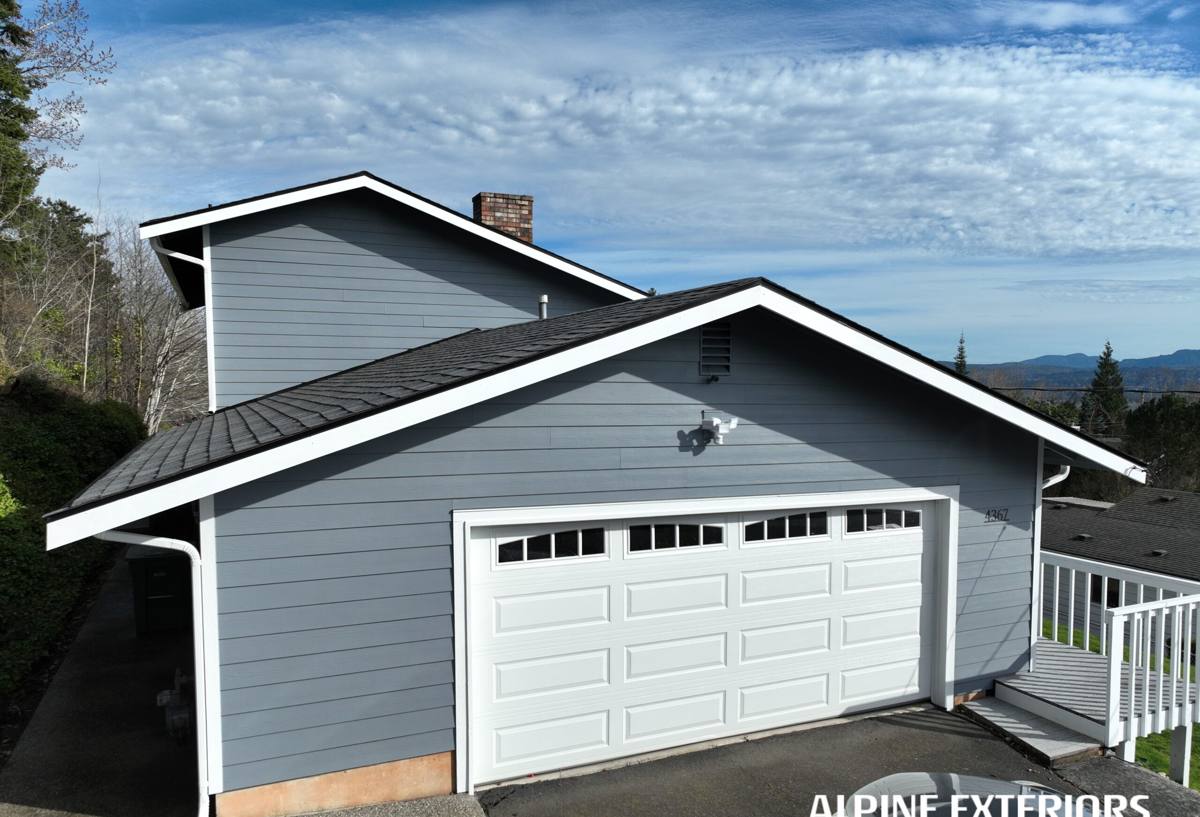
What Actually Damages Roofs in This Part of Whatcom County
Driving Rain and Wind-Driven Moisture
Bellingham doesn't just get rain — it gets rain pushed sideways by wind coming off the water. That matters because standard shingle installation assumes water moves straight down. Wind-driven rain can work its way sideways and upward under shingle tabs, around chimneys, and along roof-to-wall transitions. If flashing details and underlayment aren't upgraded to account for that, leaks show up in places a "textbook" install would never expect.
Moss and Organic Growth
Moss doesn't just look bad — it holds moisture directly against roofing material, works its way under shingle edges, and lifts fasteners over time. In shaded York yards, moss can establish itself within a year or two of a roof going untreated. Left alone, it shortens the life of almost any roofing material, regardless of brand or price point.
Salt Air and Metal Fatigue
Proximity to Bellingham Bay means airborne salt is a real factor for exposed metal — flashing, fasteners, vents, and gutters. Lower-grade metal components corrode faster near the water than they would ten or fifteen miles inland. This is a detail that's easy to overlook because it doesn't show up as a problem until years later.
What a Correct New Roof Installation Includes
A new roof is more than shingles nailed to plywood. Every layer underneath the visible surface does specific work, and skipping or downgrading any of them is where premature failures come from.
- Deck inspection and repair: Old sheathing gets checked for soft spots, delamination, and rot before anything new goes down — covering a bad deck just hides the problem.
- Ice and water shield at vulnerable zones: Eaves, valleys, and roof-to-wall transitions get a self-adhering waterproof membrane, not just felt paper, because these are the spots wind-driven rain actually reaches.
- Synthetic underlayment across the field: A durable, water-resistant layer under the whole roof, not just the trouble spots, gives a second line of defense if wind ever lifts a shingle edge.
- Corrosion-resistant flashing and fasteners: Especially important this close to the water — cheaper metal components are a false economy in a salt-air environment.
- Balanced attic ventilation: Intake at the eaves and exhaust at the ridge, sized correctly for the attic volume, so moisture and heat don't build up under the deck.
- Proper shingle or panel installation: Correct nail placement, exposure, and fastening pattern for the specific wind exposure of the site — not a generic pattern used everywhere.
Why Ventilation Deserves Its Own Mention
Attic ventilation is one of the most overlooked parts of a roof job, and it's especially important in a climate this wet. A poorly ventilated attic traps moisture from everyday household humidity, which condenses on the underside of the roof deck and can rot sheathing from the inside — completely invisible until it's a significant repair. Balanced intake and exhaust ventilation also helps prevent ice damming in cold snaps and extends the life of the shingles themselves by keeping deck temperatures more stable.
Choosing a Roofing Material for a York Home
There's no single "best" roofing material — the right choice depends on the home's roof pitch, shading, budget, and how much long-term maintenance the homeowner wants to take on. Here's how the common options compare for a shaded, marine-climate lot like most in York:
| Material | Moss/Moisture Resistance | Salt Air Durability | Typical Lifespan | Maintenance Level |
|---|---|---|---|---|
| Architectural asphalt shingle | Good with proper ventilation and periodic cleaning | Good, provided flashing/fasteners are corrosion-resistant | 25–30 years | Low to moderate |
| Standing seam metal | Excellent — sheds moss and debris well | Very good with coated, marine-rated panels | 40–50+ years | Low |
| Cedar shake | Requires diligent upkeep in shaded, damp settings | Moderate — needs regular treatment | 20–30 years with maintenance | High |
| Synthetic composite shingle | Very good — engineered to resist organic growth | Good | 40–50 years | Low |
We don't push one material on every homeowner. Cedar shake, for example, can look excellent on the right home, but in a shaded, damp neighborhood it demands a level of upkeep — cleaning, treating, and monitoring — that not every homeowner wants to sign up for. That's a maintenance conversation we have honestly up front, not a sales pitch either direction.
Our New Roof Installation Process
- On-site assessment: We walk the roof and attic, check the deck condition, look at ventilation, and note site-specific factors like tree cover, slope, and exposure to wind off the bay.
- Written estimate and material selection: You get a clear scope of work and material options with honest pros and cons for your specific roof — no pressure toward the most expensive option.
- Tear-off and deck inspection: Old roofing comes off completely so the deck can be inspected and repaired where needed. Covering up a compromised deck is not something we do.
- Waterproofing and ventilation upgrades: Ice and water shield, synthetic underlayment, and ventilation components go in before a single shingle or panel is installed.
- Installation: Materials go on to manufacturer specifications and local wind/exposure conditions, with attention to the flashing details that matter most in this climate.
- Cleanup and final walkthrough: Site is cleaned, magnetic sweep for stray fasteners is done, and we walk the finished roof with you before calling the job complete.
What a New Roof Typically Costs — and What Moves the Number
Every roof is priced based on its own specifics, but the main cost drivers are consistent from house to house. Understanding them helps homeowners compare estimates apples-to-apples instead of just looking at a bottom-line number.
| Factor | Why It Matters |
|---|---|
| Roof size and number of facets | More square footage and more valleys/hips mean more material and labor time |
| Roof pitch and accessibility | Steep or hard-to-access roofs require more safety setup and slow the work down |
| Deck condition | Rot or soft sheathing found during tear-off adds repair cost, but skipping it costs far more later |
| Material choice | Asphalt, metal, and composite options carry different material and labor costs |
| Ventilation upgrades needed | Older homes often need added intake or exhaust ventilation brought up to current standards |
| Tear-off layers | Removing multiple existing layers of roofing takes more labor than a single-layer tear-off |
Rather than quote a number that doesn't mean anything without seeing the roof, we give a firm written estimate after the on-site assessment, broken down so you can see exactly what you're paying for.
Signs a York Home May Need a New Roof Soon
- Granules collecting in gutters or at downspout outlets
- Shingles that are curling, cracking, or visibly bald in spots
- Moss or dark streaking that returns quickly after cleaning
- Daylight visible through the roof deck from inside the attic
- Soft or spongy spots when walking the roof
- Repeated flashing leaks around chimneys, vents, or skylights
- A roof approaching or past 20–25 years old with no major work done
Any one of these on its own might just call for a repair. Several together, especially on an older roof, usually means it's time to talk about full replacement instead of patching the same problem year after year.
Why Working With a Crew That Already Knows York Matters
A roofing crew that's worked other homes in this neighborhood already knows which streets sit in heavier shade, where wind off the bay tends to hit hardest, and which older homes commonly need ventilation upgrades along with the new roof. That local pattern recognition shortens the assessment, avoids guesswork, and means the ventilation and flashing decisions on your roof are based on what actually works here — not a generic install pulled from a manual written for a different climate. It also means someone local is easy to reach if a question comes up after the job is done, rather than a crew that drove in from out of the area for a single project.
Permits, Warranty, and Timeline
New roof installations in the City of Bellingham typically require a building permit, and we handle that process as part of the job so nothing falls on the homeowner to track down. Most straightforward tear-off-and-replace jobs on a single-family home take one to three days depending on roof size, complexity, and weather — and in this climate, we plan installation windows around forecasted dry stretches whenever possible rather than racing against incoming rain. Materials carry manufacturer warranties that vary by product line, and workmanship is backed separately, so you know exactly what's covered and for how long before work begins.
If your roof in York is showing its age or you just want an honest opinion on its condition, we're happy to take a look. Fill out the form below for a free, no-pressure estimate — we'll walk the roof, tell you what we actually see, and give you a clear, written price before any work starts.