 Bellingham Siding
 Why Siding Wears Out Faster in York Than the Manufacturer's Numbers Suggest
Every siding product on the market gets rated under lab conditions. York doesn't offer lab conditions. It offers Bellingham Bay air moving inland with a fine load of salt in it, long stretches of driving rain off the water, and a tree canopy mature enough to keep large sections of roofs and walls shaded and damp for most of the year. That combination is exactly what accelerates moss, mildew, and moisture intrusion on exterior walls — and it's why siding that might hold up fine in a drier inland climate can fail early here.
Homes in York and the older, established blocks around it tend to compound the problem. A lot of the housing stock in this part of Bellingham dates back to early-to-mid-century construction — bungalows, foursquares, and additions built onto them over the decades. Older homes often carry older siding, older flashing details, and in some cases wall assemblies that were never built with today's moisture-management standards in mind. When we're called out to look at siding in York, we're rarely looking at a simple like-for-like swap. We're looking at what decades of Whatcom County weather did to whatever went up originally, and what needs to change so the next installation doesn't repeat the same failure.
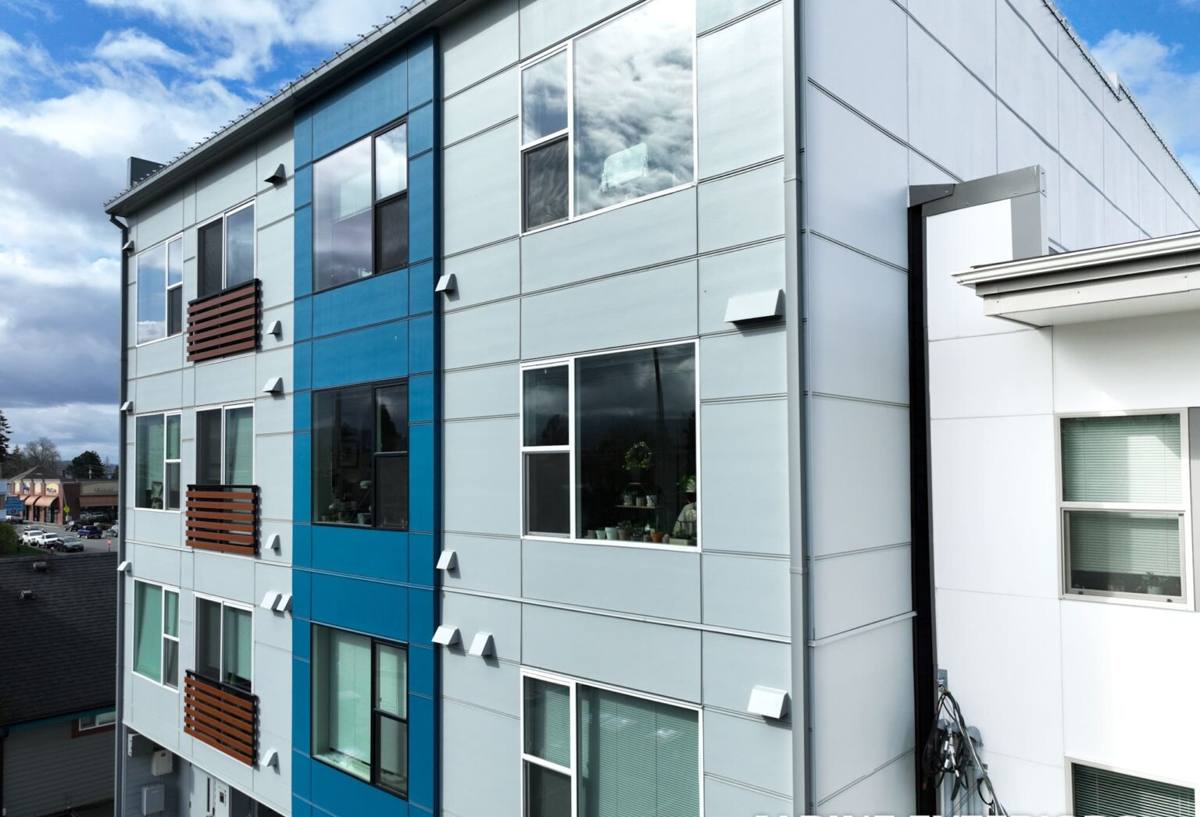
What a Correct Siding Replacement Actually Involves
Siding replacement done right is not "remove old boards, nail up new ones." It's a wall-assembly project that happens to end with new siding on the outside. Skipping the steps in between is the single biggest reason siding fails years before it should — on any house, in any neighborhood, with any product.
Tear-Off and What's Underneath
Once the old siding comes off, that's the only point in the project where the sheathing, framing, and existing water damage are actually visible. On older York homes this step matters more than usual — we're checking for soft or rotted sheathing, past water intrusion around windows and doors, and any signs that moss and moisture worked their way behind the old cladding rather than just staining the surface of it. Any of that gets repaired before a single new board goes up.
The Moisture-Management Layer
A weather-resistant barrier goes over the sheathing, and depending on the wall assembly and exposure, a rainscreen gap behind the siding gives incidental moisture somewhere to drain and dry instead of sitting against the back of the board. In a climate that spends a good part of the year at or near saturation, this drainage layer is not optional extra credit — it's the difference between siding that sheds water and siding that slowly wicks it.
Fastening, Clearances, and Flashing
Fiber cement has manufacturer-specified nailing patterns, fastener types, and minimum clearances from grade, roof lines, and abutting decks — all of it exists because it's exactly where moisture gets in when it's ignored. Flashing at windows, doors, and any place two building materials meet gets integrated with the water-resistant barrier in the correct shingle-lap order, not caulked over as an afterthought. Caulk is a backup, not a plan.
Why We Only Install James Hardie Fiber Cement
We don't install vinyl, LP SmartSide, Cemplank, Allura, or unprimed cedar or spruce siding. That's a deliberate standard, not a lack of familiarity with the alternatives — we know exactly what those products do well and where they struggle, and we've decided the trade-offs aren't ones we're willing to put on a customer's home, especially in a climate like this one.
| Material | How It Handles Salt Air & Rain | Moss/Moisture Behavior | Ongoing Maintenance | Fire Rating |
|---|---|---|---|---|
| Vinyl | Can warp or become brittle with temperature swings; seams are a moisture path | Traps moisture behind panels if not installed with a drainage plane | Low, but fades and can't be repainted easily | Combustible |
| Untreated wood/cedar | Absorbs moisture directly; needs a sound paint film to hold up | High risk of moss, mildew, and rot in shaded, damp areas | High — repainting/staining every few years | Combustible |
| LP SmartSide (engineered wood) | Performs reasonably when the finish stays intact | Edge and cut-end swelling if moisture reaches the substrate | Moderate — finish and caulked joints need monitoring | Combustible |
| James Hardie fiber cement | Engineered for wet, coastal-type climates (HZ5 formulation) | Does not absorb moisture the way wood-based products do; resists moss-driving rot | Low — factory ColorPlus finish holds color for years | Non-combustible |
James Hardie's HZ5 product line is engineered specifically for the wet, temperate conditions the Pacific Northwest deals with, which includes the moisture load Bellingham and Whatcom County see most of the year. The ColorPlus factory finish is baked on under controlled conditions rather than field-applied, which means better adhesion and a longer color life than a job-site paint job — a real advantage on a home that's going to sit under a wet tree canopy for the next several decades. It's also non-combustible, which matters as regional wildfire-season smoke and ember exposure become a bigger part of Pacific Northwest summers even in traditionally wet areas like Whatcom County.
Matching New Siding to York's Older Housing Stock
Board Profiles and Trim
Older Bellingham homes generally carry a traditional lap-siding look, sometimes mixed with shingle-style accents in gables or dormers. Hardie's product lineup covers both — HardiePlank lap siding for the main field, HardieShingle where a home has that staggered or straight-edge shingle detail, and HardieTrim for corner boards, window and door casing, and fascia. Matching board exposure and trim width to what the house originally had (or to a cleaner, more consistent version of it) keeps a York home looking like it belongs on its own block rather than looking like a generic remodel.
Color and Finish
ColorPlus comes in a range of factory colors, and because the finish is baked on rather than brushed on-site, touch-up paint is available to match rather than requiring a full repaint if a board ever gets nicked. For homes where the goal is preserving an older, established character rather than modernizing it, sticking with a traditional color and a lap profile close to the original tends to age better — visually and financially — than chasing a trend.
Our Process, Start to Finish
- On-site assessment: we look at the current siding, trim, flashing, and any visible moisture or moss damage, and walk the whole exterior — not just the side that prompted the call.
- Written estimate: scope, product selection, and a real cost breakdown, not a verbal ballpark.
- Tear-off and sheathing inspection: old siding comes off, damaged sheathing or framing gets flagged and repaired before moving forward.
- Water-resistive barrier and drainage plane installation: the layer that does the actual moisture management work.
- Hardie installation to manufacturer spec: correct fasteners, clearances, and flashing integration at every penetration and transition.
- Trim, caulking, and final finish check: paint-matched touch-up where needed, site cleanup, and a walkthrough with the homeowner.
What Siding Replacement Costs in York
We don't quote a number without seeing the house, but the factors that move the price up or down are consistent enough to lay out honestly.
| Factor | Why It Affects Cost |
|---|---|
| Condition of existing sheathing | Rot or water damage found during tear-off has to be repaired before new siding goes on — this is the most common source of a mid-project change order |
| House size and wall complexity | More corners, dormers, and roofline transitions mean more cutting, flashing, and labor time |
| Board profile chosen | Shingle-style siding and mixed profiles take more time to install than straight lap siding |
| Trim scope | Full trim replacement adds material and labor beyond the field siding itself |
| Access | Mature landscaping, narrow side yards, and older detached structures common in in-city neighborhoods can slow staging and material handling |
| Paint/color selection | Standard ColorPlus colors are more cost-predictable than custom or premium finish options |
Signs Your York Home's Siding Needs Replacing, Not Patching
- Persistent moss or dark streaking that comes back within a season of cleaning
- Soft spots, or a spongy feel, when you press on the siding near the bottom courses or under windows
- Paint that's bubbling, peeling, or won't hold regardless of how recently it was applied
- Visible gaps, warping, or boards that have pulled away from the wall
- A musty smell or visible staining on interior walls that share an exterior wall with problem siding
- Siding that's original to a home built decades ago and has never been fully replaced
- Cracked or missing caulk at trim and window joints that's let moisture behind the cladding
Why a Crew That Already Works in York Matters
Moss and moisture damage in Bellingham isn't evenly distributed — it follows tree cover, wall orientation, and how close a lot sits to the water, and those patterns repeat street by street within a neighborhood like York. A crew that's worked in this specific part of Bellingham has already seen which walls take the worst of the north-facing shade, which lot layouts create tight staging conditions, and how the older housing stock here tends to be built underneath the current siding. That's not something you get from a national install network — it's built by doing the work here, repeatedly, and reading Whatcom County's building and permitting requirements as they apply to a real York address rather than a generic checklist.
Living With Hardie Siding After Installation
The lower-maintenance case for fiber cement mostly comes down to what it doesn't need. No repainting every three to five years, no re-caulking every joint on a schedule, no annual moss treatment just to keep it from cutting into the finish. A rinse-down to keep moss and mildew from taking hold, plus an occasional visual check of caulking at trim joints, is the extent of upkeep for most homeowners. Over the 30-plus-year window a well-installed Hardie system is built for, that adds up to real savings in both money and hassle compared to the maintenance cycle of wood or lower-grade engineered wood siding in this climate.
If your York home's siding is showing its age, we're happy to take a look and give you a straightforward, no-pressure estimate — no obligation, just an honest read on what your home actually needs.