 Bellingham Siding
 Windows Take a Different Kind of Beating in Barkley
Barkley sits close enough to the water and the lowland moisture belt that its homes deal with a specific combination of stresses: salt-laden air moving in off Bellingham Bay, long stretches of driving rain pushed by wind rather than falling straight down, and a moss season that can run from early fall into late spring. None of these things destroy a window on their own. What they do is find every weak point in a window's frame, seal, and flashing, and work on it year after year until something gives. A window that would perform fine in a dry inland climate can fail early here simply because it wasn't detailed for wind-driven rain and constant humidity.
This page is about one job, done right, in one place: custom window installation for homes in the Barkley area of Bellingham, Whatcom County. Not a general overview of every window product on the market, and not advice that would apply the same way in a drier inland climate. What follows is what we actually look at, plan for, and install when a Barkley homeowner calls us about windows.
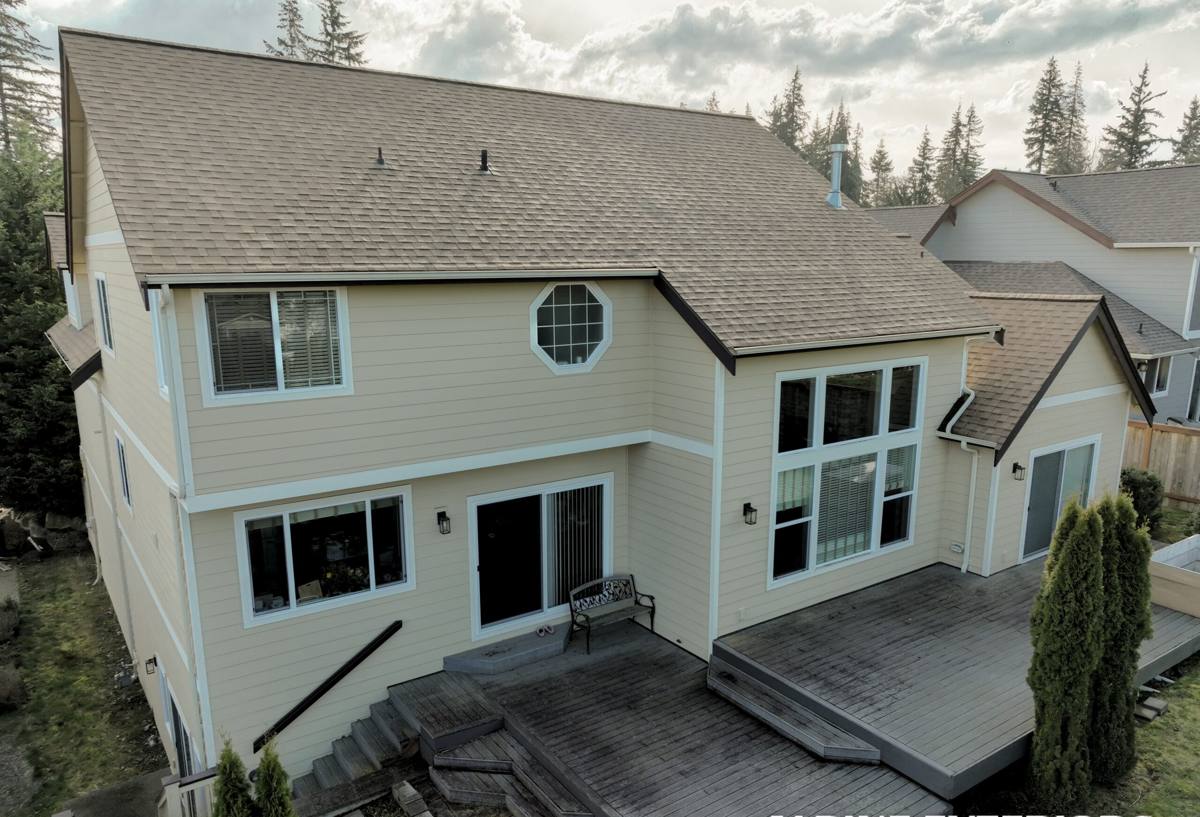
How Barkley's Climate Actually Attacks a Window
Salt Air and Corrosion
Coastal proximity means airborne salt settles on exterior surfaces continuously, not just during storms. Over time it accelerates corrosion on unprotected fasteners, hardware, and lower-grade metal components. It also breaks down certain finishes faster than manufacturers' standard warranty testing assumes, because that testing is rarely done in a marine-influenced environment like ours.
Driving Rain, Not Just Rainfall Totals
Bellingham's rain often arrives sideways. Wind-driven rain gets pushed up under trim, into reveals, and against the vertical seams around a window unit in a way that straight-down rain never tests. A window and flashing detail that "sheds water" in a lab test still needs to resist water being forced upward and sideways by wind pressure — that's a completely different demand.
Moss, Shade, and Prolonged Dampness
Mature tree cover and a long wet season keep moss and algae established on north- and west-facing walls for much of the year. Moss holds moisture against whatever it's growing on. On a window, that usually means sills, the tops of trim boards, and any horizontal ledge where organic debris can collect and stay wet instead of drying out between rain events.
Where This Shows Up on Barkley Homes
We see the same handful of failure patterns repeatedly on service and replacement calls in this area:
- Soft or discolored wood trim at the sill and lower corners, often before the glass or sash itself shows any problem
- Fogging or a visible haze between panes on older insulated glass units — a sign the seal has failed and moisture has gotten between the layers
- Sticking or misaligned sashes on wood and older vinyl windows as moisture cycles cause swelling and shrinking
- Moss or dark staining building up on horizontal trim and sills that don't get direct sun or airflow
- Drafts or cold spots around the frame that weren't there when the window was newer, usually from a failing sealant joint rather than the window unit itself
- Corroded balances, hinges, or locking hardware on windows facing prevailing wind and weather
Any one of these can look minor in isolation. Together, they're usually a sign that the original installation detail — not just the window product — wasn't built for this climate to begin with.
What a Correct Installation Actually Involves
The window unit itself gets most of the attention in sales conversations, but the installation detail is what determines whether that window performs for fifteen years or leaks within three. In a climate like Bellingham's, we treat these three areas as non-negotiable on every job.
Flashing and Water Management
Proper flashing directs water that reaches the wall assembly back out, rather than trusting sealant alone to keep it out. That means flashing tape or membrane integrated with the house wrap or weather-resistive barrier in the correct shingle-lap order — sill pan first, then jambs, then head flashing lapped over the top — so water is always directed downward and outward at every layer, never trapped behind the window.
Sealant Joints Built for Movement
Wood, vinyl, fiberglass, and the surrounding siding all expand and contract at different rates as temperature and humidity swing through the year. A sealant joint that's too rigid, too thin, or applied to a dirty or damp surface will crack or separate well before its rated lifespan — and once that joint opens up, wind-driven rain has a direct path in. We size and tool joints for actual movement, not just a bead that looks good on installation day.
Fit, Shim, and Reveal
A window that's out of square or shimmed unevenly puts stress on the sash and hardware from day one, which shows up later as sticking, air leaks, or premature seal failure. Getting the reveal and margins consistent on all four sides isn't cosmetic — it's what lets the window operate and seal the way it was engineered to.
Choosing a Frame Material for This Climate
There's no single "best" window frame material — the right choice depends on the home's exposure, budget, and how much upkeep the homeowner wants to take on. Here's how the common options actually compare for a marine, wet-winter climate like ours:
| Frame Material | Moisture & Salt-Air Behavior | Maintenance | Typical Fit |
|---|---|---|---|
| Vinyl | Doesn't rot or corrode; UV can affect color over many years | Low — occasional cleaning | Budget-conscious replacements, most exposures |
| Fiberglass | Excellent — dimensionally stable through temperature and moisture swings | Low | Higher-exposure walls, larger openings, long-term value |
| Wood | Handsome but vulnerable to moisture and moss contact without diligent upkeep | High — regular painting/sealing | Homes prioritizing a traditional look, sheltered exposures |
| Wood-Clad | Exterior cladding protects the wood core; cladding seams need good detailing | Moderate | Traditional interior look with better exterior durability |
| Aluminum | Strong but conducts cold and is prone to condensation without a thermal break | Low | Less common in residential retrofits here |
For most Barkley homes, we steer homeowners toward vinyl or fiberglass on higher-exposure elevations — the sides that take the worst of the wind-driven rain and salt air — and reserve wood or wood-clad for sheltered walls or where matching an existing architectural look matters more than minimizing upkeep. We're honest about the trade-off: wood looks great, but in this climate it only stays looking great with a maintenance schedule the homeowner has to actually keep up with.
Glass Packages Worth Discussing
Beyond the frame, the glass package matters for both comfort and durability. Dual-pane, low-E coated glass is the practical baseline for our climate — it cuts heat loss through the coldest months and reduces solar gain on the west and south sides in the rare stretch of strong summer sun. Argon or krypton gas fill between panes adds a modest efficiency bump for a modest cost increase, and is worth it on a full-home replacement more than a single spot repair.
Our Process, Start to Finish
1. On-Site Assessment
We start by looking at the actual condition of each opening — not just the window itself, but the trim, sill, and the wall assembly behind it. This is where we find rot, prior water intrusion, or flashing that was never installed correctly the first time, and it changes the scope of the job if it's there.
2. Honest Scoping and Estimate
We walk through frame material, glass package, and any repair work the opening needs before a new window goes in, and put together a written estimate that separates the window cost from the installation and any incidental repair work. No pressure to upgrade beyond what the home actually needs.
3. Preparation and Removal
Old units come out carefully to protect interior finishes and existing siding, and we inspect the opening again once it's exposed — this is the point where hidden moisture damage, if any, becomes visible and gets addressed before anything new goes in.
4. Flashing, Installation, and Sealing
Sill pan, jamb flashing, and head flashing go in in the correct order, the new window is set square and shimmed evenly, and sealant joints are sized and tooled for the materials and exposure involved. This is the step that determines long-term performance more than any other.
5. Finish Work and Walkthrough
Interior and exterior trim get finished to match the home, the window is tested for smooth operation and a proper seal, and we walk the homeowner through operation, hardware, and any maintenance recommendations specific to their home's exposure.
What Drives the Cost of a Window Project
Every Barkley home is different, so we won't quote a number without seeing the openings — but these are the factors that actually move the price, in rough order of impact:
- Number and size of openings — larger and more numerous windows mean more material and labor, straightforwardly
- Hidden repair work — rot or water damage found once old windows come out adds scope that couldn't be priced sight-unseen
- Frame material — vinyl, fiberglass, wood, and wood-clad carry different material costs, as shown above
- Glass package — standard dual-pane low-E versus upgraded gas fills or specialty coatings
- Access and exposure — second-story or hard-to-reach openings take longer and require more setup
- Custom sizing or shapes — anything outside standard stock dimensions is made to order and priced accordingly
We'd rather walk a homeowner through these variables honestly than lead with a low number that doesn't survive contact with the actual condition of the home.
Why a Crew That Already Works This Area Matters
A contractor who works Bellingham and Whatcom County regularly already knows which elevations in a neighborhood like Barkley take the worst weather, what the typical construction has looked like across the area's building periods, and how the local permitting process works before the first call is even made. That familiarity shortens the assessment, avoids surprises mid-project, and means the flashing and sealant details being installed are chosen for this climate specifically — not a generic national installation standard written for a drier region. It also means we're not learning the area's weather patterns on the homeowner's dime.
Living With New Windows Through a Bellingham Winter
New windows reduce maintenance, but they don't eliminate it — especially in a climate that stays wet for months at a stretch. A short seasonal routine keeps a new installation performing the way it's supposed to:
- Clear moss, leaves, and debris off sills and horizontal trim before they trap moisture through the wet season
- Check that weep holes on vinyl and fiberglass frames stay clear so water can drain out as designed
- Rinse salt residue off frames and hardware periodically if the home has direct exposure to coastal air
- Inspect exterior sealant joints annually for cracking or separation, especially after the first full winter
- Operate hardware through its full range a few times a year so moving parts don't seize from disuse
Repair, Restore, or Replace?
Not every window in a Barkley home needs full replacement. Sometimes a failed sealant joint or worn weatherstripping is the actual problem, and repairing it solves the draft or leak without the cost of a new unit. We look at three things to make that call: whether the frame material itself is sound, whether the glass seal has failed, and whether the flashing behind the window was ever installed correctly. If the frame and flashing are solid and it's a hardware or sealant issue, repair usually makes sense. If the flashing was never right to begin with, or the frame material has reached the end of what it can take in this climate, replacement is the more honest recommendation — patching a bad flashing detail just delays the same failure.
If you're weighing a window project for a Barkley home — whether it's a full-house replacement or a targeted fix on a few problem openings — we're happy to take a look and give you a straightforward, no-pressure estimate. Use the form below to get started.