 Bellingham Siding
 Barkley's Roofs Work Harder Than Most
Barkley sits close enough to Bellingham Bay that salt-laden air is a constant factor, and it's also tucked among mature trees and shaded lots that hold onto moisture far longer than open ground. That combination — salt air, driving rain off the water, and shade that never quite dries out — is a tough environment for a roof to sit in year after year. Add Whatcom County's long, wet fall-through-spring stretch and you get a roof that's rarely given a real chance to dry out between storms.
None of that means Barkley roofs fail faster than they should. It means small problems don't stay small. A lifted shingle tab, a gap in flashing, or a clogged valley that would take years to matter in a dry climate can turn into a leak in one bad winter here. Roof repair in this neighborhood is less about patching and more about getting ahead of what the weather is going to do next.
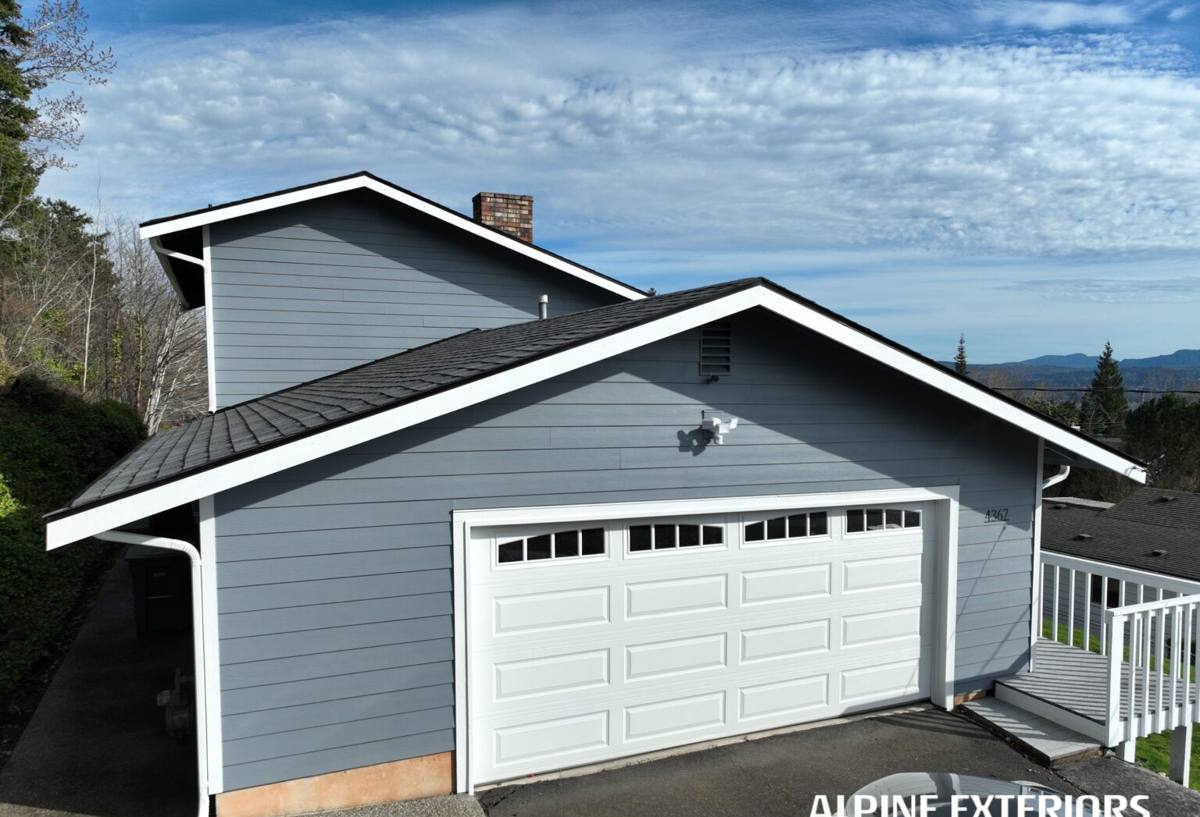
What Local Conditions Actually Do to a Roof
Salt Air
Airborne salt from the bay accelerates corrosion on exposed metal — flashing, fasteners, gutter hardware, and vent boots all age faster than they would inland. Once a fastener starts to corrode, it loses its grip and the seal around it goes with it. This is usually invisible from the ground until water is already getting in underneath.
Driving Rain
Storms coming off the water don't just fall straight down — wind-driven rain pushes water sideways and up under shingle edges, around chimneys, and into any flashing that's slightly loose. A roof that would shed a normal rain just fine can still leak in a driving rain if the flashing details aren't tight.
Moss Season
Shade, moisture, and mild temperatures make Whatcom County close to ideal moss-growing conditions for a large part of the year. Moss doesn't just look bad — its root structure lifts shingle edges, holds water against the roof deck, and gradually works granules and material loose. Left long enough, moss growth is one of the more common reasons a repairable roof turns into a replacement.
Signs a Barkley Roof Needs Repair, Not Replacement
Most roofs don't fail all at once — they show warning signs first. Catching these early is usually what keeps a job a repair instead of a full tear-off:
- Granules collecting in gutters or at downspout outlets
- Shingles that look curled, cupped, or lifted at the edges
- Visible moss or dark streaking, especially on north-facing or shaded slopes
- Soft or discolored spots on interior ceilings, especially near chimneys or skylights
- Flashing that looks separated, rusted, or caulked over rather than properly sealed
- Daylight visible through the attic roof deck
- Missing or damaged shingles after a windstorm
If you're seeing one or two of these and the roof is otherwise in reasonable shape, a targeted repair is very often the right call. If several of these are showing up together, or the roof is well into its expected lifespan, that's a conversation worth having honestly rather than assuming the worst — or assuming a patch will hold.
What an Honest Repair Actually Involves
A roof repair that's done right isn't just swapping out the shingle that's visibly damaged. The visible damage is usually the last symptom of a problem that started somewhere else — a flashing gap, a failed underlayment seam, or trapped moisture from moss. A proper repair means:
- Finding the actual entry point, not just the stain it caused. Water travels along the deck before it shows up inside, so the leak's visible location and its source are often several feet apart.
- Checking the underlayment beneath the damaged area, since a compromised surface layer often means the layer underneath took on moisture too.
- Correcting flashing at any nearby penetration — vents, chimneys, skylights, wall intersections — since flashing failure is one of the most common real causes behind a "shingle leak."
- Matching materials as closely as possible so the repair doesn't stand out or create a new weak seam where old and new meet.
- Clearing moss and debris from the surrounding area so the repair isn't undermined again within a season.
Skipping any of these steps is how a "repaired" roof ends up leaking again in the next storm — the shingle looks fixed, but the actual cause never got addressed.
Repair vs. Replacement: How We Help You Decide
| Factor | Leans Toward Repair | Leans Toward Replacement |
|---|---|---|
| Age of roof | Under 15-20 years, depending on material | At or past expected lifespan |
| Extent of damage | Localized to one area or slope | Spread across multiple sections |
| Underlayment/deck condition | Dry, sound wood beneath damage | Soft, delaminated, or repeatedly wet decking |
| Moss/algae history | Recent, surface-level growth | Long-term growth with visible shingle lift |
| Prior repairs | First or second repair in this area | Same spot repaired multiple times already |
We'll walk you through where your roof actually falls on this table before recommending anything — a repair should be the answer whenever it's genuinely the right one, not a stopgap that gets you back on the schedule in two years.
Our Process for a Barkley Roof Repair
1. Inspection
We look at the roof from the ground and, where it's safe and useful, from the surface itself — the damaged area, but also flashing, valleys, vents, and any shaded sections where moss tends to establish first.
2. Diagnosis and a Straight Answer
We tell you what we found, what's causing it, and what it will take to fix — including if the honest answer is that a repair won't hold and replacement is the better long-term value. We'd rather tell you that up front than sell a repair we don't believe in.
3. The Repair Itself
We match materials, correct flashing where it's part of the problem, and address the underlying cause — not just the visible symptom — so the fix is built to hold through the next wet season, not just until the next inspection.
4. Cleanup and Walkthrough
Debris, old material, and displaced moss get cleared from the roof and gutters before we call the job done. We'll show you what was done and what to watch going forward.
Living With Moss Season: A Homeowner's Maintenance Checklist
Repair work solves the immediate problem, but moss season in Whatcom County is a recurring condition, not a one-time event. A little regular attention keeps small issues from becoming repair calls:
- Keep gutters and downspouts clear so water isn't backing up under the roof edge
- Trim back overhanging branches to let more light and airflow reach shaded slopes
- Have moss removed properly rather than scraped, which can lift and damage shingles
- Walk the yard after major windstorms and look up for missing or lifted shingles
- Check attic spaces for staining or daylight a couple times a year, especially after a hard winter
- Address small leaks the season you notice them — deferred repairs cost more once decking is involved
Materials We Work With
Most Barkley roofs we repair are asphalt composition shingle, which is the dominant roofing material in this part of Bellingham and generally repairs well when the underlying deck is sound. We also work on cedar shake, metal, and low-slope membrane roofing where they're present. Our standard is matching repair materials as closely as possible to what's already on the roof and being upfront about any material where long-term moisture behavior or maintenance demands don't hold up well to this specific climate — that's a judgment we make based on how these materials actually perform in wet, salt-air conditions, not a knock on any manufacturer.
Why a Crew That Already Works Barkley Matters
A roofer who works this neighborhood regularly already knows what to expect before climbing up: which slopes hold moss longest, how the salt air near the bay tends to attack flashing and fasteners first, and how driving rain off the water finds the gaps that a calmer climate would never expose. That familiarity shortens the diagnosis and reduces the chance of missing a related problem nearby.
It also means someone who's still local and reachable if a repair needs a follow-up look after the next big storm — not a one-time visit from a crew that's moved on to another region entirely.
If you've noticed a stain on the ceiling, moss creeping across a slope, or shingles that don't look right after the last windstorm, we're happy to take a look and give you a straight answer — repair, monitor, or replace. Reach out through the form below for a free, no-pressure estimate.