 Bellingham Siding
 Why Barkley's Climate Is Harder on Siding Than It Looks
Barkley sits close enough to Bellingham Bay and the Salish Sea that homes here deal with a steady diet of salt-laden air, on top of everything else the Whatcom County marine climate throws at a house. That combination — salt air, wind-driven rain, and a moss season that can stretch nine or ten months out of the year — is harder on exterior siding than most homeowners realize until they're standing in front of a wall that's failing from the inside out.
Barkley is also a newer, more planned part of Bellingham than many of the city's older neighborhoods, which means a lot of the housing stock here was built during a specific stretch of decades, often with mature landscaping, shared green space, and shaded lots that hold moisture longer than an open, sun-exposed yard would. That's a good thing for curb appeal and a genuinely bad thing for siding that wasn't built, or installed, to handle sustained dampness.
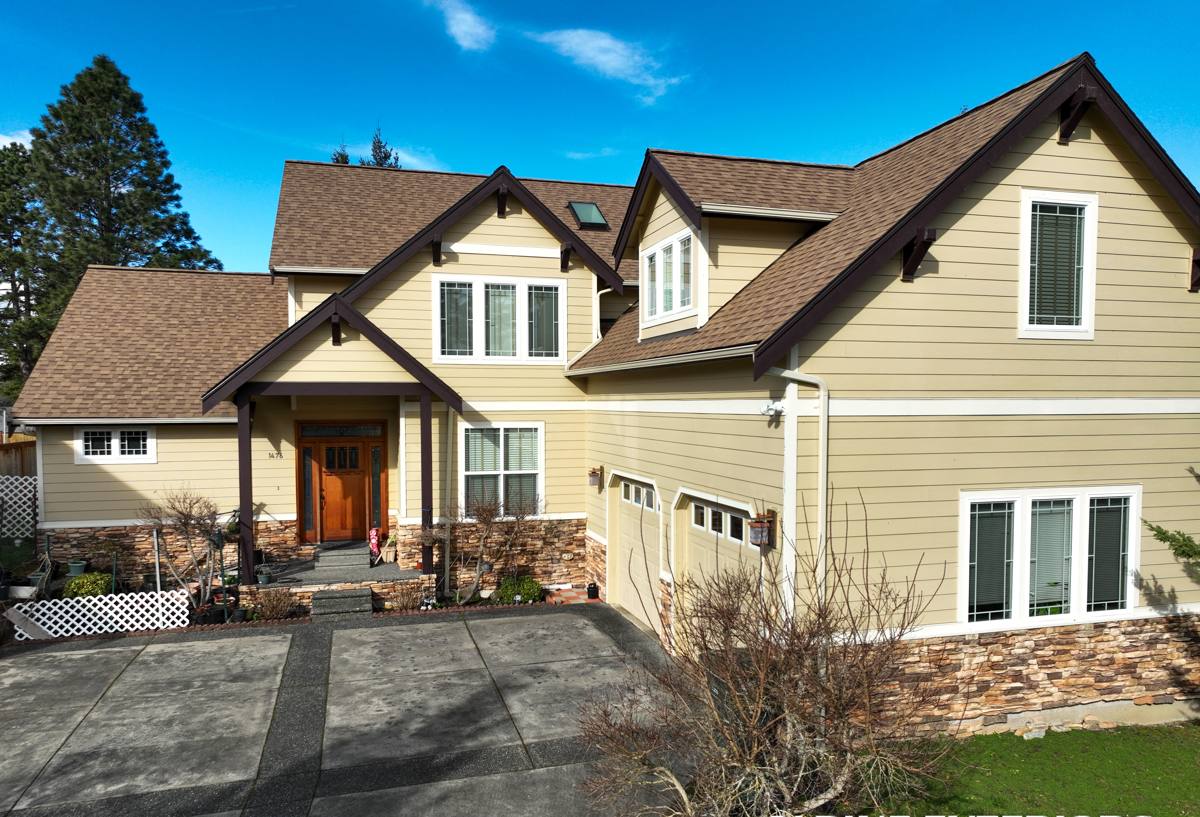
What Driving Rain and Moss Actually Do to a Wall
Rain in Bellingham doesn't just fall straight down. Storms coming off the water push rain sideways into exterior walls, and that wind-driven rain finds every gap, lap seam, and fastener hole that wasn't sealed or lapped correctly the first time. Once water gets behind the siding — even a small amount, even occasionally — it doesn't dry out quickly in our climate. It sits against the sheathing, the framing, and the back side of the siding itself.
Moss compounds the problem. It doesn't just look bad; it holds moisture directly against the siding surface for months at a time, which keeps that surface wetter, longer, than it would be if it could dry between rain events. On wood-based products, that constant dampness accelerates rot, delamination, and paint failure. On lower-grade siding materials in general, it accelerates whatever the material's weak point already is. Add Whatcom County's freeze-thaw cycles — not extreme, but frequent — and trapped moisture that expands and contracts through the colder months does slow, compounding damage that's often invisible until the siding is pulled off.
Signs a Barkley Home's Siding Needs Replacement, Not a Patch
Most homeowners don't call about siding until something visible goes wrong, but by the time it's visible, the underlying problem has usually been building for a while. Here's what we look for, and what you can check yourself before calling anyone:
- Soft or spongy spots when you press on the siding, especially near the bottom courses and around window and door trim
- Paint that's peeling, bubbling, or needing repainting far more often than it used to
- Visible gaps, warping, or buckling in the siding panels or lap boards
- Moss or algae that comes back within weeks of being cleaned off
- Dark streaking or staining that doesn't wash off, particularly under eaves and on north- and west-facing walls
- Rising energy bills with no other explanation, which can point to a compromised weather barrier letting air and moisture through
- Visible rot, staining, or musty smell on interior walls that back up to exterior siding
One or two of these can sometimes be a localized repair. Several at once, or any sign of rot at the sheathing, usually means the siding system as a whole has failed and a patch will just delay the real fix.
What a Correct Siding Replacement Actually Involves
Replacing siding is not just pulling off old boards and nailing up new ones. In a climate like Bellingham's, most of what determines whether a job lasts 30 years or fails in 8 happens in the layers you never see again once the new siding goes up.
Tear-Off and Sheathing Inspection
Full removal of the old siding lets us actually see the sheathing underneath, which is the only way to know whether there's hidden rot, soft spots, or prior water damage that needs to be cut out and replaced before anything new goes on. Installing new siding over compromised sheathing just hides the problem for a while longer.
Weather-Resistive Barrier and Flashing
A correctly lapped weather-resistive barrier, paired with proper flashing at every window, door, and roofline intersection, is what actually keeps wind-driven rain out of the wall assembly. This is where a lot of siding jobs quietly go wrong — the flashing details around penetrations are the single most common source of hidden leaks, and they're invisible once the siding is on.
Drainage Gap (Rainscreen)
Given how much moisture Barkley homes deal with, a drainage gap between the siding and the weather barrier gives any water that does get past the siding a path to drain and evaporate, instead of sitting trapped against the wall. This detail matters more here than it would in a drier climate.
Fastening and Finish
Fastener spacing, type, and placement need to match manufacturer specifications for our climate zone. Get this wrong and you get panels that crack, pull loose, or fail to shed water the way they're designed to — even if the product itself is excellent.
Recover vs. Full Replacement: What Actually Fits Your Home
Some homeowners ask whether they can just install new siding over the old layer instead of tearing it off. Occasionally that's reasonable; more often in this climate it isn't, because it buries whatever moisture problems already exist. Here's how the two approaches compare:
| Factor | Recover (Over Existing) | Full Tear-Off Replacement |
|---|---|---|
| Sheathing inspection | Not possible | Full visibility, repairs done before new siding goes on |
| Hidden moisture/rot | Stays hidden and can keep spreading | Found and addressed |
| Drainage gap installation | Difficult to add correctly | Installed properly from the start |
| Upfront cost | Lower | Higher |
| Long-term reliability in our climate | Uncertain, especially on older homes | Predictable, when installed to spec |
For most Barkley homes, especially anything with visible siding issues or an original siding layer more than a couple decades old, we recommend full tear-off. It costs more upfront but it's the only way to actually know what's happening behind the wall.
Why We Install Only James Hardie Fiber Cement
We standardized on James Hardie fiber cement siding and don't install vinyl, LP SmartSide, or other hardboard and composite products. That's a deliberate call, not a default. Fiber cement is non-combustible, doesn't feed moisture into itself the way wood-based products can, and holds its shape and finish through decades of wet-dry cycling far better than materials that are more sensitive to sustained moisture exposure.
James Hardie's HZ5 product line is engineered specifically for climates like ours, with freeze-thaw cycling and high moisture exposure. The factory-applied ColorPlus finish is baked on under controlled conditions rather than field-painted, which means better color retention and adhesion against the UV and salt-air exposure Barkley homes deal with, and it comes with a transferable warranty backing both the product and the finish. When we tell a homeowner what to expect from their new siding, we're telling them what the manufacturer has engineered and warrantied it to do — not guessing.
Our Process From Estimate to Finished Job
We start with an on-site inspection, not a generic quote. That means checking the current siding, looking for soft spots and existing moisture damage, and being honest about whether your home needs a repair, a partial replacement, or a full tear-off. From there:
- Detailed assessment of siding condition and any sheathing or moisture concerns
- A clear, written estimate with product and labor scope explained in plain language
- Full tear-off where warranted, with sheathing repair done before anything new goes up
- Correct installation of weather-resistive barrier, flashing, drainage gap, and James Hardie siding to manufacturer spec
- Final walkthrough and warranty registration
No pressure, no upsell theater — just an honest read on what your specific home needs.
Why a Crew That Already Works in Barkley Matters
Barkley is a more planned, cohesive neighborhood than a lot of Bellingham, and many homes here fall under some form of community design standard or association review for exterior changes. A crew that already works in the area knows to check for that upfront, rather than getting a project halfway done before running into a design approval question. Local experience also means we've seen how homes in this specific pocket of Whatcom County actually age — which walls take the worst of the wind-driven rain, where moss builds up fastest under mature tree cover, and which original siding installations from this area's main construction era are now reaching the point where problems are showing up. That's not something a crew driving in from outside the county picks up on a first visit.
If you're seeing early signs of siding trouble on a Barkley home, or you're just planning ahead before a small problem becomes a big one, we're happy to take a look. Request a free, no-pressure estimate using the form below and we'll give you a straight answer about what your home actually needs.