 Bellingham Siding
 Siding Installation in Birchwood: What This Neighborhood Actually Needs
Birchwood homes sit close enough to the water and the tree canopy that the siding on them works harder than siding does in a lot of inland Whatcom County neighborhoods. You've got salt-laden air moving in off Bellingham Bay, long stretches of driving rain that hit certain wall faces harder than others, and a moss and mildew season that can run eight or nine months out of the year under mature trees and shaded north walls. None of that is exotic — it's just what siding here has to survive, year after year, without babying. A correct installation in Birchwood isn't about a fancier product. It's about material choice, water management details, and workmanship that account for those three things specifically, instead of a generic install that would be fine in a drier climate.
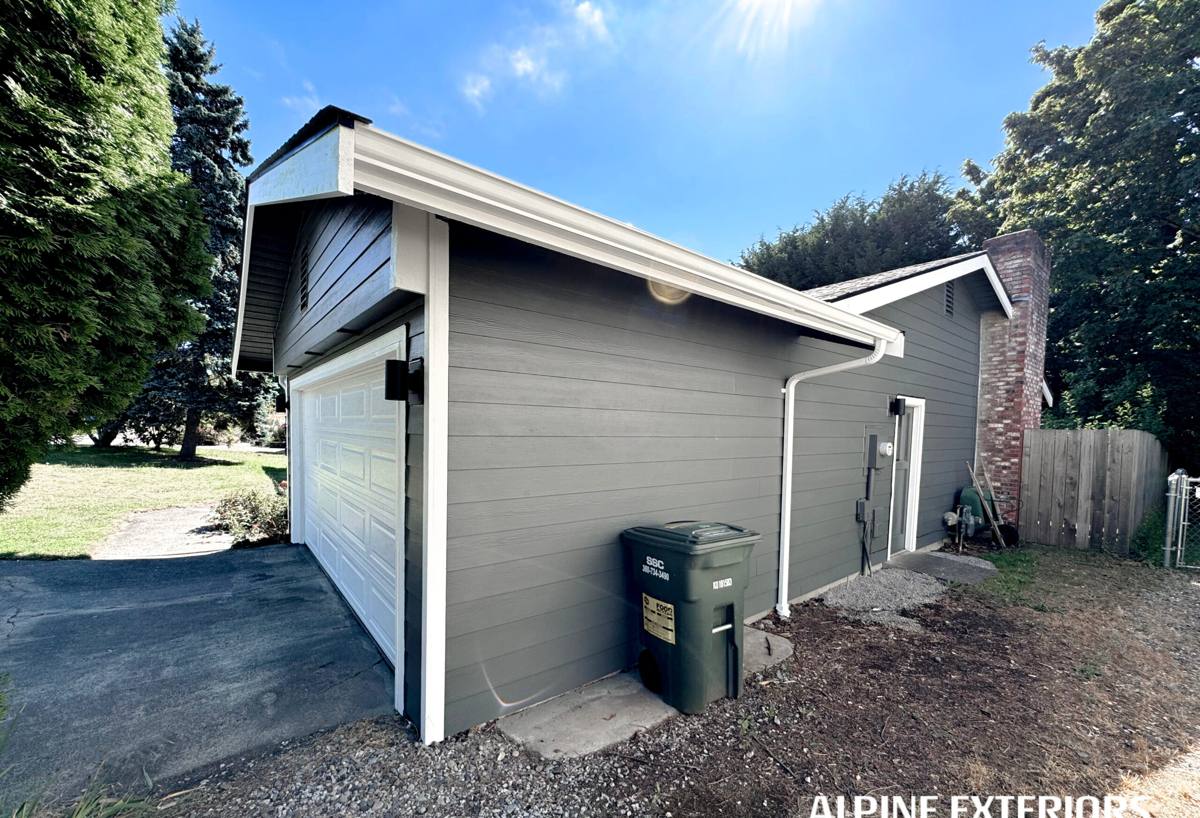
Why We Only Install James Hardie Fiber Cement Here
We don't install vinyl, LP SmartSide, primed spruce, cedar, or the other fiber cement brands like Cemplank or Allura. That's a deliberate standard, not a sales pitch, and it matters more in a neighborhood like Birchwood than it does in a lot of places.
Salt Air and Material Stability
Vinyl expands and contracts with temperature swings and can become brittle over time, especially where salt air accelerates surface breakdown of lower-grade formulations. Wood products — cedar, primed spruce — are organic material in a climate that keeps them damp for most of the year; even with good maintenance, moisture cycling near the coast shortens their service life. James Hardie fiber cement is non-combustible and dimensionally stable across our temperature range, and it doesn't feed mold or rot the way wood-based siding can.
Factory Finish vs. Field Paint
Hardie's ColorPlus finish is baked on at the factory under controlled conditions, which gives it better fade and moisture resistance than a field-applied paint job on primed wood or engineered wood siding. In a neighborhood dealing with near-constant humidity and UV exposure through the summer, a factory finish holds its line and color far longer than something painted on site and touched up every few years.
The HZ5 Product Line
James Hardie engineers specific product lines for different climate zones. The HZ5 line is built for regions with the moisture and freeze-thaw exposure we get in the Pacific Northwest, which is a meaningful difference from a one-size-fits-all siding product sold nationally without climate-specific engineering.
What Correct Installation Involves
The siding material is maybe a third of what determines whether a wall performs well for the next 30 years. The rest is the water management system behind it and the details at every transition — and this is where a lot of installations fail, regardless of what siding is on the outside.
Weather-Resistive Barrier and Drainage Plane
Every wall gets a code-compliant weather-resistive barrier, lapped and taped correctly so water sheds down and out rather than working its way behind the siding. Given how much rain Birchwood walls see in a typical winter, this layer is doing more long-term work than the siding itself.
Rainscreen Furring
We install with a rainscreen gap wherever the wall assembly calls for it — a small air space behind the siding that lets any moisture that does get past the cladding drain and dry out instead of sitting against the substrate. This is one of the biggest differences between an installation that lasts decades and one that starts showing problems in five to ten years, and it's especially important on shaded, moss-prone wall faces.
Flashing at Every Penetration
Windows, doors, hose bibs, light fixtures, deck ledgers — anywhere something penetrates the wall plane is a place water can get in if it's not flashed correctly. This is detail work, not material spec, and it's the single most common source of siding failures we see on homes that weren't done right the first time.
Fastening and Clearances
Hardie has specific fastener patterns, nailing schedules, and ground/roof clearance requirements. Skipping these doesn't void the installation warranty in a way you'd notice right away — it shows up years later as cupping, cracking at fastener points, or moisture intrusion at the bottom courses.
Moss, Mildew, and North-Facing Walls
Birchwood's tree cover is part of what makes it a nice place to live, and it's also why certain wall faces — especially north-facing walls and anything shaded most of the day — stay damp longer than walls in full sun. Over time that supports moss and mildew growth on the siding surface.
Fiber cement doesn't feed organic growth the way wood does, but moss and algae can still grow on the surface of any siding material if it stays damp long enough. The real defense is airflow — the rainscreen gap mentioned above — plus keeping vegetation trimmed back from walls so sun and air can reach the siding. We also point out during estimates which wall faces on a given home are likely to need more attention over time, so it's not a surprise later.
Our Process for a Birchwood Installation
- On-site assessment. We look at existing siding condition, wall orientation, drainage patterns around the foundation, and any trouble spots — old flashing failures, rot at trim, moss buildup — before we talk product or price.
- Tear-off and substrate check. Old siding comes off and we inspect the sheathing underneath. Any soft or water-damaged sheathing gets repaired before anything new goes up; installing over compromised substrate just locks a problem behind new siding.
- Weather barrier and rainscreen installation. This is the layer that does the most long-term work, and it's not visible once the job is done — which is exactly why it needs to be right.
- Flashing at all penetrations and transitions. Windows, doors, roof-to-wall intersections, and any wall-mounted fixtures get properly flashed before siding closes them in.
- Hardie installation to manufacturer spec. Correct fastening pattern, clearances, and joint treatment, using the HZ5 product engineered for our climate zone.
- Final walkthrough. We go over the finished work with the homeowner, including any wall-specific maintenance notes — like which faces will need periodic cleaning given shade and moss exposure.
Cost Factors for Siding Installation in Birchwood
Every home is different, but the main variables that move the price on a Birchwood project are consistent. We give firm numbers only after seeing the house, but this is what typically drives the estimate:
| Factor | Why It Matters |
|---|---|
| Existing siding removal | Tear-off complexity varies with layers, trim, and how the old material was fastened |
| Substrate condition | Water-damaged sheathing found during tear-off requires repair before new siding goes on |
| Home size and wall complexity | Dormers, bump-outs, and multiple stories add cutting, flashing, and labor time |
| Siding profile and trim selection | Lap width, trim style, and accessory boards affect material cost |
| Rainscreen and drainage detailing | Proper drainage plane work adds labor but is what protects the investment long-term |
| Access and site conditions | Trees, slopes, and tight lot lines around a home can affect staging and labor time |
Why Hire a Crew That Already Works in Birchwood
Siding installation isn't uniform across Whatcom County. A crew that mostly works drier, more open lots inland doesn't necessarily think about rainscreen detailing or moss-prone shaded walls the same way a crew that regularly works closer to the water does. Knowing which wall orientations in a given neighborhood take the worst weather, how much tree cover typically affects drying time, and what the salt air does to different materials over years isn't something you get from a spec sheet — it's something you get from doing the work in that specific area repeatedly.
It also matters for permitting and inspection familiarity, and for knowing what condition to expect when tear-off starts on homes of a certain age and construction type common to the neighborhood.
Signs Your Birchwood Home May Need New Siding
- Visible cracking, warping, or soft spots, especially near the bottom courses or around windows
- Persistent moss or dark staining that comes back quickly after cleaning
- Paint that's failing faster than it should, or siding that needs repainting more often than every several years
- Soft or spongy sheathing felt through the siding near trim, corners, or penetrations
- Visible gaps or separation at seams, corners, or where siding meets trim and flashing
- Rising energy bills that may point to a compromised wall assembly, not just old windows
If any of that sounds like your home, or you're just planning ahead for a siding replacement, we're happy to come take a look. A free estimate gets you a straight assessment of what your home's siding and wall assembly actually need — no pressure, no generic quote pulled out of thin air.