 Bellingham Siding
 Asphalt Shingle Roofing Built for Columbia's Weather, Not Just Any Roof
Columbia is one of Bellingham's older, tree-lined neighborhoods, sitting close enough to Bellingham Bay that homes here deal with a specific combination of stresses: salt-tinged air moving in off the water, driving rain that comes in sideways during winter storms, and a long moss season fed by mature tree canopy and shade. An asphalt shingle roof that would hold up fine in a dry inland climate can wear out early here if it wasn't installed with these conditions in mind. This page covers what a shingle roof actually needs to survive and look good in Columbia, what a correct installation involves, and how our process works when you hire us.
We're not going to pretend every roof problem in this neighborhood is unique — asphalt shingles behave the same everywhere in terms of the physics involved. What's different here is how fast certain problems show up and which details matter most when we're specifying materials and installing them.
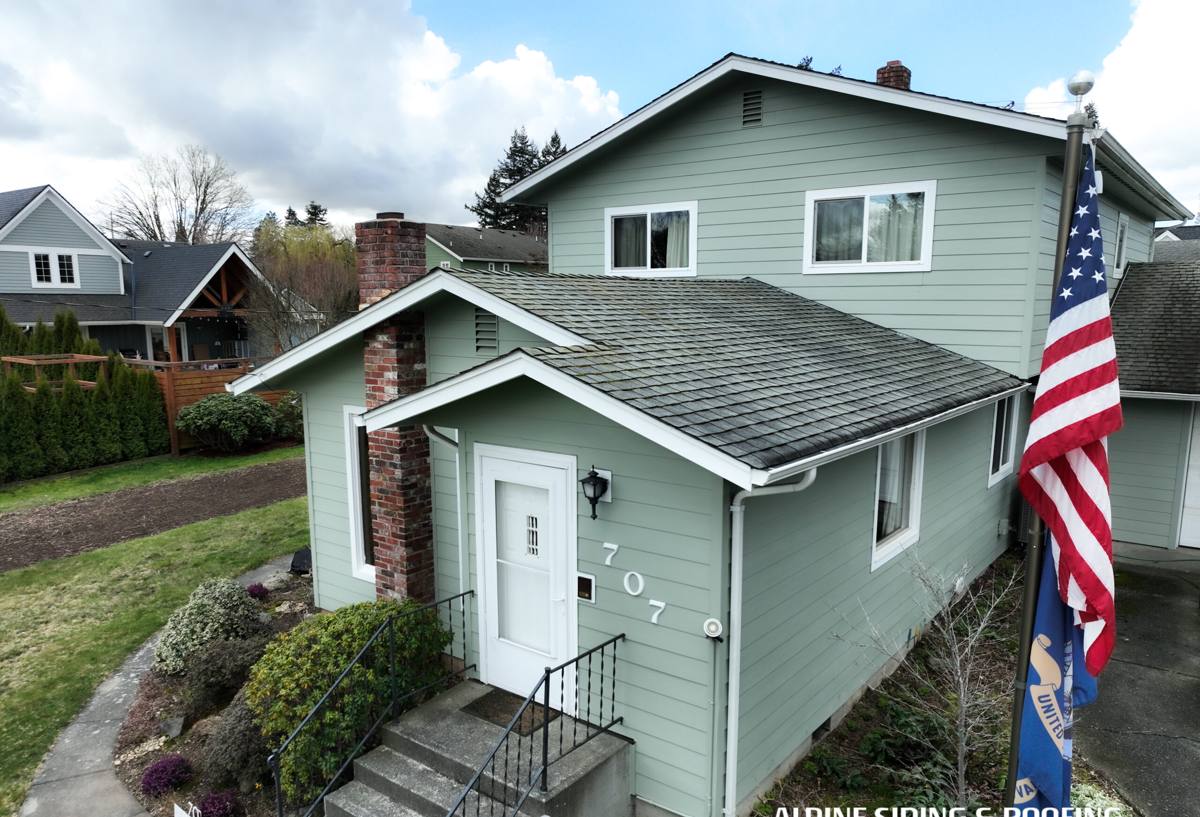
What Salt Air, Driving Rain, and Moss Season Actually Do to a Roof
Moisture Intrusion From Wind-Driven Rain
Whatcom County gets a lot of its winter precipitation as sustained, wind-pushed rain rather than short heavy downpours. That matters for roofing because wind-driven rain can work its way sideways and upward under shingles at vulnerable points — valleys, eaves, and anywhere two roof planes meet — instead of just running straight down and off. A roof that only accounts for gravity drainage will eventually leak at these transition points, usually years before the shingles themselves are actually worn out.
Corrosion on Metal Components
Proximity to Bellingham Bay means a low but constant level of salt in the air, especially on days with onshore wind. Over years, that salt exposure accelerates corrosion on unprotected metal roofing components — nails, flashing, and vents — faster than it would in a drier, inland part of Whatcom County. Using the wrong grade of fastener or flashing here shows up as rust streaks and eventual failure well before the shingles themselves need replacing.
Moss, Algae, and Shaded Roof Sections
Columbia's mature trees are part of what makes the neighborhood attractive, but tree cover also means shaded, slow-to-dry roof sections for much of the year. Combined with the Pacific Northwest's mild, damp winters, that shade is exactly what moss and algae need to establish themselves. Moss doesn't just look bad — it holds moisture against the shingle surface, lifts shingle edges as it grows, and can work its way under tabs and flashing over a couple of seasons if it's left unaddressed.
Choosing the Right Asphalt Shingle for This Climate
Not every asphalt shingle product is built the same way, and in a neighborhood like Columbia, that difference matters more than it would somewhere drier and less shaded. We generally steer homeowners toward laminated (architectural) shingles with algae-resistant granules over basic three-tab products, for reasons that come down to durability and long-term maintenance, not appearance alone.
| Shingle Type | Typical Lifespan | How It Handles This Climate | Relative Cost |
|---|---|---|---|
| 3-Tab Shingle | 15–20 years | Thinner profile, less wind resistance, more prone to early algae staining without AR granules | Lowest |
| Architectural (Laminate) Shingle | 25–30 years | Heavier, better wind and impact resistance, holds up better against driving rain at edges and valleys | Moderate |
| Algae-Resistant (AR) Laminate Shingle | 25–30 years | Copper- or zinc-infused granules resist moss and algae growth on shaded, damp roof sections | Moderate to Higher |
| Impact-Rated Shingle | 25–30+ years | Added durability against debris and hail; not usually necessary for this specific climate but sometimes chosen for insurance discounts | Higher |
For most Columbia homes, we recommend at least a standard architectural shingle, and an algae-resistant version specifically for roof faces that stay shaded most of the day. Paying a little more up front for AR granules is almost always cheaper than dealing with moss removal and staining every few years.
Color and Granule Considerations
Darker shingle colors can mask early moss growth longer, but they also mean less obvious warning signs until the growth is established. Lighter and mid-tone colors show early moss and algae sooner, which some homeowners actually prefer because it gives them an earlier heads-up to schedule a cleaning before it becomes a bigger problem.
What a Correct Installation Actually Involves
Underlayment and Ice-and-Water Shield
A synthetic underlayment across the full roof deck is the baseline for this climate — it holds up better to prolonged moisture exposure than older felt products. At eaves, valleys, and around penetrations like chimneys and skylights, we install a self-adhering ice-and-water membrane underneath the shingles. This isn't primarily about ice damming, which is less of a concern at Bellingham's elevation — it's about giving the roof a second line of defense against wind-driven rain finding its way past the shingle surface at the most vulnerable spots.
Flashing Details
Flashing at chimneys, sidewalls, and valleys is where most shingle roof leaks actually originate, not in the open field of the roof. We use corrosion-resistant flashing material appropriate for a coastal-influenced climate, properly stepped and layered with the underlayment and shingles rather than just caulked on top. Caulk alone is a maintenance item, not a permanent fix, and it's usually a sign of a shortcut taken on a previous roof.
Ventilation
Balanced intake and exhaust ventilation — typically soffit vents paired with a ridge vent — keeps the attic space closer to outdoor temperature and humidity. Without it, trapped moisture in the attic can condense against the underside of the roof deck, which shortens the life of both the decking and the shingles from below, regardless of how good the shingles themselves are.
Nailing Pattern and Wind Exposure
Bellingham gets its share of exposed, windy sites, particularly on lots with less tree shelter or facing open water. We follow manufacturer-specified nailing patterns for the wind zone rather than a generic pattern, since under-nailing is one of the most common reasons shingles lift or blow off in a storm well before the end of their expected lifespan.
Moss and Debris Management Specific to Columbia's Tree Cover
Because so many lots in Columbia have established trees, ongoing moss and debris management is part of owning a shingle roof here — it's not a one-time fix. A few things make a real difference over the life of the roof:
- Keeping gutters and valleys clear of needles and leaf debris, which hold moisture against the shingle edge
- Trimming back overhanging branches where practical to reduce shade and let the roof dry faster after rain
- Scheduling moss treatment before it establishes a thick mat, not after
- Avoiding pressure washing, which strips protective granules and shortens shingle life even if it removes moss faster
- Using a soft-wash or manufacturer-approved moss treatment method instead
- Watching for granules collecting in gutters, which usually signals a shingle surface that's aging or was damaged during a cleaning attempt
We treat moss management as part of a shingle roof's maintenance plan for this neighborhood, not an emergency call that only happens once things look bad.
Repair or Replace? The Factors That Actually Decide It
Homeowners in Columbia often ask whether a leak or a patch of moss damage means a full replacement or just a repair. It genuinely depends on several factors, and an honest contractor should walk through these with you rather than defaulting to the most expensive option.
| Factor | Leans Toward Repair | Leans Toward Replacement |
|---|---|---|
| Roof age | Under 12–15 years | Approaching or past 20–25 years |
| Area affected | Isolated section or single penetration | Widespread staining, curling, or granule loss |
| Decking condition | Solid, dry decking underneath | Soft spots or visible rot found on inspection |
| Shingle availability | Matching shingles still available | Discontinued product, visible mismatch on repair |
| Existing layers | Single layer, code allows a repair | Multiple existing layers already present |
In many cases we find one section of a roof — often the shaded side with the worst moss history — failing well ahead of the rest. When that's true and the decking is sound, a targeted repair or partial re-roof can be the honest recommendation rather than pushing for a full replacement.
Our Process From Estimate to Cleanup
- Inspection. We get on the roof (or use a camera where access is limited) to check shingle condition, flashing, decking, ventilation, and moss or algae extent.
- Honest assessment. We explain what we found in plain terms, including whether repair is a reasonable option, and give you a written scope before any work starts.
- Material selection. We walk through shingle class and color options suited to your roof's sun and shade exposure, not just what's cheapest or what we have on hand.
- Tear-off and deck inspection. On a full replacement, we remove old shingles down to the deck and repair or replace any damaged sheathing before anything new goes down.
- Underlayment, flashing, and shingle installation. Done in the order and to the spec described above — ice-and-water shield at vulnerable areas, correct flashing, proper nailing pattern.
- Ventilation check. We confirm intake and exhaust venting is balanced before closing up the job.
- Cleanup. Magnetic sweep for stray nails, debris removal, and protection of landscaping and gutters during the work.
Why a Crew That Already Works Columbia Matters
A roofing crew that regularly works this neighborhood already understands the practical realities that don't show up in a generic estimate: which streets sit in near-constant shade from mature trees, how exposed a given lot is to wind off the bay, and what Whatcom County's permitting and inspection process actually requires for a full re-roof versus a repair. That familiarity shows up in fewer surprises during the job and a more accurate estimate up front, because we're not guessing at conditions we've never dealt with before.
It also matters after the job is done. A local crew is realistic to reach for a warranty question or a follow-up on a valley that's collecting debris faster than expected, rather than a company that did one job in the area and isn't set up to come back easily.
A Realistic Maintenance Schedule for This Climate
An asphalt shingle roof in Columbia does better with a light annual maintenance rhythm than with a "wait until it leaks" approach:
- Late summer or early fall: gutter and valley cleaning before the wet season starts
- Fall: visual inspection for lifted shingles, damaged flashing, or early moss growth
- Winter: address any active leaks quickly — driving rain finds small gaps fast
- Spring: moss treatment application if growth was visible over the winter
None of this is expensive or time-consuming compared to the cost of a premature full replacement caused by neglected flashing or an established moss mat.
If you're dealing with a leak, visible moss, or simply want an honest read on how much life is left in your Columbia home's roof, we're glad to take a look. Request a free, no-pressure estimate using the form below and we'll walk the roof with you before recommending anything.