 Bellingham Siding
 Why Cordata's Climate Is Harder on Siding Than It Looks
Cordata sits in north Bellingham, close enough to Puget Sound and Bellingham Bay to catch salt-laden air on a regular basis, and squarely inside the wet belt that defines Whatcom County winters. That combination is deceptively tough on exterior materials. Salt air accelerates corrosion on fasteners and metal trim. Driving rain, pushed sideways by wind off the water, finds every gap in a siding system that wasn't detailed correctly. And the long stretch of gray, damp months from fall through spring means siding here spends far more of the year wet than it does dry.
None of that is dramatic on its own. It's the cumulative effect that causes problems: a house that stays damp longer between storms grows moss and algae faster, holds moisture against fasteners and trim longer, and gives any weak point in the installation more time to fail. Siding that works fine in a dry climate can struggle here if it wasn't chosen and installed with this specific environment in mind.
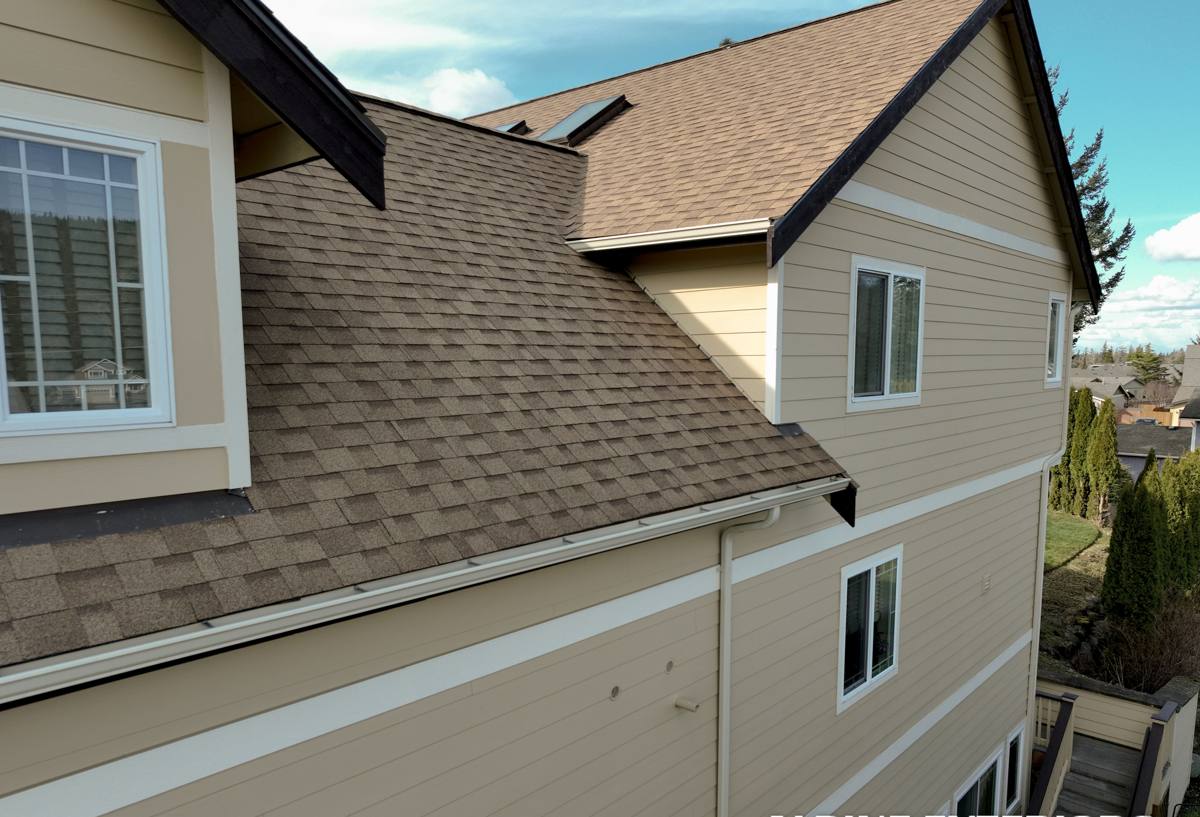
What Cordata Homes Actually Need From Their Siding
Moisture Management, Not Just Water Resistance
The real question isn't whether a siding product can shed rain — almost all of them can, for a while. The question is what happens to the water that inevitably gets behind it, through a nail hole, a hairline gap at a trim joint, or wind-driven rain forced upward under a lap. A correctly built wall assembly gives that moisture a way out. A poorly built one traps it against the sheathing, and that's where rot and mold start, often long before it's visible from the outside.
Material That Doesn't Feed the Problem
Some siding materials are themselves vulnerable to moisture — they swell, delaminate, or break down when they stay wet. Others hold up structurally but need frequent recoating or caulking to keep water out as the material moves with temperature and humidity swings. In a climate where "dry season" is a relative term, the material itself matters as much as the installation.
Why We Install Fiber Cement — and Only James Hardie
Fiber cement is cement, sand, and cellulose fiber, engineered to be dimensionally stable and resistant to moisture damage in a way that wood-based and foam-core products aren't. It doesn't rot, it doesn't feed insects, and it's non-combustible. For a house that spends half the year wet, that stability is the whole point.
We install James Hardie products exclusively — not LP SmartSide, not vinyl, not cedar, not other fiber cement brands. James Hardie's HardieZone system includes an HZ5 product line specifically engineered for wetter, more variable climates like the Pacific Northwest, with a factory-applied ColorPlus finish that's baked on under controlled conditions rather than field-painted on site. That matters in a climate where field-applied finishes have fewer good drying days to cure properly. We standardized on one manufacturer because it lets us install the same system correctly, house after house, rather than learning the quirks of several different products across a crew.
What a Correct Fiber Cement Installation Involves
The Water Management Layer Comes First
Before a single piece of siding goes up, the wall needs a properly lapped weather-resistant barrier and, ideally, a drainage gap behind the siding so any water that gets past the cladding has somewhere to go besides the sheathing. Skipping or rushing this step is the single biggest reason siding jobs fail years later, regardless of what material sits on the outside.
Flashing at Every Penetration
Windows, doors, hose bibs, light fixtures, deck ledgers — every place something interrupts the siding is a place water wants to get in. Correct flashing detail at each of these, installed in the right order relative to the weather barrier, is what actually keeps a house dry in driving rain, not the siding material by itself.
Fastening and Clearances
James Hardie specifies fastener type, spacing, and placement for a reason — get it wrong and you risk cracking, popped nails, or reduced wind resistance. Ground clearance and clearance from roof lines, decks, and walkways matter too; siding installed too close to grade or to a roof surface stays wet longer and is more exposed to splash-back and debris.
Joints, Caulking, and Paint Touch-Up
Butt joints between boards need to be treated correctly — caulked or backed with flashing, per the manufacturer's detail — and any field-cut edges need to be sealed and touched up with matching paint so raw cement isn't left exposed to the weather.
Our Process for a Cordata Siding Project
- On-site assessment — we look at the existing wall assembly, sheathing condition, trim, and any current moisture or moss issues before quoting anything.
- Product and profile selection — lap width, texture, and ColorPlus color chosen to fit the home and the neighborhood.
- Tear-off and prep — removal of old siding where needed, sheathing repair if we find damage, and installation of the weather-resistant barrier and drainage layer.
- Flashing and trim — windows, doors, and penetrations detailed before siding installation begins.
- Siding installation — installed to James Hardie's fastening and clearance specifications, not shortcuts that happen to look fine on day one.
- Final detailing and cleanup — caulking, touch-up paint on cut edges, and a walk-through with the homeowner.
Living With Moss and Algae in a Wet Climate
Moss and green algae staining on north-facing and shaded walls are common throughout Whatcom County, and they're mostly cosmetic on a correctly installed wall — a sign of the climate, not necessarily a sign of a failing siding system. That said, moss holding constant moisture against any siding, including fiber cement, isn't good for it long-term. A yearly soft wash and keeping nearby vegetation trimmed back so walls get some airflow and sun goes a long way. What actually threatens the wall isn't surface staining — it's moisture that's found its way behind the siding, which is why the water management layer described above matters more than the finish on the outside.
Homeowner Maintenance Checklist
- Rinse or soft-wash siding annually, especially on shaded or north-facing walls where moss builds up fastest
- Keep gutters clear so overflow isn't running down or pooling against the siding
- Trim back shrubs and trees so walls get airflow and some direct sun
- Check caulking at joints and trim every couple of years and have any cracked or missing sections redone
- Walk the exterior after major windstorms and check for any loose or displaced boards
- Touch up any exposed cut edges or scuffs with matching paint before they're exposed to a wet winter
What Drives Cost on a Cordata Project
Every fiber cement job is priced around the same handful of variables. None of them are fixed numbers we can quote sight unseen, but knowing what moves the price helps you evaluate any estimate you get.
| Factor | Why It Matters |
|---|---|
| Existing wall condition | Rotted sheathing or an inadequate weather barrier found during tear-off adds repair work before new siding can go on |
| Home size and wall complexity | More corners, dormers, and trim detail means more cutting, flashing, and labor time |
| Siding profile and finish | Lap width, texture, and ColorPlus color selection affect material cost |
| Access and site conditions | Tight lots, slopes, or landscaping close to the house add setup and staging time |
| Tear-off scope | Full removal of old siding down to the sheathing costs more than installing over a prepared surface, but is often the right call |
Why a Crew That Already Works in Cordata Matters
Whatcom County building requirements, typical wall construction in this area's housing stock, and the specific way wind-driven rain hits a north Bellingham lot aren't things you learn from a manual — they're things you learn from doing the work here repeatedly. A crew that already works in and around Cordata knows what to check for on an older home's sheathing, how the local moisture cycle behaves through the year, and what details actually hold up through a Whatcom County winter versus what merely passes inspection on installation day. That local pattern recognition is worth more than it sounds like on paper — it's the difference between a siding job that looks right for a season and one that's still performing in fifteen years.
If you're considering fiber cement siding for a home in Cordata, we're happy to take a look and put together a straightforward, no-pressure estimate. Fill out the form below and we'll go from there.