 Bellingham Siding
 Windows Built for Edgemoor's Waterfront Exposure
Edgemoor sits close to the water, and that proximity shapes what a window has to survive here. Salt-laden air moves off Bellingham Bay and settles on everything it touches, including window frames, hardware, and glazing seals. Add Whatcom County's long wet season, driving rain that comes in sideways during winter storms, and months of shade and moisture that feed moss and mildew growth, and you have a climate that is genuinely harder on windows than most of the country ever deals with. A window that performs fine in a dry inland climate can fail early here if it wasn't built or installed with this specific exposure in mind.
This isn't a generic window page. It's about what actually holds up on Edgemoor homes, what a correct installation looks like given the local weather, and why the details matter more here than they would somewhere with a milder, drier climate.
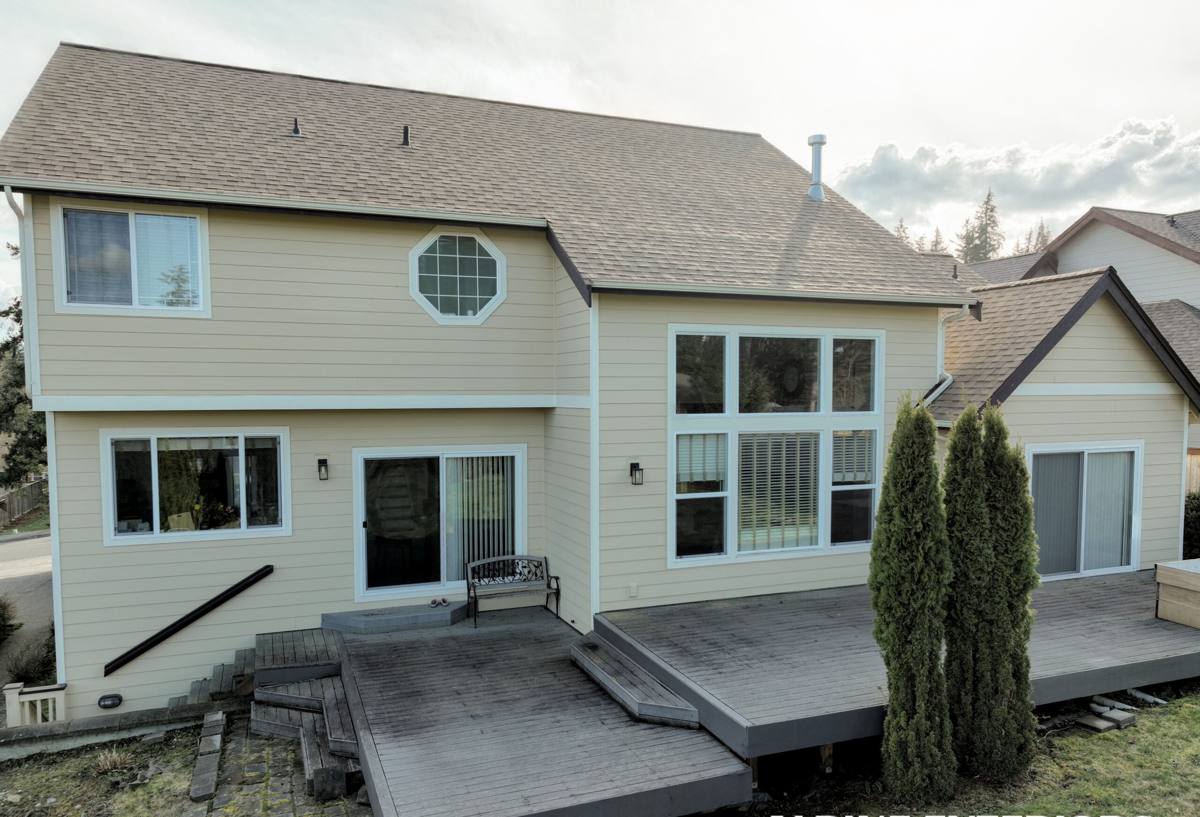
What "Energy-Efficient" Actually Means
The term gets used loosely, so it's worth being specific. An energy-efficient window is doing three jobs at once: keeping conditioned air inside, keeping outside air and moisture out, and managing how much heat passes through the glass. A few terms worth knowing before you compare quotes:
- U-factor — measures how well the window resists heat loss. Lower is better for our climate, where keeping heat in matters more than keeping it out.
- SHGC (Solar Heat Gain Coefficient) — measures how much solar heat passes through the glass. Less critical here than in sunnier climates, but still relevant on south- and west-facing exposures.
- Air infiltration rating — how much air leaks around the sash even when the window is closed and locked. This matters a lot in a location that gets regular wind-driven rain, since a leaky window doesn't just waste energy, it lets water find its way in too.
- Glass package — double-pane with low-E coating and argon gas fill is the practical standard for this region; triple-pane can make sense on north-facing walls or rooms with unusual heat loss, but it adds cost and weight that isn't always worth it.
For Edgemoor specifically, air infiltration and moisture management deserve as much attention as raw insulation numbers. A window with an excellent U-factor that leaks air around a poorly sealed frame will still cost you money on heating bills and, worse, can let water into the wall cavity.
Frame Materials: What Holds Up Near Salt Air
Frame material choice matters more on Edgemoor than it would a few miles inland. Salt air accelerates corrosion on metal hardware and components, and constant damp cycles punish materials that swell, rot, or hold moisture.
| Frame Material | Marine-Climate Performance | Maintenance Needs | Relative Cost |
|---|---|---|---|
| Vinyl | Handles salt air and moisture well; won't rot or corrode | Low — occasional cleaning | Low to mid |
| Fiberglass | Excellent — very stable in temperature swings and moisture, resists corrosion | Low | Mid to high |
| Wood-clad | Good if cladding and seals are intact; exposed wood trim needs protection from driving rain | Moderate to high — cladding seams and any exposed wood need monitoring | Mid to high |
| Aluminum | Prone to corrosion and condensation in salt air and cold; poor insulator unless thermally broken | Moderate — watch for pitting and corrosion | Low to mid |
We don't push one material as a universal answer — the right choice depends on the home's style, budget, and how exposed a given wall is to weather. But for most Edgemoor homes, vinyl or fiberglass wins on the combination of salt-air durability and low maintenance. Wood-clad can still be the right call on a home where matching existing trim and architectural detail matters, as long as the cladding and flashing are done correctly. Bare aluminum frames are the one option we're generally cautious about recommending for waterfront-adjacent homes, simply because corrosion and poor insulation are harder to manage over time in this specific exposure.
Signs Your Current Windows Are Working Against You
Homeowners often live with failing windows longer than they should because the signs show up gradually. In a moss-season, salt-air climate, watch for:
- Fogging or condensation between the panes (a failed seal, meaning the insulating gas has escaped)
- Visible staining, discoloration, or soft spots on the sill or lower frame
- Windows that stick, won't stay open, or are hard to lock — often swelling or warping
- Noticeable drafts near the frame edges even when the window is fully closed and locked
- Moss, algae, or mildew building up on the frame or sill faster than on the rest of the home's exterior
- A jump in heating bills without a clear cause elsewhere
- Visible daylight or gaps around the frame from outside
Any one of these on its own might just need a repair. Several at once, especially on the same wall, usually points to a window or installation reaching the end of its useful life.
What a Correct Installation Actually Involves
The window unit itself is only part of the equation — a well-rated window installed poorly will underperform a modest window installed correctly. Given how much wind-driven rain Bellingham sees, the flashing and sealing details around the opening matter as much as the product choice. A correct job includes:
- Removing the old window and inspecting the rough opening for hidden rot, moisture damage, or prior improper flashing before anything new goes in
- Repairing any damaged sheathing or framing found during removal, rather than covering it up
- Installing proper flashing — at the sill, jambs, and head — sequenced so water is always directed outward and downward, never trapped behind the siding
- Using appropriate sealants and backer rod at the right joints, not just caulk smeared over gaps
- Confirming the window is level, plumb, and square before final fastening, since a racked frame stresses seals and hardware over time
- Insulating the gap between the window frame and rough opening correctly, without overpacking it (which can bow the frame)
- Finishing interior and exterior trim so the whole assembly sheds water and looks right
Skipping or rushing any of these steps is exactly how a brand-new window ends up with a soft spot or water stain within a few years — not because the window failed, but because the installation didn't account for this climate.
Our Process on Edgemoor Homes
We keep the process straightforward and honest about what's involved:
1. On-site assessment
We look at each window opening individually — not every window in a home is in the same condition, especially on walls with more direct weather exposure. We check for existing moisture damage, current frame material and condition, and how the home's exterior details (siding, trim, drainage) interact with the window openings.
2. Product recommendation
We walk through frame material, glass package, and style options based on that specific home, its exposure, and the homeowner's budget — not a one-size answer. We're upfront about trade-offs, including where a lower-cost option is genuinely a fine choice and where it isn't.
3. Installation
Old windows come out, openings get inspected and repaired as needed, and new units go in with proper flashing and sealing sequencing. We work to keep the opening protected from weather throughout the process, which matters more here than in a drier climate where an exposed opening overnight is a minor risk rather than a real one.
4. Final check and cleanup
We confirm every window operates correctly, seals are finished properly inside and out, and the work area is cleaned up before we call the job done.
Why a Crew That Already Works Edgemoor Matters
Window installation isn't a one-size-fits-all trade, and a crew that regularly works this specific area brings a few practical advantages. We already know how Edgemoor's waterfront exposure differs from work a few miles inland in Whatcom County, so we're not guessing at flashing details or frame material recommendations. We're familiar with the older housing stock common in established Bellingham neighborhoods, including how older window openings were often framed and flashed differently than current code expects — which affects what we need to fix during a replacement. And because we're local, warranty and follow-up service isn't a phone call to a call center; it's a crew that can come back out.
Living With Windows in a Salt-Air, Moss-Prone Climate
Even a correctly installed, high-quality window benefits from a little seasonal attention in this environment. A short list worth keeping in mind:
- Rinse frames and sills periodically to clear salt residue, especially on wind-exposed walls
- Keep gutters and downspouts clear so water isn't sheeting down across window openings
- Trim back vegetation or moss buildup near sills so damp organic material isn't sitting against the frame
- Check exterior caulking annually and have gaps addressed before they let water behind the trim
- Operate windows periodically even in the off season to keep hardware and weatherstripping from sticking or seizing
None of this is heavy maintenance — it's the kind of upkeep that's easy to fold into normal home care and that meaningfully extends the life of the investment.
Ready for a Straight Answer on Your Windows?
If you're dealing with drafts, fogged glass, sticking sashes, or you're just planning ahead for a home that's been standing up to Bellingham's marine climate for a while, we're happy to take a look. We'll give you a straightforward, no-pressure assessment of what your windows actually need — whether that's a full replacement or something less. Use the form below to request a free estimate.