 Bellingham Siding
 The Edgemoor Climate Challenge: Salt Air, Rain, and Shade
Edgemoor sits close enough to the water that salt-laden air is a daily fact of life for anything on a roof, and it's shaded by enough mature evergreen canopy that moisture and moss are a daily fact of life too. That combination is harder on a roof than either factor alone. Salt air accelerates corrosion on exposed metal fasteners, flashing, and vent caps. Overhanging trees keep roof surfaces shaded and damp longer after a storm, which is exactly what moss and algae need to establish themselves. Add Bellingham's driving winter rain, often coming in sideways off Bellingham Bay, and you have a roof that's tested from three directions at once: corrosion, organic growth, and wind-driven water intrusion at every seam.
A roof built for a drier, sunnier inland neighborhood simply doesn't hold up the same way here. Replacing a roof in Edgemoor isn't just about picking a shingle color — it's about choosing materials and details that are matched to a coastal, tree-covered lot in Whatcom County.
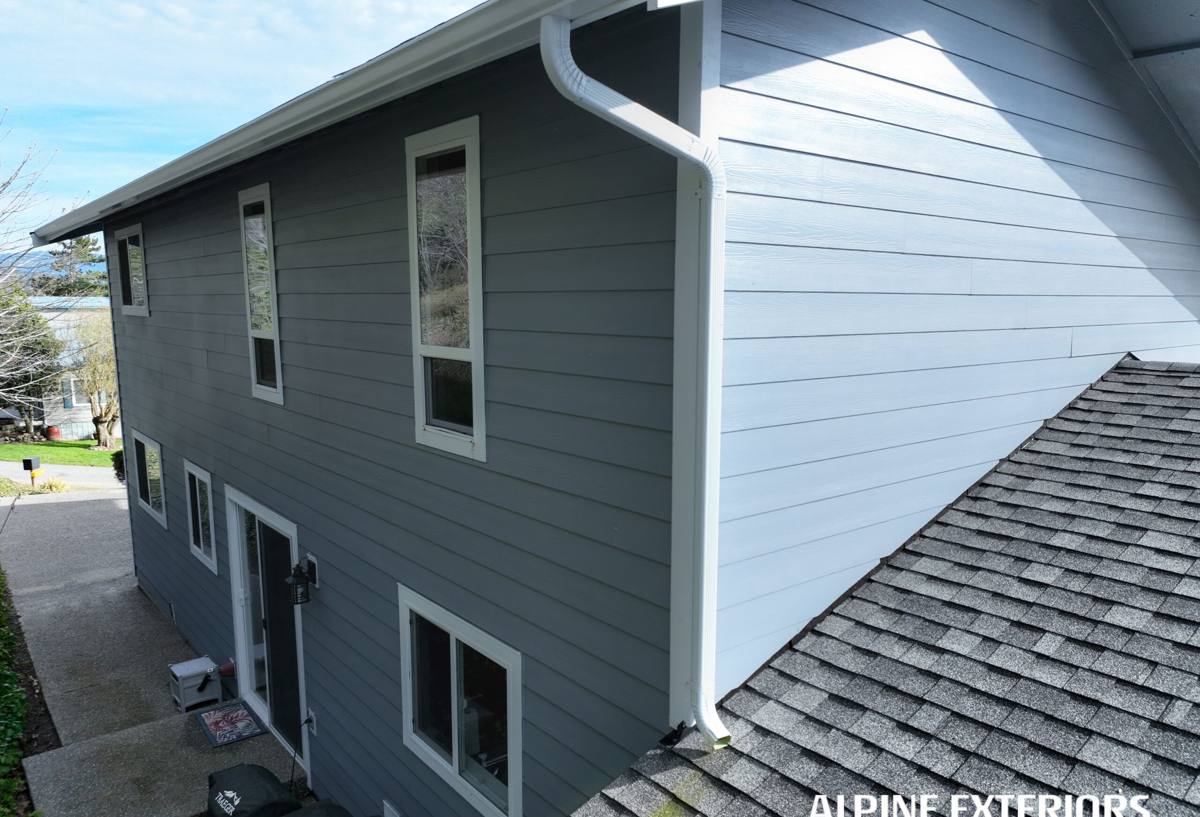
How to Tell a Roof Needs Replacing, Not Patching
Not every roof problem in Edgemoor calls for a full replacement, but there are a few signs that patching is just delaying the inevitable:
- Moss has worked its way under shingle tabs rather than just sitting on the surface — this lifts shingles and breaks the seal underneath.
- Granule loss is heavy enough that you can see bare asphalt mat in the gutters or downspouts.
- Flashing around chimneys, skylights, or valleys shows rust streaking or has separated from the surface it's sealed to.
- There's daylight visible through the roof deck from the attic, or insulation shows water staining in more than one spot.
- The roof is nearing or past the manufacturer's expected service life for this climate, which in a wet, mossy, salt-air environment usually runs shorter than the national average quoted on the shingle wrapper.
If a roof is showing two or more of these at once, repair costs start to approach replacement costs anyway, and you're not solving the underlying moisture problem — just chasing it around the roof.
What Belongs in a Correct Edgemoor Roof Replacement
Tear-Off and Deck Inspection
A correct replacement starts with a full tear-off, not a layover. Layering new shingles over old traps moisture against the deck and hides rot until it's a structural problem. Once the old roofing is off, the deck gets inspected board by board. In a shaded, damp neighborhood like Edgemoor, it's common to find soft or delaminated sheathing near valleys, eaves, or old flashing penetrations — that gets replaced before anything new goes down, not covered over.
Underlayment and Ice/Water Protection
Given the amount of driving rain the area sees, a synthetic underlayment with a self-adhered ice-and-water membrane at eaves, valleys, and around every penetration is the baseline, not an upgrade. Wind-driven rain finds the weak point in a roof faster in a coastal microclimate than it does further inland, and the underlayment is the backup layer that catches what gets past the shingles.
Flashing That Actually Handles Salt Air
Standard galvanized flashing corrodes faster near the water. On Edgemoor jobs we favor flashing metals with better long-term corrosion resistance for chimneys, valleys, and wall-to-roof transitions, and we make sure fasteners are corrosion-resistant too — a roof is only as good as its weakest metal component.
Ventilation Sized for a Shaded Roof
A roof under tree cover dries out slower after every rain. Balanced intake and exhaust ventilation matters more here than on an open, sunny lot, because it's doing more of the work of drying the deck and attic space between storms. Undersized or blocked ventilation is one of the most common contributors to premature deck rot we see on shaded coastal roofs.
Choosing a Roofing Material for a Coastal, Tree-Covered Lot
There's no single "best" roofing material for every home, but some hold up better than others under Edgemoor's specific mix of salt air, shade, and rain. Here's how the common options compare for this environment:
| Material | Moss/Algae Resistance | Salt Air Performance | Maintenance Burden |
|---|---|---|---|
| Standard architectural asphalt shingle | Moderate — improves with algae-resistant granules | Good; fasteners/flashing are the vulnerable point, not the shingle itself | Periodic moss removal recommended |
| Algae-resistant (copper-granule) asphalt shingle | Better — copper granules actively slow algae/moss growth | Good, same flashing considerations apply | Lower than standard shingle, still benefits from occasional cleaning |
| Standing seam metal | Very good — smooth surface sheds moisture, little for moss to grip | Depends on finish/coating; needs a coating rated for coastal exposure | Low; occasional fastener and sealant checks |
| Synthetic/composite shake | Good, varies by product | Generally stable, check manufacturer coastal warranty terms | Moderate; follow manufacturer cleaning guidance |
For most Edgemoor homes we lean toward algae-resistant architectural shingles or standing seam metal, but the right call depends on the roof's pitch, how much direct tree shade it gets, and the look the home is going for. We'll walk through the honest trade-offs for your specific roof rather than pushing one product across every job.
Cost Factors for an Edgemoor Roof Replacement
Every roof is priced on its own specifics, but the same handful of factors move the number up or down on most Edgemoor jobs:
| Factor | Why It Matters Here |
|---|---|
| Roof pitch and access | Steeper roofs and wooded, sloped lots take longer to stage safely and require more fall protection setup |
| Deck condition | Shaded, damp roofs more often need sheathing repair discovered during tear-off |
| Material choice | Standing seam metal and algae-resistant shingles cost more upfront than standard shingles but reduce moss-related maintenance |
| Flashing and penetrations | Chimneys, skylights, and multiple roof planes each add flashing detail work |
| Tree cover and debris | Overhanging limbs may need trimming back before work starts, and needle/debris cleanup is part of a thorough job |
Our Replacement Process, Start to Finish
- On-site inspection. We get on the roof, check the deck condition where accessible, look at flashing and ventilation, and talk through what your home actually needs versus what's optional.
- Written estimate. A clear scope of work and materials, no vague allowances, so you know exactly what's being installed and why.
- Tear-off and deck repair. Full removal of old roofing, deck inspected and any soft sheathing replaced before underlayment goes down.
- Underlayment, flashing, and material installation. Ice-and-water membrane at vulnerable areas, corrosion-appropriate flashing, then the roofing material installed to manufacturer spec.
- Ventilation check. Intake and exhaust confirmed balanced for the roof's size and the amount of shade it sits under.
- Cleanup and final walkthrough. Site swept for debris and nails, and we walk the finished roof with you before calling it done.
Built-In Moss and Algae Defense
You can't eliminate moss risk on a shaded Edgemoor lot, but a well-built roof reduces how fast it comes back. Zinc or copper strips installed near the ridge release trace metal ions with every rain that inhibit moss and algae growth down the roof plane. Combined with algae-resistant shingle granules where applicable, and keeping tree limbs trimmed back from the roof surface to let more light and air reach it, this cuts down significantly on how often the roof needs manual moss removal. It won't replace occasional maintenance, but it stretches the time between cleanings considerably.
Why Local Experience in Edgemoor Matters
A roofing crew that only works inland, drier parts of Whatcom County will size ventilation and pick flashing metal for a different set of conditions than what an Edgemoor roof actually faces. Working this neighborhood regularly means knowing how much moss buildup is normal versus a sign of a bigger problem, how tree cover on a given lot affects drying time, and how to stage equipment and materials on wooded or bluff-adjacent lots without damage to landscaping. It also means knowing the local permitting process with the City of Bellingham or Whatcom County depending on exactly where the property falls, so the paperwork doesn't hold up the schedule.
Maintaining Your New Roof
A correct installation is most of the battle, but a little routine attention keeps it performing for its full service life in this climate:
- Have moss and debris cleared from the roof and gutters at least once a year, more often under heavy tree cover.
- Keep overhanging branches trimmed back to reduce shade and debris buildup.
- Check attic ventilation isn't blocked by insulation or storage.
- Have flashing and sealant around penetrations inspected every few years, since these are the first points to show wear from salt air.
- Address any granule loss, lifted shingles, or rust streaking promptly rather than waiting for a leak to show up inside.
If your Edgemoor roof is showing its age or you just want an honest read on how much life it has left, we're happy to take a look. Fill out the form below for a free, no-pressure estimate.