 Bellingham Siding
 Edgemoor sits on the bluffs and shoreline south of downtown Bellingham, and that position on Bellingham Bay shapes everything about how siding performs there. Homes a few blocks apart can see very different weather depending on how exposed they are to the water, how much conifer canopy shades the roofline, and which direction the prevailing wind comes from. Siding installation in this part of Whatcom County isn't a one-size-fits-all job, and the details that get skipped on a rushed install are exactly the ones that show up as problems five or ten years later.
Why Edgemoor's Location Changes the Siding Equation
Most of Bellingham deals with the same wet Pacific Northwest weather pattern, but Edgemoor's bluff-top and waterfront lots add a few extra variables that inland neighborhoods don't face as consistently.
Salt Air and Coastal Corrosion
Homes closer to the water pick up salt-laden air off Bellingham Bay, especially on windier stretches of the bluff. Over time, that air accelerates corrosion on fasteners, flashing, and any exposed metal trim. It doesn't damage fiber cement siding itself the way it can degrade some metals, but it makes fastener choice and flashing material a real consideration rather than an afterthought.
Driving Rain Off the Bay
Wind-driven rain coming off open water hits siding at an angle instead of falling straight down, which pushes moisture up under laps, around trim, and into any gap that isn't properly sealed or flashed. A siding system that works fine on a sheltered inland lot can fail faster on a bluff-facing wall that takes rain sideways for a good part of the year.
Moss and Shade from Mature Tree Cover
Edgemoor has a lot of mature landscaping and tree canopy, which is part of what makes the neighborhood attractive but also means many homes get long stretches of shade. Shaded, damp siding stays wet longer after a storm, and that's exactly the condition moss and algae need to take hold. Siding material, surface texture, and how well a wall can dry out all matter more here than they would on a wide-open, sun-exposed lot.
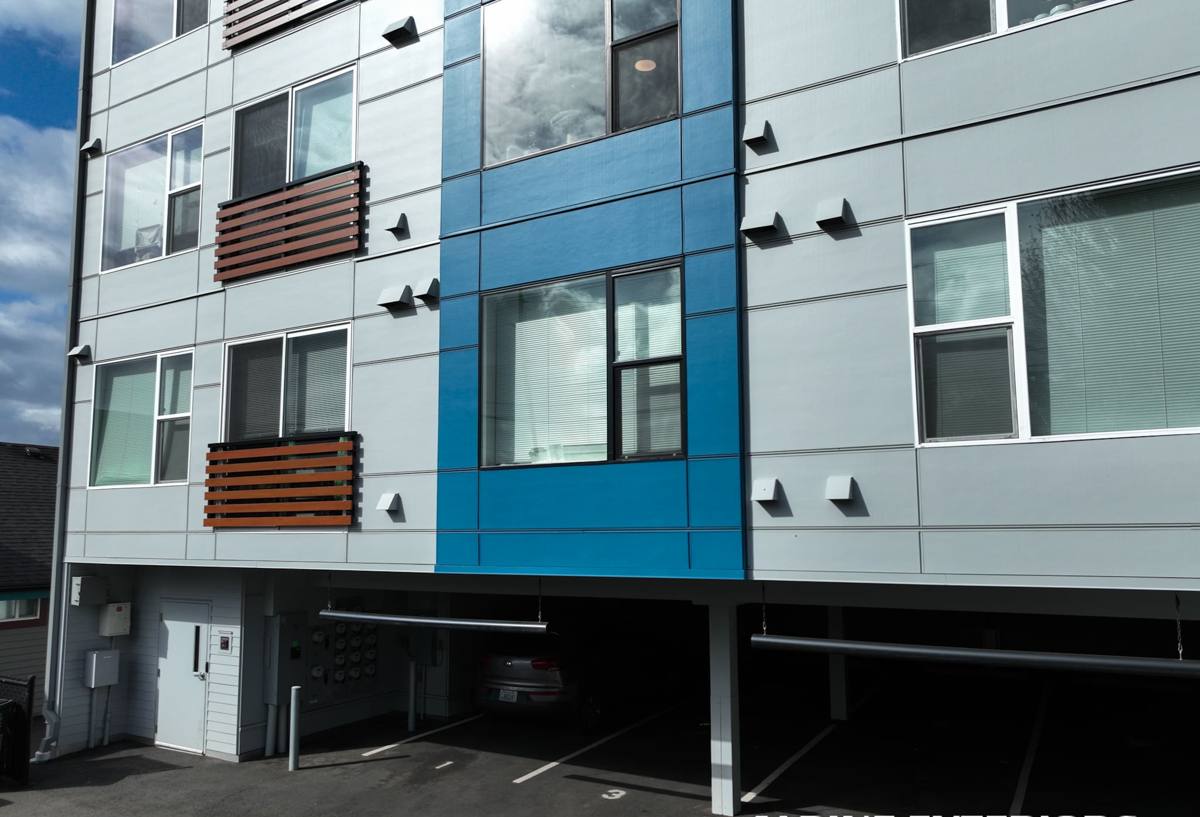
What a Correct Siding Installation Actually Involves
The siding boards themselves get most of the attention, but the water management details behind them determine whether a siding job lasts fifteen years or fifty. This is where corners get cut most often, and where it's hardest for a homeowner to check the work after the fact.
Weather-Resistive Barrier and Flashing
Every wall needs a continuous weather-resistive barrier underneath the siding, with flashing integrated at every window, door, deck ledger, and penetration so water is directed out and away from the sheathing rather than trapped behind it. On a bluff-exposed wall taking driving rain, gaps in this layer are the single most common cause of hidden rot.
Rainscreen Drainage Gap
A drainage gap between the siding and the weather barrier lets any moisture that does get past the surface drain and evaporate instead of sitting against the wall assembly. For a climate with Bellingham's rainfall totals and Edgemoor's added shade and salt-air exposure, this gap is not optional extra credit — it's part of doing the installation correctly.
Fastening and Manufacturer Specification
Fiber cement siding has to be fastened at the spacing, depth, and location the manufacturer specifies, with corrosion-resistant fasteners appropriate for a coastal-adjacent site. Overdriven nails, wrong fastener spacing, or missing the stud are common installation mistakes that void warranty coverage and shorten the life of the siding regardless of how good the product itself is.
Why We Install Only James Hardie Fiber Cement
We standardized on James Hardie products and don't install vinyl, LP SmartSide, or other fiber cement brands. Hardie's fiber cement is non-combustible, holds paint and factory finish far longer than wood-based siding products, and is engineered in climate-specific formulations rather than a single generic mix for the whole country.
HardiePlank HZ5 for This Climate
Hardie's HZ5 formulation is engineered for wetter, freeze-thaw climates like western Washington, with moisture and impact resistance suited to a place that sees rain most months of the year. That matters more on an exposed Edgemoor lot than it does somewhere drier and more sheltered.
ColorPlus Factory Finish
Hardie's ColorPlus finish is baked on at the factory under controlled conditions, which gives more consistent, longer-lasting color than field-applied paint over wood or primed siding. On a shaded, damp lot where mildew and fading show up faster, a finish that resists both matters more, not less.
Our Installation Process for Edgemoor Projects
The steps are the same craft on every job, but how we sequence and detail them shifts based on a home's exposure and shade.
Site Assessment and Moisture Check
We start by walking the exterior, checking existing siding and trim for hidden moisture damage, and noting which walls take the most direct rain and which stay shaded and slow to dry. This tells us where extra flashing attention and drainage detailing matter most before a single board comes off.
Removal and Water Management Installation
Once old siding is off, we install the weather-resistive barrier, flashing at every opening and penetration, and the drainage gap before any Hardie board goes up. This stage is invisible once the job is finished, which is exactly why it has to be done right the first time.
Siding Installation and Final Detailing
Boards go up to manufacturer spacing and fastening specs, with careful attention to butt joints, corners, and trim transitions — the places water finds its way in when installation is rushed. We finish with a walkthrough and cleanup so the site is left the way we found it, minus the old siding.
Cost Factors for an Edgemoor Siding Project
Every home is different, but the same handful of factors drive most of the cost variation we see on projects in this neighborhood.
| Factor | Why It Affects Cost |
|---|---|
| Home size and wall complexity | More square footage, corners, and gables means more material and labor hours |
| Existing siding removal | Tear-off and disposal of old material adds time versus installing over new construction sheathing |
| Hidden moisture or rot repair | Sheathing or framing damage found during removal has to be repaired before new siding goes on |
| Access and site conditions | Steep bluff lots, mature landscaping, or limited driveway access can slow staging and setup |
| Trim and detail work | Window and door trim, fascia, and corner detailing add labor beyond flat wall siding |
| Hardie product line and profile | Lap width, texture, and ColorPlus versus field-painted options carry different material costs |
Signs Your Edgemoor Home May Need New Siding
A few warning signs show up more often on homes with this neighborhood's exposure and tree cover:
- Persistent moss or algae growth on shaded walls that comes back soon after cleaning
- Soft spots, bubbling, or visible warping in siding on walls that face the bay directly
- Paint that's peeling or chalking faster than the rest of the house, especially near trim and corners
- Visible gaps, cracks, or separation at seams and around window and door trim
- A musty smell or discoloration on interior walls that back up to exterior siding
- Fasteners or nail heads showing rust stains bleeding through the siding surface
Why a Crew That Already Works Edgemoor Matters
A contractor who's worked this neighborhood before already understands how bluff exposure, shade patterns, and bay-facing walls change the installation approach from one lot to the next. That's not something you can fully account for from a generic estimate — it comes from having actually installed siding on homes dealing with the same salt air, driving rain, and moss pressure. Local experience also means knowing how to stage a job around narrower streets, mature landscaping, and the access challenges that come with waterfront and bluff-top lots, so the project moves efficiently without damaging what's already on the property.
Maintenance After Installation
Correctly installed Hardie siding needs very little upkeep, but an occasional rinse to clear pollen, salt residue, and moss spores off shaded walls goes a long way in this environment. Keeping gutters clear and trimming back vegetation that holds moisture against the wall also helps the siding dry out between the rain events that are just part of living this close to the water.
If you're planning a siding project on an Edgemoor home, we're happy to walk the property, point out what we see, and put together a straightforward estimate — no pressure, no sales script. Use the form below to get started.