 Bellingham Siding
 Why Fairhaven's Location Is Hard on Windows
Fairhaven sits close to Bellingham Bay, which means homes here take a heavier dose of marine weather than houses further inland in Whatcom County. Wind off the water drives rain sideways into window frames instead of letting it run straight down the glass. Salt-laden air speeds up corrosion on hinges, balances, and screen hardware. And the long stretch of wet, low-sun months that defines western Washington winters keeps wood and trim damp for weeks at a time, which is exactly the condition moss, algae, and slow rot need to take hold.
None of that means Fairhaven homes need exotic solutions. It means the details that get skipped on an easier job — flashing, sealant choice, drainage paths — matter more here than they would in a drier part of the state. A window that would last two decades in a sheltered inland location can fail in half that time if water is allowed to sit against the frame.
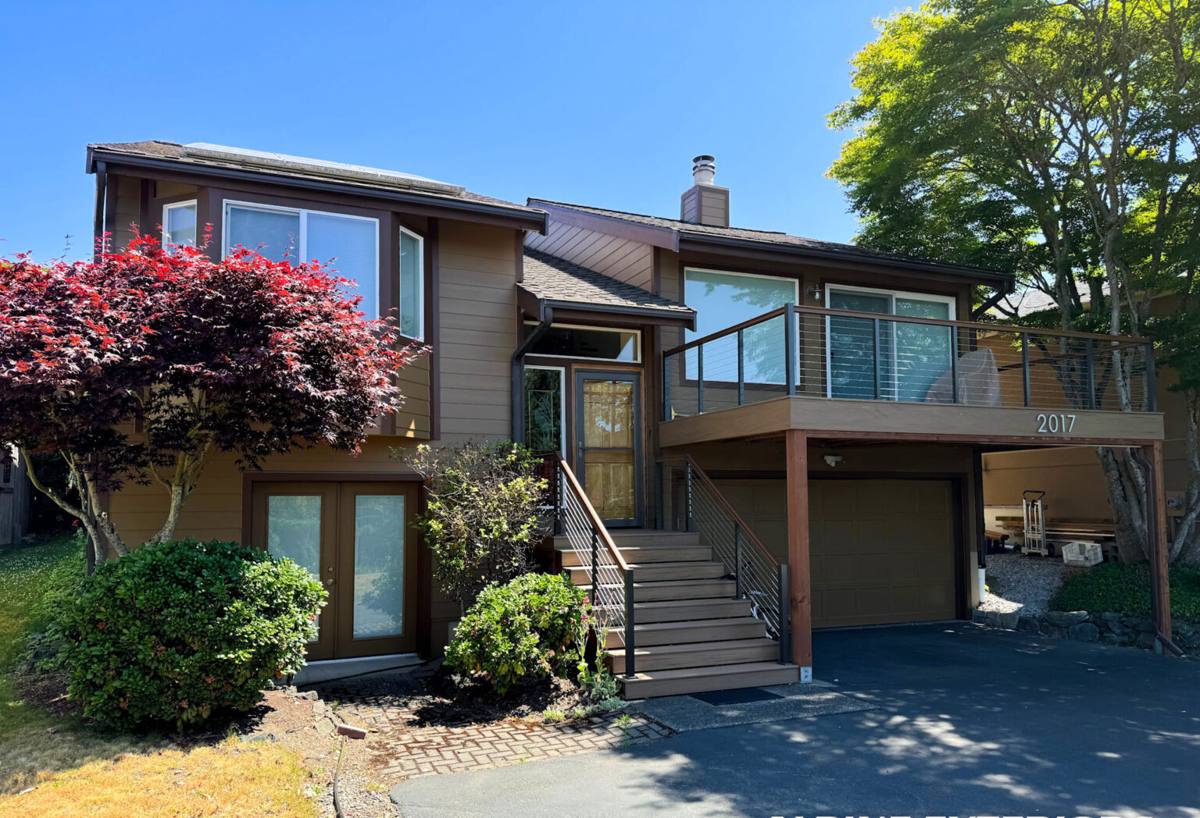
Signs a Window Is Past Its Useful Life
What you can see and feel
Fogging or a milky haze between the panes means the seal on a double-pane unit has failed and moisture has gotten into the gas space — this is not fixable with cleaning, only replacement. Wood that feels soft or spongy at the sill or lower corners is usually rot, not just old paint. Windows that are hard to open, don't latch flush, or let in a draft you can feel with your hand on a windy day have usually shifted out of square or lost their weatherstripping.
What's happening that you can't see
Water that's been getting behind old flashing or through a failed sealant joint can be rotting the framing inside the wall long before it shows up as a stain or soft spot on the interior trim. This is common in older Fairhaven homes where the original window flashing was never designed for the amount of wind-driven rain the site actually gets. It's one of the reasons we always check the condition of the rough opening, not just the window itself, before quoting a replacement.
Window Materials That Hold Up Near the Water
Every window material has trade-offs. In a marine climate like Fairhaven's, moisture resistance and hardware durability matter as much as upfront cost.
| Material | Moisture & Salt-Air Performance | Maintenance | Typical Lifespan |
|---|---|---|---|
| Vinyl | Won't rot or corrode; seams and welds are the weak point if not installed well | Low — occasional cleaning | 20–30 years |
| Fiberglass | Very stable in wet, temperature-swinging conditions; resists warping | Low | 30-plus years |
| Wood (unclad) | Handsome but needs consistent upkeep; exposed wood is the first thing driving rain attacks | High — repainting/sealing on a schedule | Varies widely with maintenance |
| Wood with aluminum or fiberglass cladding | Good — cladding shields the wood from weather on the exterior face | Moderate | 25-plus years |
| Aluminum (uncoated) | Conducts cold and can corrode faster in salt air unless properly finished | Moderate | Varies with coating quality |
We don't push one material as "the" answer for every house. A vinyl or fiberglass window with quality hardware is usually the most cost-effective, low-maintenance choice for a Fairhaven home exposed to weather off the bay. A clad-wood window can be the right call when matching an older home's original look matters more than minimizing upkeep — that's a homeowner decision, and we'll walk through the honest trade-offs for your specific house rather than steer you toward whatever's easiest for us to install.
What a Correct Installation Actually Involves
The window unit itself is only part of the job. As a siding contractor first, we look at window replacement as a water-management problem as much as a product swap — the window has to tie into the wall's drainage plane correctly, or it will leak regardless of how good the window is.
Flashing and the drainage plane
Proper installation means integrating new flashing with the house wrap or building paper so water is directed out and down, never trapped behind the siding. This is the step most likely to get rushed on a fast, budget install, and it's the one that causes hidden rot years later.
Sealant and gaps
Exterior sealant has to be the right type for the surface and gapped correctly — too little and water gets in, too much or the wrong product and it traps moisture instead of shedding it. Interior gaps around the frame need proper insulation, not just caulk, to control condensation and drafts.
Fit and function
The window has to be shimmed level, plumb, and square so it opens, closes, and latches the way it's supposed to for the life of the unit — not just on installation day.
Our Window Replacement Process
- Assessment: We look at each window's condition, the surrounding trim and siding, and check for signs of hidden water damage before quoting anything.
- Product selection: We go over material, style, and glass options based on your home's exposure, your budget, and how long you want this to last.
- Removal: The old unit comes out carefully, and we inspect the rough opening and framing underneath for rot or damage that needs addressing before the new window goes in.
- Flashing and installation: New flashing is integrated with the existing water barrier, and the window is set level, plumb, and square.
- Insulation, sealant, and trim: Gaps are insulated and sealed correctly, and exterior trim is finished to match the surrounding siding.
- Cleanup and walkthrough: We clear debris, check that every window operates correctly, and go over care basics with you before we consider the job done.
What Affects the Cost of Window Replacement
Window replacement pricing varies a lot from house to house, but the same handful of factors drive most of the difference. We give straight, itemized estimates rather than a single vague number, so you can see where your money is going.
| Cost Factor | Why It Matters |
|---|---|
| Number of windows | Per-window cost usually drops slightly on larger jobs due to shared setup and labor efficiency |
| Material and glass package | Vinyl is generally the most budget-friendly; clad-wood and upgraded glass (double- or triple-pane, low-E coatings) cost more |
| Size and style | Large picture windows, bays, or custom shapes cost more than standard operable sizes |
| Rough opening condition | Hidden rot found during removal adds framing repair before the new window can go in |
| Access and height | Second-story or hard-to-reach windows take more time and equipment |
| Trim matching | Matching existing exterior trim on an older home takes more custom work than a standard trim wrap |
Timing the Job Around Whatcom County's Wet Season
Window replacement can be done responsibly in most weather, but we plan around the region's wet stretch — roughly fall through early spring — when possible. Openings are only exposed for a short window during removal and installation, and we take precautions to protect the house if rain moves in mid-job. That said, waiting until a visibly failing window finally fails completely usually costs more than scheduling the replacement proactively, since ongoing water intrusion during "moss season" is what turns a simple window swap into a framing repair.
Checklist: What to Ask Before Hiring a Window Contractor
- Do you check the rough opening and framing for hidden rot before quoting, or only after the old window is out?
- How do you flash and integrate the new window with my home's existing siding and water barrier?
- What warranty covers the installation itself, separate from the manufacturer's product warranty?
- Can you show me the specific sealant and flashing materials you use, and why?
- Do you carry current licensing and insurance for work in Washington State?
- How do you handle unexpected rot or damage found once the old window is removed?
Why a Crew That Already Works in Fairhaven Matters
A contractor who regularly works this part of Bellingham has already seen how the local exposure to wind, rain, and salt air affects window frames, trim, and flashing on homes similar to yours. That means fewer surprises: we generally have a good sense of what we'll find once an old window comes out, we know which materials hold up under this area's conditions instead of underperforming a few years in, and we can move quickly when weather is a factor. That local familiarity, combined with doing the flashing and water-management side of the job correctly the first time, is what keeps a window replacement from turning into a recurring problem.
If your windows in Fairhaven are drafty, fogged, hard to operate, or just original to a home that's due for an upgrade, we're happy to take a look and give you a straightforward, no-pressure estimate — no invented urgency, just an honest read on what your windows actually need. Use the form below to get started.