 Bellingham Siding
 Windows Built for Ferndale's Weather, Not Just Its View
Ferndale sits close enough to the water and the flats around Whatcom County that homes here take a different kind of weather beating than houses twenty miles inland. Salt-tinged air off the bay corrodes hardware and finishes faster than manufacturers' brochures ever admit. Driving rain off winter storms pushes water sideways into gaps that would stay dry in a calmer climate. And the long gray stretch of moss season — roughly October through April in this part of Whatcom County — keeps every north- and west-facing wall damp for months at a time. Windows are one of the biggest openings in your building envelope, and when they're installed wrong, or aging out, they're usually the first place that damage shows up.
This page is about one job, done right, in one place: custom window replacement and installation for Ferndale homes. Not a general overview of windows everywhere — the specific conditions this town deals with, what a correct install actually involves, and what we do differently because we already work here.
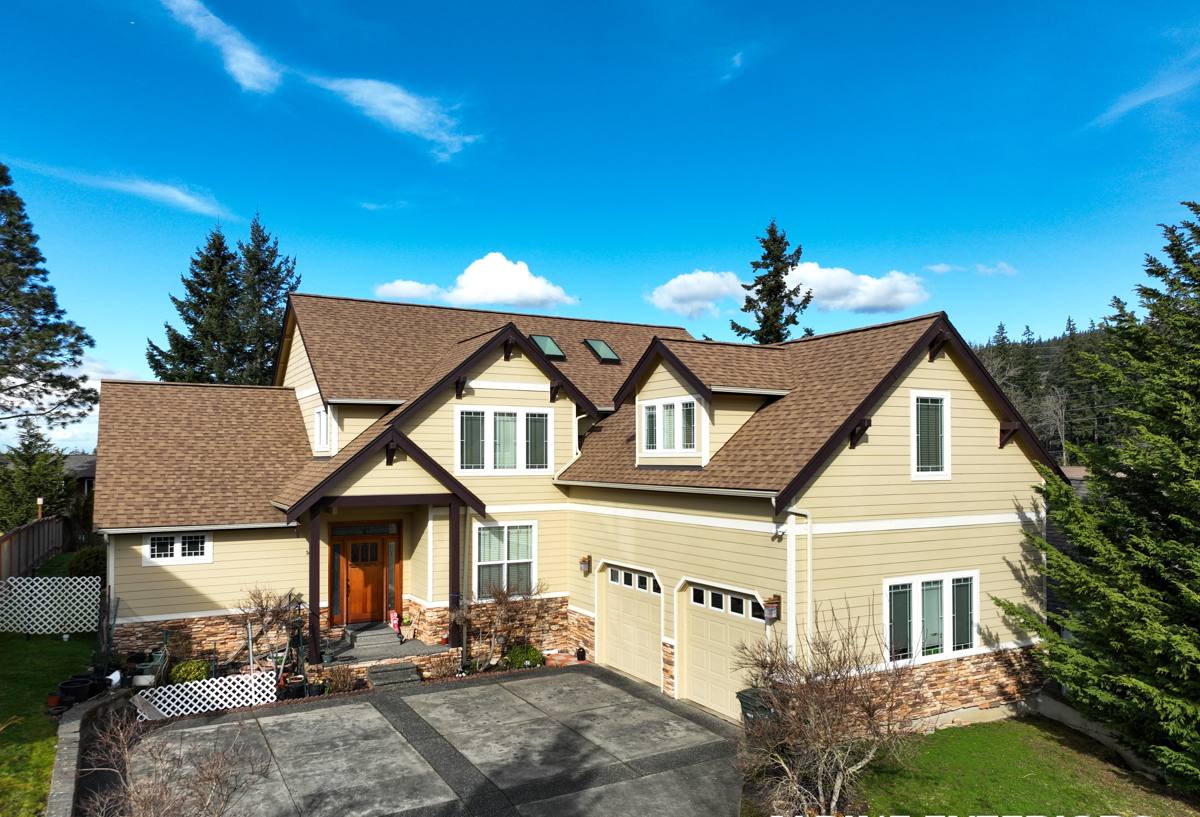
What Ferndale Homes Actually Need From Their Windows
Salt Air and Hardware Corrosion
Homes closer to the water deal with airborne salt that settles on window hardware, screens, and exposed fasteners. Over years, that accelerates corrosion on cheaper hinges, locks, and cranks — long before the glass or frame itself would fail. It's a slow problem, which is exactly why it gets ignored until a window won't latch or a crank snaps off in your hand.
Driving Rain and Wind-Driven Water
Storms coming off the Salish Sea don't just fall — they push. Wind-driven rain finds any weakness in a window's water management: a poorly lapped flashing, a missing sill pan, a bead of caulk asked to do a job it was never designed for. Water intrusion around windows is one of the most common causes of hidden rot we find when we're re-siding or re-trimming a Ferndale home, and it's almost always a flashing and install problem, not a "bad window" problem.
Moss Season and Chronic Moisture
The long wet season means exterior trim, sills, and casings around windows stay damp for extended stretches, especially on shaded or north-facing walls. Wood trim that isn't detailed and finished correctly will hold that moisture and start to soften or grow moss and mildew within a few seasons. It's not just cosmetic — sustained moisture at a window opening is exactly the kind of slow damage that eventually reaches the framing behind it.
What a Correct Custom Window Install Actually Involves
"Custom" doesn't just mean a non-standard size. It means the window is built and installed to fit this specific opening, on this specific wall, in this specific climate — not a generic retrofit shoved into a hole that's close enough.
- Opening inspection. Before anything is ordered, we check the existing opening for rot, settling, or water staining. If there's hidden damage, it needs to be addressed before a new window goes in — otherwise you're sealing a problem behind a nice new frame.
- Accurate measurement and product selection. Custom sizing means the window is built to the actual opening, which reduces gaps that need to be packed with foam or shimmed excessively — both of which are weak points for air and water infiltration over time.
- Sill pan and flashing first. This is the step that gets skipped on rushed jobs and is the single biggest factor in whether a window stays dry. A proper sill pan, correctly lapped house wrap or weather-resistive barrier, and flashing tape integrated in the right order (not just caulked over afterward) is what actually keeps wind-driven rain out.
- Air sealing and insulation at the rough opening. Gaps around the frame get sealed with appropriate low-expansion foam or backer rod and sealant — not overpacked, not left hollow. Overpacking foam can bow a frame out of square; underfilling leaves drafts and condensation points.
- Correct fastening and shimming. The window needs to be square, plumb, and fastened per the manufacturer's structural requirements — not just "eyeballed level." An out-of-square frame stresses the sash and shortens the life of weatherstripping and hardware.
- Exterior trim and finish detailing. This is where moss-season durability is decided. Trim needs back-priming, correct caulk joints (not caulk used as a substitute for flashing), and drainage paths so water sheds away from the opening instead of pooling against it.
- Interior finish and final check. Interior casing, insulation continuity, and operation checks — the window should open, close, lock, and tilt (if applicable) smoothly before we call the job done.
Material and Frame Options — Honest Trade-Offs
We install a range of window lines and frame materials depending on the home, the budget, and the specific exposure of that wall. There's no single "best" product for every Ferndale house — there are trade-offs worth understanding upfront.
| Frame Type | Salt/Moisture Behavior | Maintenance | Typical Use Case |
|---|---|---|---|
| Vinyl | Doesn't corrode; UV and thermal cycling can affect seals over decades | Low — no painting, occasional cleaning | Budget-conscious full replacements, rental/investment properties |
| Fiberglass | Very stable dimensionally; handles wet/dry cycling well | Low to moderate | Homes wanting durability without wood upkeep, higher exposure walls |
| Wood (clad exterior) | Interior warmth of real wood; exterior clad protects from direct weather | Moderate — clad exterior low-maintenance, interior wood still needs occasional attention | Historic-style or high-end aesthetic where wood interior is wanted |
| Aluminum | Prone to corrosion near salt air unless properly coated/anodized | Moderate — coating maintenance matters | Specific architectural or commercial-style applications only |
For homes closer to the water or on more exposed walls, we typically steer clients away from bare aluminum framing and toward vinyl, fiberglass, or properly clad wood — not because aluminum is a bad material everywhere, but because untreated or poorly coated aluminum has a harder time in salt-air conditions specifically, and replacing corroded hardware or refinishing frames adds cost down the road that a homeowner didn't budget for.
Signs Your Ferndale Home's Windows Need Attention
- Fogging or condensation between panes (failed seal on double- or triple-glazed units)
- Visible moss, algae, or black staining on sills and exterior trim
- Drafts you can feel with a hand near the frame on a windy day
- Hardware — locks, cranks, hinges — that's stiff, corroded, or won't fully latch
- Soft or spongy wood trim around the window opening
- Paint peeling or bubbling specifically at the window perimeter, not the whole wall
- Visible daylight or gaps around the frame from the interior
- Rising energy bills without another clear explanation
Our Process for Ferndale Jobs
We work Ferndale regularly as part of our Whatcom County service area, which matters more than it sounds. A crew that's already done window installs on homes with similar exposure to salt air and driving rain knows which walls in this town need extra flashing attention before they even pull a tape measure — that's not something you get from a general contractor who's only seen the neighborhood on a map.
- Free on-site estimate. We walk the exterior and the specific window openings, check for existing water damage, and talk through what you actually need versus what's optional.
- Honest scope and written quote. No pressure, no inflated packages — a clear breakdown of product, labor, and any repair work the opening needs before install.
- Scheduling around the weather. Window openings are exposed during install. We plan around forecasted rain windows where possible so your home isn't sitting open during a storm.
- Install per the process above. Sill pan, flashing, sealing, fastening, trim — in the right order, every time, not shortcuts to save an hour.
- Final walkthrough. We check operation, seal quality, and trim finish with you before we consider the job complete.
Cost Factors to Expect
We won't quote a number here that doesn't mean anything without seeing your home — window pricing depends heavily on size, frame material, glazing package, and whether the opening needs repair work first. What we can tell you is what actually moves the price:
| Factor | Why It Matters |
|---|---|
| Number and size of openings | More or larger windows means more material and labor |
| Frame material chosen | Vinyl, fiberglass, and clad wood carry different material costs |
| Existing rot or water damage | Hidden repair work at the opening adds time and material before the new window goes in |
| Glazing package | Double vs. triple pane, low-E coatings, and gas fills affect both cost and performance |
| Trim and finish scope | Matching existing trim profiles or upgrading exterior finish adds labor |
| Access and site conditions | Second-story openings, tight side-yards, or landscaping obstacles affect labor time |
Why It Matters That We Already Work Ferndale
Whatcom County covers a lot of ground with a lot of variation in exposure — homes tucked away from the wind behave differently than ones on a more open, exposed lot. A crew that installs windows across this area regularly has already seen what fails first on which kind of wall, which means less guesswork and fewer callbacks. We're not learning your town's climate on your project; we're applying what we already know about how salt air, wind-driven rain, and a long moss season interact with a window opening over time.
If your windows are original, drafty, fogged, or just due for an honest look, we're happy to come out and take a look at no cost and with no pressure to buy anything on the spot. Fill out the form below and we'll get an estimate scheduled.