 Bellingham Siding
 Why Ferndale Roofs Wear Differently Than Roofs Inland
Ferndale sits close to the water in northern Whatcom County, just a short drive from Bellingham, and that location shapes what a roof has to deal with year-round. Salt-laden air off the Strait of Georgia works its way into fasteners, flashing, and granule surfaces faster than it does twenty miles inland. Driving rain off winter storms doesn't just fall straight down here — it comes in sideways, which means laps, flashing details, and underlayment matter more than they would in a calmer climate. And then there's moss. Whatcom County's long, wet, mild winters give moss and algae months of ideal growing conditions on any roof that holds shade or moisture, which is most of them.
None of this means a Ferndale roof needs to be exotic or overbuilt. It means the details that get glossed over on a quick job — proper ventilation, correct underlayment choice, flashing that's actually sealed and not just caulked — are the difference between a roof that looks tired at year eight and one that's still doing its job at year twenty-five.
What Ferndale Homes Actually Need From a New Roof
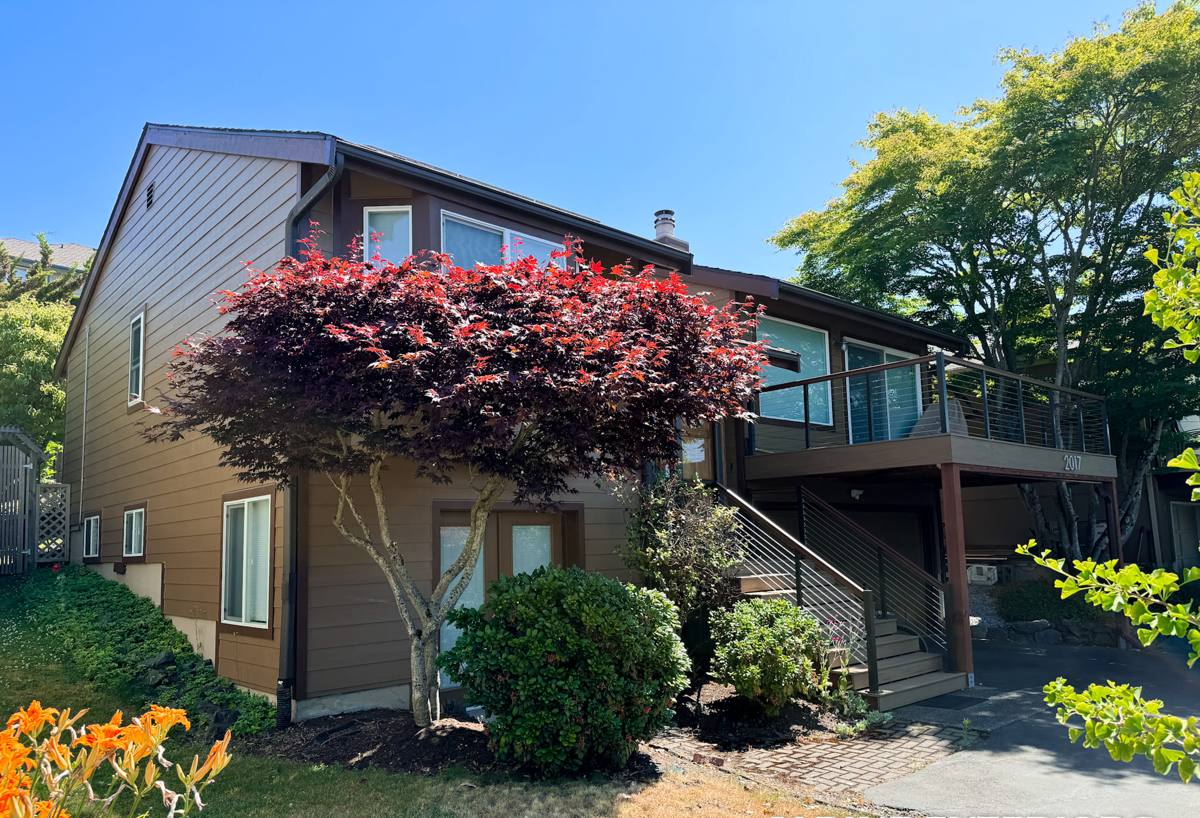
Most of the housing stock around Ferndale falls into a few categories: older farmhouses and rural properties with steeper, simpler rooflines, mid-century homes with moderate pitches, and newer subdivision construction with more complex rooflines, dormers, and valleys. Each of these has different failure points, but the underlying needs are consistent:
- Ventilation that actually moves air, not just a token ridge vent with no matching intake
- Underlayment rated for wind-driven rain, not the cheapest felt available
- Flashing detail at every wall, chimney, skylight, and valley — the places nearly all leaks start
- A material and color that resists moss growth or at least doesn't trap moisture against the deck
- Fasteners and flashing metals that hold up to salt air instead of corroding early
A roof that checks these boxes will outperform a more expensive roof that skips them, every time.
Choosing the Right Roofing Material for This Climate
There's no single "best" roofing material for Ferndale — it depends on budget, roof pitch, and how much maintenance you're willing to do. Here's how the common options actually compare for this specific climate, not in the abstract.
| Material | Moss/algae resistance | Salt air durability | Typical lifespan | Relative cost |
|---|---|---|---|---|
| Standard 3-tab asphalt shingle | Low without treatment | Fair — watch fastener corrosion | 15-20 years | Lowest |
| Architectural (dimensional) shingle | Better with algae-resistant granules | Good with quality flashing | 25-30 years | Moderate |
| Metal (standing seam or panel) | Very good — sheds moss easily | Excellent with proper coating/fasteners | 40-50+ years | Highest |
| Cedar shake | Poor — high maintenance to prevent rot | Fair, needs regular treatment | 20-30 years with upkeep | High |
| Synthetic/composite shingle | Good, engineered for moisture | Good | 30-50 years | Moderate-high |
We steer most Ferndale homeowners toward algae-resistant architectural shingles or metal roofing, not because other products are bad, but because they carry the least maintenance burden in a climate that gives moss every advantage. Cedar shake can look great, but it demands upkeep most homeowners underestimate when moisture sits on a roof for half the year.
A Note on Warranties
Manufacturer warranties on shingles are usually prorated and tied to proper installation — improper ventilation or nailing patterns can void coverage even if the shingle itself is fine. We install to manufacturer spec specifically so that warranty stays intact if you ever need it.
What a Correct Installation Actually Involves
A new roof is more than laying shingles over what's there. Done right, the process includes:
- Full tear-off to bare decking — never install over old layers, which traps moisture and hides deck damage
- Deck inspection and replacement of any soft, rotted, or delaminated sheathing
- Ice-and-water shield at eaves, valleys, and around penetrations, where wind-driven rain is most likely to find a way in
- Synthetic underlayment across the full field for a secondary water barrier
- New flashing at all walls, chimneys, skylights, and vents — reused flashing is a common source of early leaks
- Balanced ventilation — intake at the eaves, exhaust at the ridge — sized to the attic volume
- Correct nailing pattern and shingle exposure per manufacturer specification
- Drip edge and gutter apron to direct water away from fascia and siding
Skipping any of these steps might not show up as a problem in year one. It shows up in year five or six, usually as a leak that's harder to trace than it should be because the root cause is hidden under new shingles.
Moss and Salt Air: Prevention Built Into the Job, Not Bolted On Later
Moss doesn't just sit on top of a roof — left long enough, it lifts shingle edges, holds moisture against the deck, and works its way into fastener holes. Rather than treat moss as a cleaning problem to deal with after the fact, we build in prevention during installation:
- Zinc or copper strips near the ridge, which release trace metals with every rain that inhibit moss and algae growth down the field of the roof
- Algae-resistant shingle products where budget allows, which are granule-treated at the factory
- Proper ventilation, since a cooler, drier attic means a cooler, drier roof deck — moss grows fastest where moisture lingers
- Trim recommendations for overhanging branches, since shade and debris are moss's best friends
On the salt air side, we pay attention to fastener and flashing material — galvanized or stainless components hold up far better near the water than bargain-grade hardware, and the cost difference over the life of the roof is small compared to the cost of a callback.
Our Installation Process
Every roof starts with an honest inspection, not a sales pitch. Here's how a project typically moves:
- On-site inspection and estimate — we look at the current roof, attic ventilation, and any problem areas, and give you a written estimate with real numbers, not a placeholder
- Material selection — we walk through the options that fit your budget and the realities of this climate, without steering you toward whatever has the best margin
- Scheduling and permitting — we handle the paperwork Whatcom County requires so you don't have to track it down yourself
- Tear-off and deck inspection — old roofing comes off completely, and we show you photos of any deck damage before we cover it back up
- Installation — underlayment, flashing, ventilation, and roofing material installed to spec, with daily site cleanup
- Final walkthrough — we go over the finished roof with you, confirm ventilation is balanced, and answer any questions before we consider the job done
Why a Crew That Already Works in Ferndale Makes a Difference
Roofing crews that mostly work in drier, inland climates sometimes underbuild for coastal wind and rain exposure — not out of carelessness, but because it's simply not what they see every day. A crew that regularly works Ferndale and the surrounding Whatcom County coastline already knows which flashing details fail first in this weather, which materials hold up against salt air without a premium price tag, and how much ventilation an attic actually needs when the roof rarely gets a chance to fully dry out between storms.
That local familiarity also matters for scheduling. Roofing has a weather window, and a crew that knows the local forecast patterns and county permitting process can plan a job to avoid getting caught mid-tear-off by an incoming system.
What Affects the Cost of a New Roof
Every roof is priced on its own specifics, but the factors that move the number the most are consistent:
| Cost factor | Why it matters |
|---|---|
| Roof size and pitch | More square footage and steeper pitches mean more material and labor time |
| Number of existing layers | Tearing off multiple old layers costs more than a single-layer tear-off |
| Deck condition | Rotted or soft sheathing needs replacement before new roofing goes down |
| Material choice | Asphalt, metal, and synthetic products span a wide cost range, as shown above |
| Roof complexity | Valleys, dormers, skylights, and chimneys all add flashing labor |
| Access and site conditions | Steep lots or limited driveway access can affect staging and disposal costs |
We give you these numbers up front, broken down, rather than a single lump figure — you should know what you're paying for before you agree to it.
Signs Your Ferndale Roof May Need Replacement Soon
- Shingles that are cupping, curling, or losing granules faster than the surrounding roof surface
- Moss or algae that returns within months of cleaning, even after treatment
- Daylight visible through the attic roof deck, or damp insulation after storms
- Flashing that's visibly rusted, cracked, or separating from the roofline
- Shingles that are more than 20 years old, especially if the roof has never been inspected for ventilation issues
- Granules collecting in gutters in noticeable quantities
- Interior ceiling stains that appear after heavy rain, even if they dry out afterward
Any one of these on its own isn't necessarily an emergency, but a few together usually mean it's worth getting an honest look before a small problem becomes a bigger repair bill.
Get a Straight Answer on Your Roof
If your roof is showing its age, growing moss faster than you can keep up with, or you're just planning ahead, we're happy to take a look and give you a clear, no-pressure estimate — what we'd recommend, what it would cost, and why. Use the form below to get started.