 Bellingham Siding
 Why Siding Fails Faster Near the Puget Waterfront
Homes in the Puget area, on the edge of Bellingham in Whatcom County, sit closer to salt water than most of the county's housing stock. That proximity is part of what makes the neighborhood desirable, and it's also exactly why siding here takes more abuse than siding ten miles inland. Salt-laden air corrodes fasteners and finishes faster than dry air does. Wind-driven rain off the water hits walls sideways instead of falling straight down, which pushes moisture into every seam, lap, and penetration a siding system has. And the shade, humidity, and mild temperatures that make this corner of the Pacific Northwest so green also make it one of the best moss and algae incubators in the state.
None of that means siding here is doomed — it means siding here has to be chosen and installed with those specific stresses in mind. A product and installation method that works fine in a drier, more sheltered part of Whatcom County can fail early in Puget if it isn't matched to the actual conditions on that wall.
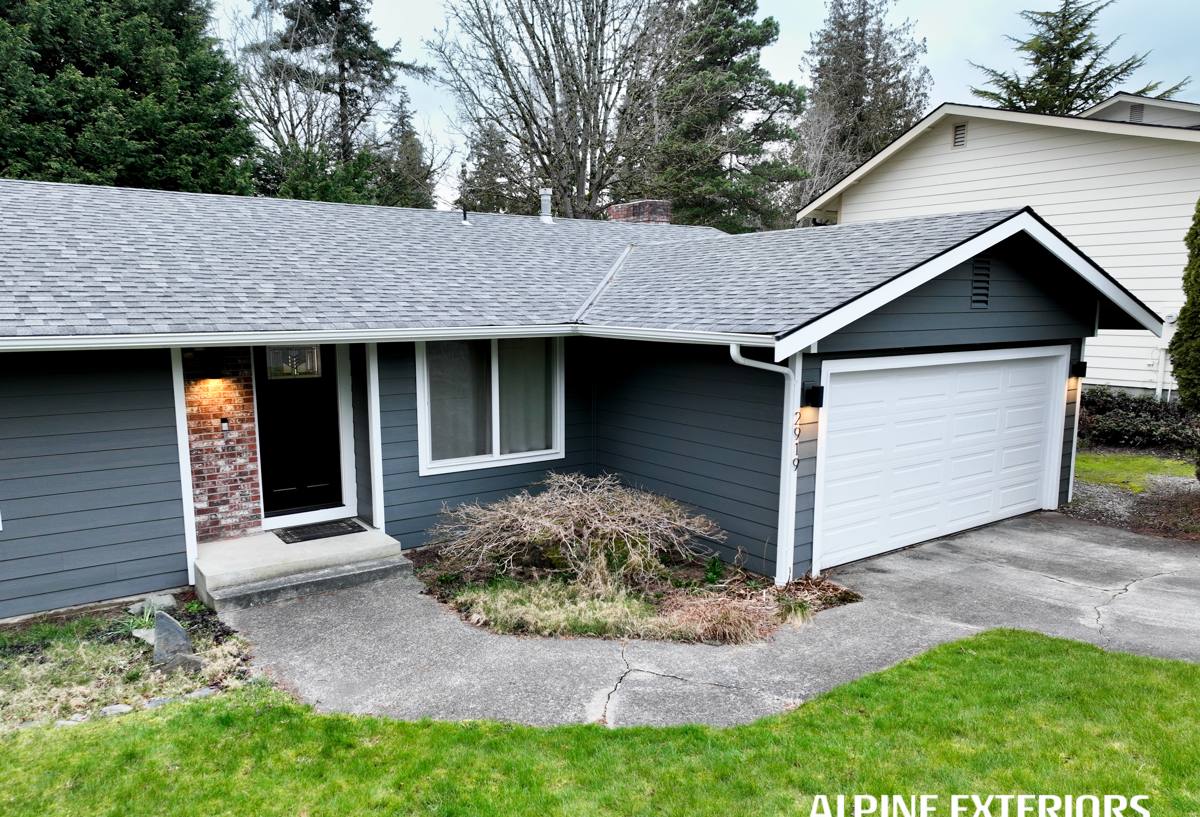
What Puget's Climate Actually Does to a Wall System
Salt Air and Metal Fatigue
Salt air accelerates corrosion on anything metal — nails, flashing, trim fasteners, even the cut edges of some factory finishes. Over years, corroding fasteners loosen their grip, panels start to work free, and small gaps open up that let bulk water behind the cladding. This is a slow process, which is why it's easy to underestimate until a homeowner is dealing with soft sheathing behind siding that still looks okay from the curb.
Driving Rain and Wind-Loaded Water
Bellingham gets a lot of rain, but the Puget area's exposure means that rain often arrives horizontally during winter storms. Wind-driven rain doesn't respect the assumptions built into a lot of standard siding installs — it finds its way under laps, around poorly flashed windows, and into any seam that was caulked instead of properly flashed. A wall system built for straight-down rain isn't automatically built for sideways rain.
Moss, Algae, and a Long Wet Season
North-facing and shaded walls in this part of Whatcom County stay damp for long stretches of the year. That's ideal growing conditions for moss and algae, which hold moisture against the siding surface even after the rain stops. Over time, that constant dampness degrades paint film, softens wood-based products, and gives water a foothold at every seam it colonizes.
What a Correct Siding Replacement Actually Involves
Siding replacement is not just pulling off old panels and nailing up new ones. Done correctly, especially on a home exposed to salt air and driving rain, it's a full wall-assembly job. Skipping any of the following steps is how a brand-new siding job ends up with rot behind it five years later.
- Full tear-off, not overlay: installing new siding over old hides problems instead of solving them and traps moisture between two layers.
- Sheathing inspection: every wall gets checked for soft spots, delamination, or existing rot once the old siding is off — this is the only real chance to catch hidden damage before it's covered up again.
- Weather-resistant barrier: a continuous, correctly lapped water-resistive barrier goes on before any siding, managing bulk water that gets past the cladding.
- Flashing at every penetration: windows, doors, vents, hose bibs, and light fixtures each need proper flashing detail — not caulk as a substitute for flashing.
- Correct fastening: fastener type, length, and spacing matter more in a high-exposure area, and using the wrong ones is a common source of early failure.
- Proper clearances: siding kept off grade, decks, and roof lines by the right margin so it isn't sitting in standing water or splash-back.
Why We Install James Hardie Fiber Cement and Nothing Else
We standardized this company on James Hardie fiber cement siding, and we don't install vinyl, LP SmartSide, Cemplank, Allura, primed spruce, or cedar. That's not a marketing position — it's a decision built around what actually holds up in a climate like this one.
Fiber cement is non-combustible and dimensionally stable, meaning it doesn't expand, contract, warp, or absorb water the way wood-based or engineered-wood products can. In a marine-influenced climate with a long wet season, that stability matters more than it does somewhere dry. Hardie's HZ5 product line is engineered specifically for climates with more moisture exposure, which fits Puget's conditions better than a general-purpose siding line.
The factory-applied ColorPlus finish is baked on under controlled conditions rather than field-painted, which gives it better adhesion and UV resistance than most on-site paint jobs achieve — a real advantage against the moss, algae, and constant damp that degrade painted surfaces here faster than in drier parts of the state. Hardie also backs the product with a strong transferable warranty, which matters on a coastal-adjacent home where the siding is doing more work than average.
We're not going to tell homeowners that other products are junk — vinyl, LP, and cedar all have legitimate uses and loyal installers. But we've made a professional call that in this climate, with these stresses, fiber cement installed to spec is the product that gives homeowners the fewest surprises ten and twenty years down the road, and we'd rather install one product correctly than several products with compromises we'd have to explain later.
How Siding Materials Actually Compare in This Climate
| Factor | Vinyl | Wood / Cedar | Engineered Wood (LP-type) | James Hardie Fiber Cement |
|---|---|---|---|---|
| Moisture absorption | Low, but seams can trap water behind panels | High — swells, cups, rots without diligent upkeep | Moderate — vulnerable at cut edges and exposed panel faces | Very low — dimensionally stable when installed and sealed to spec |
| Salt air / corrosion resistance | Panel itself resists corrosion, but fasteners and trim still corrode | No inherent resistance; finish is the only protection | Finish and edge sealant are the main protection | Non-combustible, stable substrate; factory finish resists salt-driven fade |
| Moss / algae resistance | Surface can host growth, hard to bond fresh paint | Absorbs moisture that feeds growth | Vulnerable where finish is compromised | Factory finish sheds and cleans better than field-applied coatings |
| Long-term maintenance | Low, but early failures are hard to repair invisibly | High — regular sealing/staining required | Moderate — finish touch-ups matter | Low when installed correctly; occasional wash and caulk check |
This isn't a claim that any of these other products is defective — it's a comparison of how each one tends to behave under the specific combination of salt air, wind-driven rain, and heavy moss growth that Puget-area homes face. Under milder conditions, several of these products perform reasonably well.
Our Siding Replacement Process for Puget Homes
1. On-Site Assessment
We walk the exterior wall by wall, checking exposure direction, existing moisture damage, trim and flashing condition, and how much of the home faces the prevailing wind and rain. A wall that catches driving rain off the water needs different attention than a sheltered wall on the same house.
2. Tear-Off and Sheathing Check
Old siding comes off completely. Sheathing gets inspected and any compromised sections are documented and repaired before anything new goes up — this is the step that gets skipped by crews trying to move fast, and it's the one that determines whether the new siding lasts.
3. Weather Barrier and Flashing
We install a continuous weather-resistive barrier and detail flashing at every window, door, and penetration before the first piece of Hardie panel or plank goes on. This is the layer that actually keeps wind-driven rain out of the wall assembly, not the visible siding itself.
4. Hardie Installation to Spec
Panels or lap siding go up following James Hardie's installation instructions on fastener type, spacing, and clearance — the details that keep the manufacturer's warranty intact and keep the assembly performing the way it's engineered to.
5. Trim, Caulking, and Final Detail
Trim, corners, and joints are finished and sealed at the points where water actually tries to get in, not just for appearance.
6. Walkthrough
We walk the finished job with the homeowner, point out anything worth knowing for maintenance, and answer questions before we consider the job done.
Cost Factors for Siding Replacement in the Puget Area
| Cost Factor | Why It Matters Here |
|---|---|
| Sheathing repair scope | Homes with long-term moisture exposure near the water more often need sheathing repair discovered during tear-off |
| Home size and wall complexity | More corners, penetrations, and stories mean more flashing detail and labor |
| Existing siding removal | Multiple layers or difficult-to-remove old material add time |
| Trim and accessory scope | Fascia, soffit, and trim work bundled into the project change total scope |
| Access and site conditions | Slopes, tight lot lines, and staging space affect labor time |
We give honest, project-specific estimates rather than quoting a blind per-square-foot number, because the sheathing condition alone can swing a Puget-area project significantly once the old siding comes off.
Signs Your Siding Needs Replacing Now, Not Later
- Soft or spongy spots when you press on the siding, especially near the bottom courses or under windows
- Persistent moss or algae staining that returns within weeks of cleaning
- Paint or finish that's peeling, bubbling, or chalking heavily on one side of the house
- Visible gaps opening at seams, corners, or trim joints
- Warping, cupping, or panels that no longer sit flat against the wall
- Rusted or backed-out fasteners visible on the siding face
- Interior signs — musty smell, staining, or soft drywall near exterior walls
Any one of these on its own isn't necessarily an emergency, but a wall showing two or three of them is usually further along than it looks from the ground.
Why a Crew That Already Works Puget Matters
A siding crew that regularly works this part of Bellingham already knows how the wind and rain hit these lots, where moss builds up fastest, and what condition to expect once old siding comes off a home that's spent years this close to salt air. That's not something you can fully substitute with a general checklist — it comes from having actually opened up walls in this specific area and seen what the climate does to them over time.
It also means fewer surprises during the estimate. When a crew already has a feel for how Puget homes typically hold up, they can flag likely sheathing issues or flashing problems before demo even starts, instead of discovering everything mid-project.
Warranty and Long-Term Value
James Hardie backs its fiber cement products with a strong, transferable limited warranty — a real asset on a home in a demanding coastal-adjacent climate, and one that can matter to a future buyer if the home sells. Installation quality is what keeps that warranty meaningful: fastener choice, flashing, and clearances done correctly are usually what's required to keep coverage intact, which is part of why we install strictly to Hardie's specifications rather than cutting corners to save labor time.
Beyond the manufacturer warranty, the real long-term value of a correct siding replacement in this area is fewer callbacks, fewer hidden moisture problems, and a wall system that's actually built for the wind and rain it will face every winter rather than for an average climate that doesn't describe Puget particularly well.
If you're seeing early wear on your Puget-area home's siding, or you're just planning ahead for a home this close to the water, we're happy to walk the exterior with you and give a straight, no-pressure estimate — no obligation, and no pressure to sign anything on the spot. Use the form below to get started.