 Bellingham Siding
 Building a Deck That Actually Holds Up in Silver Beach
A deck in Silver Beach lives a harder life than the same deck would in a dry inland climate. Whatcom County's marine air, long stretches of driving rain, and the shoulder seasons where nothing dries out for weeks at a time all work against wood, fasteners, and finishes. A deck that looks great the day it's finished can start showing problems within a year or two if it wasn't built with this specific climate in mind. We've built and repaired enough decks in this neighborhood to know which shortcuts cause callbacks and which details are worth the extra time.
This page covers what we think about when we design and build a custom deck for a Silver Beach property — the site conditions, the material choices, the parts of the structure nobody sees, and the code requirements that keep it safe for years, not just for the first summer.
What Rain and Moss Season Actually Do to a Deck
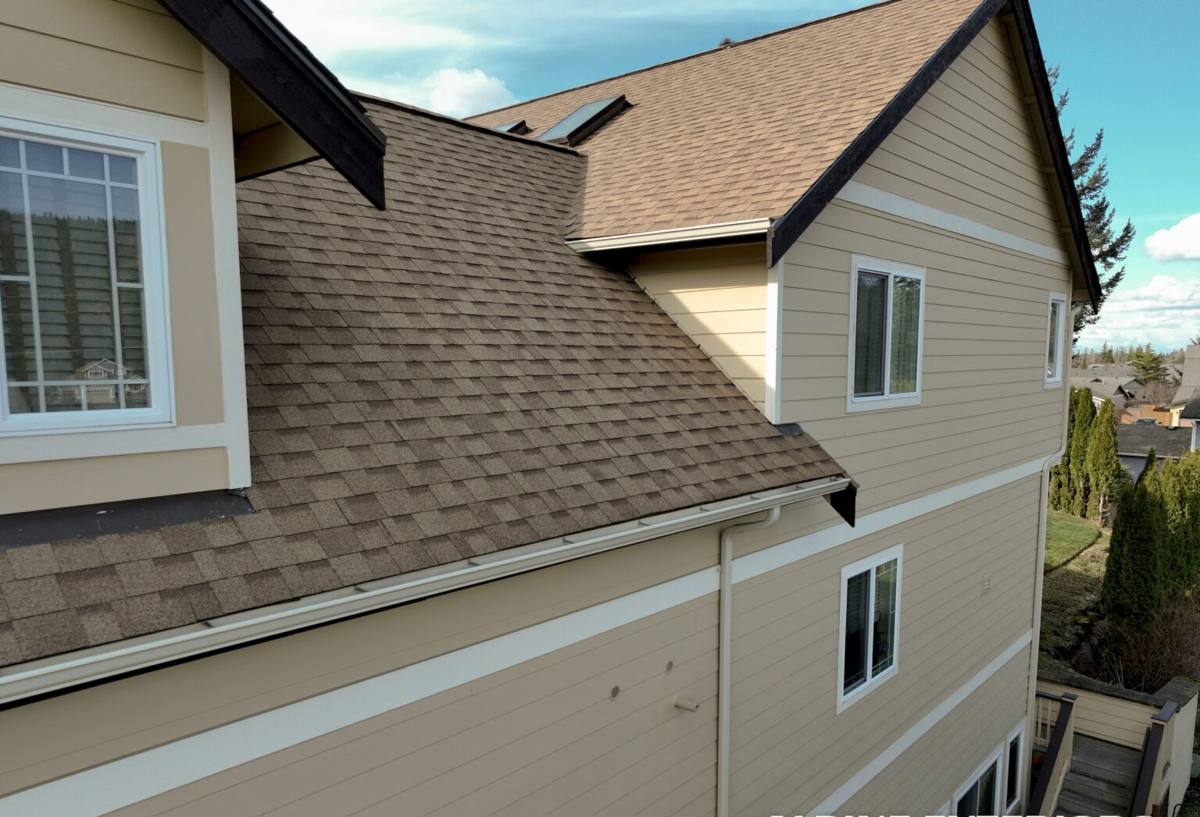
Most deck failures aren't dramatic. They're slow. Water finds a way into a joint, a fastener, or a ledger connection, and it just sits there because the air is too damp to dry it out quickly. Over a season or two, that turns into rot, corrosion, or a green film of algae and moss that makes the surface slick.
The three things we see most often on older decks
- Moss and algae buildup on the walking surface, especially in shaded corners or under tree canopy, which becomes a slip hazard in wet weather
- Rust streaking or fastener failure where standard hardware was used instead of coated or stainless fasteners
- Soft or rotted framing near the ledger board, where the deck attaches to the house, from water intrusion behind flashing that was never installed correctly
None of these are inevitable. They happen when a deck is built to a generic spec instead of to the conditions it will actually sit in. Building for Bellingham's climate means assuming the deck will stay wet for long stretches and designing every layer to handle that, not just resist it for a season.
Building for the Site: Slopes, Footings, and Drainage
Many properties around Silver Beach sit on sloped or uneven lots, which changes how a deck needs to be supported. A flat backyard deck and an elevated deck stepping down a slope are two different engineering problems, even if the decking on top looks the same.
What we look at before we design anything
- Soil conditions and drainage on the site — Whatcom County's wet winters mean standing water at footings is a real risk if grading isn't accounted for
- Frost depth for footings, so posts are set below the frost line and won't heave or shift over time
- Whether concrete footings or helical piers make more sense for the slope, access, and soil type
- Airflow underneath the deck — a low deck with poor ventilation traps moisture and accelerates rot and moss growth on the underside of the joists
Getting the substructure right is less visible than picking decking boards, but it's the part that determines whether the deck is still solid in fifteen years or needs major repair in five.
Choosing Decking Material for Marine Air and Constant Moisture
There's no single "best" decking material — there's a best material for your budget, your maintenance appetite, and how much shade and moisture your specific yard gets. We'll walk through the honest trade-offs rather than push one product.
| Material | Moss/Algae Resistance | Maintenance | Typical Lifespan |
|---|---|---|---|
| Pressure-treated wood | Low — needs regular cleaning and sealing to resist growth | Annual cleaning and re-sealing recommended | 10-15 years with upkeep |
| Cedar | Moderate — natural oils help some, but still needs care in shaded, damp spots | Periodic cleaning, staining or sealing every 2-3 years | 15-20 years with upkeep |
| Capped composite | Higher — capped surface resists moisture absorption and staining | Occasional washing, no sealing or staining | 25-30+ years, per manufacturer warranty |
| PVC decking | Highest — fully synthetic, minimal organic material for growth to grip | Occasional washing | 25-30+ years, per manufacturer warranty |
Wood decking isn't a bad choice — plenty of homeowners like the look and are willing to keep up with cleaning and sealing. But in a shaded, damp yard, wood is going to need more attention to stay ahead of moss than a capped composite or PVC board will. We'll tell you honestly which fits your site and your maintenance plans, rather than upselling the most expensive option by default.
The Details That Don't Show Up in Photos: Flashing, Fasteners, and the Ledger
The single most important connection on most decks is the ledger board — the piece that attaches the deck to the house. It's also the connection most likely to fail if it's not flashed correctly, because it sits right where water running off the house meets the framing.
What a correct ledger and fastener setup includes
- Proper metal flashing that directs water away from the ledger board and the house's siding or sheathing, not into it
- A gap or water-resistant barrier between the ledger and the house band board so moisture doesn't get trapped against the wall
- Stainless steel or coated structural fasteners and hangers rated for outdoor and coastal-air exposure — standard hardware corrodes faster in this climate
- Proper board spacing on the decking surface to allow water to shed and air to circulate, rather than pooling between boards
This is the work that's invisible once the deck is finished, which is exactly why it's the work that gets cut corners on cheap jobs. It's also the work that determines whether you're dealing with a rotted ledger and a wet crawlspace wall in eight years.
Railings, Guardrails, and Code Requirements
Any deck that sits above a certain height off grade needs a code-compliant guardrail, and that requirement gets enforced through the local permitting process. Guardrail height, baluster spacing, and structural attachment all matter for safety and for passing inspection — this isn't a place to guess.
Whatcom County and the City of Bellingham both require permits for most new deck construction, particularly for elevated decks or any structure attached to the house. Permit review also checks footing depth, structural sizing, and guardrail compliance. We handle the permit process as part of the build so you're not the one tracking down inspections or code requirements.
Our Process, Start to Finish
- On-site consultation: we walk the yard, look at slope, drainage, sun and shade patterns, and talk through how you actually plan to use the deck
- Design and material selection: we lay out size, layout, and material options with honest cost and maintenance trade-offs for your specific site
- Permitting: we prepare and submit what's required for Whatcom County or City of Bellingham approval before any framing starts
- Foundation and framing: footings, posts, and structural framing are built to span and load requirements, with attention to drainage and ventilation underneath
- Decking, railings, and finishing: decking is installed with correct spacing and fastening, railings are set to code, and any staining or sealing is completed
- Final walkthrough: we go over the finished deck with you, including what maintenance it will and won't need
Keeping a Silver Beach Deck Looking Right Year-Round
A well-built deck still needs some seasonal attention in this climate — the goal is to make that upkeep light, not eliminate it entirely.
- Sweep leaves and debris off the surface regularly, especially in fall, so moisture doesn't sit trapped underneath
- Rinse or wash the deck surface a couple of times a year to knock back early moss and algae growth before it takes hold
- Check and clear gaps between boards so water keeps draining freely rather than pooling
- For wood decking, plan on re-sealing or staining every 2-3 years; composite and PVC decking generally just need washing
- Trim back overhanging branches or vegetation that keeps sections of the deck shaded and damp longer than the rest
Homeowners who stay ahead of these simple steps get significantly more life out of their deck than those who don't touch it after installation.
Why It Matters That We Already Work in Silver Beach
A crew that builds decks all over the country will build to a national average spec. A crew that works Silver Beach regularly knows how wet this particular corner of Bellingham stays, which yards hold moisture longest, and which framing and fastener choices actually pay off here versus which ones are wasted money. That local knowledge shows up in fewer callbacks, less maintenance for you, and a deck that's still solid well past the point where a generic build would need major repair.
If you're planning a new deck or replacing one that's showing its age, we're happy to walk your property, talk through honest material and design options for your site, and put together a straightforward estimate — no pressure, no obligation. Use the form below to get started.