 Bellingham Siding
 Building New in Silver Beach? The Windows Have to Be Right From Day One
Silver Beach is one of those Bellingham neighborhoods where new construction sits right next to homes that have been through forty or fifty Whatcom County winters. If you're framing a new house here, the windows you choose and how they're installed will decide whether that house stays dry and efficient for the next few decades — or whether you're chasing rot, fog between panes, and stuck sashes within ten years. New-construction windows are a different job than replacement windows, and getting that job right the first time matters more here than almost anywhere else in the county.
Our climate doesn't forgive shortcuts. Long stretches of driving rain, a marine air layer that carries salt and moisture well inland from Bellingham Bay, and a moss season that can run eight or nine months out of the year all put steady pressure on a building envelope. Windows are one of the biggest penetrations in that envelope, and a poorly flashed or poorly sealed unit is where water finds its way in first.
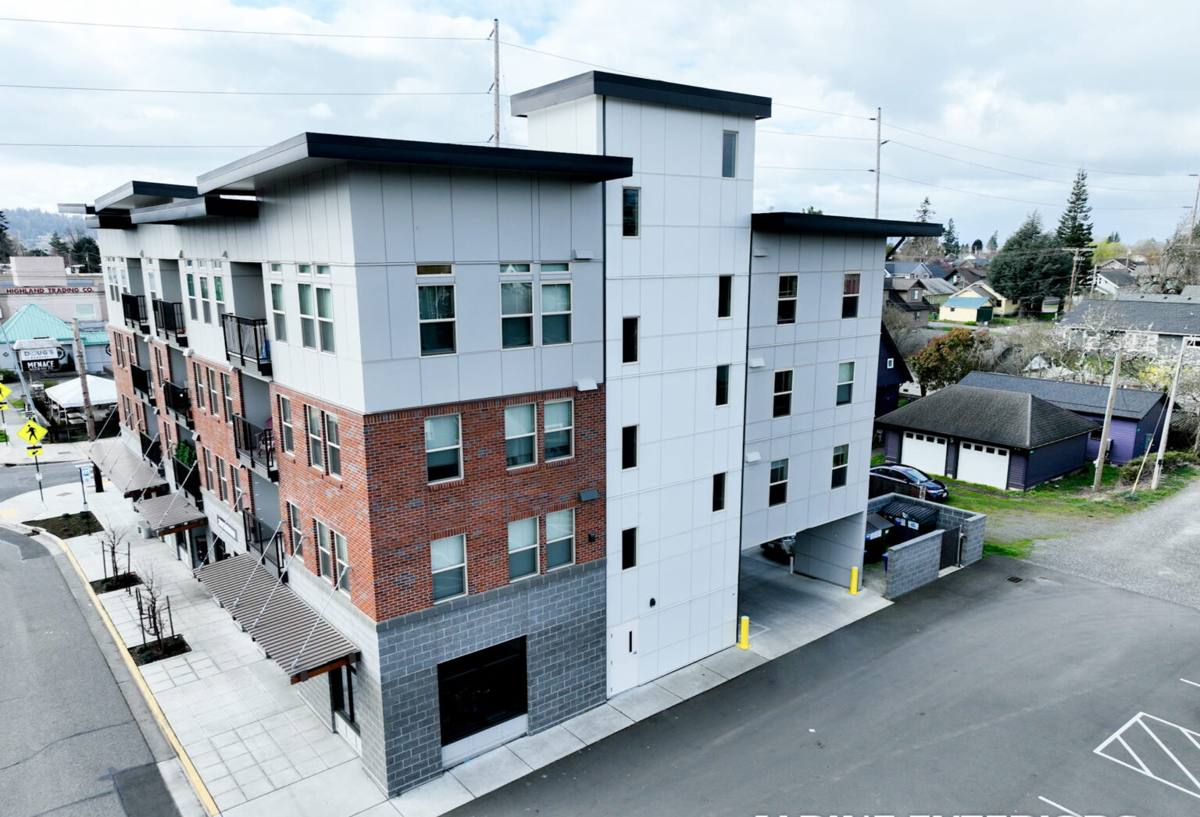
What This Climate Actually Does to a Window Opening
New-construction framing gives us bare rough openings and a chance to build the water management right from the sheathing out. That's an advantage over remodel work, but only if it's used correctly. In Whatcom County, a few conditions show up again and again:
- Driving rain pushed by wind off the Sound and the Strait means water hits window openings horizontally, not just vertically — flashing has to shed water outward at every layer, not just at the sill.
- Persistent marine air carries salt and moisture that accelerates corrosion on fasteners, hinges, and cheaper hardware, even well away from the immediate waterfront.
- Extended moss and mildew season keeps north- and shade-facing walls damp for months at a time, which is exactly where sloppy sealant work turns into hidden sheathing rot.
- Freeze-thaw swings, while milder here than inland climates, still stress caulk joints and sealants that weren't rated for our humidity levels.
None of this means new construction here is harder than anywhere else — it means the sequence of flashing, wrap, and sealant has to be followed in order, every time, with no steps skipped because "it's a new house so it'll be fine."
New-Construction Windows vs. Replacement Windows: Why the Method Changes Everything
A lot of homeowners assume a window is a window. The install method is actually the bigger factor in long-term performance, especially in a wet climate. New-construction units have a nailing fin that gets integrated directly into the wall's water-resistive barrier (WRB) before siding goes on. That's a very different sequence than a pocket or insert replacement window going into an existing, already-clad opening.
| Factor | New-Construction Install | Replacement/Insert Install |
|---|---|---|
| Access to rough opening | Fully open — sheathing and studs exposed | Limited — working inside an existing frame |
| Flashing integration | Nailing fin taped into WRB in correct shingle-lap order | Relies on existing flashing, sealant, and trim |
| Sill pan drainage | Built from scratch, sloped and back-dammed before window sets | Often can't be added without removing siding |
| Timing in build schedule | Must sync with framing, WRB, and siding crews | Standalone project, any time of year |
| Long-term risk if done wrong | Hidden water intrusion behind finished siding | Usually visible sooner — easier to catch early |
The upside of new construction is that we get to build the drainage plane correctly from bare studs, with no compromises for existing trim or siding. The downside is that mistakes get buried under siding and aren't visible again until there's a problem — which is exactly why the sequence has to be right the first time.
What a Correct Install Actually Involves
The Sill Pan Comes First
Before a single window ever sets into the opening, the rough sill needs a sloped, back-dammed pan flashing so any water that gets past the window has somewhere to go — out, not into the wall cavity. This is the step we see skipped most often on rushed new-construction jobs, and it's the single biggest predictor of a dry wall assembly ten years out.
Shingle-Lap Sequencing
Flashing tape and the WRB need to overlap in the correct order — sill, then jambs, then head — so water always sheds down and out over the layer below it, never up and under. In a region with as much wind-driven rain as ours, a reversed lap at the head flashing is a slow leak waiting to happen.
Fastening and Shimming
The window has to be plumb, level, and square in the opening, shimmed at the right points so the frame doesn't rack or bow, and fastened through the nailing fin per the manufacturer's schedule — not just "enough nails to hold it." Over-fastening or under-fastening both cause problems, from warped frames to fins that pull loose in wind events.
Interior and Exterior Sealant
A quality low-expansion foam or backer rod and sealant at the interior perimeter controls air leakage and condensation risk, while the exterior gets sealed per the window manufacturer's instructions — often leaving a designed weep path rather than fully caulking the bottom, which would trap any water that does get in.
Product Considerations for a Wet, Salt-Air Climate
Frame material and hardware choice matter more here than in a dry inland climate. We steer new-construction clients toward materials and glazing packages that hold up to sustained moisture exposure and coastal-influenced air, rather than whatever is cheapest per unit:
| Component | What to Look For Locally | Why It Matters Here |
|---|---|---|
| Frame material | Vinyl with UV/moisture-stable formulation, fiberglass, or properly clad wood | Resists swelling, warping, and the slow degradation that comes from months of damp air each year |
| Hardware and fasteners | Corrosion-resistant coatings rated for coastal/marine exposure | Salt-laden air travels well inland off Bellingham Bay and accelerates corrosion on standard hardware |
| Glazing package | Dual or triple pane, low-E coating, argon or krypton fill | Reduces interior condensation, which feeds mold and moss growth on and around frames |
| Weatherstripping | Compression seals rated for sustained wet-season contact | Standard seals can compress and lose elasticity faster under near-constant humidity |
We're not chasing the most expensive option on every job — we're matching the product to what actually holds up under our conditions, and being upfront when a cheaper unit will cost more in maintenance and early replacement than it saves upfront.
How We Work on New-Construction Sites in Silver Beach
New-construction window work only goes well when it's coordinated with the rest of the build, not treated as an isolated trade. Our process on Silver Beach projects generally runs like this:
- Plan review before framing is finalized — confirming rough opening sizes match ordered window units, catching sizing conflicts before they become change orders.
- Site visit at WRB stage — checking that the house wrap or building paper is installed in a sequence that will accept our flashing correctly.
- Sill pan and flashing install — done in the correct shingle-lap order before the window ever goes into the opening.
- Window set, shim, and fasten — to manufacturer spec, checked for plumb, level, and square.
- Exterior seal and integration with siding crew — making sure trim and siding lap over our flashing correctly, not under it.
- Final walkthrough — operating every unit, checking weep paths, and confirming interior seals before drywall closes the wall up.
Working regularly in this neighborhood means we already know which GCs and framers do things a certain way, what inspectors here tend to flag, and where the local drainage and grading tends to push water on a typical Silver Beach lot. That familiarity shortens the coordination time on a new build and reduces the back-and-forth that slows a schedule down.
Mistakes We See on Rushed New-Construction Jobs
Most window failures we get called out to repair in newer Bellingham-area homes trace back to a handful of repeatable mistakes made during the original install — almost never a defective window itself:
- Sill pan skipped or installed flat instead of sloped, so any intrusion has nowhere to drain
- Flashing tape lapped in the wrong order, directing water into the wall instead of over the WRB
- Windows fully caulked at the bottom, trapping incidental water inside the frame instead of letting it weep out
- Fasteners driven at an angle or spaced incorrectly, leaving fins loose enough to work free in wind
- Interior gaps left unsealed, allowing warm moist household air to condense inside the wall cavity
- Standard-grade hardware used where corrosion-resistant fasteners were called for given our marine-influenced air
Every one of these is avoidable with a correct sequence and a crew that isn't rushing to get to the next house on the schedule.
What Drives Cost on a New-Construction Window Package
Homeowners and builders both want a straight answer on cost, and the honest answer is that it depends on a handful of specific factors rather than a flat per-window price:
| Factor | Effect on Cost |
|---|---|
| Frame material (vinyl vs. fiberglass vs. clad wood) | Fiberglass and clad wood run higher than vinyl but offer more longevity in a wet climate |
| Window size and configuration | Larger units, custom shapes, and multi-unit combinations cost more than standard operable sizes |
| Glazing package | Triple pane and upgraded low-E coatings add cost but reduce condensation and energy loss |
| Number of openings | Whole-house packages typically run a lower per-unit cost than piecemeal ordering |
| Coordination complexity | Tight build schedules or multiple trades on-site at once can add labor time |
We give straightforward, itemized numbers based on the actual window schedule for the house — not a vague estimate — so builders and homeowners can compare real options rather than guessing.
Why Hiring a Crew That Already Works Silver Beach Matters
New-construction window installation isn't a service you want learned on your house. A crew that already works this part of Bellingham has already seen how water moves on similar lots, already knows which flashing sequences hold up through a full Whatcom County wet season, and already has a working relationship with the framers and siding crews who need to hand off cleanly at each stage. That familiarity shows up as fewer callbacks, fewer surprises during inspection, and a building envelope that's actually sealed the way it was designed to be — not just the way it looked finished on install day.
If you're building new in Silver Beach and want a window package and install plan that's actually built for this climate, we're happy to walk your plans, talk through product options, and put together a straightforward, no-pressure estimate using the form below.