 Bellingham Siding
 Siding Installation in Silver Beach: What the Climate Actually Does to a Home
Silver Beach is one of Bellingham's older, more established residential pockets, with a mix of homes ranging from mid-century originals to newer construction tucked in among mature trees. That tree cover and proximity to the water are part of what make the neighborhood desirable — and part of what make siding one of the hardest-working materials on the house. Whether a property sits close to the water or back under a canopy of firs and cedars, Whatcom County's marine climate reaches every lot in Bellingham. Salt-tinged air drifts inland off the water, driving rain comes sideways for months at a stretch in fall and winter, and shaded, damp yards hold onto moisture long enough to grow a stubborn moss season that can run from October well into spring.
None of that is unique to Silver Beach, but it's a real, ongoing load on exterior materials, and it doesn't take a break because a homeowner is between projects. Siding that isn't installed correctly — regardless of brand — starts losing the fight to moisture and organic growth years before it should. That's the frame for everything below: this page is specifically about installing siding correctly on a Silver Beach home, not siding installation in general.
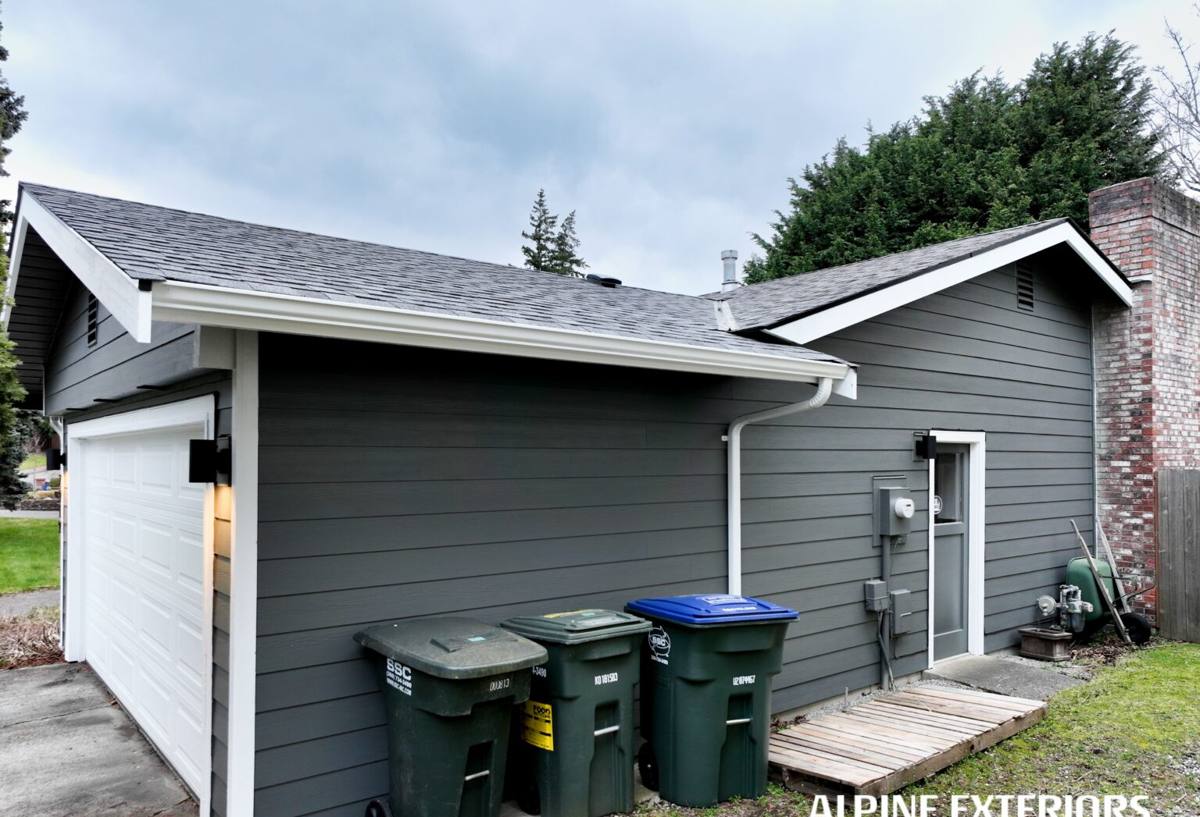
Why Installation Quality Matters More Than Which Product You Pick
Homeowners often spend their research time comparing siding materials and very little time thinking about installation, but installation is where most premature failures actually start. A high-quality fiber cement product installed with the wrong clearances, poor flashing, or rushed caulking will fail faster than a mid-tier product installed to spec. In a climate like Bellingham's, where wood-framed walls sit behind siding that's rarely fully dry for long stretches of the year, the margin for error is smaller than it is in drier parts of the country.
That's especially true in a neighborhood like Silver Beach, where mature landscaping means a lot of homes have siding that stays shaded and damp longer than it would on an open lot. Moss and algae don't just look bad — sustained moisture against a wall assembly is exactly what rots sheathing, corrodes fasteners, and voids warranties. The fix isn't a different paint color or a pressure wash every spring; it's a siding system and an installation process built to shed water and dry out fast.
What a Correct James Hardie Installation Actually Involves
We install James Hardie fiber cement siding exclusively, and we do it because the product performs when it's put on right — not because it's the only thing on the market. Getting it right means paying attention to details that don't show up in a sales brochure.
Weather-Resistive Barrier and Flashing
Every installation starts behind the siding, not at it. A continuous weather-resistive barrier, properly lapped and sealed, gives the wall a second line of defense if any water gets past the cladding — which, over decades in this climate, it eventually will at some point. Flashing at windows, doors, decks, and any place two roof or wall planes meet is where most real-world leaks originate, and it's the step that gets rushed on lower-bid jobs.
Fastening and Clearances
James Hardie publishes specific fastener types, spacing, and penetration requirements, along with minimum clearances from grade, roof lines, and decks. Those clearances aren't cosmetic guidelines — they're what keeps the bottom edge of the siding from sitting in standing water or snow-melt runoff, which is one of the most common failure points we see on homes that had siding installed by a crew unfamiliar with the product.
Joints, Caulking, and Paint-Grade Finishing
Butt joints, corners, and trim intersections need to be treated correctly and, where called for, caulked with a product compatible with Hardie's ColorPlus finish. Sloppy joint work is often invisible on installation day and becomes obvious two or three winters later, once water has had time to work into gaps that should have been sealed.
Choosing the Right Hardie Product Line for a Silver Beach Home
James Hardie makes several distinct product lines, and the right one depends on the home's architecture, exposure, and the look a homeowner wants. We walk through this in person, but here's the general breakdown:
| Product | Best Fit | Notes for This Climate |
|---|---|---|
| HardiePlank lap siding | Traditional and craftsman-style homes | Most common choice; wide range of exposures and textures, pairs well with the region's mixed architecture |
| HardiePanel vertical siding | Modern builds, accent walls, gable ends | Clean lines; needs correct board-and-batten detailing at seams to shed water properly |
| HardieShingle siding | Cottage or shingle-style homes | Popular for a coastal Pacific Northwest look; more labor-intensive install, worth it when done to spec |
| HardieTrim boards | Corners, fascia, window and door trim | Matched to the siding line so the whole envelope moves and weathers consistently |
All of these are available in Hardie's factory-applied ColorPlus finish, which matters more in a shaded, damp neighborhood than it does in a drier climate — a factory finish resists fading and holds up to repeated wet-dry cycling far better than field-applied paint, and it comes with its own finish warranty separate from the product warranty.
HZ5 vs HZ10: Why the Climate Zone Rating Matters Here
James Hardie engineers its siding in region-specific formulations, labeled HZ5 and HZ10, tuned for different combinations of moisture and freeze-thaw exposure. Bellingham's climate — wet, moderate temperatures, long stretches of high humidity — calls for the correct HZ rating for this part of Washington. Installing the wrong regional formulation, or installing correctly-rated product with the wrong practices, undercuts the whole point of buying an engineered product in the first place. This is one of the reasons we don't treat "James Hardie" as a single generic product; we spec the line and formulation appropriate to Whatcom County conditions.
Signs a Silver Beach Home Needs Replacement Siding, Not Just a Repair
Not every siding problem means a full tear-off. But there's a point where patching becomes a way of postponing the inevitable rather than solving the problem. Here's what tells us a home needs a full installation rather than a repair:
- Soft or spongy spots when you press on the siding, especially near the bottom courses or under windows
- Persistent moss or algae growth that returns within weeks of cleaning
- Visible gaps, warping, or buckling along multiple sections rather than one isolated board
- Paint that's failing evenly across large areas rather than in one weathered spot
- Interior signs — musty smells, peeling interior paint, or staining near exterior walls
- Siding material that's already vinyl, older masonite, or damaged wood and is past the point of being salvageable
- Visible daylight or drafts at trim and corner boards
If a home is only showing one or two of these in a contained area, a targeted repair may be reasonable. Once it's several of these across the exterior, the wall assembly underneath is usually compromised enough that a full re-side is the more honest recommendation — and the one that actually protects the structure long-term.
How Our Process Works
1. On-Site Assessment
We walk the exterior with the homeowner, check current siding and sheathing condition where accessible, and talk through sun exposure, shade, drainage, and any trouble spots the homeowner has already noticed.
2. Product and Line Selection
We recommend the Hardie product line, profile, and color based on the home's style and exposure — not a one-size-fits-all package.
3. Written Estimate
A clear, itemized estimate covering material, labor, tear-off (if applicable), flashing and weather barrier work, and trim.
4. Installation to Manufacturer Spec
Correct fastening, clearances, flashing, and joint treatment — the details covered above — done by a crew trained specifically on Hardie's installation requirements, not general siding practices adapted on the fly.
5. Final Walkthrough
We go over the finished exterior with the homeowner before considering the job done, including care and maintenance expectations specific to a shaded, damp lot.
What Affects the Cost of a Siding Installation
Every home is different, so we don't publish flat pricing, but these are the main variables that move a quote up or down:
| Factor | Why It Matters |
|---|---|
| Tear-off vs. new construction | Removing and disposing of existing siding adds labor and dump fees |
| Sheathing condition | Rot discovered once old siding comes off may need repair before new siding goes on |
| Home shape and trim detail | Corners, dormers, and multiple roof lines increase cutting, flashing, and labor time |
| Product line and profile | Lap, panel, and shingle styles carry different material and labor costs |
| Access and site conditions | Steep lots, tight setbacks, or mature landscaping close to the walls can slow staging and installation |
| Trim and accessory scope | Full trim replacement versus reusing sound existing trim changes the total |
We'll always tell a homeowner up front if sheathing repair or additional scope looks likely, rather than surprising them with it mid-project.
Why It Matters to Hire a Crew That Already Works This Neighborhood
A crew that regularly works in Silver Beach and the surrounding Bellingham neighborhoods has already seen how the local combination of shade, moisture, and salt-tinged air behaves on real houses over multiple seasons — not just on installation day. That experience shows up in small decisions: where to add extra flashing attention, which orientations tend to hold moss longest, how to sequence a job around Whatcom County's wet-season weather windows. It also means a homeowner is working with a crew that's answerable locally, not a traveling outfit that's moved on by the time a warranty question comes up.
If you're weighing a siding replacement or new installation for a Silver Beach home, we're happy to walk the exterior with you, talk through what we're seeing, and put together a straightforward, no-pressure estimate. There's no cost or obligation to have a look — just use the form below to get started.