 Bellingham Siding
 Board & Batten Siding on South Hill: What the Climate Actually Demands
South Hill sits up out of the flats of Bellingham, which means it catches wind and wind-driven rain that lower-lying neighborhoods are partially sheltered from. Add in Whatcom County's marine layer, salt-laden air off Bellingham Bay, and a moss season that can run eight months of the year on shaded, north-facing walls, and you have a set of conditions that punishes the wrong siding choice fast. Board and batten is a popular look on the hill's older character homes and newer builds alike, but the look only holds up if the material and the install both respect what this specific microclimate does to a house.
We're a Bellingham-based crew, and South Hill is a neighborhood we're in regularly. That matters here more than it does with a lot of other exterior work, because board and batten depends on details — flashing at the battens, gaps for movement, fastening schedule — that are easy to get wrong once and expensive to fix later.
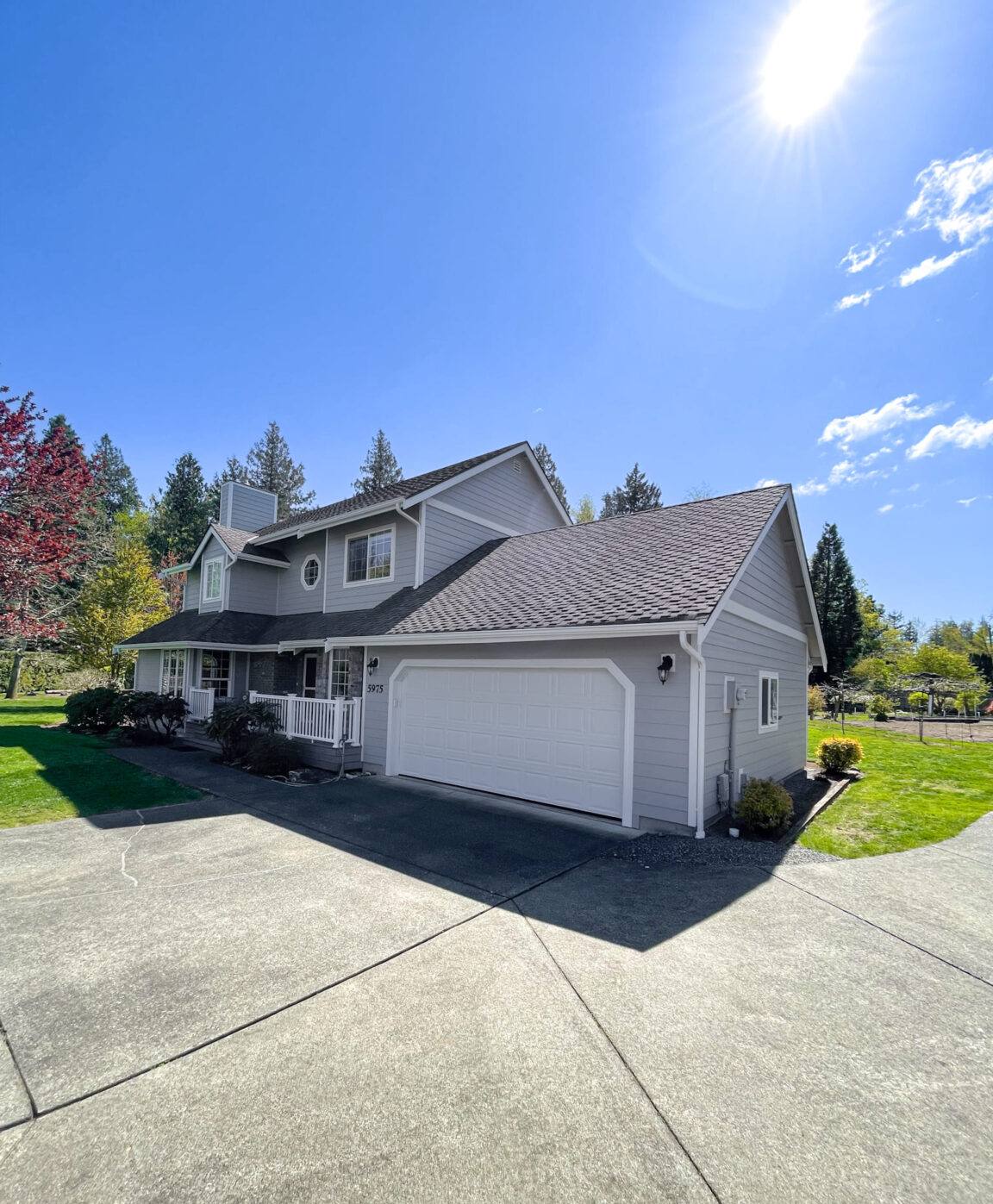
Why Board & Batten Is a Good Fit for South Hill — With Caveats
Board and batten reads well against South Hill's mix of craftsman-era homes and newer construction. The vertical lines suit both a traditional and a more modern exterior, and it pairs cleanly with stone or masonry accents that show up on the hill's larger lots. That's the upside.
The caveat: board and batten has more linear feet of seams and butt joints per square foot of wall than lap siding does. Every batten strip is a place where water can be pushed by wind-driven rain, and every horizontal butt joint is a place where it can collect if it isn't flashed correctly. On an exposed South Hill elevation, that adds up. This isn't a reason to avoid the style — it's a reason to be precise about the substrate and the install.
Where It Performs Best
- Gable ends and upper-story accent walls that get less direct wetting than ground-level walls
- South- and west-facing elevations that dry out between rain events (versus permanently shaded north walls, where moss and mildew pressure is highest)
- Homes with decent roof overhangs that already keep the wall assembly drier
- Mixed-material exteriors where board and batten is an accent rather than the only cladding
Why We Only Install James Hardie for This Application
Board and batten is available in wood, engineered wood, vinyl, and fiber cement. We install James Hardie fiber cement exclusively, and on a style with this many seams, the reasoning is more pronounced than on plain lap siding.
Wood and primed spruce board and batten look right at first, but they're end-grain and edge-grain intensive by design — every batten has exposed edges, and every edge is where moisture gets in first. On a hill that sees this much driving rain and prolonged dampness, that means more frequent repainting, more caulk maintenance, and a real risk of rot at the battens within a handful of years if upkeep slips even once.
Vinyl board and batten is low-maintenance in the sense that it doesn't rot, but it's a thin, flexible material that telegraphs waviness on long vertical runs, and it wasn't built to handle the batten-and-groove detailing that gives the style its crisp shadow lines. It also doesn't take the deep, dark accent colors that make board and batten pop — those colors absorb heat and can warp vinyl over time.
James Hardie's fiber cement holds a factory-applied ColorPlus finish that doesn't rely on field-applied paint sealing every batten edge, it's non-combustible, and it's engineered specifically for this climate under the HZ5 product line. It holds a straight line on long vertical runs, takes deep colors without the heat-warp risk, and comes with a strong transferable warranty that follows the house, not just the original owner. For a style that lives or dies on crisp lines and sealed seams, that's the material we're willing to put our name behind.
What a Correct Board & Batten Install Involves
The board and batten look can be achieved a few different ways with Hardie products, and the method matters as much as the material.
The System, Not Just the Boards
- Weather-resistive barrier installed and lapped correctly behind the whole assembly — this is the actual water management layer, and the siding is a second line of defense, not the first
- Vertical furring or a rainscreen gap in many applications, so water that does get behind the battens has somewhere to drain and dry rather than sitting against the sheathing
- Flashing at every horizontal butt joint and at all penetrations — hose bibs, light fixtures, vents — sealed before the boards go on top
- Correct fastener spacing and type per Hardie's published fastening schedule for the specific product line and exposure
- Expansion gaps at trim and adjacent materials, caulked with a product rated for the movement fiber cement actually goes through in this climate
Skipping the rainscreen gap or the butt-joint flashing is the single most common corner cut we see on board and batten jobs, because it doesn't show up as a problem for a year or two. On an exposed South Hill wall, it shows up eventually — usually as staining, then as soft spots at the base of battens.
Moss, Salt Air, and Long-Term Maintenance on the Hill
Two climate factors specific to this area deserve their own mention because they affect board and batten differently than they affect flat lap siding.
Moss and Algae
Shaded battens on north-facing walls stay damp longer than the field of a flat wall would, because the vertical strips create micro-shadows and slow airflow right at the surface. Hardie's factory finish resists this better than raw wood, but no siding is moss-proof. An annual soft wash (not pressure washing, which can drive water behind the battens) keeps growth from taking hold in the grooves.
Salt Air
Bellingham Bay's salt air is corrosive to fasteners and metal flashing over time. We spec corrosion-resistant fasteners and flashing on every board and batten job here, not just the ones closest to the water — South Hill's elevation doesn't fully shield it from salt-laden wind.
| Factor | Why It Matters on South Hill | How We Address It |
|---|---|---|
| Wind-driven rain | Elevation and exposure push water harder into seams than on sheltered lots | Rainscreen detailing, flashed butt joints |
| Moss/algae | Shaded battens hold moisture longer, especially north walls | ColorPlus factory finish, drainage gap, homeowner soft-wash guidance |
| Salt air | Accelerates fastener and flashing corrosion | Corrosion-resistant fasteners and flashing on every job |
| Temperature swings | Coastal freeze-thaw and seasonal humidity shifts cause material movement | Correct expansion gaps, rated caulk, HZ5-engineered board |
Cost Factors for South Hill Board & Batten Projects
We won't quote a number without seeing the house, but the real cost drivers on this style are consistent from job to job:
- Wall height and complexity — gables, dormers, and multiple roof lines add cutting and flashing time
- Whether the substrate needs repair before siding goes on (a common finding once old siding comes off a hillside home)
- Batten spacing and reveal width — tighter spacing means more material and more fastening
- Access — steep South Hill lots sometimes need staging or lift work that flatter lots don't
- Whether board and batten is full-coverage or an accent alongside another Hardie profile
Our Process on South Hill Jobs
- On-site walkthrough — we look at exposure, existing siding condition, and any moisture damage before quoting anything
- Substrate check once old siding is off — sheathing and framing get repaired before anything new goes up, never covered over
- Weather barrier and drainage plane installation — the part of the job that's invisible once it's done, and the part that determines whether the siding lasts
- Hardie board and batten installation to manufacturer fastening and flashing specs
- Final detailing — trim, caulking at expansion joints, and a walk-through with the homeowner
Because we're already working in Bellingham and on South Hill regularly, we know which elevations on this hill tend to take the worst weather and we plan the flashing and drainage detailing accordingly rather than treating every wall the same.
What to Ask Any Contractor Bidding This Job
- What weather-resistive barrier and drainage approach are you using behind the battens?
- How are horizontal butt joints flashed?
- What fastener type and spacing schedule are you following, and is it rated for this exposure?
- Is the manufacturer's installation instruction being followed to the letter, or adapted?
- What does the warranty cover, and does it transfer if the home is sold?
If a bid can't answer the first two questions specifically, the flashing and drainage detail is probably being treated as an afterthought — and on an exposed South Hill wall, that's exactly the detail that fails first.
If you're weighing board and batten for a home on South Hill, we're happy to come take a look, walk the exterior with you, and put together a straightforward, no-pressure estimate — just fill out the form below.