 Bellingham Siding
 South Hill Decks Face a Different Kind of Wear
South Hill sits up on the slope above downtown Bellingham, and that elevation cuts both ways. The views are part of why people love living there, but the same exposure that gives you a look at Bellingham Bay also means your deck takes wind-driven rain straight off the water, plus salt-laden air that speeds up corrosion on anything metal. Add in the mature fir and cedar canopy that shades a lot of South Hill yards, and you've got a recipe for decks that stay damp longer than they should, grow moss faster than they should, and develop hidden rot before anyone notices from the top.
We're not describing a hypothetical here — this is the normal wear pattern we see on hillside decks all over Whatcom County, and South Hill's mix of older homes, sloped lots, and tree cover makes it a fairly predictable one. Knowing what to expect is the first step in catching problems while they're still a repair instead of a full rebuild.
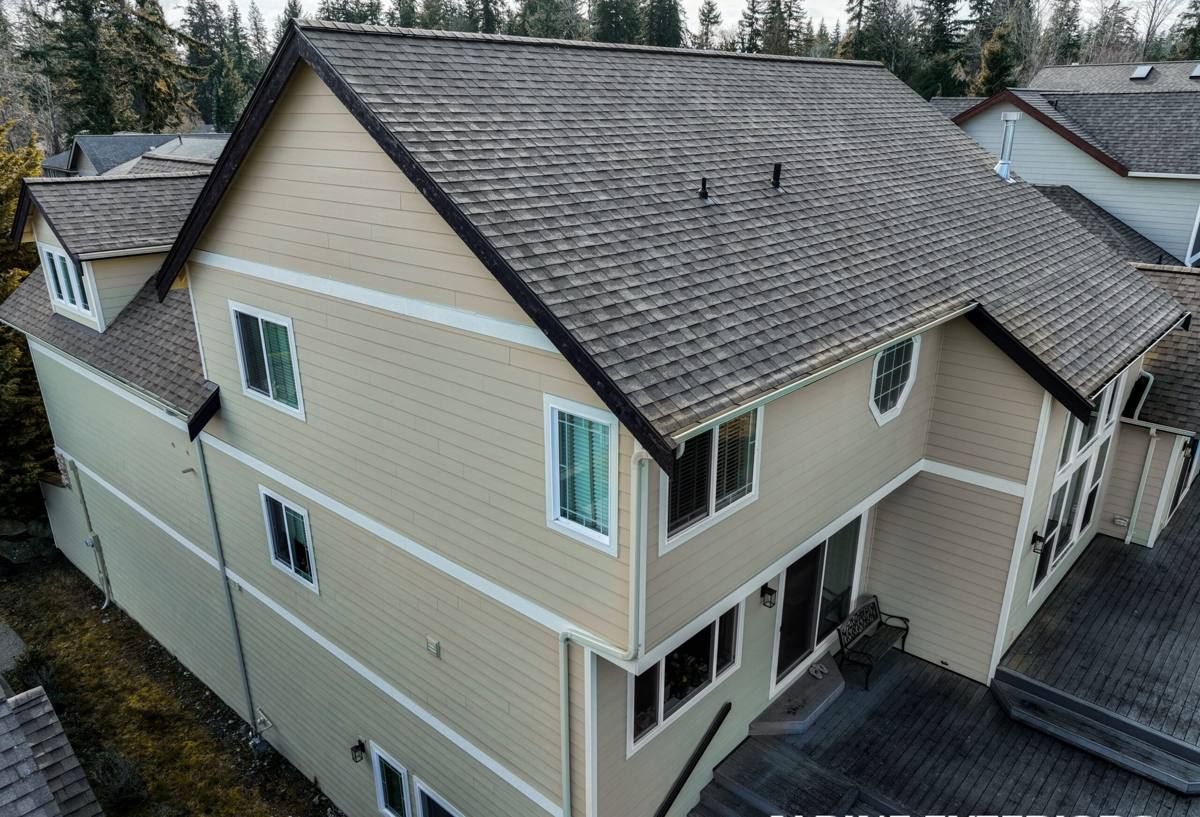
Where Deck Damage Actually Starts
Most homeowners notice deck problems at the surface — a soft board, a wobbly rail, gray weathered wood. But the surface is usually the last place damage shows up, not the first. By the time you can see it, the underlying wood has often been wet for a season or more. A few areas worth checking regularly:
- The ledger board — where the deck attaches to the house. This is the single most common point of hidden rot, especially on older homes built before proper flashing details were standard practice.
- Joist tops under the decking, particularly where boards butt together or where debris collects.
- Post bases and any wood-to-concrete contact points, where moisture wicks upward.
- Stair stringers, which take direct rain exposure and rarely get looked at closely.
- Railing posts, especially where they're through-bolted or notched into the frame.
If your deck was built more than 15-20 years ago and hasn't had the ledger flashing or joist hardware inspected, it's worth a look even if nothing feels wrong when you walk on it.
Signs You Can Check Yourself
- Boards that feel spongy or flex more than neighboring boards when you step on them
- Dark staining or streaking around fasteners or where the deck meets the house
- Green or black film on the decking surface, especially in shaded corners
- Rust bleeding from screw heads or joist hangers
- A railing that shifts or feels loose when you lean on it
- Gaps opening up between decking boards wider than when the deck was new
Moss, Algae, and Bellingham's Long Wet Season
Whatcom County's wet season runs long, and on a shaded South Hill lot under fir or cedar cover, a deck surface can stay damp for weeks at a stretch. That's exactly the environment moss and algae need. Beyond looking unkempt, moss holds moisture directly against the wood or composite surface, which accelerates rot in real wood decking and can stain and pit some composite products over time. It also makes the surface genuinely slick — we treat this as a safety issue on stairs and near entry doors, not just a cosmetic one.
Routine cleaning helps, but if moss has been left to grow for a season or more, the fix usually isn't just a pressure wash. We look at whether the growth has already compromised the wood underneath, whether gaps between boards need to be cleared out to restore drainage, and whether the site conditions (overhanging branches, low airflow) will just bring the moss right back unless something changes about drainage or sun exposure.
Salt Air and Hardware Corrosion
Decks closer to the water, and higher up where wind carries salt spray further inland, see faster corrosion on fasteners, joist hangers, and railing hardware than decks further from the Bay. Standard electro-galvanized screws and connectors that would hold up fine in a drier inland climate can start rusting within a few years here. Once a fastener corrodes, it loses holding strength well before it looks obviously bad, which is part of why railings and stair connections can feel "suddenly" loose — the hardware has actually been weakening for a while.
When we repair a deck in this area, we default to stainless steel or hot-dip galvanized fasteners and connectors rated for coastal exposure, even if the original build used standard hardware. It costs a little more up front and saves you from doing the same repair again in five years.
Repair, Partial Rebuild, or Full Replacement?
Not every deck problem calls for tearing the whole thing out, but it's also not worth patching a deck whose frame is failing. We base the call on where the damage is and how far it's spread, not on the age of the deck alone.
| Situation | Typical Approach | Why |
|---|---|---|
| Isolated soft boards, frame is sound | Board replacement | Framing is doing its job; only the wear surface needs attention |
| Rot at the ledger connection | Ledger and flashing repair | This is a structural safety issue regardless of how the rest of the deck looks |
| Rusted or undersized joist hangers | Hardware replacement | Corroded connectors lose load capacity before they visibly fail |
| Widespread rot in joists or beams | Partial or full reframe | Patching around failing structural members just moves the problem |
| Sound frame, outdated railing code | Railing upgrade only | Framing can often stay; railings are the part most likely out of current code on older decks |
| Frame, ledger, and surface all failing | Full rebuild | At that point, repair costs approach rebuild costs without the benefit of new materials |
We'll always tell you honestly which category your deck falls into, including when a repair is the right call even though a rebuild would be more profitable for us. A deck with a sound frame doesn't need to be replaced just because the surface looks tired.
Our Deck Repair Process
We start with an inspection from underneath the deck, not just a walk-around on top — that's where ledger rot, joist damage, and hardware corrosion actually show themselves. From there:
- We identify every point of moisture intrusion, not just the symptom you called about. A soft board near the stairs is often connected to a drainage or flashing issue elsewhere.
- We check the ledger flashing and house connection first, since that's the highest-consequence failure point on any deck.
- We assess hardware condition and plan for corrosion-resistant replacements where the existing fasteners are compromised.
- We scope the repair to what the deck actually needs — replacing sound framing isn't in your interest or ours.
- We give you a clear, written explanation of what we found and what we recommend, including the option to phase larger work if budget is a factor.
Decking Material Considerations for This Climate
When boards need replacing, the material choice matters more here than in a drier climate. A few honest trade-offs:
| Material | Moss/Moisture Behavior | Maintenance |
|---|---|---|
| Pressure-treated wood | Needs sealing on a regular cycle to shed water; will stain and grow moss faster if neglected | Periodic cleaning and re-sealing |
| Cedar | Naturally more rot-resistant but still needs care in shaded, damp spots | Occasional cleaning and finish maintenance |
| Composite decking | Won't rot, but can still grow surface algae/moss film in shaded areas — needs cleaning, not sealing | Low, mostly periodic washing |
None of these are maintenance-free on a shaded South Hill lot — the climate here means something in the deck's upkeep cycle, whether it's sealing or cleaning, has to happen on a schedule. We'll walk you through what fits your budget and how much upkeep you're realistically willing to do.
Railings, Stairs, and Code
Older South Hill homes sometimes have decks built before current railing height, baluster spacing, or guard requirements were in place. When we're already repairing a deck, we'll flag anything that's out of step with current code — not to upsell unnecessary work, but because a railing repair is the natural point to bring it up to a safer standard, especially on elevated hillside decks where a fall has further to go.
Why Work With a Crew That Already Knows South Hill
A deck repair crew that's worked this neighborhood before already knows which builds tend to have flashing shortcuts, which slopes cause drainage problems at the downhill side of a deck, and how much the tree canopy in a given yard is actually contributing to moss buildup. That's not a substitute for inspecting your specific deck, but it means we're not guessing at what Bellingham's climate does to a structure over time — we've already seen it play out on decks like yours.
If you're noticing a soft spot, a loose railing, or just want an honest read on how much life is left in your deck, we're glad to take a look. Reach out for a free, no-pressure estimate using the form below.