 Bellingham Siding
 Window Installation for South Hill: A Hillside Neighborhood With Its Own Set of Demands
South Hill sits above downtown Bellingham on a slope that looks out over Bellingham Bay, and that elevation is exactly what makes window installation here a little different from a job on flatter ground closer to sea level. The neighborhood carries a mix of older character homes, many built well before modern window technology existed, alongside newer infill construction on the same steep, view-oriented lots. Whatever era the house is from, a window installed on South Hill is dealing with more direct wind exposure off the water than a comparable home tucked into a sheltered part of the city, on top of the salt air, driving rain, and long moss season that already define Whatcom County's marine climate.
We install windows across Bellingham and the surrounding area, and South Hill jobs get treated differently from the start because of that combination: hillside wind exposure, older framing in a lot of the housing stock, and lots with real slope and access challenges. None of that changes the fundamentals of a correct installation, but it does change which details we pay closest attention to.
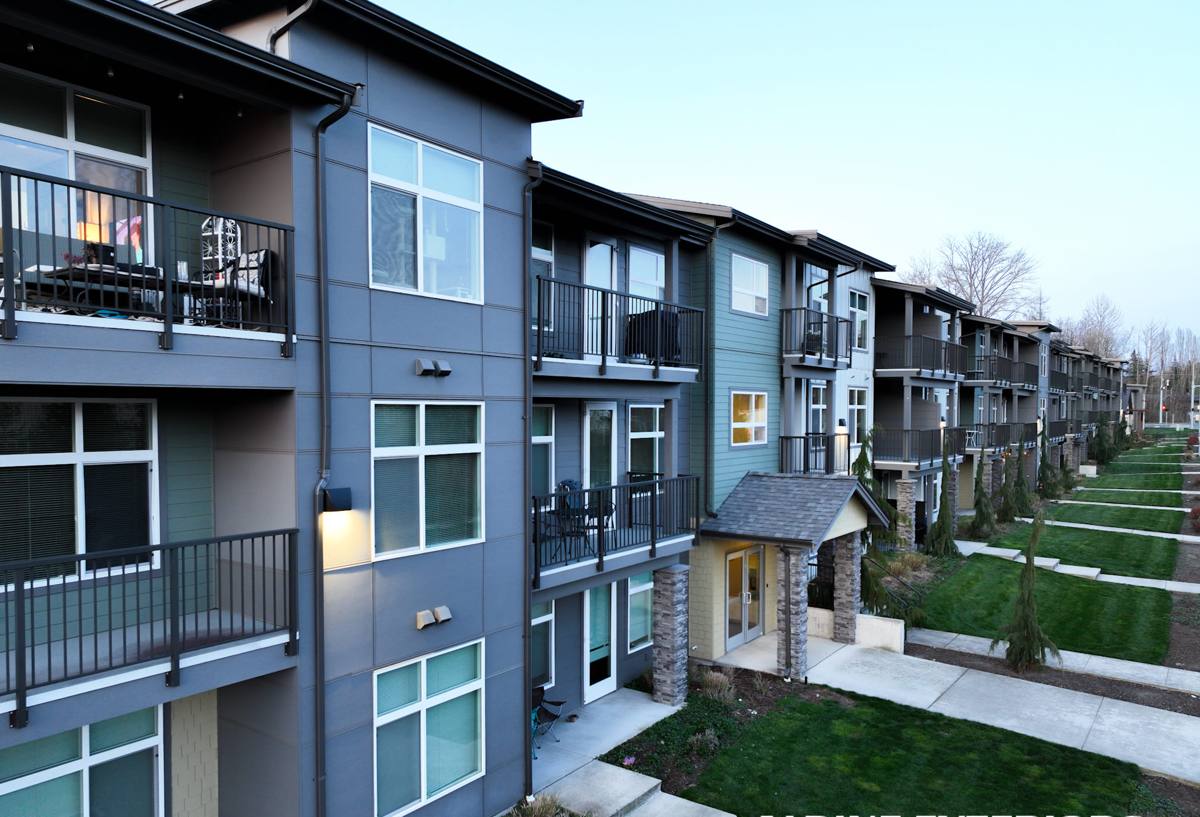
What South Hill's Climate and Setting Actually Demand
Wind Load From Elevation
A home partway up South Hill catches wind off the bay with less to break it up than a house down in a low-lying, tree-sheltered part of Bellingham. That matters for window installation because it raises the bar on how well a unit needs to be anchored, flashed, and sealed into the rough opening. A window that would perform fine on a calm, protected lot can take more direct pressure on an exposed hillside face, and installation quality is what determines whether that pressure finds a weak seam.
Marine Air and Corrosion
Bellingham Bay sends salt-tinged, moisture-laden air up the hill on a regular basis, not just during storms. Over years, that steady exposure is harder on lower-grade window hardware, fasteners, and finishes than an inland climate would be. It's a slow kind of wear — hinges that get stiff, latches that start to pit, finishes that dull faster than they should — and it shows up earliest on the sides of a house that face the water most directly.
A Long Moss and Moisture Season
Mild temperatures and near-constant dampness through fall, winter, and spring give moss and mildew a long growing season across Whatcom County, and South Hill's mature tree canopy adds extra shade on top of that. Window sills, trim, and the wood framing around older units are common places it takes hold, especially on north-facing walls or windows tucked under deep eaves where things don't dry out between rains.
What a Correct Window Installation Actually Involves
The window unit itself is only part of the job. Installation quality is what decides whether that unit performs for one wet winter or several decades, and on an exposed hillside site the margin for error is smaller than it would be on a sheltered lot.
Rough Opening Preparation
Before a new window goes in, the rough opening needs to be checked for square, level, and sound framing underneath. On older South Hill homes especially, openings have often shifted slightly with decades of settling, and that has to be addressed before the window goes in rather than papered over with extra caulk afterward.
Flashing and Drainage Integration
Flashing is what directs water that reaches the window opening back out and away from the wall assembly, rather than letting it collect behind the siding. It needs to lap correctly with the house wrap or building paper already on the wall, and on a wind-exposed hillside face, that lap and seal matter even more, since wind-driven rain is being pushed into seams from an angle rather than just falling straight down onto them.
Sealing and Insulation Around the Frame
Once the window is set, the gap between the frame and the rough opening needs to be insulated and air-sealed correctly, not just stuffed with fiberglass and forgotten. Done poorly, that gap becomes a path for both drafts and moisture. Done correctly, it's part of what keeps the window performing at its rated efficiency and keeps condensation from forming on cold surfaces around the frame.
Fit, Alignment, and Operation
A window that's slightly out of square in its opening will bind, won't seal tightly when closed, or will develop hardware problems well before it should. Getting the reveal even on all sides and confirming smooth operation before calling the job finished is a basic step, but it's one that gets rushed on jobs where speed is prioritized over care.
Working With South Hill's Older Housing Stock
A meaningful share of South Hill's homes predate modern window standards by decades, which means installation crews are regularly working with wood-frame openings, older trim profiles, and wall assemblies that were never designed around today's window technology. That's a different job than installing windows in newer construction with modern rough openings already built to spec.
On these homes, we pay close attention to matching the new window's dimensions and reveal to the existing trim and siding, so the finished look doesn't read as an obvious retrofit, and to making sure any rot or moisture damage found in the opening during removal gets addressed before the new unit goes in. Installing a new window into a compromised opening just relocates the problem instead of fixing it.
Choosing Windows for This Setting
We install vinyl and fiberglass window systems suited to the Pacific Northwest's wet, mild, and — on a hillside site like South Hill — wind-exposed climate. There isn't one universally correct choice; it comes down to the specific home, its exposure, and what the homeowner is trying to solve for.
| Factor | Vinyl Frames | Fiberglass Frames |
|---|---|---|
| Upfront cost | Generally lower | Generally higher |
| Performance in wet marine climate | Strong — resists rot, low maintenance | Strong — resists rot, very stable |
| Behavior under wind load / temperature swings | Good; can expand and contract more with heat | More dimensionally stable across temperature extremes |
| Paintable / custom color | Limited, usually factory colors only | Often paintable, useful for matching older trim |
| Hardware corrosion resistance | Depends on hardware grade specified | Depends on hardware grade specified |
Both materials resist rot in a way an uncladded wood frame doesn't, which matters given how much sustained moisture this region sees. On South Hill specifically, we also talk through wind exposure with the homeowner, since a face of the house that takes direct gusts off the bay may warrant a heavier-duty unit than a sheltered side of the same house.
Our Installation Process
We start with an on-site look at the openings involved, checking existing framing condition, how exposed each elevation is to wind and rain, and whether trim or siding around the opening will need to be adjusted to fit the new unit. From there we give a straightforward read on what's needed for each window, provide a written scope before ordering anything, and schedule the work once materials are on hand — custom-sized units can take several weeks to arrive, which we account for upfront rather than surprising anyone later. Flashing, sealing, and insulation are handled as standard practice on every installation, not offered as an optional upgrade.
A Checklist Before Hiring for Window Installation on South Hill
- Confirm current Washington state contractor licensing and active liability insurance
- Ask specifically how they handle flashing integration on wind-exposed elevations, not just which window brand they sell
- Get a written scope that separates the manufacturer's product warranty from the contractor's installation warranty
- Ask how they plan to address any rot or framing issues found once the old window is removed, before work starts
- Confirm realistic lead times for custom-sized units, since older homes rarely take standard off-the-shelf sizes
- Ask whether they've worked on South Hill or similarly exposed hillside properties specifically, not just Bellingham in general
Why a Crew That Already Works South Hill Matters
A contractor who regularly works this neighborhood already understands things that don't show up on a generic estimate: how much more wind a hillside face takes than a sheltered lot a few blocks away, how steep driveways and lots affect staging and access for larger window units, and how common it is to find older, non-standard openings once a wood-frame window comes out. That familiarity shows up in the details — how much lap a flashing detail gets, which elevations get flagged for a heavier-duty unit, how carefully an opening gets checked before assuming a standard-size replacement will fit. Those are the decisions that determine whether an installation holds up through one wet winter or many.
If you're planning a window installation on a South Hill property, whether it's a full replacement, new construction, or a retrofit into an older opening, we're glad to take a look and walk through the options honestly. Reach out below for a free, no-pressure estimate.