 Bellingham Siding
 Why Siding Works Harder in Sunnyland
Sunnyland sits inside a stretch of Bellingham where three things gang up on exterior walls at once: airborne salt moving in off Bellingham Bay, wind-driven rain that hits siding sideways rather than falling straight down, and a moss season that runs longer here than it does in drier parts of the country. None of these is dramatic on its own. Together, over years, they're what separates siding that still looks tight after two decades from siding that's cupping, staining, and rotting at the bottom courses by year ten.
Salt air is corrosive to fasteners and hard on paint films. Driving rain finds every gap in flashing and caulking that a calmer climate would never test. And moss doesn't just sit on a roof — spores land on siding too, especially on north- and west-facing walls and anywhere tree cover keeps a surface from drying out between storms. A lot of Sunnyland's established blocks have exactly that mix of shade and moisture retention. Siding material and installation quality both matter more here than they would in a dry inland climate, because the margin for error is smaller.
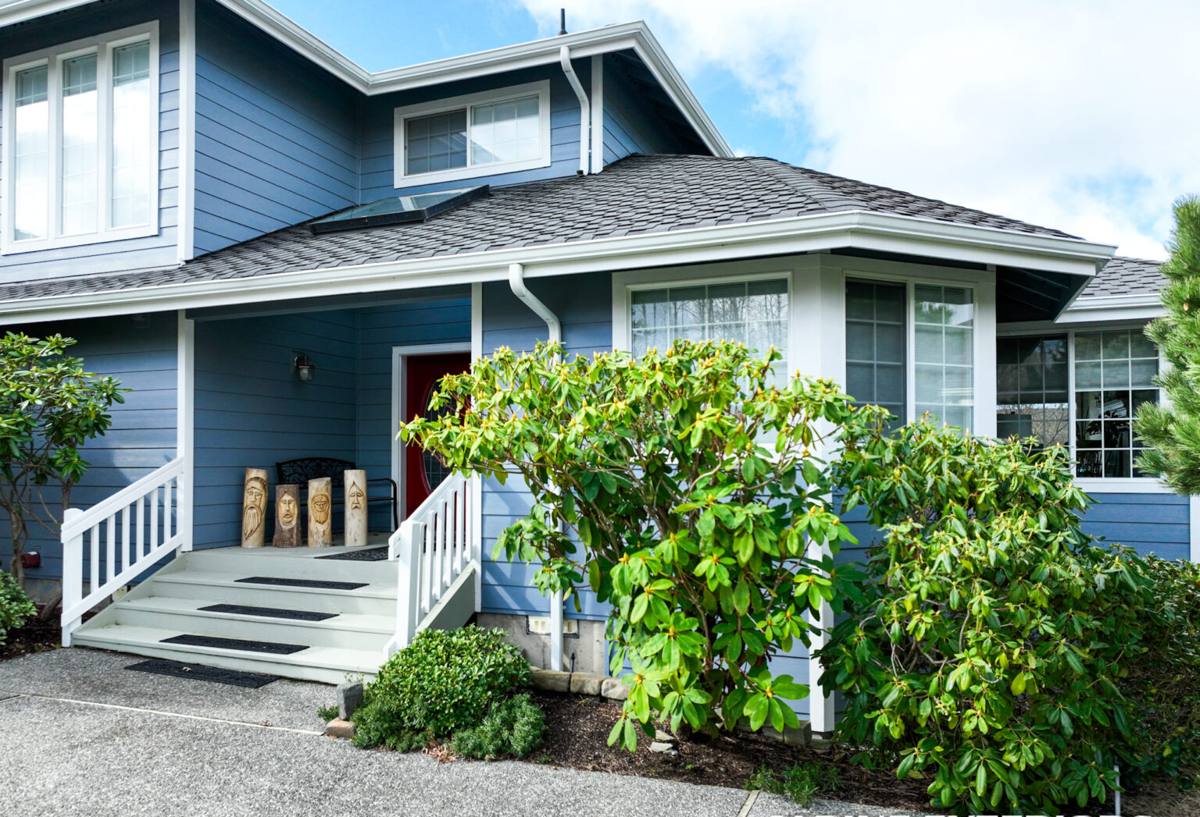
What James Hardie Siding Is Built to Handle
We install James Hardie fiber cement siding exclusively, and in a climate like Whatcom County's, the reasoning is straightforward rather than salesy.
Fiber Cement and Moisture
Fiber cement is made from cement, sand, and cellulose fiber. It doesn't absorb water the way wood-based products can, and it doesn't warp, delaminate, or feed rot the way an engineered wood substrate will if water gets behind it or sits against it too long. That matters directly here: in a wet, low-sun climate, siding spends more days per year damp than it does in most of the country. A material that shrugs off that exposure instead of slowly breaking down from it is doing real work, not just meeting a spec sheet.
ColorPlus Finish and Long-Term Appearance
James Hardie's ColorPlus finish is baked on at the factory under controlled conditions, which gives it better fade and moisture resistance than a field-applied paint job typically achieves. In salt-air, high-moss conditions, that finish resists the chalky fading and mildew staining that shows up faster on field-painted surfaces. It also comes with its own warranty coverage against fading and peeling, separate from the substrate warranty.
HZ5 Product Engineering
Hardie engineers its HZ product lines for specific climate zones, and the Pacific Northwest falls into the wetter, milder HZ5 category. That's not marketing language — it reflects real differences in moisture-management engineering built into the product for regions that see a lot of rain and humidity rather than freeze-thaw extremes or desert heat. Installing the version of the product that's actually engineered for this weather, rather than a generic version, is part of why we standardized on Hardie rather than treating siding as a one-size-fits-all product.
What a Correct Installation Involves in This Climate
Fiber cement siding performs the way it's supposed to only when it's installed to spec. In a climate with this much driving rain, the installation details matter as much as the product choice.
Drainage Behind the Siding
A proper rainscreen gap — a small drainage space between the siding and the weather-resistant barrier — lets any moisture that does get past the siding drain and dry out instead of sitting against the wall sheathing. This is one of the details that separates a correct Hardie installation from a fast one.
Flashing and Clearances
Every window, door, deck ledger, and roof-to-wall transition needs flashing detailed to shed water outward, not trap it. Siding also needs proper clearance above rooflines, decks, and grade — tight clearances are a common source of moisture problems in wet climates, because they keep the bottom edge of the siding damp far longer than the manufacturer's installation guidelines allow for.
Fastening and Joints
Hardie specifies fastener type, spacing, and placement for a reason — incorrect fastening can crack boards or leave gaps that let water in. Butt joints and trim intersections need to be caulked and sealed correctly, since these are the spots driving rain finds first.
Signs Your Current Siding Is Losing the Battle
Homeowners in Sunnyland often notice a pattern before they can name the cause. Some combination of the following usually means the siding is no longer keeping moisture out the way it should:
- Green or black staining that comes back within a season or two of being cleaned
- Paint that's peeling, bubbling, or chalking faster on shaded or north-facing walls
- Soft spots, sagging, or visible warping, especially near the bottom courses
- Gaps opening up at butt joints, corners, or trim that weren't there a few years ago
- A musty smell near exterior walls inside the home
- Visible moss growth directly on the siding surface, not just on the roof or in gutters
Any one of these on its own might just mean a cleaning is overdue. Several together, especially on a home more than 15-20 years old, usually means moisture has been getting behind the siding for a while.
Our Process for a Sunnyland Project
The steps don't change much from house to house, but the details we check are shaped by what we've seen repeatedly in this neighborhood's housing stock and microclimate.
- Walk the exterior and identify which walls take the most wind-driven rain and which stay shaded and damp longest
- Check existing flashing, clearances, and any signs of moisture already in the wall assembly
- Remove the old siding and inspect the sheathing underneath for hidden rot before anything new goes up
- Install or correct the weather-resistant barrier and rainscreen gap
- Install James Hardie siding and trim to manufacturer specification, with attention to fastening, joints, and clearances
- Final walkthrough to confirm caulking, flashing, and finish work meet both Hardie's installation guidelines and our own standard
Skipping the inspection step is the most common shortcut in this trade, and it's the one that causes the most expensive repeat problems, because new siding over rotten sheathing just hides a bigger issue for a few more years.
What Affects the Cost of a Hardie Siding Project Here
Every home is different, but the factors below are the ones that most often move a Sunnyland project's price up or down. We can only give a firm number after seeing the house.
| Factor | Why It Matters | Typical Cost Impact |
|---|---|---|
| Age and condition of existing sheathing | Hidden rot from long-term moisture exposure requires repair before new siding goes on | Low to significant, depends on what's found |
| Tree cover and moss exposure | Heavily shaded walls may need extra prep or moisture-barrier attention | Low to moderate |
| Home size and wall complexity | More corners, dormers, and trim details mean more labor and cutting | Moderate |
| Siding profile and finish selection | Lap width, shingle-style panels, and trim boards vary in material and labor cost | Low to moderate |
| Full tear-off vs. new construction | Removing and disposing of old siding adds labor that new-build projects skip | Moderate |
| Access and site conditions | Tight lots, slopes, or limited staging area affect scaffolding and logistics | Low to moderate |
Why Local Experience in This Neighborhood Matters
A crew that regularly works Sunnyland and the surrounding Bellingham neighborhoods has already seen how this specific mix of tree cover, bay-adjacent salt air, and rain exposure plays out on the area's housing stock. That means knowing which walls on a typical home orientation take the worst weather, what condition to expect from sheathing on homes of a certain age, and how to sequence a tear-off around this region's rain patterns instead of guessing. It also means familiarity with Whatcom County permitting and inspection expectations, so a project doesn't stall on paperwork a crew unfamiliar with the area might not anticipate.
None of that shows up in a brochure, but it shows up in how few surprises come up mid-project.
Maintenance and Longevity After Installation
Correctly installed James Hardie siding is genuinely low-maintenance, but "low" isn't "zero," especially in this climate. An occasional gentle wash to keep moss and mildew from taking hold on shaded walls, a yearly look at caulking around windows and trim, and prompt attention if a gutter starts overflowing onto a wall are about all it takes. Because the ColorPlus finish is factory-applied, most homeowners never need to repaint the siding itself for the life of the product — a real advantage over field-painted materials in a climate that's hard on paint.
If you're dealing with siding in Sunnyland that's showing moss staining, soft spots, or paint failure, or you're planning ahead for a replacement, we're happy to take a look and walk you through what we find. The estimate is free, there's no pressure, and you'll get a straight answer about what your home actually needs.