 Bellingham Siding
 York is one of Bellingham's older, established neighborhoods, with a housing stock that ranges from early-1900s bungalows to mid-century remodels and newer infill construction sitting close enough to the water and to mature tree cover that both salt-laden air and shade-driven moss are part of daily life on most lots. That combination is exactly the kind of exposure James Hardie fiber cement siding was engineered to handle, and it's exactly why we install nothing else. This page is about what a correctly specified and correctly installed Hardie job looks like on a York home, not a generic overview of the product line.
Why York's Setting Matters for a Siding Decision
Bellingham sits on Bellingham Bay, and York's position within the city means most homes there are close enough to the water that salt air reaches the exterior walls year-round, not just during storms. Add Whatcom County's wind-driven rain pattern, where precipitation regularly moves sideways into lap joints and trim rather than falling straight down, and a long stretch of mild, damp months that keep moss and mildew active for most of the calendar, and you have three separate stresses working on a wall at once. None of them is dramatic in isolation. Compounded over ten or fifteen years, they're a harder test than most siding products were designed around.
Salt Air Off the Bay
Airborne salt accelerates the breakdown of surface coatings and speeds corrosion on fasteners, flashing, and trim hardware. A finish that holds up fine in a drier, inland market doesn't necessarily perform the same way here, and the gap usually shows up gradually — chalking, fading, or fastener staining — rather than as a sudden, obvious failure.
Wind-Driven Rain
Rain pushed sideways by wind off the bay finds its way into lap joints, under trim, and into any seam where the water-management detailing isn't right. That's a much tougher test on caulked joints and painted surfaces than a simple annual rainfall total would suggest, and it's a big part of why installation quality matters as much as the material itself.
A Long Moss and Mildew Season
York's mix of mature street trees and consistently damp, mild weather keeps moss and mildew active on shaded walls for most of the year. Organic growth on a siding surface holds moisture against the wall behind it, and that trapped moisture is where a lot of long-term rot and paint failure actually starts, regardless of what material is on the wall.
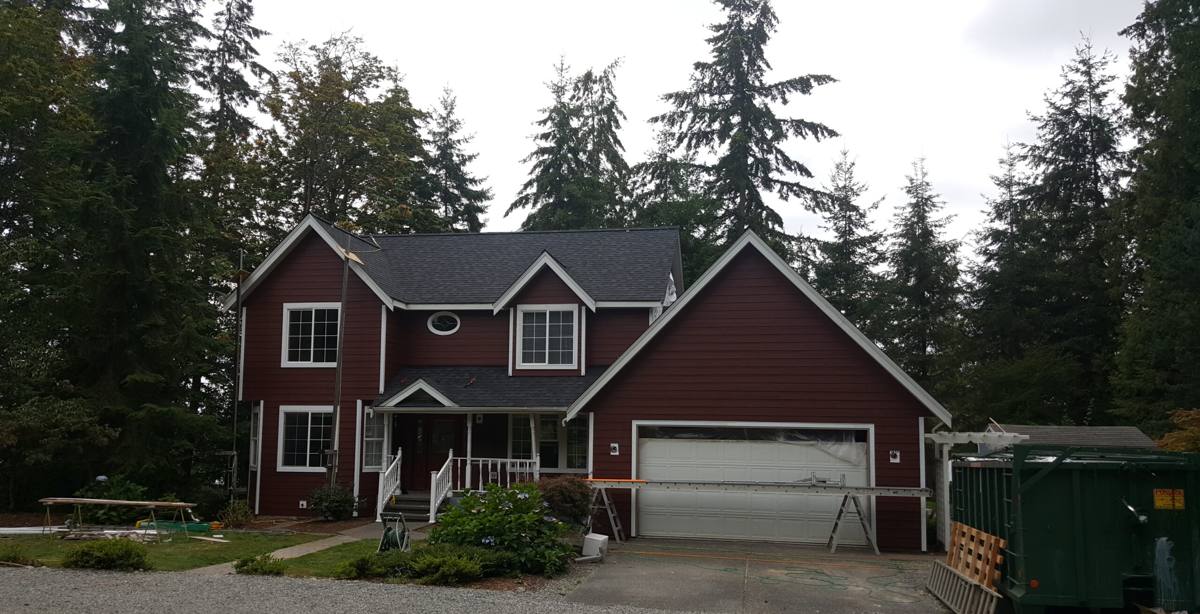
Why We Only Install James Hardie in This Neighborhood
We don't offer vinyl, LP SmartSide, Cemplank, Allura, primed spruce, or cedar, and that's a deliberate standard, not an oversight. Each of those products has a legitimate place in the broader market, but none of them holds up to York's specific combination of salt exposure, wind-driven rain, and near-constant moss pressure as consistently as James Hardie fiber cement does when it's installed correctly.
- Vinyl expands and contracts significantly with temperature swings and depends on lapped, unsealed joints that aren't built to resist sideways-driven rain. It also lacks real fire resistance and can warp under sustained heat exposure.
- LP SmartSide and other engineered wood products use a wood-fiber core that performs well only as long as the factory coating and every field-cut edge and fastener penetration stay fully sealed, indefinitely. In a climate where wet weather is the default rather than the exception, that's an ongoing maintenance obligation riding on a wood-based core.
- Cedar and primed spruce are genuine, traditional materials with real curb appeal, but they're organic, combustible, and dependent on a paint or stain schedule that has to be kept up without fail. Moss finds an organic surface especially hospitable in a climate that stays damp most of the year.
- Cemplank and Allura are other fiber cement manufacturers, and fiber cement as a category is the right direction. We standardized on James Hardie specifically for its factory-applied ColorPlus finish, its climate-engineered HZ product lines, and the depth of certified installer support and warranty backing available in this region.
What James Hardie Siding Actually Is
James Hardie siding is fiber cement: Portland cement, sand, and cellulose fiber, cured into rigid boards and panels. It's inorganic, so it doesn't have a wood-based or petroleum-based core that absorbs water and swells, rots, or feeds insects the way organic siding can. It's also non-combustible, and it holds a factory finish differently than wood or vinyl because it doesn't move with temperature and humidity the way those materials do.
The HZ5 Product Line for This Climate
James Hardie engineers its siding by climate zone, and the HZ5 line is built for regions with sustained moisture exposure and freeze-thaw cycling, which fits western Whatcom County's winters far better than a product engineered primarily for hot, dry climates. That regional engineering is a concrete reason to choose this manufacturer specifically, not fiber cement as a generic category.
ColorPlus Factory Finish
Instead of being painted on site, Hardie's ColorPlus finish is baked on in a controlled factory environment in multiple coats before the boards ever reach a job. That finish carries its own warranty separate from the substrate warranty and is formulated to resist fading and hold color consistency better than a field-applied finish exposed to salt air and UV over years.
Choosing a Siding Style for a York Home
York's mix of bungalows, mid-century houses, and newer infill means there isn't one "correct" profile for the neighborhood — the right choice depends on the house's era and the look the owner wants, and Hardie's product line covers a wide range without stepping outside fiber cement.
| Style | Best Fit | Notes |
|---|---|---|
| HardiePlank lap, Select Cedarmill texture | Older bungalows, traditional homes | Wood-grain texture reads close to painted cedar from the street |
| HardiePlank lap, Smooth texture | Mid-century and updated homes | Crisp, flat face with sharper shadow lines; shows dirt and scuffs sooner |
| HardiePanel vertical with battens | Gable accents, entry walls, garages | Common as an accent paired with lap siding on the main walls |
| HardieShingle | Craftsman-style and cottage homes | Staggered or straight-edge panels for a shingled look without wood's upkeep |
The most common combination we install in neighborhoods like York is lap siding across the body of the house with a panel-and-batten accent on a gable or entry feature, all in matching ColorPlus tones so the mix reads as one intentional design.
How Our Installation Process Works
The product only performs as well as the install behind it, so our process is built around the details that actually matter for York's exposure, not just getting boards on the wall quickly.
- On-site evaluation: We walk the property, check the current siding and sheathing condition, note tree cover and shade patterns that affect moss risk, and assess the home's actual exposure to wind and salt air rather than assuming every York lot needs identical detailing.
- Tear-off and sheathing check: Old siding comes off and we inspect the sheathing underneath for rot or water damage before anything new goes up. Hidden damage found at this stage gets addressed before installation continues, not covered over.
- Weather-resistive barrier and flashing: A properly lapped and sealed water-resistive barrier goes down first, with integrated flashing at every window, door, and penetration, and kick-out flashing wherever a roofline meets a wall. This layer is what actually keeps the wall dry; the siding is the rain screen in front of it.
- Layout before cutting: Courses are planned on paper for level, consistent coursing around the whole house, so lines land sensibly at window heads and corners instead of ending in an awkward sliver.
- Installation to manufacturer spec: Fasteners, clearances, joint staggering, and edge sealing follow James Hardie's published installation requirements, not a generalized approach borrowed from another siding material.
- Final walkthrough: We review the finished job with the homeowner, point out anything worth knowing for future maintenance, and confirm warranty registration.
Installation Details That Determine How the Job Ages
Fiber cement is unforgiving of shortcuts; the failures just take years to show up rather than appearing right away.
| Installation Detail | Why It Matters in York |
|---|---|
| Manufacturer-specified clearances from grade, roofline, and decks | Keeps splash-back and standing moisture off the board edge in a high-rainfall climate |
| Corrosion-resistant fasteners, correct placement and depth | Salt air accelerates corrosion on the wrong fastener type; correct fasteners resist it |
| Proper flashing at windows, doors, and penetrations | Directs wind-driven rain off the bay away from seams instead of trapping it |
| Factory-cut edges used wherever possible; field cuts sealed to spec | Preserves the ColorPlus finish's protection at every edge |
| Rain screen or drainage plane behind the siding | Lets any moisture that gets past the surface drain and dry instead of sitting against the wall |
| Adequate clearance from tree canopy and shaded plantings where possible | Reduces the moss and mildew load on shaded elevations common in York |
This is why certified installers handle every job rather than treating fiber cement as an interchangeable swap for whatever a crew is used to hanging. A material that resists moisture and combustion in its core can still underperform if the details around it are wrong.
Maintenance: What a Hardie-Sided York Home Actually Needs
One of the real advantages of fiber cement in this climate is how little ongoing work it asks for compared to wood or engineered wood, but "low maintenance" isn't "no maintenance."
- Rinse the exterior once or twice a year, more often on shaded elevations, to keep moss and mildew from building up before it stains or holds moisture against the wall.
- Trim back tree branches and shrubs that keep siding shaded and damp longer than the rest of the house.
- Check caulking at trim, window, and door joints periodically and re-caulk where it's cracked or pulled away, since caulking is a maintained component, not a permanent one.
- Touch up any nicks or scrapes in the ColorPlus finish with manufacturer-matched touch-up paint to keep the finish's protection intact at the damaged spot.
- Watch fastener heads and trim hardware for early corrosion staining, especially on elevations facing the bay, and address it before it spreads.
Warranty and What It Actually Covers
James Hardie backs its siding with a transferable, non-prorated limited warranty on the substrate, plus a separate finish warranty on ColorPlus color retention. Transferability is a real, practical benefit: if the home sells before the warranty period ends, coverage generally moves to the next owner, which matters in a market where buyers increasingly ask specific questions about exterior materials and remaining service life. Warranty terms are set by the manufacturer and vary by product line and finish, so the specifics should be reviewed directly with your installer rather than assumed from general marketing language.
What to Confirm Before Any Siding Project
Whether you end up working with us or someone else, these are worth confirming before signing anything:
- Ask whether the installer is manufacturer-certified for the specific product line being proposed, not just generally experienced with siding.
- Ask which HZ product line is being used and whether it's engineered for this region's climate.
- Ask what the warranty actually covers, whether it's prorated, and whether it transfers to a future buyer.
- Ask how the crew handles hidden sheathing damage discovered mid-project, and get that answer in writing.
- Ask to see the manufacturer's installation spec sheet and compare it against what's actually planned for your walls.
- Confirm current WA contractor licensing and liability insurance before any work begins.
If you're weighing a re-side in York or anywhere else in Bellingham, we're glad to walk the property, look at what's on the walls now, and give you a straight answer about what we'd recommend and why. Reach out using the form below to schedule a free, no-pressure estimate.