 Bellingham Siding
 Why Barkley Roofs Take More Punishment Than People Expect
Barkley sits close enough to Bellingham Bay and the Puget Sound weather pattern that homes here deal with a specific combination of stress most drier climates never see: salt-tinged air off the water, wind-driven rain that comes in sideways during winter fronts, and a moss season that can run eight or nine months out of the year. None of those three things alone is dramatic. Together, over years, they wear a roof down faster than the shingle warranty label suggests they should.
Salt air is corrosive to exposed metal — flashing, fasteners, gutter hangers, vent caps. It doesn't take a hurricane to cause damage here; it takes repeated exposure. Driving rain finds every gap in flashing and underlayment that a straight-down rain would never reach, which is why roofs that "look fine from the ground" in Barkley can still be leaking at a valley or a chimney flashing. And moss, once established, holds moisture against the shingle surface around the clock, which accelerates granule loss and lifts shingle edges — exactly the kind of weak point that a wind event turns into a real leak.
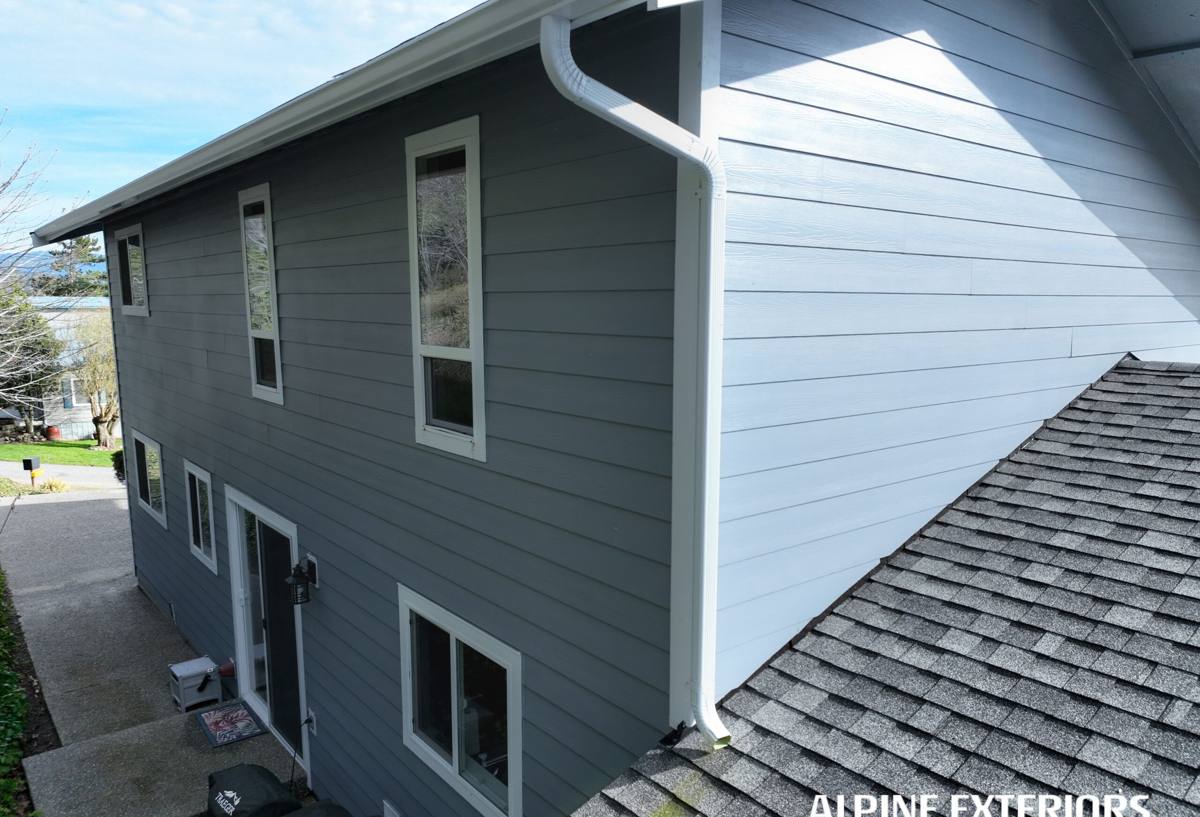
What Storm Damage Actually Looks Like on a Barkley Roof
Storm damage rarely announces itself with a hole in the roof. It's usually smaller and easier to miss, which is why so many claims get filed months after the actual wind or rain event that caused the problem.
Common patterns we see after a storm in this area
- Shingles lifted or creased along the tab edges, especially on the side of the roof facing the prevailing wind
- Flashing pulled loose or bent at chimneys, skylights, and roof-to-wall transitions
- Granule loss concentrated in one section, usually where wind-driven rain hit hardest
- Gutters pulled away from the fascia or overflowing because debris and moss runoff clogged them mid-storm
- Soft or discolored decking visible from the attic, which tells us water has already been getting in for a while
- Moss mats that lifted along with the shingle underneath them during high wind, taking granules and sometimes the shingle itself
None of these require a headline storm. A single hard blow off the water combined with a roof that already had moss buildup or aging flashing is enough to start a leak that won't show up inside the house until the next heavy rain.
What a Correct Storm Damage Repair Actually Involves
A repair that only addresses what's visible from the ground is a repair that comes back. Doing it right means working through the roof system in order, not just patching the spot that's obviously wrong.
The sequence we follow
- Full-roof inspection, not just the damaged area. Wind and moss damage is rarely isolated to one spot — we check the whole roof plane, valleys, flashing, and attic before quoting anything.
- Emergency protection if there's active water intrusion. Tarping or temporary sealing to stop water from reaching the decking while the repair is scheduled.
- Removal of compromised material. Damaged shingles, saturated underlayment, and any decking that's gone soft get pulled — not covered over.
- Decking assessment and replacement where needed. Water-damaged plywood or sheathing gets replaced before anything new goes down on top of it.
- Underlayment and flashing rebuilt to current standards. This is where a lot of the water intrusion actually starts, so it doesn't get skipped even if it adds a step.
- Shingle replacement matched as closely as possible to the existing roof for both color and profile.
- Final water test and inspection of the repaired section and surrounding flashing points.
How Our Process Works, From Your Call to a Finished Repair
Homeowners calling about storm damage usually want two things: someone who can look at it soon, and a straight answer about whether it's a repair or something bigger. Here's how we handle that.
| Step | What Happens | Typical Timing |
|---|---|---|
| Initial call or estimate request | We ask what you're seeing, when the storm hit, and whether there's active water inside | Same day response |
| On-site inspection | Full roof walk, attic check if accessible, photos of every issue found | Scheduled within a few days; sooner if there's active leaking |
| Written estimate | Scope, materials, and cost broken out so you know what you're paying for and why | Provided at or shortly after inspection |
| Repair work | Performed as outlined above, with decking and flashing addressed, not just shingles | Most single-section repairs finish in one day |
| Final walkthrough | We show you what was done and what to watch for going forward | Same day as completion |
Repair or Replace? How We Make That Call Honestly
Not every storm-damaged roof needs a full repair, and not every roof that "needs a repair" is actually worth repairing. The honest answer depends on the roof's age, how widespread the damage is, and what we find once we're actually up there.
| Factor | Leans Toward Repair | Leans Toward Replacement |
|---|---|---|
| Roof age | Under 12-15 years, shingles otherwise sound | Nearing or past expected shingle lifespan |
| Extent of damage | Isolated to one section or slope | Damage scattered across multiple areas |
| Decking condition | Dry, solid sheathing under the damaged spot | Widespread soft or rotted decking |
| Moss history | Light, manageable moss growth | Heavy moss coverage that's been lifting shingles for years |
| Shingle match availability | Existing shingle line still available or close match exists | Discontinued shingle with no reasonable match |
We'll tell you when a repair is genuinely the right call and won't push a replacement a roof doesn't need. We'll also tell you plainly when a repair would just be a temporary patch on a roof that's already at the end of its useful life — that's a disservice to you either way.
Insurance and Storm Damage Claims: What Homeowners Should Know
Many storm damage repairs in this area do get covered by homeowner's insurance, but coverage depends on your specific policy, the cause of the damage, and how well it's documented. A few things make the process smoother on your end:
- Photograph any visible exterior or interior damage as soon as you notice it, before any repair work starts
- Note the approximate date of the storm event that likely caused the damage
- Get a written inspection report and estimate that clearly separates storm-caused damage from pre-existing wear
- Ask your insurer directly about their timeline and documentation requirements before work begins if you plan to file a claim
We provide the inspection documentation and photos you'd need to support a claim, but we're not a public adjuster and won't promise a claim outcome — that call belongs to your insurance company.
Materials: What We Use and the Trade-Offs Involved
For storm repairs specifically, matching matters as much as material quality. A repair using the wrong underlayment weight, an incompatible flashing metal, or a shingle that doesn't match the existing wind rating can leave you with a patch that looks fine and fails again in the next storm.
A few standards we hold to
- Synthetic underlayment over older felt products in most repair scenarios, for better tear resistance and water shedding during the install itself
- Metal flashing matched to what's compatible with the existing roof metal, to avoid galvanic corrosion between dissimilar metals — a real issue in salt-air environments like ours
- Shingles rated for wind exposure appropriate to an area that regularly sees driving rain and gusty fronts, not just the minimum code requirement
- Fasteners and hardware suited to coastal-influenced air, since standard hardware can corrode faster here than it would inland
We're straightforward about why we make these choices: it's about long-term moisture behavior and how the materials hold up specifically in this climate, not about any one product being bad. A repair that skips these details might cost less up front and still look acceptable — the difference shows up two or three winters later.
Why a Crew That Already Works in Barkley Makes a Real Difference
Roofing crews that work all over Whatcom County without much local repetition tend to treat every roof as a blank slate. A crew that's already worked in and around Barkley knows the patterns: which roof orientations catch the worst of the wind off the bay, which older homes in the area tend to have flashing details that need extra attention, and how aggressively moss builds up on north-facing slopes shaded by mature trees, which is common throughout Bellingham's older and more established neighborhoods.
That familiarity also matters for permitting and code questions. Roofing repairs in the City of Bellingham and unincorporated Whatcom County can have different permit thresholds depending on the scope of work, and a crew that pulls permits in this jurisdiction regularly won't be guessing at the requirements.
Signs it's time to call, not wait
- Water stains on ceilings or upper walls that appeared after a windy or heavy rain day
- Shingles you can see are lifted, cracked, or missing from the ground
- Granules collecting in gutters or at downspout outlets after a storm
- A musty smell in the attic that wasn't there before
- Visible daylight through the roof deck from inside the attic
- Moss mats that have visibly shifted or lifted since the last time you looked
Keeping It From Happening Again
A good storm repair should reduce your risk going forward, not just fix what already broke. Once repairs are done, a little seasonal attention goes a long way in a climate like this one:
- Keep gutters and downspouts clear, especially heading into the fall rain pattern
- Have moss treated before it establishes heavy mats, not after — treatment is easier and cheaper early
- Trim back tree limbs that keep sections of the roof shaded and damp longer than the rest
- Have flashing points checked periodically, since they're the most common failure point in wind-driven rain events
- After any notably windy storm, a quick visual check from the ground can catch obvious damage before the next rain finds it
If you're dealing with visible storm damage in Barkley, or you just want an honest opinion on whether that roof is holding up the way it should, we're happy to take a look. The estimate is free, there's no pressure to sign anything on the spot, and you'll get a straight answer about what your roof actually needs — simply fill out the form below to get started.