 Bellingham Siding
 Why Birchwood Homes Ask for Windows Built for This Climate
Birchwood sits close enough to Bellingham Bay that salt-laden air, wind-driven rain, and a long stretch of gray, damp months every year all take a toll on a home's exterior — and windows are usually where that damage shows up first. Old wood sashes swell and stick. Aluminum frames pit and corrode faster than they would inland. Seals fail early, glass fogs between panes, and moss finds a foothold on sills and trim that never fully dry out between storms. None of that is unusual for Whatcom County housing stock — it's just what this climate does to windows that weren't specified or installed with it in mind.
Energy-efficient window replacement here isn't only about a lower heating bill, though that matters. It's about choosing a window assembly and an installation method that can shed driving rain, resist the corrosive edge of salt air, and hold its seal through another wet season without babying it. That's the standard we hold every Birchwood job to.
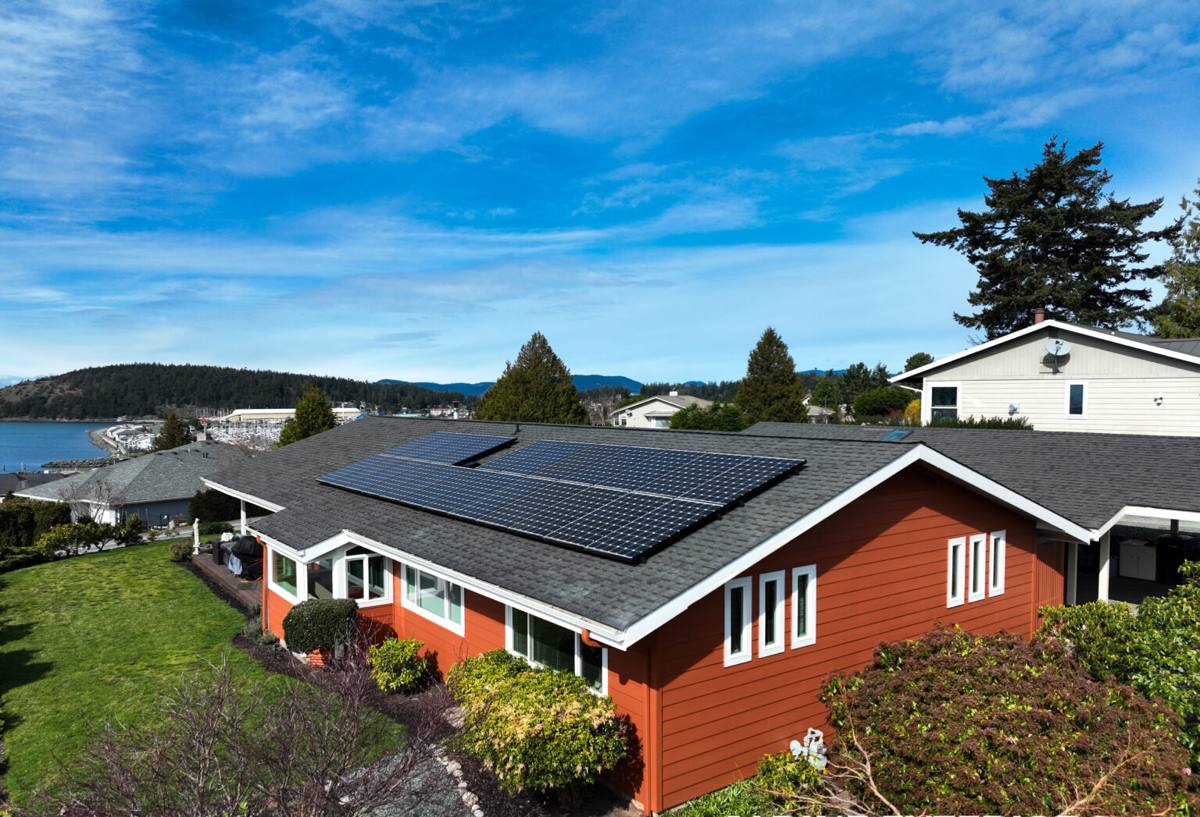
What "Energy-Efficient" Actually Means for a Bellingham Window
The label gets used loosely. For a marine climate like ours, three numbers on the window's NFRC label matter more than any marketing claim:
U-Factor and Our Marine Climate
U-factor measures how much heat escapes through the window. Bellingham doesn't see brutal winters, but it does see long stretches of damp cold, and a poor U-factor shows up as a cold draft near the glass and a furnace that runs more than it should. We look for U-factors in the range that's appropriate for the Pacific Northwest — not the deep-cold ratings sold for the upper Midwest, and not the cheap ratings sold for mild-winter southern states.
Solar Heat Gain in a Cloudy Climate
Solar heat gain coefficient (SHGC) matters less here than in sunnier regions, since Bellingham gets a limited number of clear, high-sun days. We don't recommend paying extra for aggressive solar control glass on most Birchwood homes — it's a better trade to put that money into air sealing and frame quality, which do more work in our actual weather.
Air Leakage and Wind-Driven Rain
This is the number that matters most locally. Air leakage ratings reflect how tightly the sash seals against the frame — which is also a rough proxy for how well the window resists wind-driven rain intrusion. A window with a low air leakage rating, installed with a proper sill pan and flashing, is the combination that actually keeps a Birchwood wall cavity dry through a winter storm system.
Frame Material Comparison for a Salt-Air, High-Moisture Climate
There's no single "best" frame material for every home — it depends on your budget, your home's age, and how exposed the elevation is to prevailing wind and rain. Here's how the common options hold up in our specific conditions:
| Frame Material | How It Handles Salt Air & Moisture | Maintenance | Typical Trade-Off |
|---|---|---|---|
| Vinyl | Doesn't corrode or rot; performs well near the coast | Low — occasional cleaning | Limited color/paint options; frame can flex on very large openings |
| Fiberglass | Excellent — dimensionally stable, resists moisture and salt exposure | Low | Higher upfront cost than vinyl |
| Wood-clad | Good if the cladding and cladding seams are detailed correctly; interior wood still needs protection from condensation | Moderate — watch cladding seams and interior finish | More installation-sensitive; a poorly sealed clad joint invites the exact rot it's meant to prevent |
| Aluminum | Prone to corrosion and thermal transfer near salt air unless thermally broken and coated | Moderate to high | We generally steer Birchwood homeowners away from bare aluminum for this reason, not because it's a bad product everywhere — it's a poor match for this specific exposure |
For most Birchwood replacement projects, we recommend vinyl or fiberglass as the practical choice — both shrug off the salt air and repeated soaking that this climate delivers, without the maintenance schedule that wood-clad or bare aluminum demand.
Signs a Birchwood Homeowner Shouldn't Ignore
Windows fail slowly, and by the time you notice a problem, it's often been developing behind the wall for a while. Walk your home's exterior and interior sills and check for:
- Fogging or a visible haze between panes of a double-pane window — the seal has failed and the gas fill is gone
- Soft, spongy, or darkened wood on the sill, jamb, or trim, especially on north- and west-facing walls that catch the most driving rain
- Moss or dark streaking building up on sills or below the window that doesn't wash off in dry weather
- A noticeable draft near the glass or frame edge on a windy day
- Difficulty opening or latching a sash that used to move freely — a sign the frame has swelled or warped
- Paint that bubbles or peels specifically around the window opening, rather than the wall generally
- Condensation forming consistently on the interior glass or frame during cold, damp stretches
Any one of these on its own isn't an emergency. Several together, especially rot at the sill, usually means water has been getting behind the window for longer than it looks from the outside.
The Installation Details That Actually Matter in Driving Rain
The window unit itself is only part of the equation. In a climate that throws sideways rain at a wall for days at a stretch, how the window is installed determines whether it stays dry for twenty years or starts leaking in three. The details we treat as non-negotiable on every Birchwood job:
Sill Pan Flashing
A sloped, sealed sill pan under the window gives any water that does get past the exterior seal a way out, instead of letting it pool and soak into the framing. This is the single most common shortcut we see skipped on older or poorly done replacements, and it's usually the reason a "new" window still rots out the wall around it.
Integration with the House Wrap
Flashing tape and the window's nailing flange need to be layered correctly with the home's weather-resistive barrier — over the top, under the sides and bottom — so water sheds down and out rather than working its way behind the siding. Get this sequence backward and you've built a funnel instead of a barrier.
Sealant That's Rated for the Job
Not all exterior sealants hold up to repeated wetting and UV exposure. We use products rated for exterior window and door applications, applied at the joints that actually need it — not smeared everywhere as a substitute for proper flashing.
Shimming and Squaring
A window that isn't shimmed level and square won't operate correctly and won't compress its weatherstripping evenly, which creates a leak path even on a good-quality unit. This is a slow, careful step, not one to rush through.
What Affects the Cost of Your Window Project
Every Birchwood home is a little different, so we don't quote sight unseen — but these are the main factors that move a project's price up or down:
| Factor | Why It Matters |
|---|---|
| Frame material and glass package | Fiberglass and upgraded glass packages cost more upfront than standard vinyl |
| Number and size of openings | More openings and larger units mean more material and labor |
| Access and elevation | Second-story or hard-to-reach openings take longer and may need staging |
| Condition behind the old window | Rot or water damage found during tear-out adds repair scope beyond the window itself |
| Full-frame vs. insert replacement | Full-frame replacement (removing down to the framing) costs more than an insert but is often the right call on an older or already-damaged opening |
| Permits | Some scopes require a City of Bellingham permit, which adds a modest fee and inspection step |
We'll walk your home with you and give you a straightforward number in writing before any work starts, including whether we're recommending a full-frame or insert approach and why.
Our Process, Start to Finish
Assessment and Measurement
We look at each opening from both sides — exterior cladding condition, sill and jamb condition, and interior signs of moisture — before recommending a product or approach. This is also when we flag anything that looks like it needs repair beyond the window itself.
Product Selection
We'll talk through frame material, glass package, and grille or hardware options based on your home's exposure, your budget, and what actually earns its keep in this climate versus what's just upsell.
Tear-Out and Installation
Old units come out carefully to protect interior and exterior finishes. New sill pans, flashing, and the window itself go in per the sequence above, then we check operation, seal, and squareness on every unit before moving to the next opening.
Cleanup and Final Walkthrough
We haul away old windows and debris, clean the work area, and walk the finished openings with you so you can see and test them before we call the job done.
Rebates and Local Considerations
Depending on your utility provider and the scope of work, energy-efficient window replacement may qualify for a rebate program — these change from year to year, so we'll let you know what's currently available when we quote your project rather than promise a number that may be outdated by the time you read this. If your project requires a City of Bellingham permit, we handle that as part of the job rather than leaving it on your plate. And if your home is older, we'll flag anything we find — old flashing, deteriorated sheathing, evidence of past leaks — honestly, before it becomes a surprise mid-project.
Why a Crew That Already Works Birchwood Makes a Difference
Whatcom County has a wide mix of housing ages and construction styles, and a neighborhood this close to the water sees a specific pattern of wear — salt air corrosion, moss buildup, driving rain from certain prevailing directions — that differs from what you'd see installing windows twenty miles inland. A crew that's done this work in Birchwood before recognizes that pattern immediately: where rot tends to show up first, which elevations take the worst weather, and what a correct flashing detail looks like once winter tests it. That familiarity shows up as fewer surprises during the job and a window installation that's actually built for the conditions it has to survive, not just a generic install done by the book.
If your windows are drafty, fogged, or showing rot at the sill, we're happy to take a look and give you an honest read on what's going on — no pressure, no upsell. Reach out using the form below for a free estimate.