 Bellingham Siding
 Siding Built for Birchwood's Weather, Not Just Its Curb Appeal
Birchwood sits close enough to Bellingham Bay and the broader Whatcom County waterfront that homes here deal with a specific combination of stresses most inland siding never has to survive: salt-laden air drifting off the water, driving rain that comes in sideways during fall and winter storms, and a moss season that can run eight months or longer under the region's tree canopy and cloud cover. None of these factors alone is unusual for Western Washington. Together, on a wall that faces the wrong direction or sits under the wrong tree, they wear out the wrong siding material faster than most homeowners expect.
This page is about one service in one neighborhood: fiber cement siding, specifically for Birchwood homes. We're not going to give you a generic rundown of fiber cement in general — we want to walk through what this climate actually does to a wall, what a correct fiber cement installation needs to account for here, and why the crew you hire matters as much as the material.
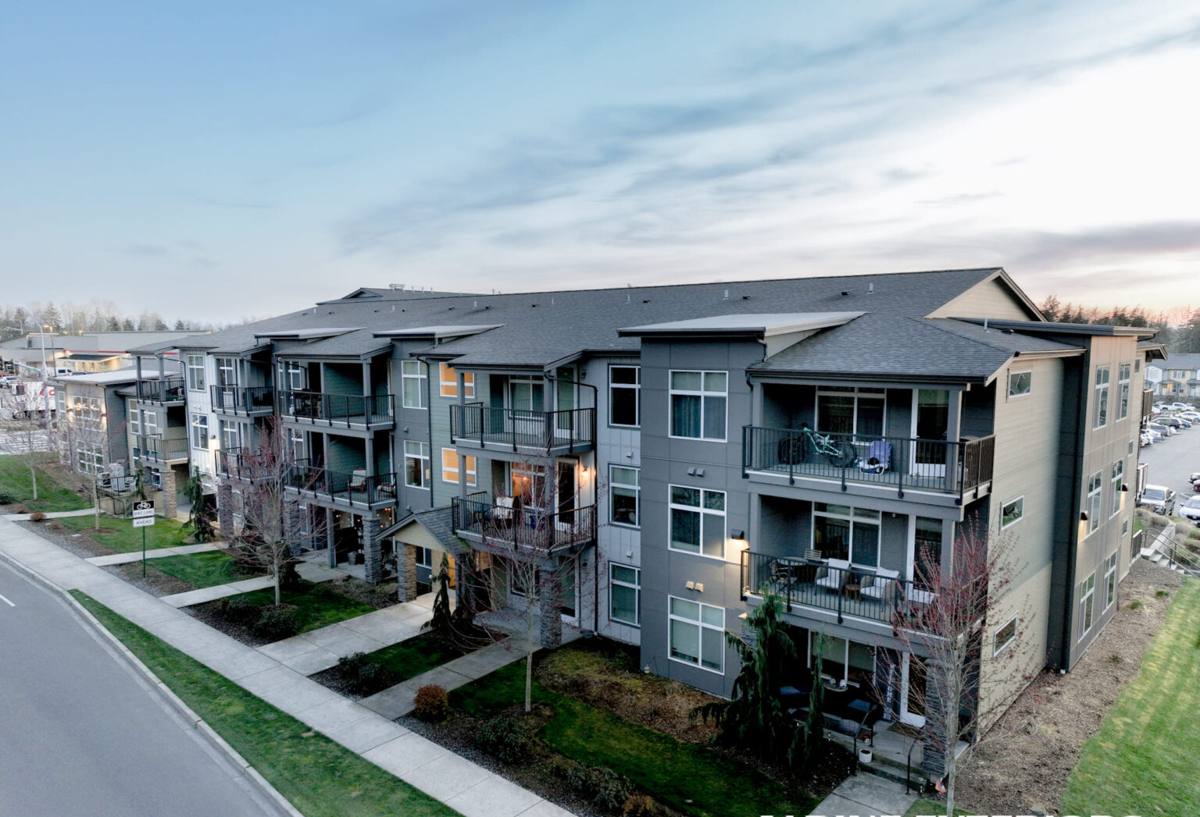
What Salt Air, Rain, and Moss Actually Do to a Wall
Each of these three factors attacks siding differently, and understanding the mechanism is the difference between a repair in year six and a siding system that's still doing its job in year thirty.
- Salt air is corrosive to exposed metal — fasteners, trim flashing, and hardware — and it also holds moisture against surfaces longer than dry inland air does. Homes with any water-facing exposure in the greater Bellingham area see this show up first at fastener heads and cut trim edges.
- Driving rain doesn't just wet a wall — wind-driven rain gets pushed sideways and upward, finding its way behind siding through gaps, poorly lapped joints, and missing flashing that would never leak in a calmer climate. This is why installation detail matters more here than in drier regions.
- Moss needs shade and sustained moisture to establish, and Whatcom County's tree cover and cloud cover provide both for most of the year. Moss itself doesn't destroy siding, but it holds moisture against the surface for extended periods, and on any material that can absorb water or decay, that's a slow, steady problem.
A siding product that handles one of these well but not the others isn't a good fit for Birchwood. That's the filter we use when we recommend a material — and it's why we've standardized on one product.
Why We Only Install James Hardie Fiber Cement Here
We install James Hardie fiber cement siding exclusively. We don't install vinyl, LP SmartSide, Cemplank, Allura, primed spruce, or cedar. That's a deliberate standard, not a limitation of what we're capable of installing, and it's worth explaining honestly rather than just stating it.
Fiber cement is a composite of cement, sand, and cellulose fiber, pressed and cured into a dense, stable board. It doesn't rot, it doesn't feed insects, and it's non-combustible — none of which depend on the local climate. What does depend on the climate is how the material behaves with sustained moisture exposure, and that's where fiber cement separates from the alternatives:
| Material | How It Handles This Climate | Where the Trade-off Shows Up |
|---|---|---|
| Vinyl siding | Sheds bulk water reasonably well but relies entirely on lap seams and J-channels to keep wind-driven rain out | Seams can allow water intrusion behind the panel in sustained driving rain; panels can warp or crack with age and impact |
| LP SmartSide (engineered wood) | Treated to resist moisture better than raw wood | Cut edges and seams are the weak point — once moisture gets into the wood strand core, swelling and edge deterioration follow |
| Cedar | Handles moisture naturally better than most wood, and looks the part | Needs ongoing refinishing and is vulnerable to rot and moss staining wherever shade and moisture are constant |
| James Hardie fiber cement | Dimensionally stable, doesn't absorb and swell, factory-cured finish resists the elements | Requires correct installation detail (clearances, flashing, fastening) to perform as designed |
None of the alternatives above are bad products used correctly in the right setting. But we're not comfortable putting a maintenance-intensive or moisture-sensitive material on a Birchwood home and calling it a long-term solution, so we don't offer them.
The HZ5 Engineered Line and Why That Matters in Whatcom County
James Hardie manufactures its siding in climate-specific formulations rather than one universal product. The HZ5 line is engineered for regions with significant moisture exposure and humidity cycling — which describes Western Washington and Whatcom County well. Using the climate-matched product line isn't a marketing detail; it affects how the board is formulated and how it's expected to perform over decades of exposure to exactly the conditions Birchwood sees.
What a Correct Fiber Cement Installation Actually Involves
Fiber cement siding's real-world performance depends heavily on installation quality — more so in a high-rain climate than in a mild one, because installation mistakes that would go unnoticed for years elsewhere show up in a season or two here. A correct job includes:
- A weather-resistive barrier installed correctly behind the siding, ideally with a drainage gap or rain screen so any water that does get past the siding has somewhere to drain instead of sitting against the sheathing
- Proper clearance between the bottom of the siding and grade, decks, and roof lines — tight clearances are one of the most common causes of moisture damage we find on older homes
- Kick-out flashing at every roof-to-wall intersection, which is one of the highest-risk leak points in a driving-rain climate and is frequently missed on older installations
- Flashing at every window, door, and penetration, lapped correctly so water sheds outward and down, not behind the siding
- Fastener placement and spacing following manufacturer specification, using corrosion-resistant fasteners appropriate for a marine-influenced air environment
- Factory-applied ColorPlus finish rather than field painting, which keeps the finish warranty intact and gives a more consistent, longer-lasting color result than site-applied paint
- Properly sized joint gaps, sealed with a high-quality paintable sealant rated for exterior movement — not just caulked tight edge to edge
Skipping any one of these doesn't usually cause an immediate, visible problem. It shows up two, five, or ten years later as moisture damage behind the siding, and by then the repair is far more expensive than doing it right the first time would have been.
A Quick Checklist Before You Hire Anyone
- Ask whether the crew is factory-trained or certified to install the specific Hardie product line being quoted
- Ask specifically about kick-out flashing and drainage plane detail — not just "do you flash," but where and how
- Confirm whether the siding will be factory-finished (ColorPlus) or field-painted, and what that means for the warranty
- Get the fastening and clearance specs in writing, not just verbally described
- Ask what happens if hidden sheathing damage is found once old siding comes off
Our Process, Start to Finish
The steps below are the same on every Birchwood project, though the scope and duration shift depending on the home's size, current siding, and condition underneath.
- On-site assessment. We look at the existing siding, check for signs of moisture intrusion at trim, corners, and roof-wall intersections, and identify which elevations take the worst weather exposure.
- Tear-off or overlay decision. In a climate like this, we lean toward full tear-off on most re-sides so we can inspect and repair the sheathing and weather barrier underneath rather than sealing existing damage behind a new layer.
- Prep work. Any damaged sheathing gets replaced, and the weather-resistive barrier and drainage plane go in correctly before a single piece of siding is hung.
- Installation. Siding, trim, and flashing go up to manufacturer spec, with particular attention to the flashing and clearance details covered above.
- Final walkthrough. We go over the finished job with you, including care and maintenance specific to your home's exposure.
- Warranty registration. Correct installation is what keeps the manufacturer's material warranty intact, so we make sure the paperwork is done right.
What Drives Cost on a Birchwood Fiber Cement Project
We're not going to quote pricing on a page like this — every home is different — but these are the factors that actually move the number, so you can ask informed questions when you get an estimate.
| Factor | Why It Matters |
|---|---|
| Tear-off vs. overlay | Full removal costs more up front but lets us inspect and fix what's underneath — often the right call given how moisture-sensitive hidden damage can be here |
| Siding profile and texture | Lap width, texture, and trim style all affect material and labor cost differently |
| Trim and detail complexity | Homes with more corners, dormers, and roof-wall intersections need more flashing and cutting labor |
| Home size and stories | More square footage and height affect both material quantities and access/scaffolding needs |
| Existing damage found during tear-off | Rotted sheathing or framing found once old siding comes off adds scope that can't always be predicted beforehand |
Living With Fiber Cement in a Moss-Prone, Salt-Air Neighborhood
Fiber cement is low-maintenance compared to wood-based siding, but "low-maintenance" doesn't mean "no maintenance" — especially in a neighborhood with the tree cover and moisture Birchwood has.
- Rinse the siding annually, especially on shaded elevations, to keep moss and organic growth from establishing — moss can grow on any exterior surface in the right conditions, fiber cement included, though it won't rot the material the way it can with wood
- Trim back vegetation and tree limbs that keep a wall in constant shade, since reduced airflow and sunlight is what lets moss take hold in the first place
- Keep gutters and downspouts clear so water isn't overflowing onto siding below
- Check caulking at trim joints and penetrations every year or two, and recaulk before you see daylight or staining behind a joint
- Avoid aggressive pressure washing directly at joints and seams — a garden hose and soft brush is usually enough and won't force water behind the siding
- Touch up any chips at cut edges promptly to keep the factory finish protecting the board
Why Hiring a Crew That Already Works in Birchwood Matters
A siding crew that regularly works this specific area already knows which elevations tend to take the worst weather, how the tree cover in a given part of the neighborhood affects moss and moisture patterns, and what the local permitting process through the City of Bellingham looks like for a re-side. That local familiarity translates into fewer surprises during the job and a more accurate estimate up front — because we're not guessing at how this climate behaves, we're working from what we already see on homes nearby every season.
It also matters after the job is done. A warranty is only as good as the contractor who's still around and reachable to honor it, and a crew based in the area isn't disappearing after the invoice is paid.
Get a Straight Answer for Your Home
If you're weighing a re-side in Birchwood, we're happy to take a look, walk you through what we'd actually recommend for your home's exposure, and give you a straightforward estimate — no pressure, no upsell to a product we wouldn't put on our own homes. Use the form below to get started.