 Bellingham Siding
 Storm Damage Roof Repair for Birchwood Homes
Birchwood sits close enough to Bellingham Bay and the Whatcom County waterways that its roofs take on a specific combination of stress most inland neighborhoods don't deal with. Salt-laden air off the water accelerates corrosion on fasteners and flashing. Winter windstorms push driving rain sideways into roof edges and valleys instead of letting it run straight off. And the long, wet stretch from fall through spring gives moss and moisture months to work into any weak point in a roof system. When a storm damages a roof here, the repair has to account for all three of those pressures, not just patch the visible hole.
This page covers what storm damage actually looks like on Birchwood roofs, what a correct repair involves, and how our process works when a homeowner in this neighborhood calls us after a windstorm or a heavy rain event.
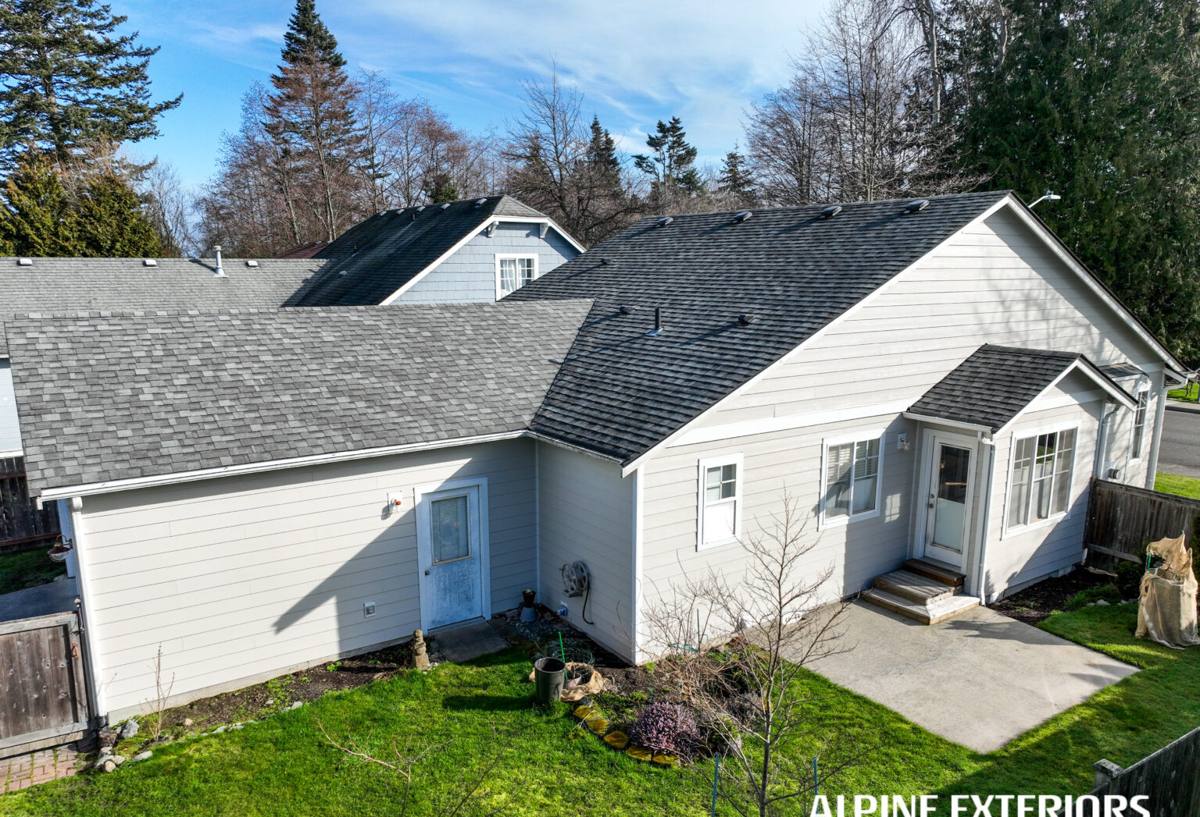
Why Birchwood's Climate Makes Storm Repairs Different
Salt Air and Metal Fatigue
Roofing hardware — nails, flashing, gutter fasteners, ridge vents — is more exposed to corrosion in neighborhoods near the bay than it is further inland. A storm that lifts a few shingles on an inland roof might expose already-weakened, salt-corroded fasteners on a Birchwood roof, which changes how the repair needs to be fastened back down. Using standard-grade fasteners in a repair here is a shortcut that shows up as a callback in a year or two.
Driving Rain and Wind Direction
Bellingham's storms tend to bring wind-driven rain rather than just straight-down rainfall. That matters because wind-driven rain finds its way under shingles, around flashing laps, and through nail holes that would never leak in a calm rain. A repair that only replaces missing shingles without checking underlayment and flashing laps for wind-driven intrusion is treating the symptom, not the cause.
Moss Season and Trapped Moisture
Whatcom County's moss season typically runs from fall through late spring. Storm damage — a cracked shingle, a lifted tab, a dented ridge cap — gives moss spores a foothold, and once moss establishes itself it holds moisture against the roof deck long after the storm has passed. A repair done in October that doesn't address moss growth already present nearby can be undone by spring.
What Actually Counts as Storm Damage
Homeowners often assume storm damage means a hole in the roof, but most of what we see in Birchwood after a wind event is more subtle:
- Wind-lifted or creased shingle tabs that no longer seal flat
- Fasteners backed out or sheared by wind uplift, leaving shingles loose but not missing
- Flashing bent, lifted, or separated at chimneys, skylights, and roof-to-wall junctions
- Granule loss from wind-blown debris, thinning the shingle's protective layer
- Gutter and downspout damage that redirects water onto fascia or siding
- Small leaks that don't show up as a drip until several rain events later, once insulation or decking has absorbed enough moisture
Any of these can look minor from the ground and still lead to decking rot, insulation damage, or interior staining if left through another Bellingham winter.
What a Correct Repair Involves
Stabilize First
If a storm has left a roof actively leaking or with exposed decking, the first step is stabilization — tarping or temporary sealing to stop water intrusion before the real repair begins. This isn't the fix itself, just triage to protect the interior while a proper repair is scheduled.
Full Diagnostic, Not Just the Obvious Spot
A correct storm repair starts with checking the whole roof plane, not just the area where damage is visible from the ground. Wind damage is rarely isolated to one shingle — if wind lifted one tab, it likely stressed the surrounding fasteners and seal strips too. We check:
- The decking underneath damaged shingles for soft spots or rot
- Underlayment condition where shingles were lifted or removed
- Flashing at every penetration and transition near the damaged area
- Attic ventilation and any signs of moisture that predate the storm
Matching Materials, Not Just Available Ones
Replacement shingles and flashing should match the existing roof's material, profile, and where possible, color — mismatched patches are a cosmetic problem now and a resale problem later. When an exact match isn't available because a roof is older, we're upfront about that trade-off rather than installing something that will visibly stand out.
Our Repair Process
| Step | What Happens | Why It Matters in Birchwood |
|---|---|---|
| Inspection | Full roof-plane assessment, not just the damaged section | Wind and salt air stress fasteners beyond the visible damage |
| Documentation | Photos and notes of damage extent and cause | Supports insurance claims accurately, without over- or under-stating the loss |
| Stabilization | Tarping or temporary sealing if there's active leak risk | Prevents a storm repair from becoming a rot repair while scheduling |
| Repair scope proposal | Written scope covering materials, flashing, and decking as needed | Avoids surprise costs once the roof is opened up |
| Repair execution | Matching materials, corrosion-resistant fasteners, proper flashing laps | Built to hold up to wind-driven rain and salt air, not just look repaired |
| Final check | Verify sealing, drainage, and ventilation are correct | Reduces the odds moss or trapped moisture return in the next wet season |
Material Choices and Honest Trade-Offs
Most Birchwood storm repairs are on asphalt composition roofs, and for repair work — as opposed to a full replacement — we generally recommend matching what's already there rather than mixing roofing systems. Introducing a different material (say, a metal patch on an asphalt roof) can create differential expansion and new leak points at the transition, even if the patch itself looks fine. Our standard is to repair in-kind whenever the existing roof condition supports it, and to recommend a fuller replacement conversation only when the roof's age or extent of damage make patch repair a short-term fix rather than a real solution. That's a judgment call we'll walk through with you rather than assume.
For fasteners and flashing in this neighborhood specifically, we favor corrosion-resistant hardware given the proximity to salt air — it costs a little more up front and holds up considerably longer than standard-grade fasteners would.
What Affects the Cost of a Storm Repair
| Factor | Why It Changes the Price |
|---|---|
| Decking condition | Rotted or soft decking underneath damaged shingles needs replacement, not just a shingle swap |
| Extent of the damage area | A single lifted section costs far less than a full slope affected by wind uplift |
| Flashing involvement | Repairs near chimneys, skylights, or valleys take more labor than open-field shingle repair |
| Material matching | Older roofs may require sourcing discontinued profiles or accepting a visible patch |
| Roof pitch and access | Steeper roofs and limited access add labor time and safety equipment needs |
We don't quote storm repairs over the phone with any accuracy — the honest range depends heavily on what we find once we're actually on the roof, particularly decking condition, which is invisible from the ground.
Insurance Documentation
Many storm repairs in Birchwood go through a homeowner's insurance policy, particularly after a named windstorm event. We document damage with dated photos and a written scope that describes cause and extent, which gives homeowners a clear record to bring to an adjuster. We're not a public adjuster and don't negotiate claims on a homeowner's behalf, but a clear, honest damage assessment makes that conversation easier regardless of which contractor ends up doing the work.
Why It Matters That We Already Work in Birchwood
A crew that regularly works this part of Whatcom County knows the practical realities that don't show up in a generic inspection: how far salt air corrosion typically travels inland from the water, which roof orientations catch the worst of the wind-driven rain in a given storm pattern, and how aggressively moss tends to establish itself on shaded north-facing slopes common in this area. That local pattern recognition shortens the diagnostic phase and helps us catch related issues — like a flashing lap that's about to fail — before they turn into their own emergency call.
After a Storm: A Quick Homeowner Checklist
- Check the attic (if accessible) for damp insulation, staining, or daylight through the decking
- Look at gutters and downspouts for granules, dents, or disconnection after the storm
- Note any interior ceiling stains, even faint ones — they often show up days after the actual storm
- Photograph visible roof damage from the ground for your own records before any repair begins
- Avoid walking the roof yourself after a storm — wet or wind-damaged roofing is unstable underfoot
- Get a professional inspection promptly — small leaks compound quickly during Bellingham's wet season
If a recent storm has left your Birchwood roof with missing shingles, a leak, or damage you're not sure how serious, we're happy to take a look. The estimate is free, there's no pressure to sign anything on the spot, and you'll get a straight answer about what actually needs repair — just fill out the form below.