 Bellingham Siding
 Board & Batten in the Columbia Neighborhood
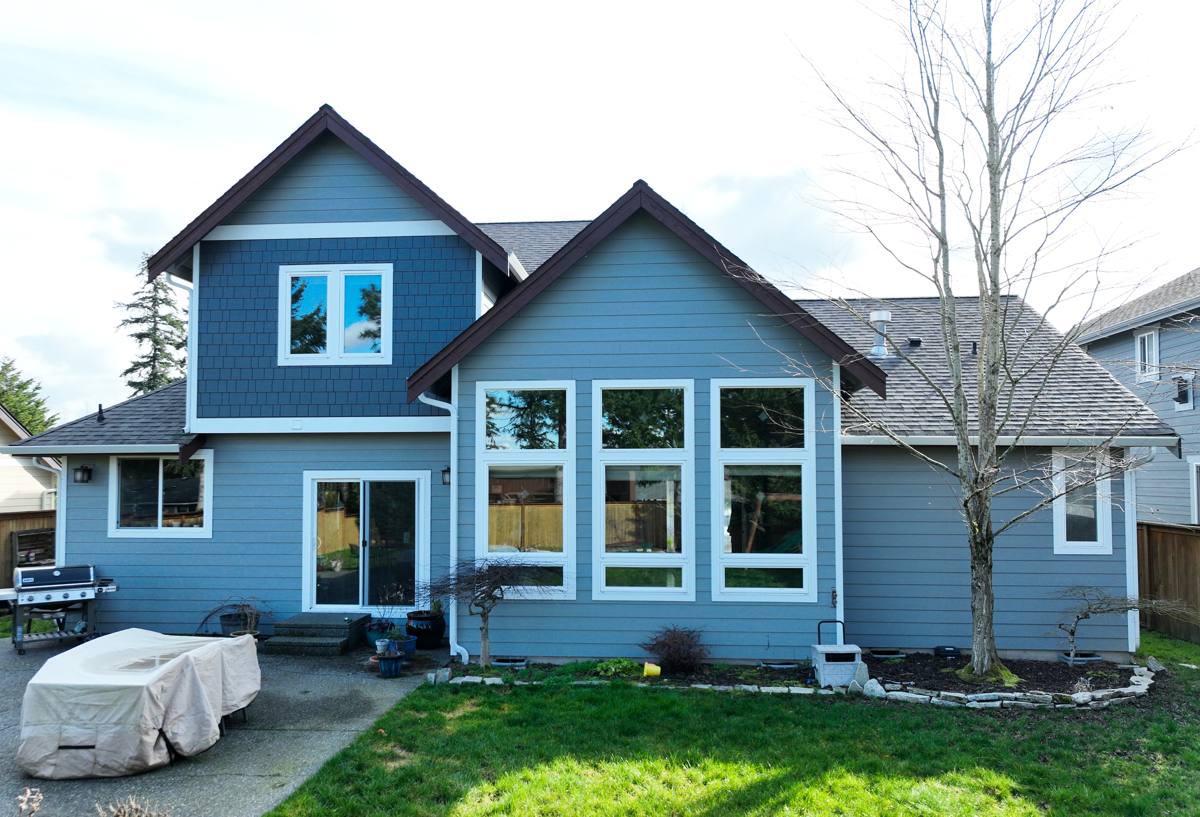
Columbia sits close enough to Bellingham Bay and the surrounding wetlands that its homes deal with a specific combination of stresses: salt-laden air moving off the water, long stretches of driving rain through fall and winter, and a moss and algae season that can run most of the year in shaded, north-facing spots. Board & batten siding — with its bold vertical lines and deep shadow reveals — is a popular look in this part of Whatcom County, on everything from older farmhouse-style homes to newer builds going for a modern-craftsman look. It's a great style choice. It's also one that punishes cheap materials and sloppy installation faster than lap siding does, because every batten joint and vertical seam is a potential water path if it isn't detailed correctly.
This page covers what board & batten siding actually needs to hold up in Columbia's climate, what a correct installation looks like, and why we only install it in James Hardie fiber cement — not vinyl, not LP SmartSide, not cedar or primed spruce.
Why the Local Climate Is Hard on Board & Batten Specifically
Board & batten isn't a single flat plane like traditional lap siding — it's a series of vertical panels and narrow battens fastened over seams, which means more linear feet of joint per square foot of wall than almost any other siding style. In a dry climate that's a minor detail. In Whatcom County, where driving rain comes in sideways off the Salish Sea during winter storms, every one of those joints is a place water can find a way behind the cladding if the flashing, caulking, or panel material isn't right.
- Salt air: Corrodes exposed fasteners and hardware over time, and accelerates the breakdown of finishes that aren't factory-cured for coastal exposure.
- Driving rain: Wind-driven moisture pushes water horizontally into vertical seams and batten joints, not just straight down the wall — this is where DIY-grade caulk-and-hope installations fail first.
- Moss and algae season: Shaded walls, especially north- and east-facing elevations near trees, stay damp for extended stretches, which is exactly the environment that swells wood fiber and feeds surface growth on porous materials.
None of this means board & batten is a bad choice for a Columbia home. It means the material and the detailing have to be matched to the exposure, not just picked for looks.
What a Correct Board & Batten Installation Actually Involves
Board & batten looks simple from the street — vertical boards, narrow strips covering the seams — but the assembly behind that look is doing real structural and moisture-management work. A correct install includes:
Weather-Resistive Barrier and Rainscreen
A properly lapped weather-resistive barrier goes on first, and in a climate like ours we strongly favor a rainscreen gap behind the siding — a thin drainage/ventilation space that lets any moisture that does get past the cladding drain and dry out instead of sitting against the sheathing. This matters more with board & batten than with lap siding because of the higher joint count.
Panel and Batten Layout
Vertical panels are installed first, joints backed properly, then battens are fastened over the seams into framing — not just into the panel itself. Batten spacing and fastening pattern affect both the finished look and how well the assembly sheds water long-term.
Flashing at Every Transition
Windows, doors, corners, and the base of the wall (especially near grade, decks, and roof-to-wall intersections) all need proper flashing detail. This is the single biggest source of siding failures we see regionally, board & batten or otherwise — not the siding material itself, but a missed flashing detail at a transition point.
Fastener Choice
Corrosion-resistant fasteners, installed per the manufacturer's schedule, matter more here than on almost any other exterior product given the salt air off the bay. Wrong fastener type or spacing shows up as staining and eventual loosening years before the siding itself would otherwise show wear.
Why We Only Install James Hardie for Board & Batten
Board & batten is available in several materials — cedar, primed spruce, LP SmartSide (engineered wood), vinyl, and Hardie fiber cement. We've made the call to install James Hardie exclusively, and for this particular style the reasoning is even more pointed than usual.
Wood and engineered-wood board & batten rely on paint film and edge sealing to keep moisture out of the panel material. In a climate with this much sustained rain and humidity, panel edges — especially at butt joints and batten overlaps — are exactly where those products are most vulnerable to swelling, delamination, or rot if maintenance slips even one paint cycle. Vinyl board & batten avoids rot but expands and contracts significantly with temperature swings, which telegraphs through the vertical battens as waviness over time, and it's a thinner, less rigid product that shows impact damage more readily.
James Hardie fiber cement is dimensionally stable, doesn't absorb water the way wood-based products do, and carries a factory-applied ColorPlus finish that's baked on and warrantied against fading and peeling — which matters on a material that's going to sit in salt air and UV for decades. It's also non-combustible, a genuine plus for wildfire-adjacent insurance considerations even in a coastal county. We use Hardie's vertical siding panels with batten strips (and Artisan-line options where a homeowner wants a more refined, tighter-reveal look) specifically because the assembly is engineered to work as a system — panel, batten, and flashing details designed to go together, not improvised on site.
Our Process for Columbia Board & Batten Projects
- On-site assessment: We walk the home, check current siding and sheathing condition, identify problem transitions (roof lines, decks, window/door flashing), and note sun/shade exposure per elevation since that affects moss risk and drying time.
- Tear-off and sheathing check: Old siding comes off and we inspect the sheathing underneath for rot or moisture damage before anything new goes on — this step gets skipped by crews trying to move fast, and it's where hidden problems get missed.
- Weather barrier and rainscreen install: Properly lapped WRB with a drainage gap behind the siding field.
- Flashing at every penetration and transition: Windows, doors, corners, and grade-level details get flashed before panels go up, not patched after.
- Panel and batten installation: Hardie panels and battens installed per manufacturer spec, with corrosion-resistant fasteners set to the correct pattern.
- Final inspection and walk-through: We review the finished work with the homeowner and cover basic care before we consider the job done.
Common Failure Points We See on Older Board & Batten Around Whatcom County
Most of the board & batten problems we get called out to inspect in this area trace back to a handful of repeat issues, not random bad luck:
| Failure Point | What Causes It | What It Looks Like |
|---|---|---|
| Batten joints | Caulk-only sealing instead of proper lap and flashing detail | Staining or soft spots below batten lines |
| Base of wall | Siding installed too close to grade or decking, trapping moisture | Swelling, rot, or paint failure near the bottom courses |
| Fasteners | Standard fasteners used in a salt-air environment | Rust streaks, loosening battens over a few seasons |
| Window/door flashing | Missed or improvised flashing at openings | Interior staining, exterior discoloration radiating from corners |
| No rainscreen gap | Panels fastened tight to the WRB with no drainage plane | Slow-drying walls, elevated moss and mildew growth |
Every one of these is a detailing and material problem, not an inherent flaw in the board & batten style — which is exactly why the installation matters as much as the product choice.
Cost Factors for a Columbia Board & Batten Project
We don't quote pricing sight-unseen because every home's wall area, tear-off scope, trim detail, and access affect the number, but these are the factors that actually move the price on a board & batten job in this area:
| Factor | Why It Matters |
|---|---|
| Tear-off scope | Full removal of old siding and sheathing repair adds labor versus a straightforward re-side over sound sheathing |
| Wall complexity | Dormers, gables, and multiple roof-to-wall transitions mean more flashing detail and cut waste |
| Batten spacing/reveal | Tighter batten spacing (a more refined, "Artisan" look) uses more material and labor than a standard wide-spaced layout |
| Sheathing/moisture damage | Any rot found during tear-off needs repair before new siding goes on — this is usually the biggest wildcard |
| Trim and accessory work | Corner boards, window trim, and fascia detailing add to scope beyond the field siding itself |
Maintenance: What Board & Batten Actually Needs Long-Term
One advantage of a correctly installed Hardie board & batten system is how little it asks of a homeowner year to year compared to wood-based alternatives — but "little" isn't "nothing," especially with the moss season this region gets:
- Rinse siding down annually, particularly shaded north- and east-facing walls, to keep moss and algae from establishing.
- Walk the base of the wall each fall and clear any leaf or debris buildup that's holding moisture against the bottom courses.
- Check caulking at trim and penetrations every couple of years and re-caulk where it's cracked or pulled away — sealant is a maintenance item on any siding system.
- Watch for any staining below batten joints or window flashing, since that's the earliest visible sign of a flashing issue, not a siding-material issue.
- Avoid pressure-washing directly into seams and battens — a garden-hose rinse is enough and won't force water where it doesn't belong.
Why Hire a Crew That Already Works in Columbia
Board & batten's failure points are almost all about how it's detailed against the specific conditions of a wall — sun exposure, prevailing wind direction, proximity to the bay, roofline complexity. A crew that already works homes in Columbia and the surrounding Bellingham neighborhoods has seen which elevations tend to hold moss, which transitions catch the worst of the driving rain off the water, and how the salt air here compares to a job forty miles inland. That's not something you can fully substitute with a general installation manual — it's pattern recognition built from working the same conditions repeatedly. Combined with sticking to one engineered siding system rather than juggling installation quirks across five different products, it's how we keep the callback rate low on board & batten specifically, which is a style that's genuinely less forgiving of shortcuts than standard lap siding.
If you're considering board & batten siding for a home in Columbia, we're happy to walk the property, look at your current siding condition, and put together a straightforward, no-pressure estimate — just fill out the form below.