 Bellingham Siding
 Why Happy Valley Decks Wear Differently
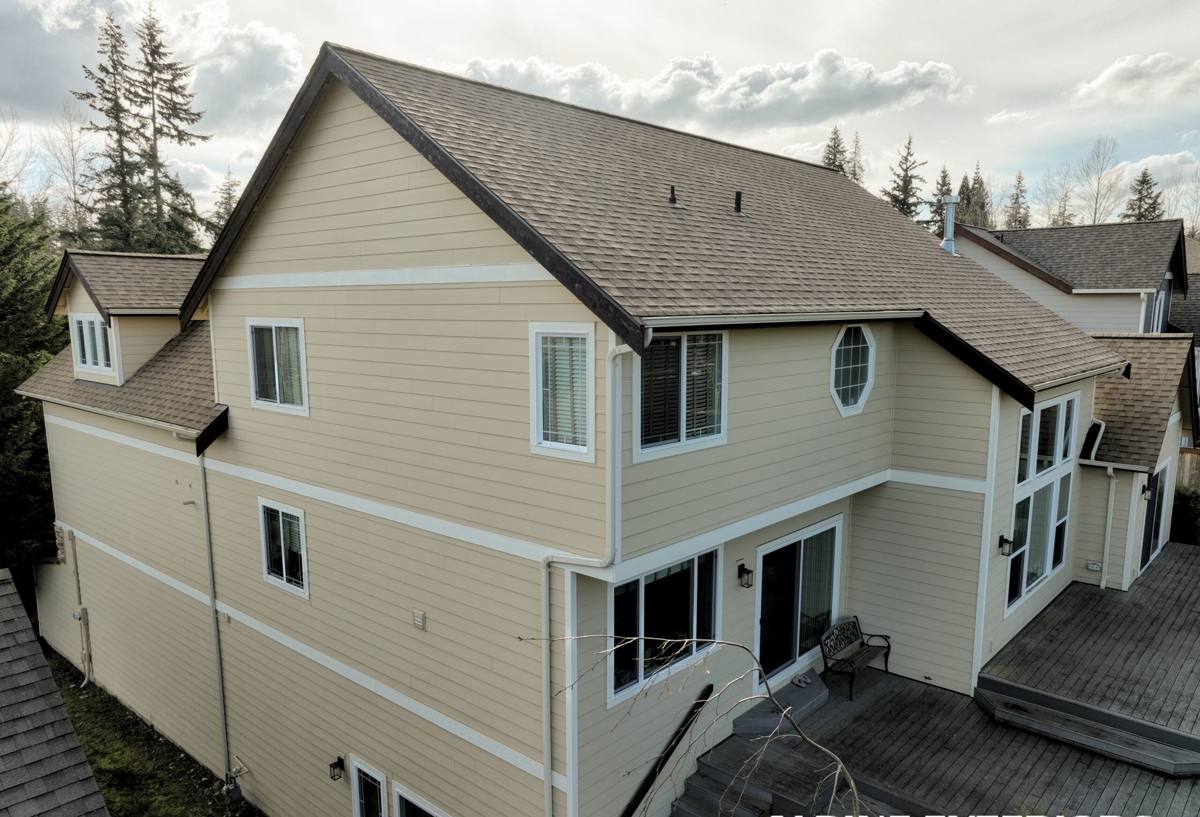
Happy Valley sits close enough to the water and the tree cover that decks here take a specific kind of punishment. It's not one big storm that does the damage — it's the steady combination of salt-laden air drifting in off Bellingham Bay, driving rain that finds its way into every joint and fastener hole, and a moss season that can run from October well into April. Add in the shade from mature trees on many of the neighborhood's older lots, and you get decks that stay damp longer than they should, season after season.
None of that is unusual for Whatcom County. But it does mean a deck built to a generic spec, or repaired with a quick patch, tends to fail faster here than the same deck would in a drier inland climate. The fixes that hold up are the ones that account for moisture cycling, not just the visible wear.
Signs Your Deck Needs Attention
Most deck problems in this area start small and stay hidden until they're not. Here's what we tell homeowners to watch for between now and their next full inspection:
- Soft or spongy spots underfoot, especially near the house or at board ends
- Green or black staining that comes back within weeks of cleaning
- Railings or posts that flex more than they used to
- Gaps opening up where the deck meets the house (ledger board area)
- Fasteners that are rusted, popped up, or leaving dark streaks on the wood
- Stairs that feel bouncy or have visibly sagging stringers
- Standing water that takes more than a day to dry after rain
Any one of these on its own might just mean a cleaning and re-sealing. Two or three together, especially near structural members, usually means it's time for a real inspection before someone gets hurt.
Cosmetic vs. Structural
A lot of homeowners assume a rough-looking deck needs to be torn out and rebuilt. Often it doesn't. Graying, surface checking, and a weathered look are cosmetic — normal aging for wood exposed to this much rain and UV. What matters is what's underneath: the ledger board connection, the joists, the posts, and the footings. A deck can look tired on the surface and still be structurally sound, or look fine on top and be rotting from below at the ledger. That's why we never quote repair work off a walk-by — we get underneath and check the framing directly.
What a Correct Deck Repair Actually Involves
A repair that's done right in this climate goes beyond swapping out a few bad boards. Here's what we check on every deck repair call in Happy Valley:
| Component | What we check | Why it matters here |
|---|---|---|
| Ledger board | Flashing, fastener condition, gap for drainage behind the board | The #1 point of rot on Whatcom County decks — driving rain gets pushed into the house wall |
| Joists & beams | Soft spots, rust streaking, sag under load | Moss-shaded decks stay damp against framing far longer than sunny ones |
| Posts & footings | Base rot, concrete cracking, post-to-footing connection | Ground moisture near the coast keeps footing areas wet most of the year |
| Decking boards | Cupping, splitting, fastener pull-through | Repeated wet-dry cycles stress boards more than steady climates |
| Railings & stairs | Post attachment, baluster spacing, stringer condition | Code compliance and basic safety — these get the most repeated foot and hand contact |
| Fasteners & hardware | Corrosion, correct rated hardware for the connection | Salt air accelerates corrosion on anything less than stainless or coated fasteners |
Common Problem Areas We See Around Happy Valley
The pattern repeats often enough that we can usually guess where the trouble is before we even get on the deck. The ledger board — where the deck attaches to the house — is the most frequent culprit. If it was never properly flashed, or the flashing has failed over the years, water tracks behind it and rots both the ledger and the rim joist of the house. It's hidden, it's structural, and it's the single most important repair to get right.
Shaded corners under trees are the second most common issue. Moss doesn't just look bad — it holds moisture against the wood surface constantly, which speeds up decay in exactly the spots that get the least sun to dry out. Stair stringers are the third. They take direct rain, get walked on daily, and are often under-sized or under-fastened from the original build.
Repair, or Time to Replace?
This is the honest question every homeowner asks, and the answer depends on where the damage is, not how old the deck is. A well-framed deck with rotted ledger flashing or a handful of bad boards is almost always worth repairing. A deck with rot spreading through multiple joists, failing footings, or a structure that was undersized to begin with is often better replaced — patching it repeatedly ends up costing more over a few years than doing it once, correctly.
| Factor | Leans toward repair | Leans toward replacement |
|---|---|---|
| Framing condition | Solid joists/beams, isolated soft spots | Rot in multiple structural members |
| Ledger connection | Sound once reflashed | Rim joist behind it is compromised |
| Footings | Stable, adequately sized | Undersized, heaving, or cracked |
| Age of decking | Under 10-12 years, isolated board failure | Widespread cupping/splitting across the deck |
| Design | Layout and size still work for the home | Homeowner wants a different footprint or material |
We'll tell you plainly which category your deck falls into. We don't sell full replacements to homeowners who only need a repair, and we don't recommend patching a structure that's genuinely done.
Our Deck Repair Process
- On-site inspection: We get under the deck and check framing, footings, and the ledger connection directly — not just what's visible from the top.
- Written scope: You get a clear list of what's failing, what's sound, and what we recommend, in plain language.
- Repair or replace the compromised parts: Structural members first, then decking, railings, and stairs as needed.
- Correct the moisture path: Reflash the ledger, address drainage, and fix whatever originally let water in — otherwise the same failure comes back.
- Match materials and fasteners: Coated or stainless hardware suited to a marine-influenced climate, not standard interior-grade fasteners.
- Final walk-through: We show you what was done and what to watch going forward.
Decking Material Trade-Offs
Part of a good repair is knowing when to keep the existing material and when to recommend a change for the sections being replaced.
Wood Decking
Cedar and pressure-treated lumber are common on older Happy Valley decks and can look great for years, but they need regular cleaning and resealing to hold up against this much rain and moss pressure. Skipping maintenance for a few seasons is usually what turns a cosmetic issue into a structural one.
Composite Decking
Composite boards resist moss and moisture better on the surface and cut down on repainting, but they're not maintenance-free — they still need cleaning, and the framing underneath still needs to be sound wood or approved substructure. Composite also has its own installation sensitivities: gapping, fastener type, and ventilation underneath all need to be right, or you trade one set of problems for another. We'll walk you through what fits your budget and how much upkeep you actually want to take on, rather than pushing one product as a universal fix.
Why Hiring a Crew That Works Happy Valley Regularly Matters
A contractor who works this neighborhood routinely already knows which builders' decks tend to have flashing shortcuts, which lots hold moisture longest, and what hardware actually survives here versus what corrodes out in a few winters. That's not something you can fully diagnose from a single visit if you don't already know the area's patterns. It also means faster, more accurate quotes — we're not guessing at what Bellingham's rain and salt air will do to a repair five years out, because we've already seen it.
Keeping a Repaired Deck Sound
Once repairs are done, a little seasonal upkeep goes a long way toward not repeating the same work in a few years:
- Clean moss and debris off the deck surface and between boards at least twice a year
- Keep gutters and downspouts clear so water isn't dumping near the deck or foundation
- Check and reseal wood decking on the manufacturer's recommended cycle, not just when it looks dry
- Trim back overhanging branches to cut down on shade and debris buildup
- Look under the deck once a year for new soft spots or staining, especially near the ledger
- Tighten or replace any hardware showing rust before it spreads to the wood around it
Whatcom County's wet season isn't going away, but a deck that's repaired correctly the first time — with attention to drainage, flashing, and the right hardware — will handle it a lot better than one that's just had its boards swapped.
If you're seeing soft spots, staining, or just want an honest read on where your deck stands, we're happy to take a look. Fill out the form below for a free, no-pressure estimate — we'll tell you straight whether you need a repair, a rebuild, or nothing at all right now.