 Bellingham Siding
 Siding Installation in Cordata: Built for the Weather That's Actually Here
Cordata sits in north Bellingham, close enough to Bellingham Bay and the Salish Sea that homes here deal with a mix of coastal and inland Whatcom County weather in the same year — sometimes the same week. That combination matters when it's time to install new siding. A product or installation detail that works fine in a drier part of Washington can fail early here if it wasn't chosen and installed with this specific climate in mind. Siding installation isn't a one-size-fits-all job, and treating it that way is one of the most common reasons homeowners end up replacing siding again sooner than they should.
This page covers what siding installation actually involves for a home in Cordata, why the local climate changes the calculus, and how our process is built around getting it right the first time.
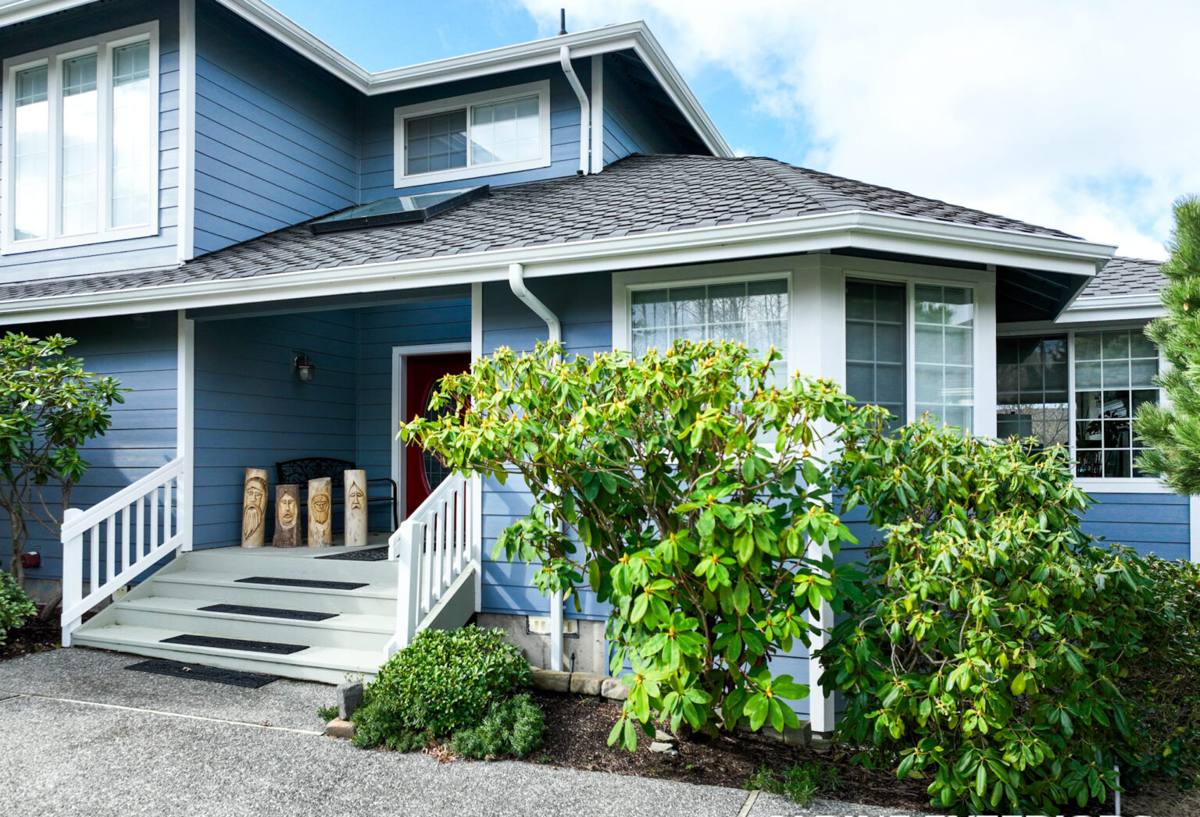
Why Cordata Homes Take a Beating: Salt Air, Driving Rain, and Moss
Salt Air and Moisture
Proximity to Bellingham Bay means airborne salt and moisture are a constant, low-level presence on exterior surfaces. Salt-laden air accelerates the breakdown of fasteners, caulking, and paint film, and it keeps exterior surfaces damp longer than they'd stay in a purely inland climate. Siding materials and finishes that aren't built to resist this kind of exposure tend to show fading, chalking, and fastener corrosion years before they should.
Wind-Driven Rain
Whatcom County gets a lot of rain, but it's the wind-driven rain off Pacific storm systems that causes the real damage. Rain that's being pushed sideways finds every gap in flashing, every under-caulked seam, and every place where siding wasn't lapped correctly. On a home with proper water management behind the siding, that's a non-issue. On a home where shortcuts were taken, it's how rot starts — often behind the wall, where nobody sees it until the damage is extensive.
The Long Moss Season
Between the tree cover common in Cordata's residential areas and the region's long wet season, moss and algae growth on north-facing and shaded siding is nearly unavoidable without the right material and finish. Moss holds moisture against the siding surface, and on materials that absorb water, that constant dampness is exactly what accelerates decay. The goal isn't to eliminate moss entirely — it's to install siding that doesn't degrade because of it.
What a Correct Siding Installation Actually Involves
Siding is a system, not just a surface. The visible boards or panels are the last layer installed and the first thing anyone notices, but the work that determines whether the job lasts happens underneath.
Weather-Resistive Barrier and Flashing
A continuous weather-resistive barrier behind the siding, properly lapped and taped, is what actually keeps bulk water out of the wall assembly. Flashing at windows, doors, and every horizontal trim transition has to be integrated with that barrier correctly — not caulked over as an afterthought. This is the part of the job that's invisible once the siding goes up, and it's also the part most likely to be rushed by a crew trying to move fast.
Clearances and Ventilation
Siding needs proper clearance from grade, roofing, decks, and patios — generally a minimum of a few inches — so water and debris don't sit against the bottom edge. It also needs room to let any moisture that does get behind it dry out. Installers who nail siding tight against a deck surface or bury the bottom edge in landscaping are setting up a rot problem regardless of what material was used.
Fastening and Butt Joints
Fastener type, spacing, and depth all affect how siding performs over time, and they're all manufacturer-specified for a reason — get them wrong and you can void a warranty even on a good product. Butt joints between boards need to be sealed or flashed correctly, since these are one of the most common points of water intrusion on any siding job, on any house, in any neighborhood.
Why We Only Install James Hardie Fiber Cement
We install one siding product: James Hardie fiber cement, in the HZ product lines engineered for this climate zone. We don't install vinyl, LP SmartSide, Cemplank, Allura, primed spruce, or cedar. That's not a marketing position — it's a standard we hold because of what we've seen these materials do over time in exactly the kind of weather Cordata gets.
Fiber cement is non-combustible, which matters in Washington's current wildfire-risk environment even outside of dense forest areas. It doesn't absorb water the way wood-based products do, so it doesn't swell, cup, or provide the same food source for moss and rot. The factory-applied ColorPlus finish is baked on under controlled conditions, which holds color and resists the fading and chalking that salt air and UV exposure cause on field-applied paint. And Hardie's transferable limited warranty is a real, structured commitment — not a marketing footnote.
Other siding materials aren't without merit, and we're upfront about their trade-offs on our other pages. But when we're the crew standing behind the installation, we install what we've seen hold up.
Our Installation Process
- Assessment and measurement — We walk the home, check existing siding and sheathing condition where relevant, and take precise measurements for material ordering.
- Product and color selection — We help homeowners choose the right Hardie profile (lap, shingle, or panel) and ColorPlus finish for the home's style and exposure.
- Prep and tear-off — Removal of old siding, inspection of the sheathing underneath, and repair of any rot or damage found before anything new goes on.
- Weather barrier and flashing — Installation of a continuous weather-resistive barrier with correctly integrated flashing at every penetration and transition.
- Siding installation — Installed to Hardie's fastening, clearance, and joint specifications, not shortcuts that happen to look right from the ground.
- Trim, caulking, and final detailing — Trim work, sealant at specified joints only, and a final walkthrough.
- Cleanup and inspection — Site cleanup and a final review with the homeowner before we consider the job done.
Signs Your Cordata Home May Need New Siding
- Visible warping, cupping, or soft spots when you press on the siding
- Paint that's peeling, bubbling, or needs repainting more often than every few years
- Persistent moss or algae growth that comes back quickly after cleaning
- Cracked or crumbling caulk at seams, corners, or trim
- Rising energy bills that suggest the wall assembly isn't insulating or sealing the way it should
- Visible gaps, missing pieces, or boards that have separated from the wall
- Interior signs like musty smells, staining, or soft drywall near exterior walls
What Affects the Cost of a Siding Installation
Every home is different, and we don't quote sight-unseen, but these are the main factors that move a project's cost up or down:
| Factor | Why It Matters | Typical Impact |
|---|---|---|
| Tear-off vs. new construction | Removing and disposing of old siding, plus repairing any hidden damage found underneath | Medium to High |
| Home size and story count | More square footage and taller walls mean more material and more labor, plus added equipment for upper stories | High |
| Trim and architectural detail | Homes with more corners, dormers, and trim transitions take longer to flash and finish correctly | Medium |
| Siding profile chosen | Lap, shingle, and panel profiles differ in material and labor cost | Low to Medium |
| Access and site conditions | Tight lots, landscaping, or limited equipment access can add labor time | Low to Medium |
| Underlying sheathing condition | Rot or damage discovered during tear-off needs to be repaired before new siding goes on | Variable |
Why Hiring a Crew That Already Works in Cordata Matters
A crew that regularly works in this part of Whatcom County already knows how the local weather behaves through the seasons, what clearance and drainage details actually hold up here, and what moss and moisture problems look like before they become structural ones. That's not something you can substitute with a generic installation checklist. It's the difference between a crew executing a standard process and a crew adapting that process to the house in front of them and the weather it's going to face for the next several decades.
We also stand behind our work locally — if a question comes up after the job is done, we're not a crew that drove in from out of the area and disappeared.
If your Cordata home's siding is showing its age, or you're planning ahead for a replacement, we're happy to take a look and give you a straightforward, no-pressure estimate. Fill out the form below and we'll get in touch.