 Bellingham Siding
 Storm Damage Roof Repair Built for Cordata's Weather
Cordata sits far enough inland from the water that homeowners sometimes assume they're spared the worst of what hits the coastline, but that's not how Whatcom County weather works. Wind funnels down from the Fraser Valley, driving rain sideways into roof edges and valleys, and the same marine moisture that blankets the rest of Bellingham settles here just as heavily. When a windstorm lifts shingles, a fallen limb punches through a roof deck, or weeks of wet weather finally find their way through a weak spot, Cordata homes need a repair that accounts for all of that at once — not just a quick patch that fails again next season.
We work storm damage calls across Cordata regularly, and the pattern is consistent: the visible damage (a missing shingle, a dented vent cap, a soft spot in the ceiling) is rarely the whole story. Correct storm damage repair means finding where water actually got in, not just where it showed up.
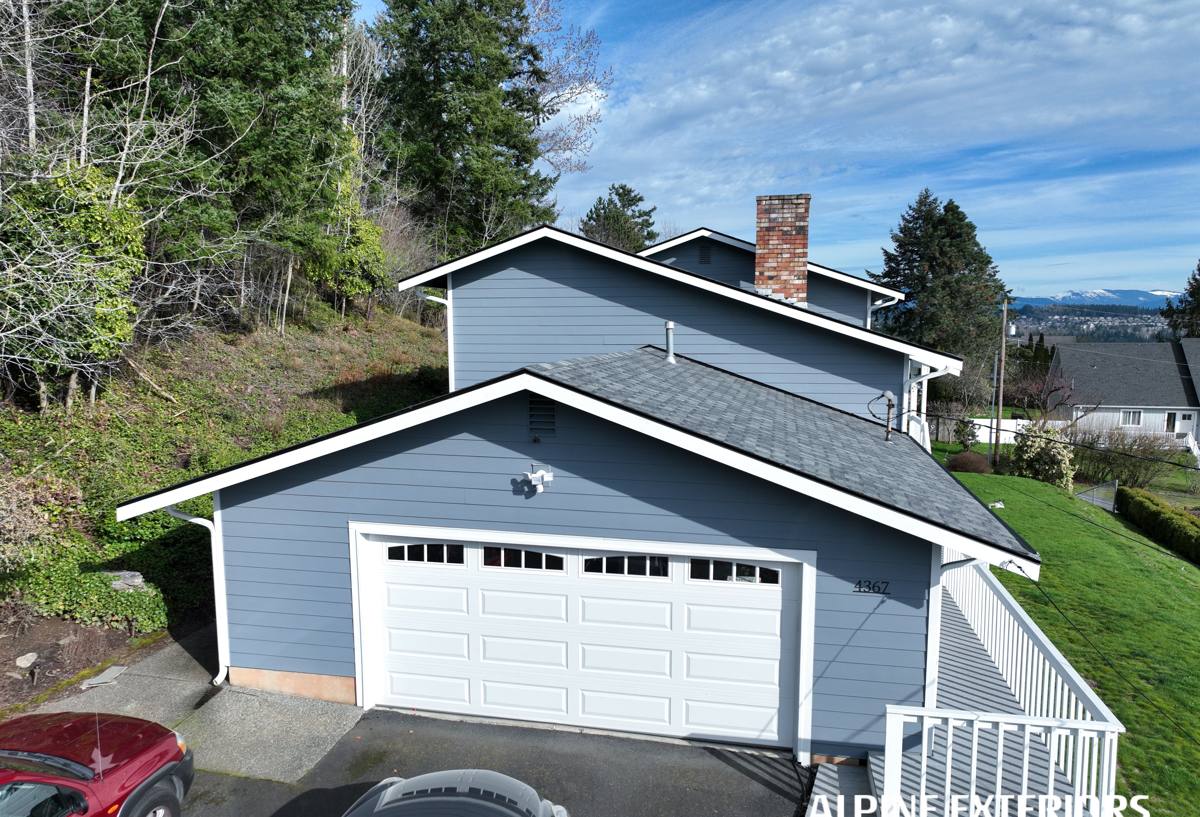
Why Storm Damage Behaves Differently Here Than Elsewhere
Bellingham's climate isn't dramatic in the way a hurricane zone is, but it's relentless in ways that matter for roofs. Three factors specific to this area shape how storm damage develops and how it needs to be repaired:
Salt Air and Metal Fatigue
Even at Cordata's distance from Bellingham Bay, salt-laden air travels on wind and settles on roofing metal — flashing, vents, gutters, fasteners. Over years, that accelerates corrosion at exactly the spots most likely to fail during a storm: nail heads, drip edges, and valley flashing seams. A storm doesn't create this weakness, but it finds it.
Driving Rain and Wind-Driven Intrusion
Whatcom County storms tend to bring rain at an angle rather than straight down, especially during fall and winter fronts. That means water gets pushed under shingle tabs, around vent boots, and through gaps that would stay dry in a calmer climate. A repair that only addresses the surface damage and ignores the underlayment beneath it will leak again in the next windstorm.
Moss Season and Trapped Moisture
Bellingham's long, wet moss season — realistically stretching from fall through spring — means roofs here rarely get a chance to fully dry out between rain events. Storm damage that goes unrepaired even for a few weeks gives moss and moisture a head start on the exposed area, which can turn a simple shingle repair into a deck-level repair if it sits too long.
What Correct Storm Damage Repair Actually Involves
A lot of storm repair work in this region is done fast and shallow — understandable when a homeowner just wants the leak stopped, but it tends to create repeat calls. Here's what we consider a complete job:
- Full roof inspection, not just the damaged section. Wind damage often has a pattern — if one area failed, nearby areas took similar stress and may be close to failing too.
- Interior check for water intrusion. Attic and ceiling inspection to see whether water has already tracked past the visible damage point.
- Underlayment assessment. If wind lifted shingles, the underlayment beneath is often compromised even where shingles look intact once re-laid.
- Flashing and vent boot review. These are common failure points in wind events and are frequently overlooked in a quick patch.
- Matching materials, not just covering the gap. Mismatched shingles patch the leak but shorten the life of the surrounding roof and stand out visually.
Our Process for Cordata Storm Calls
1. Emergency Assessment and Temporary Protection
If a storm has left an active leak or exposed decking, the first priority is stopping water intrusion — tarping or temporary sealing done correctly so it holds through the next weather system, not just until the wind picks up again.
2. Detailed Inspection and Honest Scope
Once the roof is stable, we walk the full roof and document what's actually damaged versus what's cosmetic. We tell homeowners plainly when a repair will hold and when the damage points to a bigger underlying issue, like aging underlayment or a roof past the point where patching makes financial sense.
3. Repair Using Compatible Materials
We match shingle type, color, and exposure to the existing roof wherever possible, and we use flashing and fastener materials suited to this climate's salt and moisture exposure rather than whatever is cheapest to grab.
4. Insurance Documentation
Storm damage is often covered by homeowners insurance. We provide photo documentation and a clear written scope of the damage and repair, which homeowners can submit with their claim. We don't handle the claim itself, but we make sure the paperwork on our end is complete and accurate.
5. Post-Repair Check
After the repair, we confirm there's no remaining moisture path and that flashing and seals are fully set before we consider the job done.
Repair vs. Replacement: How We Help You Decide
Not every storm-damaged roof needs full replacement, and not every roof is a good candidate for another patch. The table below outlines the honest factors that push a decision one way or the other.
| Factor | Favors Repair | Favors Replacement |
|---|---|---|
| Roof age | Under 10-12 years | Approaching or past expected lifespan |
| Damage extent | Isolated area, single storm event | Widespread across multiple slopes |
| Underlayment condition | Dry, intact beneath damage | Saturated or degraded in multiple spots |
| Moss/moisture history | Minimal prior moss buildup | Chronic moss or trapped moisture over years |
| Shingle availability | Matching shingles still obtainable | Discontinued, forcing visible mismatch |
We walk through these factors with the homeowner directly rather than defaulting to whichever answer is more profitable for us — a repair that's the right call gets a repair; a roof that's genuinely done gets told so.
Signs a Cordata Roof Has Storm Damage Worth Checking
Some storm damage is obvious. A lot of it isn't, especially with Bellingham's overcast skies making roof inspection from the ground unreliable. Watch for:
- Granules collecting in gutters or at downspout outlets after a windstorm
- Shingles that look lifted, curled, or creased along the tab edges
- New or spreading ceiling stains after a storm, even faint discoloration
- Visible daylight through the attic where there shouldn't be any
- Dented or dislodged vent caps, flashing, or gutter sections
- Sudden increase in moss growth concentrated in one area, which can indicate a spot that's staying wetter than the rest of the roof
Common Storm-Related Roof Issues by Type
- Asphalt shingle roofs: tab lifting, granule loss, and creasing from wind uplift
- Metal roofing and flashing: loosened fasteners and seam separation under wind stress
- Cedar shake: splitting and dislodged shakes from impact debris, compounded by moisture absorption
- Flat or low-slope sections: ponding and membrane stress after heavy wind-driven rain
Why It Matters to Hire a Crew That Already Works Cordata
Storm damage repair isn't a one-size-fits-all trade, and a crew that mostly works drier or more sheltered parts of Washington doesn't always account for what Bellingham roofs actually deal with. A crew already familiar with Cordata and the surrounding Whatcom County area brings a few concrete advantages:
- Faster response, since we're not driving in from out of the area for an emergency tarp job
- Familiarity with the housing stock and roofing styles common in the neighborhood
- Understanding of how local moss season and salt exposure interact with storm damage over time
- A track record built on repeat local work, not one-off storm-chasing jobs that leave town after the season
Storm-chasing crews that show up after a major weather event and go door to door are a real pattern in this region, and they're worth being cautious about. A local, established contractor has a reputation to maintain in the community and is still reachable if a repair needs a follow-up months later.
What to Do Immediately After Storm Damage
- Move anything inside that could be damaged by dripping water, and place a container to catch active leaks
- Photograph visible exterior damage from the ground if it's safe to do so — don't get on the roof yourself after a storm
- Call for a temporary tarp or seal if the damage is actively letting water in
- Contact your insurance provider to start the claims process while damage is fresh and documented
- Schedule a full inspection even if the visible damage looks minor
Get a Straightforward Estimate
If a recent storm has left your Cordata home with a damaged roof — or you're just not sure whether that missing shingle is a bigger problem underneath — we're glad to come take a look. The estimate is free, there's no pressure to move forward, and you'll get a clear, honest read on what's actually going on with your roof. Fill out the form below to get started.