 Bellingham Siding
 Cordata's Windows Take a Different Kind of Beating
Cordata has grown fast over the last few decades, which means the neighborhood's window stock is a mix — older aluminum-frame single-pane units from earlier builds sitting next to vinyl double-pane windows installed during the growth years of the 1990s and 2000s, alongside a smaller number of newer, higher-performance installs. Whatcom County sits in a marine climate zone, and Cordata gets the full package: salt-tinged air drifting in off Bellingham Bay and the Sound, driving rain that comes in sideways during winter storms, and a moss season that can stretch from fall through spring. None of that is dramatic on its own, but stacked year after year it wears down window seals, frames, and glazing faster than homeowners expect.
A window that looks fine from the curb can be failing where you can't see it — inside the frame, behind the trim, in the seal between panes. Window replacement done right in this climate isn't just about picking a style you like. It's about matching the product and the installation to what Whatcom County weather actually does to a house over time.
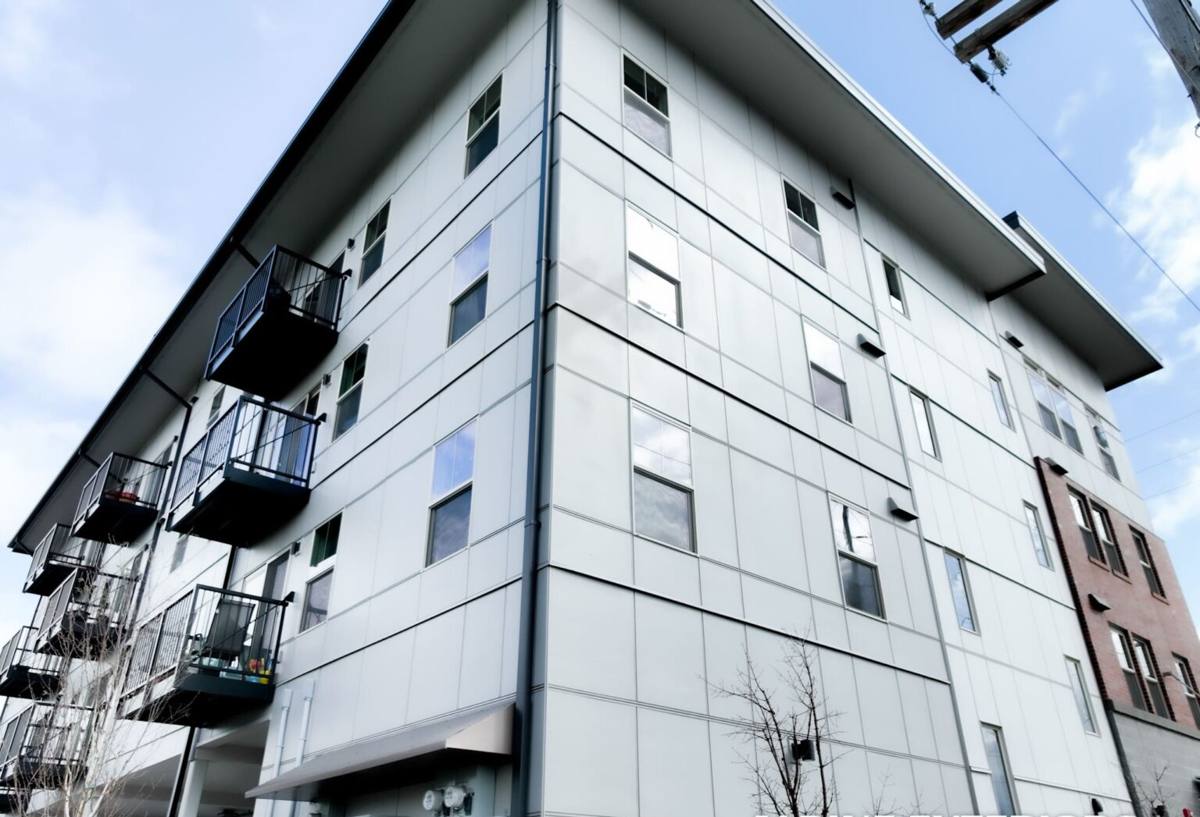
What Salt Air, Driving Rain, and Moss Season Actually Do to Windows
Each of these regional conditions attacks windows in a specific way:
- Salt air accelerates corrosion on aluminum frames, hardware, and fasteners — hinges get stiff, locks stop seating right, and unpainted or poorly coated metal starts to pit and discolor.
- Driving rain tests flashing and sealant details that a calmer climate would never expose. Wind-driven rain finds any gap in the water management around a window opening, and once it's behind the siding it doesn't dry out quickly in our humidity.
- Moss and prolonged damp hold moisture against wood trim, sills, and cladding for weeks at a time. Where a window's exterior casing has failed paint or caulking, that sustained wetness is what leads to soft wood and rot around the opening — not one bad storm, but months of low-grade saturation.
The result in Bellingham and greater Whatcom County is a pattern we see over and over: windows that are 20-30 years old with fogged double-pane glass (the seal has failed and the gas fill or air gap is gone), frames that operate stiffly or won't lock, and staining or soft spots in the trim and sill that trace back to water getting behind the window rather than through the glass itself.
Signs a Cordata Home Needs Replacement, Not Just a Repair
Not every window problem means a full replacement. But these are the signals that repair is no longer the honest answer:
- Fogging, haze, or visible moisture between panes — the seal is gone and the insulating gas or air gap has been compromised
- Windows that are noticeably cold to the touch or draw a draft even when fully latched
- Wood trim, sill, or the framing around the window that's soft, discolored, or spongy when pressed
- Frames that have swelled, warped, or no longer let the sash open and close smoothly
- Paint or caulking failing repeatedly at the same window despite touch-ups
- Noticeably higher heating bills with no other explanation, especially in older single-pane or early double-pane units
- Visible corrosion, pitting, or stuck hardware on aluminum-frame windows
If you're seeing one or two of these, a repair might buy time. If you're seeing several, or the window is original to a home built before the 2000s, replacement is usually the more honest recommendation — repeated repairs on a failing frame end up costing more over a few years than doing the job once, correctly.
What a Correct Window Replacement Job Involves
Opening Inspection and Prep
Before a new window goes in, the opening itself needs to be checked — not just measured. That means confirming the framing underneath is solid, checking for any rot or moisture damage from the old window's failed seals, and addressing it before the new unit goes in. Installing a new window into a compromised opening just hides the problem behind fresh trim.
Flashing and Water Management
This is the part of the job that matters most in our climate and shows the least once it's done. A correct install includes proper sill pan flashing, integration with the house wrap or weather-resistive barrier, and head flashing that sheds water out and away from the opening — not just caulk around the edges. Given how much driving rain this region gets, flashing details are where a rushed job shows up as a leak two or three winters later.
Insulation and Air Sealing
The gap between the new window frame and the rough opening needs to be filled with an appropriate low-expansion foam or backer rod and sealant — not stuffed with fiberglass batting, which does little to stop air movement. Proper air sealing here is a big part of why a new window actually performs the way its energy rating suggests it should.
Code and Energy Requirements
Replacement windows in this area need to meet current energy code for U-factor and, in bedrooms, egress size requirements if the opening is being resized. A correct job accounts for both before the window is ordered, not after it's already on site.
Choosing a Window Material and Glass Package
Material choice matters more here than in drier climates, because whatever you pick has to hold up to sustained moisture and salt-tinged air for decades, not just look good on day one.
| Material | Moisture & Salt-Air Behavior | Maintenance | Typical Lifespan |
|---|---|---|---|
| Vinyl | Won't rot or corrode; performs well in coastal/marine conditions | Low — occasional cleaning | 20-30+ years |
| Fiberglass | Very stable dimensionally, holds paint well, strong moisture resistance | Low | 30-40+ years |
| Aluminum | Prone to corrosion and pitting in salt air unless well-coated; conducts cold | Moderate — hardware and finish need attention | 15-25 years before performance drops |
| Wood-clad | Good performance if cladding and joints stay sealed; interior wood needs protection from condensation | Higher — exterior cladding seams are the weak point | 20-30 years with upkeep |
For most Cordata homes, we lean toward vinyl or fiberglass for the exterior-facing performance in this climate — they don't corrode, don't need repainting, and handle sustained damp without the maintenance burden that wood-clad or bare aluminum carries here. That's a maintenance and moisture-behavior call, not a knock on any manufacturer; homeowners who want a specific wood-look interior can still get that with a clad or composite product built for it.
Cost Factors Worth Understanding
Window replacement pricing swings on a handful of variables, and it's worth knowing which ones actually move the number before you get quotes:
| Factor | Why It Affects Cost |
|---|---|
| Window size and configuration | Larger units, custom shapes, and multi-panel combinations cost more in material and labor |
| Material (vinyl, fiberglass, wood-clad) | Material cost and installation complexity vary significantly by product line |
| Glass package | Low-E coatings, argon fill, and triple-pane glass add cost but improve comfort and energy performance |
| Full-frame vs. insert replacement | Full-frame replacement addresses rot and flashing issues but costs more than an insert into a sound existing frame |
| Trim and siding integration | Matching or repairing exterior trim and siding around the new opening adds labor |
| Number of windows | Whole-house jobs typically bring a better per-window rate than one-off replacements |
As a broad range, homeowners in this area should expect individual window replacement costs to run from several hundred dollars into the low thousands per window depending on these factors — we'll always walk you through where your specific job lands and why, rather than quoting a number before we've seen the openings.
How the Job Works, Start to Finish
- On-site walkthrough of every window being considered, checking frames, trim, and signs of water intrusion — not just counting openings
- Honest recommendation on repair vs. replacement, and full-frame vs. insert, based on what we find
- Written estimate with material options explained in plain terms
- Scheduling timed around Whatcom County weather — we plan installs to minimize how long an opening is exposed to wind and rain
- Removal of old units, inspection and repair of any rot or damage found in the opening before the new window goes in
- Installation with proper sill pan flashing, air sealing, and integration with the existing siding and weather barrier
- Final check of operation, weatherstripping, and exterior finish work
Why It Matters That We Already Work in Cordata
A crew that already works this neighborhood knows the common construction patterns from Cordata's different building eras, has a working relationship with the City of Bellingham's permitting process when a job needs it, and understands how to plan around Whatcom County's wet stretches instead of getting caught mid-install during a driving rain event. That local familiarity shows up in small but real ways — knowing which older subdivisions tend to have a particular trim detail, or planning install days around the forecast instead of just the calendar. It's the difference between a window that's installed and one that's installed correctly for where it sits.
If you're seeing fogged glass, drafts, or soft trim around your windows, or you just want an honest read on whether repair or replacement makes sense for your Cordata home, we're happy to take a look. Fill out the form below for a free, no-pressure estimate — we'll walk the windows with you and tell you straight what we find.