 Bellingham Siding
 Building Decks for Sehome's Particular Climate
Sehome sits close enough to Bellingham Bay that salt-laden air is a daily fact of life for anything built outdoors, and far enough into the Pacific Northwest weather pattern that rain is measured in months, not storms. A deck in this neighborhood isn't judged by how it looks on a dry August afternoon — it's judged by how it holds up in February, under six months of damp, low sun angles, and the slow green creep of moss across every horizontal surface. We build decks in Sehome with that reality in mind from the first sketch, not as an afterthought once problems show up.
Whatcom County's marine climate is genuinely different from what most deck-building guides assume. Products and details that work fine in a dry inland climate can fail quietly here — trapped moisture under decking, corroding fasteners, or ledger connections that rot from the inside before anything looks wrong on the surface. A deck built correctly for Sehome looks almost identical to one built anywhere else. The difference is entirely in what's underneath and how it was assembled.
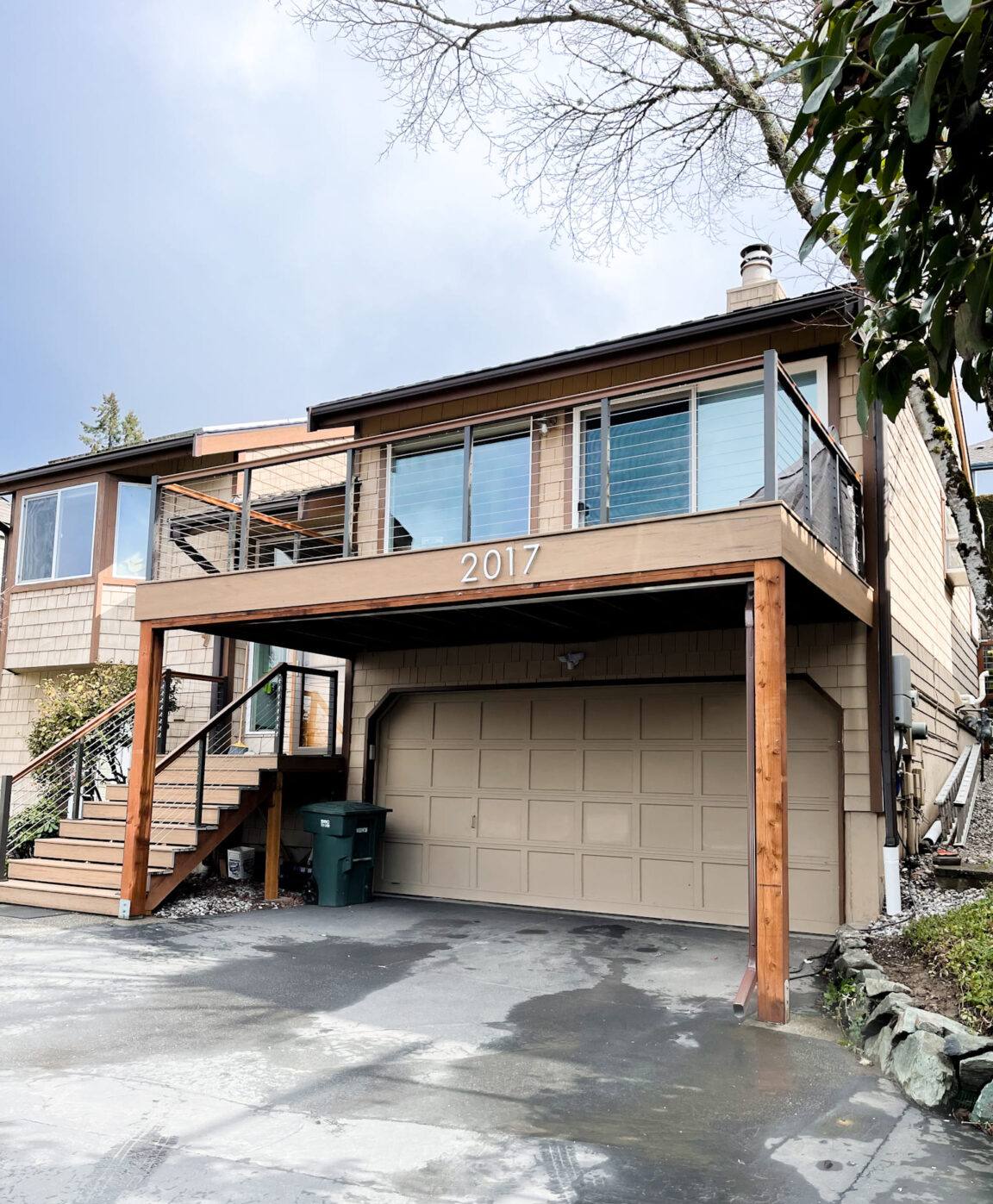
What Local Homes Actually Need From a Deck
Most Sehome homes are older neighborhood housing stock with a mix of additions, so decks here often tie into existing framing, sit close to mature trees, or sit in partial shade for large parts of the day. All three of those conditions matter more than they would in a sunnier, more exposed lot.
Shade and Moisture Retention
Tree cover is common in this neighborhood, and it's a mixed blessing for a deck. Shade keeps a deck cooler and reduces UV wear on finishes, but it also means surfaces stay damp longer after rain, and moss and algae get a real foothold. Boards that don't shed water quickly, or that trap moisture between boards and joists, will grow moss and go slick well before they show any structural problem.
Salt Air and Metal Fasteners
Proximity to the bay means airborne salt reaches further inland than people expect, especially with the prevailing wind patterns common to Bellingham. Standard fasteners and hardware that would last decades in a dry climate can start showing corrosion in a handful of years here. This is one of the most common causes of premature deck failure we see on older Whatcom County decks — not the decking itself, but the hidden hardware holding it together.
Sun Exposure Where It Does Exist
On the flip side, decks with southern or western exposure in Sehome get real UV load during our long summer daylight hours, which means finishes and film-forming coatings degrade faster than owners expect, even in a generally cloudy climate. A deck needs to handle both extremes — long damp shade and periodic strong UV — not just one.
Framing and Structure Done Right
The part of a deck nobody sees is the part that determines whether it lasts 10 years or 40. In this climate, three structural details matter more than anything cosmetic.
Ledger Attachment and Flashing
Where a deck attaches to the house is the single most common failure point we find on older decks in this area. A ledger board that isn't properly flashed will let water track behind it and into the house rim joist, and in a climate with this much annual rainfall, that damage compounds every winter. Correct flashing — not just fasteners, but proper water-shedding detail at the ledger — is non-negotiable on every deck we build.
Footings Below Frost and Seasonal Wet
Whatcom County soil holds a lot of seasonal moisture, and footings need to be set to the depth and bearing that account for that, not just poured to a minimum. Undersized or shallow footings can shift over a few wet winters, which shows up later as a deck that feels slightly uneven or a railing post that's started to lean.
Joist Spacing for the Decking You Choose
Composite and PVC decking generally need tighter joist spacing than solid wood to avoid deflection over time, and manufacturers publish specific span tables for a reason. Building to wood-spacing habits under a composite board is a common corner-cutting mistake that shows up as bounce and long-term sag.
Choosing Materials for a Marine Climate
There's no single "best" decking material — there's a best material for this specific yard, this specific sun exposure, and this specific budget. Here's how the common options actually compare for a Sehome property.
| Material | How it handles our climate | Maintenance | Typical lifespan |
|---|---|---|---|
| Pressure-treated wood | Affordable, but needs consistent sealing to resist moss and moisture cycling | Annual cleaning, re-sealing every 2-3 years | 10-15 years with upkeep |
| Cedar | Naturally rot-resistant, ages well, but still needs periodic treatment in shaded, damp spots | Cleaning and oil/stain every 2-3 years | 15-20 years with upkeep |
| Composite decking | Resists moisture and moss growth well; performance depends heavily on correct installation and ventilation | Periodic washing, no staining or sealing | 25-30 years |
| PVC decking | Fully synthetic, handles constant damp shade with minimal moss issues | Occasional washing | 25-30+ years |
We don't push one product on every job. Composite and PVC cost more up front and, installed correctly, cut down dramatically on the moss-scrubbing and re-sealing routine that wears people out here. Wood and cedar cost less initially but ask for a real annual maintenance commitment — skip a season or two of sealing in this climate and the deferred damage adds up faster than it would somewhere drier. We'll walk through the honest trade-offs for your specific yard rather than defaulting to whatever's easiest to install.
Our Process, Start to Finish
- On-site assessment — we look at sun exposure, tree cover, drainage, and how the deck will tie into your existing home before recommending anything.
- Design and material selection — sized, laid out, and specified for your actual site conditions, not a generic template.
- Permitting — we handle the Whatcom County or City of Bellingham permit submission for the project, including any required structural details.
- Footings and framing — footings set to proper depth and bearing, ledger flashed correctly, joists spaced for the decking material chosen.
- Decking, railing, and finish work — installed to manufacturer spec with fastener hardware rated for our salt-air exposure.
- Final walkthrough — we go over basic care specific to the material you chose so you know what upkeep actually looks like here.
What Drives the Cost of a Deck Project
| Factor | Why it matters here |
|---|---|
| Deck size and shape | More linear footage of framing, decking, and railing directly scales labor and material cost |
| Height above grade | Taller decks need more substantial footings, framing, and often code-required railing and stair details |
| Decking material | Composite and PVC cost more upfront than wood but reduce long-term maintenance in our damp climate |
| Ledger and tie-in condition | Older homes sometimes need rim joist repair before a new deck can attach safely |
| Site access | Tight side yards or sloped lots common in Sehome can add labor time for material staging and excavation |
Rather than quote a number before seeing the site, we'll give you a straightforward range once we've looked at your yard and talked through material options — no surprise add-ons after the fact.
Permits and Code in Bellingham
Most new decks and significant deck rebuilds in Bellingham and unincorporated Whatcom County require a permit, particularly once you're above a certain height or attaching structurally to the house. Guardrail height, baluster spacing, and stair geometry are all governed by code, and inspectors here pay close attention to ledger attachment given how often it's the source of long-term water damage. We handle the permit process as part of the job so you're not left navigating it separately, and so the finished deck is something that holds up to inspection now and to a home sale down the road.
Maintenance That Actually Matters in This Climate
Every material needs some care, but in Sehome's shade-and-rain pattern, a few habits matter more than others:
- Sweep debris off the deck regularly — trapped leaves and needles hold moisture against the surface and accelerate moss growth
- Clean moss and algae off decking and stairs before it builds up; a slick deck surface is a real fall hazard in wet months
- Check and clear gaps between boards so water can drain through rather than pooling
- Inspect fastener heads and railing hardware yearly for early signs of corrosion, especially on decks closer to the bay
- Re-seal wood or cedar decking on the schedule the product calls for — skipping a cycle in this climate costs more to fix later than it saves now
- Keep an eye on the ledger area where the deck meets the house — it's the first place hidden water damage shows up
Why Hiring a Crew That Already Works in Sehome Matters
A deck built to a generic national spec sheet isn't the same as a deck built for this specific stretch of Whatcom County. We already know which details in this neighborhood tend to get missed — the ledger flashing that gets rushed, the joist spacing that gets fudged under composite boards, the fastener grade that looks fine on day one and corrodes by year three. Working locally also means we're not guessing at Bellingham's permit process or inspection expectations; we've been through it enough times to keep your project moving instead of stalled on paperwork.
A deck is a long-term structure sitting outside in one of the wetter climates in the country. Getting the invisible parts right the first time is what separates a deck that needs real repair work in eight years from one that just needs an occasional wash and reseal for decades.
If you're planning a new deck or replacing an aging one in Sehome, we're happy to come take a look and talk through what makes sense for your yard, your budget, and this climate. There's no pressure and no obligation — just a straightforward estimate based on what your property actually needs. Use the form below to get started.