 Bellingham Siding
 Building a Deck That Actually Holds Up in Lynden
Lynden sits out in Whatcom County's farmland, away from the density of downtown Bellingham, but the weather doesn't care about that distance. The same weather system that pushes driving rain off the Strait and up the valley soaks Lynden decks just as thoroughly, and whether your property sits closer to the water in Bellingham or out among Lynden's fields, moisture is the constant enemy. Add in a moss season that can run eight or nine months out of the year in a shaded yard, and a deck built to a generic national spec — the kind of deck that would be fine in a dry climate — starts failing here years before it should.
A deck isn't just deck boards nailed to a frame. It's a structure that has to shed water, resist rot at every joint, and keep its hardware from corroding while it does it. Building one correctly in this region means making different choices at almost every step than a contractor working somewhere drier would make.
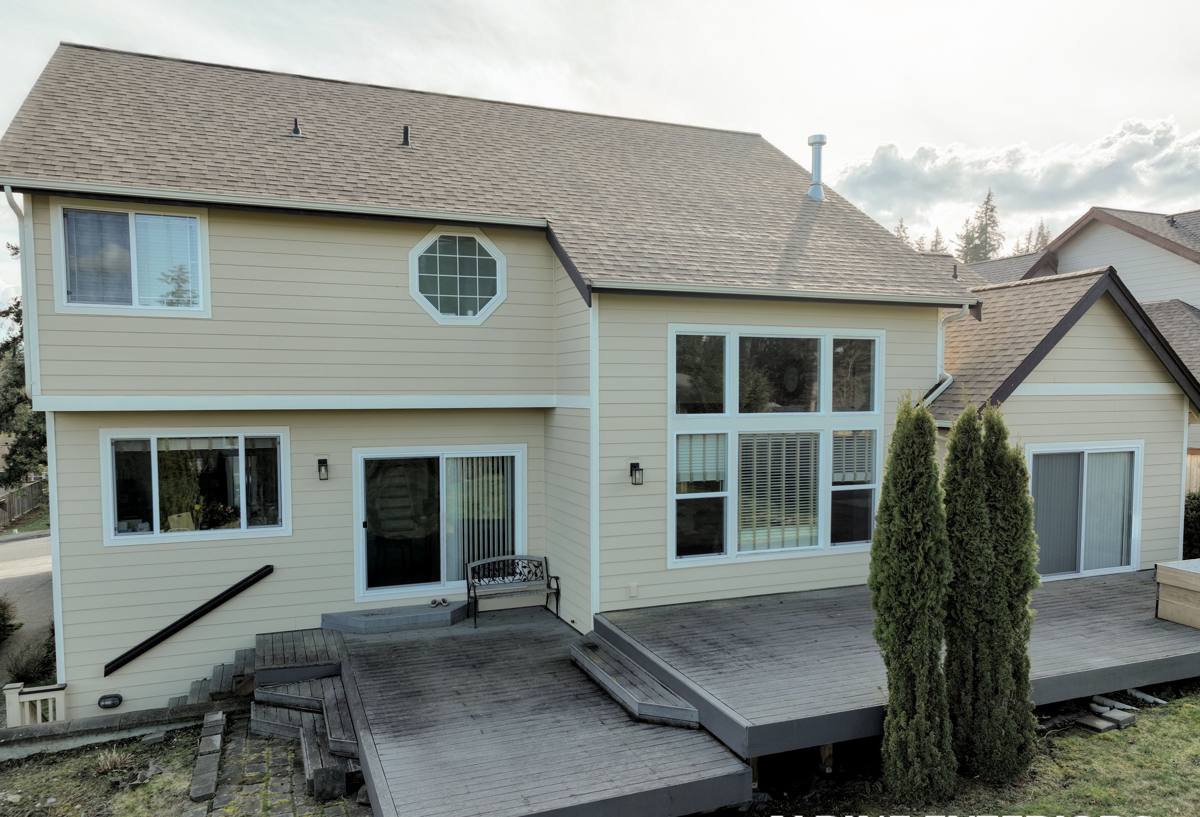
What Whatcom County Weather Does to an Ordinary Deck
Driving rain and standing water
Rain here rarely falls straight down. Wind-driven rain gets under railings, behind ledger boards, and into any gap that isn't properly flashed or sloped away from the house. Over time, water that can't drain pools at ledger connections and joist ends — the two places a deck is most likely to rot first.
Moss, algae, and constant dampness
Long stretches of overcast, damp weather mean moss and algae get a real foothold on any deck surface that doesn't dry out quickly, especially under trees or on the shaded side of a house — common conditions on Lynden's larger, more tree-lined lots. Moss holds moisture against the wood surface, and a deck that stays damp for weeks at a time ages faster than one that dries between rains.
Salt air and corrosion, even inland
Properties nearer the water around Bellingham deal with salt air directly attacking metal fasteners, but even Lynden's inland location doesn't fully escape the effect — humid, salt-tinged coastal air moves inland with weather systems, and any deck hardware not rated for a marine or coastal environment will corrode faster than the manufacturer's warranty assumes.
What a Correctly Built Lynden Deck Requires
Footings sized for our soil and frost depth
Whatcom County soil varies from sandy loam to heavier clay depending on where you are, and both conditions affect how deep and how wide a footing needs to be to stay stable. Footings poured too shallow, or without proper drainage around them, can shift over time as the ground saturates and dries through the year.
Ledger board flashing done right
The ledger board — where the deck attaches to the house — is the single most common failure point on decks in wet climates. Proper flashing (not just caulk) directs water away from the house sheathing and framing instead of trapping it against wood that's already hard to inspect once the deck is built.
Joist protection and airflow underneath
Joist tape or a comparable moisture barrier on top of the joists, combined with enough clearance underneath the deck for air to move, keeps framing lumber from sitting wet for days after a storm. A deck built tight to the ground with no ventilation is a deck that grows moss and rot faster, no matter how good the surface boards are.
Drainage and slope
A correctly built deck surface has a slight slope away from the house so water sheds instead of pooling. It sounds minor, but a flat or reverse-sloped deck is one of the most common issues we find on older builds when we're called out to repair or replace one.
Choosing Decking Material for This Climate
There's no single right answer for every homeowner — budget, look, and how much upkeep you want to do all factor in. What matters is understanding the honest trade-offs for our climate specifically, not just what a product's marketing promises.
| Material | Moisture / Moss Behavior | Maintenance | Relative Upfront Cost |
|---|---|---|---|
| Pressure-treated wood | Sheds water fine if sealed and maintained; absorbs moisture and grows moss quickly if neglected | Needs cleaning and re-sealing every 1-2 years in this climate | Low |
| Cedar | Naturally rot-resistant but still needs sealing to fight moss and graying from constant damp weather | Periodic cleaning and re-oiling to keep its resistance and look | Mid |
| Composite decking | Doesn't absorb water like wood, but can still grow surface moss/algae in shaded, damp spots without occasional cleaning | Low — occasional wash, no sealing | Mid to High |
| PVC / capped composite | Best moisture and moss resistance of the common options; fully sealed surface | Lowest — wash as needed | High |
Our standard on wood is to spec pressure-treated or cedar framing regardless of what decking material goes on top, because the structure underneath is what actually determines whether the deck lasts — the surface material is partly an aesthetic and maintenance decision, not a substitute for correct framing and drainage.
Fasteners and hardware
We use hot-dip galvanized or stainless connectors and coated or stainless fasteners rated for treated lumber and coastal/humid exposure, not the general-purpose hardware that's fine in a drier climate. Mismatched or under-rated hardware is one of the most common causes of premature corrosion and staining we see on decks that weren't originally built by a crew used to this region.
Railings and Guards
Railing systems take the most direct hit from driving rain since they're the first thing weather hits. Wood railings need the same sealing discipline as wood decking, and any metal railing components should be corrosion-rated for the same reasons as fasteners. Cable and glass rail systems look great here but need hardware specifically rated for wet, humid exposure — cheaper hardware on these systems tends to show rust streaks within a couple seasons in our climate.
Permits and Local Requirements
Most deck projects — especially anything attached to the house, elevated, or over a certain size — require a building permit, whether the property is inside Lynden city limits or in unincorporated Whatcom County. Requirements around footing depth, guardrail height, and stair specifications are set by the adopted building code and enforced by the applicable local building department. We handle the permit process as part of the job so you're not stuck figuring out which jurisdiction's rules apply or navigating the paperwork yourself.
Our Process for a Lynden Deck
- On-site assessment — we look at your soil, drainage, sun/shade exposure, and how the deck will tie into the house before recommending anything.
- Design and material selection — we walk through the honest trade-offs of wood versus composite versus PVC for your specific site and budget.
- Permitting — we pull the required permit and build to the code that applies to your property.
- Framing and flashing — footings, ledger flashing, joist protection, and proper slope are done first and correctly, since this is what determines the deck's real lifespan.
- Decking, railing, and finish work — installed with corrosion-rated hardware throughout.
- Final walkthrough — we go over basic maintenance with you so the deck actually gets the upkeep it needs in this climate.
Keeping a Lynden Deck in Good Shape
- Sweep leaves and debris off the deck regularly, especially in fall — trapped organic matter is what feeds moss growth
- Clean the surface with a deck-safe cleaner at least once a year to remove moss and algae before they take hold
- Check that gaps between boards stay clear so water can drain instead of pooling
- Inspect railing posts and ledger flashing yearly for any sign of water intrusion or staining
- Re-seal wood decking on the schedule appropriate to the product — don't wait until it's visibly graying or absorbing water
- Trim back overhanging branches and nearby vegetation so the deck gets sun and airflow to dry out between rains
Why It Matters to Hire a Crew That Already Works in Lynden
A deck built by a crew unfamiliar with this region's rain patterns, soil, and permit requirements can look fine the day it's finished and still be in trouble within a few years — wrong footing depth for local soil, missing or improper ledger flashing, standard hardware that wasn't rated for our humidity, or a design that traps water instead of shedding it. We build decks in Lynden and across Whatcom County regularly, so the moisture management, material choices, and permit steps described here aren't extra precautions — they're just how we build every deck, every time.
If you're planning a new deck or replacing one that's showing its age, we're happy to come take a look and give you a straightforward, no-pressure estimate — just fill out the form below.