 Bellingham Siding
 Edgemoor's Waterfront Setting Is Hard on a Roof
Edgemoor sits close to Bellingham Bay, which means homes here deal with a combination most inland Whatcom County neighborhoods don't see in the same intensity: salt-laden air off the water, wind-driven rain that hits roof edges and walls at an angle instead of falling straight down, and heavy tree cover that keeps roof surfaces shaded and damp for long stretches of the year. Any one of those on its own is manageable. Together, they shorten the useful life of a roof that wasn't installed with this specific exposure in mind.
Salt air accelerates corrosion on exposed metal — nails, flashing, vent stacks, gutter hardware — faster than it would a few miles inland. Driving rain finds every gap in flashing and underlayment that a straight-down rain never would. And the long moss season that comes with Bellingham's wet, mild, shaded winters means organic growth gets a head start on shingles that don't have some resistance built in. None of this means asphalt shingles are the wrong choice for Edgemoor — they're still one of the most practical, cost-effective roofing systems available here. It means the details of the installation matter more than they would in a drier, more exposed, less shaded location.
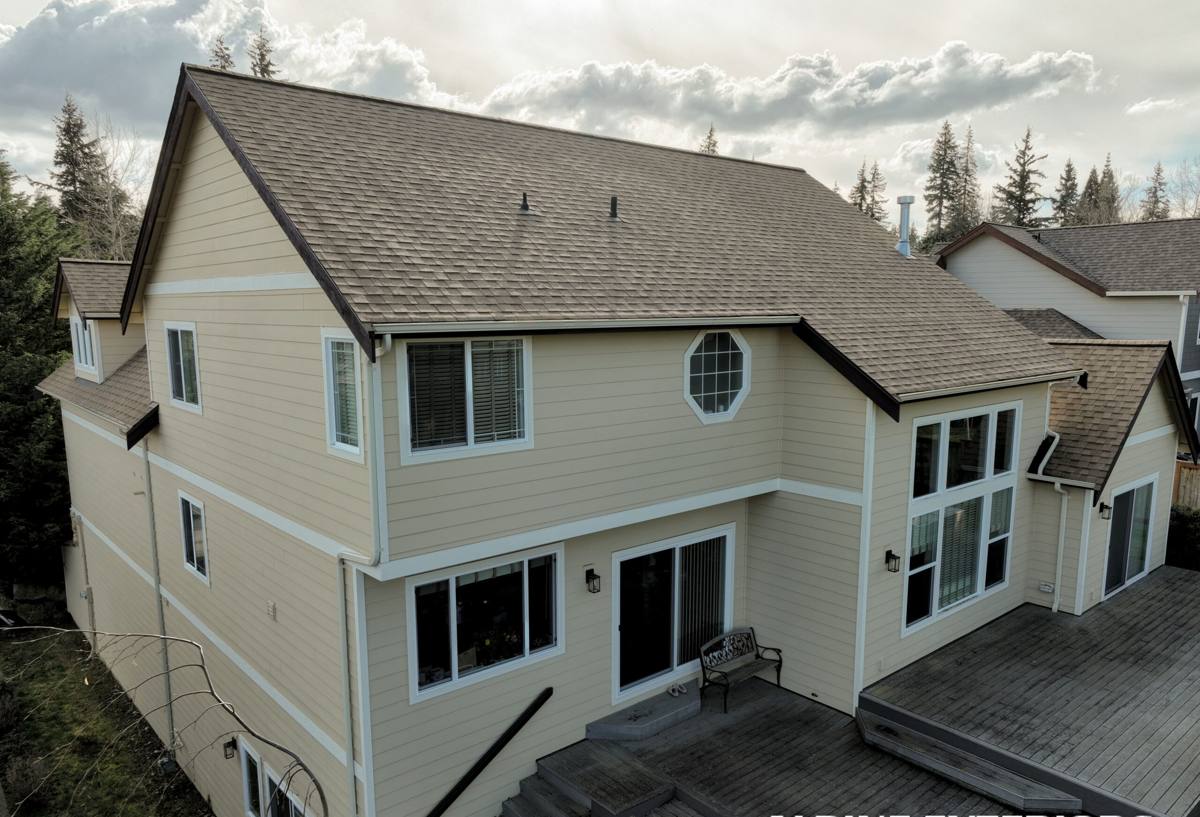
What a Correctly Built Roof Needs in This Neighborhood
Underlayment that actually blocks wind-driven moisture
A synthetic underlayment with good water-holdout, properly lapped and sealed at every penetration, is the difference between a roof that sheds wind-driven rain and one that lets it wick sideways under the shingles. In a bluff-exposed, waterfront setting, this layer is doing more work than in a sheltered inland yard.
Ventilation that keeps the deck dry from underneath
A roof deck that stays cool and dry from below resists moss, moisture, and premature aging far better than one trapping warm, humid attic air against cold sheathing. Balanced intake and exhaust ventilation matters everywhere in Whatcom County, but it matters more where shade and dampness are already working against the roof from above.
Flashing and edge metal built for salt exposure
Valleys, chimneys, skylights, and roof-to-wall transitions are where roofs actually fail — not usually in the open field of shingles. Near the water, we pay close attention to the corrosion resistance of the metal and fasteners used at these details, since standard-grade hardware degrades faster in a marine air environment.
Starter strips, sealant, and fastening built for wind
Proper starter strip along eaves and rakes, correct nail placement, and sealant at edges keep wind-driven rain from getting a foothold at the roof's most vulnerable perimeter — which is exactly where waterfront exposure puts the most pressure.
Signs an Edgemoor Roof Needs a Closer Look
Because moss, shade, and salt air work slowly, a lot of roof problems here build up quietly before they show up as an interior leak. Worth checking for:
- Moss or dark algae streaking on north-facing or shaded slopes, especially where tree cover overhangs the roof
- Granules collecting in gutters or at downspout outlets — a sign shingles are wearing past their protective layer
- Curling, cupping, or lifted shingle edges, particularly on slopes that catch the most wind off the bay
- Rusting or discolored flashing around chimneys, vents, and skylights
- Soft or spongy spots underfoot when walking the roof (a sign of deck moisture)
- Daylight visible through the attic roof deck, or musty smells in attic spaces
- Interior ceiling stains that appear or worsen after wind-driven storms rather than steady rain
Any single item on this list isn't necessarily an emergency, but a few of them together — especially moss plus granule loss — usually means the roof is past the point where surface cleaning or spot repair will buy much more time.
Repair, Overlay, or Full Replacement
Not every roof problem needs a full tear-off. The right call depends on the age of the existing roof, how much of it is affected, and what's underneath the shingles.
| Option | Best fit | Trade-offs |
|---|---|---|
| Spot repair | Isolated flashing failure, storm damage, a small localized leak on an otherwise sound roof | Doesn't address underlying age or ventilation issues; shingle color/texture may not match exactly |
| Overlay (new layer over existing) | A single existing layer in fair shape, budget-limited projects | Traps moisture problems underneath, doesn't fix deck or ventilation issues, most manufacturers limit warranty coverage on overlays |
| Full tear-off and replacement | Roofs at or past expected lifespan, multiple problem areas, visible deck damage, or any home where moss/moisture issues have been ongoing | Higher upfront cost, but the only option that lets us fix the deck, ventilation, and underlayment — not just the surface |
Given how much salt air and long-term dampness affect roofs in Edgemoor specifically, we're generally cautious about recommending overlays here — a hidden moisture or ventilation issue under a second layer of shingles is much harder to catch until it's caused real damage.
Choosing a Shingle for Salt Air and Sustained Shade
Not all asphalt shingles perform the same way in a marine, moss-prone environment. A few things worth understanding before choosing a product:
| Feature | Why it matters here |
|---|---|
| Algae-resistant (AR) granules | Copper- or zinc-infused granules slow the growth that causes dark staining in shaded, damp conditions — a real advantage given Edgemoor's tree cover and moss season |
| Wind rating | Waterfront and bluff-exposed roofs see stronger, more direct gusts off the bay; a shingle and installation method rated for higher wind resistance holds up better at edges and ridges |
| Architectural (dimensional) vs. 3-tab | Architectural shingles are thicker, generally carry stronger wind and impact ratings, and shed water more effectively due to their layered profile |
| Warranty structure | Manufacturer warranties often distinguish between materials-only and full system coverage, and can be affected by ventilation and installation method — worth reading closely rather than assuming full coverage |
We install algae-resistant, wind-rated architectural shingles as our standard recommendation for Edgemoor and similar Bellingham Bay-adjacent properties, specifically because of the moss and wind exposure this location deals with. That's a professional judgment based on how these products perform in sustained damp shade near salt water — not a claim that other products are defective, just that the trade-offs matter more here than they would on a dry, sun-exposed inland roof.
How We Approach a Roofing Project in Edgemoor
- On-site inspection. We walk the roof and attic, check flashing, ventilation, deck condition, and moss/moisture patterns specific to the property's exposure and tree cover.
- Honest scope and options. We explain what we found in plain terms — repair, overlay, or replacement — and why, including the trade-offs of each given the home's specific conditions.
- Written estimate. Materials, labor, disposal, and timeline spelled out before any work starts. No surprise add-ons mid-project.
- Deck check during tear-off. Full replacements include inspecting the sheathing once old shingles are off, since that's the only time hidden moisture damage is visible.
- Correct installation of every layer. Underlayment, ice/water protection at vulnerable areas, proper ventilation, corrosion-resistant flashing, and manufacturer-specified fastening — not just shingles nailed down fast.
- Final walkthrough and cleanup. We review the finished roof with the homeowner and make sure the property is left clean, including a magnetic sweep for stray fasteners.
Why It Matters That We Already Work This Neighborhood
A crew that only occasionally works near Bellingham Bay might install a roof correctly by generic standards and still miss the details that matter for this specific setting — the extra attention flashing needs in salt air, the ventilation margin that makes sense given the shade and moss pressure, the wind exposure on a bluff-facing slope versus a sheltered one. Working Edgemoor and the surrounding Bellingham waterfront regularly means we're not guessing at how these conditions behave over time; we've seen how roofs built with and without those details hold up several years out, not just on installation day.
It also means we're a known, reachable local business — not a crew that showed up after a storm and moved on. If a question comes up two years after installation, we're still the same company down the road, not a number that no longer answers.
Keeping a New Roof Performing for Its Full Lifespan
A well-installed asphalt shingle roof still benefits from basic upkeep in a climate like this:
- Keep gutters and downspouts clear so water isn't backing up under eave edges
- Trim back overhanging branches where practical to reduce shade, debris buildup, and moss pressure
- Have moss treated or gently removed before it thickens rather than after — aggressive scraping or pressure washing can damage granules
- Check attic ventilation isn't blocked by insulation or debris
- Have flashing and roof penetrations checked periodically, since that's where salt air corrosion shows up first
None of this is complicated, but staying ahead of it is what separates a shingle roof that reaches or exceeds its expected lifespan from one that needs premature attention because moisture and moss got a head start.
If you're noticing moss buildup, granule loss, or you just want an honest read on where your roof stands, we're glad to take a look. The estimate is free, there's no pressure to move forward, and you'll get a straight answer about what your roof actually needs — use the form below to get started.