 Bellingham Siding
 Why Edgemoor's Location Changes What a Roof Needs to Do
Edgemoor sits close to Bellingham Bay, and that waterfront position matters more than most homeowners realize when it comes to roofing. Salt-laden air moves off the water and settles on every exposed surface, including your roof. Add in the driving, wind-pushed rain that comes through Whatcom County most of the fall and winter, plus a moss season that can run eight months or longer in the shaded, tree-lined lots common to this neighborhood, and you have three separate stresses working on a roof at the same time. A roofing material or installation detail that holds up fine in a drier, inland part of the county can fail years earlier here.
Metal roofing, done correctly, handles all three of those stresses better than most alternatives — but "done correctly" is doing a lot of work in that sentence. The metal itself is only part of the equation. Fastener choice, flashing details, underlayment, and ventilation all have to be matched to a coastal, wet, shaded environment, or you end up with a roof that looks great for a few years and then starts showing corrosion streaks, fastener backout, or trapped moisture underneath.
Salt Air and Corrosion
Airborne salt accelerates galvanic corrosion, especially at cut edges, fastener heads, and anywhere dissimilar metals touch. A roof installed with the wrong fastener coating or with bare cut edges left exposed will show rust streaks down the panels well before the material itself is actually failing structurally. This is one of the most common early-failure patterns we see on homes close to the water.
Driving Rain
Wind-driven rain doesn't just fall straight down — it gets pushed sideways and upward under panel laps, around penetrations, and along valleys. A roof detailed for calm, vertical rainfall will leak here even if the panels themselves are premium. Lap direction, sealant placement, and flashing overlap all have to account for wind direction specific to the site.
Moss and Trapped Moisture
Shaded lots and the mature tree cover common around Edgemoor keep roof surfaces damp longer after a storm than roofs in open, sunny areas. Moss and organic debris hold moisture against a roof surface, and on the wrong roofing system that moisture gets trapped rather than shed. Metal roofing sheds moss growth far better than shingles when panels are properly sealed and ventilated, but debris still needs to be kept out of valleys and gutters or it will dam water against the lowest courses.
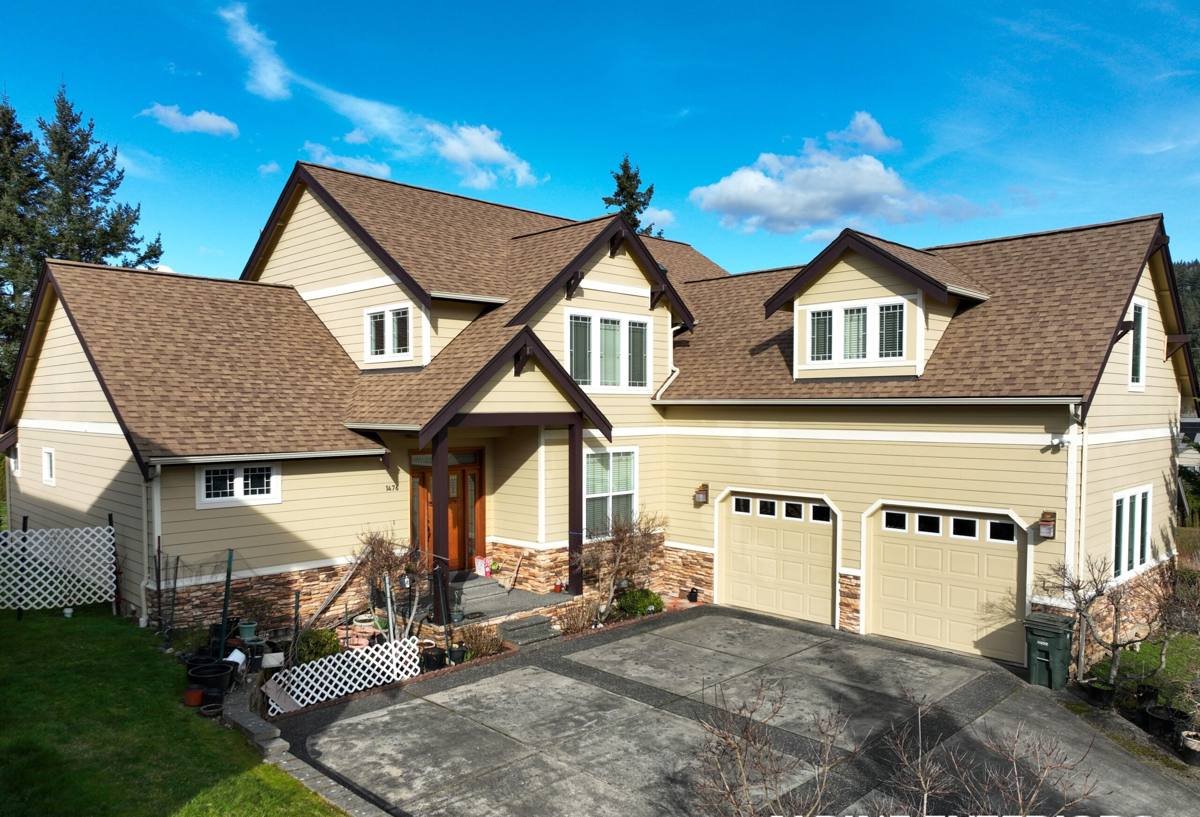
What a Correct Metal Roofing Install Actually Involves
A metal roof is a system, not just a layer of panels. Skipping or under-speccing any one component undercuts the whole job, especially in a coastal, high-rainfall environment.
- Deck inspection and repair — any soft, rotted, or under-ventilated decking gets addressed before a single panel goes down. Installing over a compromised deck just hides the problem.
- High-quality underlayment — a synthetic or self-adhered underlayment rated for the moisture load this area sees, not a minimum-grade felt.
- Ice-and-water or self-adhered membrane at vulnerable zones — eaves, valleys, and penetrations get extra protection, since these are where wind-driven rain concentrates.
- Corrosion-appropriate fasteners and flashing — matched to the panel material to avoid galvanic reaction, with cut edges treated or protected rather than left bare.
- Proper panel overlap and seam direction — set to shed water in the direction wind actually drives rain on this site, not just downhill.
- Ventilation that actually balances intake and exhaust — trapped attic moisture under a tight metal roof causes condensation problems that have nothing to do with the roof leaking from outside.
Standing Seam vs. Exposed-Fastener: Which Fits Edgemoor Homes
Both systems are legitimate metal roofing options, but they behave differently in a salt-air, high-rain environment, and the right call depends on the home, the budget, and how long you want to go between maintenance checks.
| Factor | Standing Seam | Exposed-Fastener |
|---|---|---|
| Fastener exposure | Concealed clips — no exposed fastener heads for salt air to attack | Fasteners penetrate the panel face — the most common point of long-term leaks and corrosion streaking |
| Upfront cost | Higher material and labor cost | More affordable, especially on larger roof areas |
| Long-term maintenance | Minimal — no fastener re-seating needed | Fastener washers can compress or corrode over years and need periodic checking |
| Appearance | Cleaner, more tailored look, popular on waterfront and higher-end homes | More visible ribbing/fastener pattern, still a clean look for many homes |
| Best fit here | Homes closest to the bay or exposed to direct wind-driven rain | More sheltered lots where budget is the deciding factor |
Neither option is wrong — the honest answer depends on your roof's exposure, your budget, and how much maintenance you want to plan for down the road. We'll walk through both during an estimate rather than push one by default.
Our Process, Start to Finish
1. On-Site Inspection
We look at the existing roof, the decking condition, ventilation setup, and how the house is actually exposed to wind and rain given its position and surrounding trees. Edgemoor lots vary a lot in tree cover and orientation to the water, so this step isn't a formality — it directly shapes the flashing and fastener recommendations.
2. Written Scope and Estimate
You get a clear breakdown of what's being replaced, what materials and gauge are being used, and what the flashing and ventilation plan looks like — not just a single lump-sum number.
3. Tear-Off and Deck Prep
Old roofing comes off, decking gets inspected, and any soft or damaged sections are repaired before underlayment goes down.
4. Underlayment and Flashing First
This is the step that actually determines whether a roof leaks in driving rain. Valleys, eaves, and penetrations get membrane and flashing before panels ever go on.
5. Panel Installation
Panels are run and fastened according to the plan set during inspection, accounting for wind exposure and lap direction specific to the site.
6. Final Walkthrough
We check seams, flashing, fastener seating, and site cleanup with you before calling the job done.
Cost Factors Specific to Edgemoor Projects
| Factor | Why It Moves the Price |
|---|---|
| Panel system chosen | Standing seam runs higher than exposed-fastener due to material and labor |
| Roof pitch and access | Steeper roofs and lots with limited equipment access take longer to work safely |
| Deck condition | Rot or soft decking found during tear-off adds repair cost not visible from the ground |
| Flashing and penetration count | Chimneys, skylights, and multiple valleys each add detailing time |
| Tree cover and debris removal | Heavier tree cover means more moss/debris cleanup and often more careful staging |
| Ventilation upgrades | Older homes may need intake or exhaust vents added or corrected as part of the job |
We don't quote broad "per square foot" numbers without seeing the roof, because on a coastal, tree-covered lot the deck condition and flashing complexity usually matter more than raw square footage. An honest estimate comes from an actual inspection.
Maintenance in a Salt-Air, Moss-Heavy Environment
Metal roofing is low-maintenance compared to most alternatives, but "low-maintenance" isn't "no-maintenance" this close to the water. A short seasonal routine keeps small issues from becoming expensive ones.
- Clear debris and moss buildup from valleys and gutter lines at least twice a year, more often under heavy tree cover
- Rinse off salt film periodically, especially on roofs facing the bay directly
- Check exposed fastener systems every couple of years for washer compression or early corrosion
- Keep gutters and downspouts flowing freely so water isn't backing up against the lowest roof courses
- Trim back overhanging branches that keep sections of the roof shaded and damp longer than necessary
- Have flashing around chimneys, skylights, and vents visually checked after major windstorms
Why Hiring a Crew That Already Works Edgemoor Matters
A lot of roofing problems in this neighborhood aren't caused by bad material — they're caused by details that don't account for the site. A crew unfamiliar with waterfront exposure might use standard fastener coatings that corrode faster here, or set flashing laps assuming rain falls straight down instead of getting driven sideways off the bay. A crew that already works Edgemoor and the surrounding Bellingham waterfront knows which side of a roof takes the worst wind, how much moss buildup to expect under mature tree cover, and which flashing details actually hold up over a full Whatcom County winter rather than just looking right on installation day.
Local experience also means faster, more accurate estimates — we're not guessing at how this microclimate treats a roof, we're working from what we've already seen hold up and what hasn't.
Signs an Existing Roof Needs a Closer Look
- Rust streaking below fastener heads or panel seams
- Moss buildup concentrated in shaded valleys or north-facing slopes
- Water staining on interior ceilings after wind-driven storms specifically, not calm rain
- Panels that have loosened, or fasteners visibly backing out
- Granule or coating loss visible around flashing and penetrations
None of these automatically mean a full replacement is needed — sometimes it's a flashing repair or a fastener re-seat. But they're worth having looked at before they turn into a deck or interior problem.
If you're weighing a metal roof for a home in Edgemoor or elsewhere along the Bellingham waterfront, we're happy to take a look and give you a straight, no-pressure estimate — use the form below to get started.