 Bellingham Siding
 Why Barkley's Climate Is Hard on Siding
Barkley sits close enough to Bellingham Bay and the Nooksack lowlands that homes here deal with a specific combination of stresses most siding products were never designed to handle all at once. Salt-tinged air moves in off the water, driving rain arrives sideways during fall and winter storms, and the long, damp stretch between October and May gives moss, algae, and mildew months to get established on anything that holds moisture. None of these forces alone is extreme. Together, over years, they're what separates siding that still looks good at year fifteen from siding that's already cupping, staining, or rotting at the seams.
Whatcom County's building stock reflects this — a lot of homes in and around Barkley were sided with materials that were fine when installed but weren't matched to this climate, and it shows in the trim boards, butt joints, and lower courses first. Fiber cement, installed correctly, is one of the few siding materials that holds up to this specific mix of salt exposure, wind-driven moisture, and prolonged dampness without constant upkeep. That's the whole reason we specialize in it.
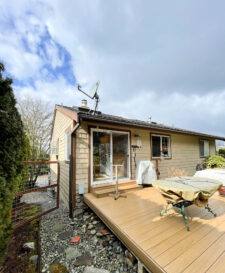
Why We Only Install James Hardie Fiber Cement
We install one siding system: James Hardie fiber cement. We don't offer LP SmartSide, vinyl, Cemplank, Allura, primed spruce, or cedar, and that's a deliberate call, not a supply issue. Each of those products has real strengths — cedar looks beautiful, vinyl is cheap and low-labor, engineered wood products install fast — but each also comes with a trade-off that matters more in a climate like Barkley's than it would somewhere drier: wood-based products need paint and caulk maintained on a strict schedule or moisture gets into the substrate; vinyl can warp, fade, and gap at the seams where wind-driven rain wants to get behind it; engineered wood siding is more forgiving to install wrong, which means more of it gets installed wrong.
James Hardie fiber cement is cement, sand, and cellulose fiber — it doesn't rot, it isn't combustible, and it doesn't expand and contract with moisture the way wood-based products do. It's also engineered specifically for regional climates: the HardieZone system ships different formulations for different parts of the country, and the Pacific Northwest falls under HZ5, built around freeze-thaw cycling and sustained moisture exposure rather than the heat and humidity that HZ10 (Southeast/Gulf) products are engineered for. That distinction matters — a product engineered for the wrong zone will underperform here no matter how well it's installed. Add the factory-applied ColorPlus finish, which is baked on under controlled conditions rather than field-painted, and you get a siding system that's a genuinely better match for what Barkley throws at a house than the alternatives, not just a marketing claim.
What Correct Fiber Cement Installation Involves
Fiber cement's reputation is only as good as the install. A huge share of the siding problems we get called out to inspect on older homes aren't material failures — they're installation shortcuts: wrong fastener spacing, missing flashing, caulk used where it shouldn't be, panels nailed too tight to allow for seasonal movement. Doing it right isn't complicated, but it does require following the manufacturer's spec sheet exactly, every time, not just when it's convenient.
Prep and Flashing First
Before any siding goes up, the wall needs a proper water-resistive barrier, correctly lapped and taped, with flashing at every horizontal transition — window heads, door heads, deck ledgers, and anywhere a roofline meets a wall. This is the step that actually keeps driving rain out of the wall assembly. Siding is the visible layer; the flashing and barrier underneath are what actually manage the water Barkley's storms push at a house.
Fastening and Clearances
Hardie panels and lap siding need specific fastener types, spacing, and penetration depth — get this wrong and you either void the warranty or create a plank that can't move slightly with temperature and humidity changes, which leads to cracking at the fastener points over time. Ground clearance and clearance from roof lines, decks, and patios also has to meet Hardie's published minimums; siding installed too close to grade or a hard surface stays wet longer and is the first place we see problems on homes that weren't installed to spec.
Joints, Caulking, and Finish
Butt joints get flashed or covered with a Hardie joint system, not just caulked and hoped for. Caulk has a service life — it's a maintenance item, not a permanent seal — so joints are detailed to shed water even if the caulk eventually needs attention. Corners, trim, and any field-cut panel edges get sealed and, where cut, get touched up with the correct primer so the cut edge doesn't wick moisture. This is the level of detail that determines whether a fiber cement job looks the same in year one and year fifteen.
Comparing Siding Options for a Barkley Home
| Factor | James Hardie Fiber Cement | Vinyl | Engineered Wood (e.g. LP SmartSide) | Cedar / Primed Spruce |
|---|---|---|---|---|
| Moisture behavior in driving rain | Doesn't absorb or swell; relies on correct flashing | Rigid PVC, but seams can let wind-driven rain behind panels | Wood core can swell/delaminate if edges aren't sealed and maintained | Absorbs moisture; needs consistent finish maintenance |
| Combustibility | Non-combustible | Combustible, can melt/deform near heat | Combustible | Combustible |
| Maintenance in a moss-prone climate | Occasional wash; factory finish resists fading | Low-labor but can chalk, fade, and trap grime at laps | Requires ongoing paint/caulk upkeep to stay sealed | Regular staining/painting required to prevent rot |
| Warranty structure | Long, transferable manufacturer warranty when installed to spec | Varies widely by product tier | Manufacturer warranty, often stricter install requirements | Typically no manufacturer product warranty |
| Appearance over time | Holds color and profile with correct install | Can look "plastic," fades unevenly | Good short-term, more prone to edge swelling long-term | Natural look but visibly weathers without upkeep |
Our Process, From Estimate to Final Walkthrough
We start with a walk-around of the home to look at what's actually happening under the current siding, not just the surface — soft spots, existing flashing condition, trim health, and any areas where past moisture intrusion has left signs. That inspection drives the estimate, because it tells us whether we're doing a straightforward re-side or whether there's sheathing or framing repair to price in first. We'd rather flag that upfront than find it mid-job.
Once a project is scheduled, old siding comes off and the wall gets a real look before anything new goes up — this is the point where hidden rot or water damage from years of an underperforming product gets caught and repaired, not covered over. From there it's water-resistive barrier, flashing, then Hardie panels or lap siding installed to Hardie's fastening and clearance specs, with trim, joints, and corners detailed to shed water rather than rely on caulk alone. We clean up daily and do a final walkthrough with the homeowner before calling the job done, checking every course, joint, and trim line together.
Maintenance Checklist for Barkley Homeowners
Fiber cement is low-maintenance, not no-maintenance. A short annual routine keeps a Hardie exterior performing the way it's designed to in this climate:
- Rinse siding with a garden hose (not a pressure washer aimed directly at seams) once or twice a year to knock off pollen, salt residue, and early moss growth
- Walk the lower courses and any shaded, tree-covered sides of the house each fall — these are where moss and algae take hold first
- Check caulking at trim joints, window and door surrounds, and butt joints every year or two; recaulk before gaps open up, not after
- Keep gutters clear so overflow isn't running down the siding face during heavy rain
- Trim back vegetation and tree limbs that keep siding shaded and damp longer than the rest of the house
- Touch up any nicks or scrapes at cut edges with the correct primer to prevent moisture wicking into the panel
Why a Crew That Already Works Barkley Matters
Siding crews that mostly work drier inland climates don't always carry the same instincts about flashing detail, clearance, and joint design that a wet, salt-exposed area like Barkley demands — and it's the kind of gap that doesn't show up until years later. A crew that regularly works Whatcom County homes already knows which details get skipped on lower-quality jobs around here, because we're the ones who get called to look at the damage afterward. That local pattern recognition — knowing which trim details fail first in this climate, which wall orientations take the worst of the driving rain, how bad a given site's moss exposure really is — shapes how we detail every job, not just the ones where something's already gone wrong.
Permitting and inspection timelines also move faster when a contractor already has a working relationship with local building departments and knows what Bellingham-area inspectors are looking for on a re-side. That's not a dramatic advantage on paper, but it keeps a project moving instead of stalling on paperwork.
Cost Factors on a Barkley Fiber Cement Project
| Factor | How it affects the estimate |
|---|---|
| Current siding removal and condition | Rot or hidden water damage found underneath adds sheathing/framing repair before new siding goes up |
| Home size and wall complexity | More corners, dormers, and trim details mean more labor and cut waste |
| Siding profile chosen | Lap siding, panel systems, and shingle-style Hardie products carry different material and labor costs |
| Trim and accent work | Hardie trim boards, soffit, and fascia replacement add scope but keep the whole exterior on one warranted system |
| Site access | Tight lots, second stories, and landscaping close to the house affect staging and labor time |
We don't quote off square footage alone — every estimate reflects what we actually find on the walk-around, so the number you get is one we can stand behind once the old siding comes off.
If your Barkley home's siding is showing its age — or you just want an honest look at what's under it before you decide what to do next — we're happy to walk the exterior with you and put together a free, no-pressure estimate using the form below.