 Bellingham Siding
 Why York Homes Need Siding Built for This Climate
York is one of Bellingham's older, established residential neighborhoods, and that means a lot of the housing stock here has already been through decades of Whatcom County weather. Between the salt-laden air drifting in off Bellingham Bay, the driving rain that comes sideways off Pacific storms, and a moss season that can run from October clear through May, exterior siding in this part of town works harder than siding almost anywhere else in the state. Wood-based products absorb that moisture cycle after cycle. Vinyl expands and contracts, and can crack in a hard freeze. Cheap fiber cement, or fiber cement that's cut corners on installation, lets water behind the cladding where it does the most damage.
We install exclusively James Hardie fiber cement siding, and we do it because homes in neighborhoods like York need a product engineered specifically for this climate, not a general-purpose siding that happens to work here too.
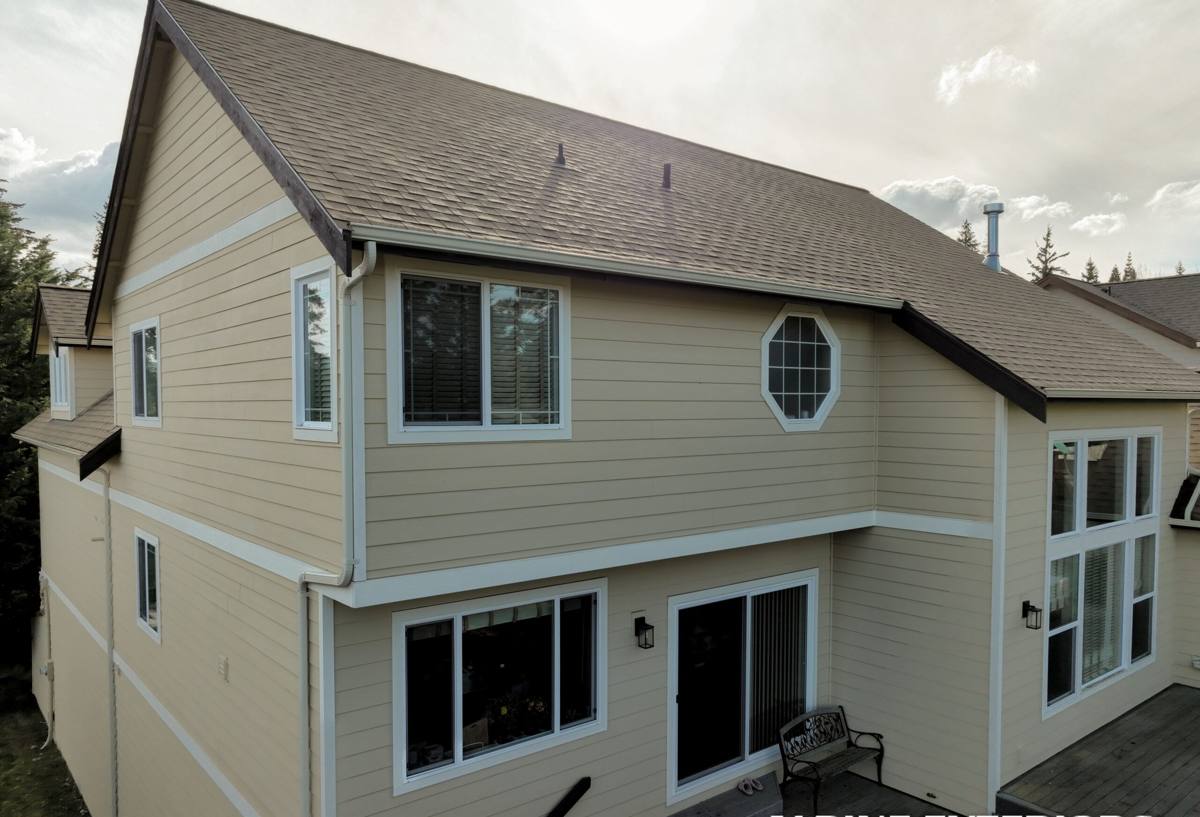
What "Correct" Looks Like on a Coastal Whatcom County Home
A siding job that looks right on day one but fails in year six almost always fails for the same reasons: wrong flashing details, siding installed too close to grade or to roof lines, caulk used where flashing should have been, or fastener patterns that don't account for the wind-driven rain this area gets. None of these mistakes are visible from the curb. They show up later as soft trim, stained fascia, or moss and mildew creeping up from the bottom courses.
The moisture path matters more than the material
Even the best siding product on the market fails if the water management behind it is wrong. Correct installation in a wet coastal climate means:
- A weather-resistive barrier installed and lapped correctly, with all penetrations sealed before the siding ever goes up
- Rigid flashing at every window and door head, not just caulk
- Proper starter strip and clearance at the foundation so splash-back and standing moisture can't wick into the bottom course
- Kick-out flashing at roof-to-wall intersections, a detail that's easy to skip and one of the most common sources of hidden rot
- Correct fastener spacing and placement per the manufacturer's engineering, not a generic nailing pattern
- Factory-primed or factory-finished cut edges sealed on site, since exposed raw edges are where fiber cement siding is most vulnerable to moisture intake
These aren't optional upgrades. They're baseline requirements for siding to perform over a 30- to 50-year lifespan in a climate that includes a real moss season and consistent onshore moisture.
Why We Standardized on James Hardie
We used to get asked why we don't offer vinyl, LP SmartSide, or other fiber cement brands as a lower-cost option. The honest answer is that we stopped installing them because we were the ones getting called back to fix problems that traced to the product, not the workmanship. James Hardie's HZ5 product line is engineered specifically for climates with heavy moisture exposure, which is exactly what Bellingham and the rest of Whatcom County deal with most of the year.
| Factor | James Hardie Fiber Cement | Vinyl / Engineered Wood |
|---|---|---|
| Moisture behavior | Non-combustible cement composite, doesn't rot or swell | Wood-based products can absorb moisture at cut edges and fastener points; vinyl can warp |
| Coastal/salt air durability | Engineered HZ5 line built for wet, marine-influenced climates | Not climate-specific; performance varies by product |
| Finish | ColorPlus factory-baked finish, resists fading and chipping | Field-painted or lower-durability factory finishes |
| Fire rating | Non-combustible | Combustible (wood-based) or heat-sensitive (vinyl) |
| Warranty | Long-term, transferable | Varies, often shorter or non-transferable |
This isn't a knock on every alternative product across every market. It's that once you've seen what a wet, moss-prone climate does to the wrong siding choice over ten or fifteen years, it's hard to justify installing anything else on a home you're putting your name behind.
ColorPlus Finish and Moss Resistance
One detail that matters more in York than in drier parts of the state is how a finish handles sustained moisture and shade. Many mature lots in this neighborhood have significant tree cover, which keeps siding damp longer after rain and creates ideal conditions for moss and algae growth. James Hardie's ColorPlus finish is factory-applied and baked on under controlled conditions, which gives it more consistent coverage and better resistance to the kind of surface staining that shows up on field-painted siding within a few years. It won't stop moss from landing on a shaded wall, but it holds up to routine washing far better than a standard paint job, so keeping the house looking clean doesn't mean repainting every few years.
Color and trim considerations for this area
A lot of York homes mix siding styles: horizontal lap on the main body, shingle-style accents in gables, and painted trim around windows and doors. Hardie's product lines cover all of these looks in a consistent factory finish, which matters for long-term maintenance since you're not managing different paint schedules for different materials on the same house.
Our Process for a York Siding Project
- On-site assessment — we look at the existing siding, sheathing, and trim, check for any hidden moisture damage, and identify problem areas like roof-wall intersections or grade clearance issues before quoting anything
- Product and color selection — walking through Hardie's plank profiles and ColorPlus palette against your home's trim, roofline, and neighboring houses
- Tear-off and sheathing check — removing old siding gives us a direct look at the wall assembly, which is the only reliable way to catch rot or moisture issues before they're covered up again
- Weather barrier and flashing installation — this is the step that determines whether the siding lasts 10 years or 40, and it's where we spend the most care
- Hardie siding installation — installed to manufacturer spec for fastener pattern, clearances, and joint treatment
- Final detail and walkthrough — trim, caulking at approved joints only, and a walk-through so you know what was done and why
What This Costs and What Drives the Number
Every home is different, and we don't publish flat pricing because the honest cost depends heavily on the condition of what's underneath the existing siding, not just the square footage. That said, homeowners in York should expect their estimate to be shaped by a few consistent factors:
| Cost Factor | Why It Matters |
|---|---|
| Condition of existing sheathing | Rot or moisture damage found during tear-off requires repair before new siding goes on |
| Home size and wall complexity | Gables, dormers, and multiple roof-wall intersections take more labor and flashing detail |
| Trim and accent work | Shingle-style accents or extensive trim add material and install time versus straight lap siding |
| Access | Multi-story sections, tight lot lines, or landscaping close to the house can affect staging and labor |
| Color and finish selection | Standard ColorPlus colors versus custom or premium finishes |
We'd rather give you a real number after seeing the house than a ballpark that doesn't hold up once we open the walls.
Why Hiring a Crew That Already Works in Bellingham Matters
Siding installation isn't just about the product, it's about whether the crew understands how this specific climate behaves against a house over time. A contractor who mostly works in drier inland climates may not think twice about a flashing detail that's non-negotiable here, or may not budget extra time for the wet-weather scheduling that's a normal part of doing exterior work in Whatcom County. Working regularly in and around Bellingham neighborhoods like York means we already know which details can't be skipped on this coastline, and we plan the job accordingly, including weather windows, drying time between steps, and sequencing that avoids leaving sheathing exposed longer than necessary.
Signs Your York Home May Need Siding Attention
- Soft or spongy spots when you press on the siding, especially near the bottom courses or below windows
- Persistent moss or algae streaking that comes back quickly after cleaning
- Peeling or bubbling paint, particularly around trim and window casings
- Visible warping, cupping, or separation at siding joints
- Rising heating costs that may point to compromised insulation behind failing siding
- Cracked or missing caulk at penetrations, which lets moisture behind the wall assembly
Catching these issues early, before they reach the sheathing, is almost always less expensive than waiting until structural repair is needed alongside the siding replacement.
If you're seeing any of these signs on your York home, or you're simply due for a siding upgrade that's actually built for Bellingham's weather, we're happy to come take a look. Estimates are free, there's no pressure, and you'll get a straight answer about what your home actually needs — fill out the form below to get started.