 Bellingham Siding
 Roof Repair for Happy Valley's Wet, Mossy Climate
Happy Valley sits in south Bellingham, close enough to the water that salt-laden air is a constant, and shaded enough by mature tree cover that moss has every reason to take hold on a roof. Add Whatcom County's long, wet fall-through-spring stretch and you get a specific combination of stresses that isn't the same as what a roof in a drier inland town deals with. Roofs here don't usually fail all at once. They fail in small, specific spots — a flashing seam, a shaded north slope, a valley that never quite dries out — and those small spots turn into rot and interior damage if they sit through a few wet seasons unaddressed.
This page covers roof repair specifically, not full replacement. Most of the calls we get from Happy Valley homeowners start as a stain on a ceiling, a handful of lifted shingles after a windstorm, or a homeowner noticing thick moss growth and wanting to get ahead of it before it causes a leak.
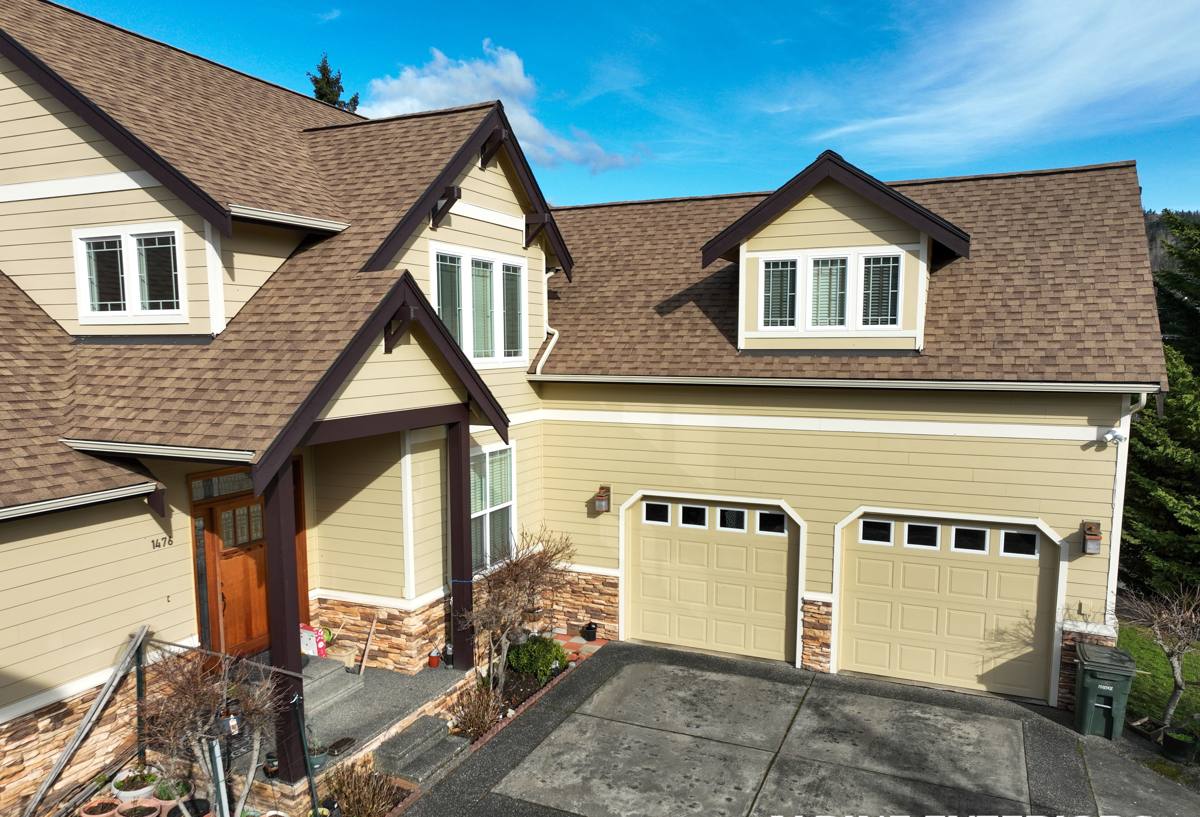
Signs a Happy Valley Roof Needs Repair, Not a Watch-and-Wait
Because our wet season is long, small roof problems here don't get a break to dry out and seal themselves the way they might in a drier climate. If you're seeing any of the following, it's worth a look before the next storm cycle:
- Ceiling or attic stains that appear or grow after a heavy rain, especially near a wall, skylight, or chimney
- Shingles that are cupped, cracked, or missing after wind — even just a few
- Thick moss mats, especially on the north-facing slope or under overhanging trees
- Granules collecting in gutters, which signals asphalt shingles losing their protective surface
- Rusted, lifted, or gapped flashing around chimneys, skylights, and roof-to-wall transitions
- Sagging or soft-feeling roof deck when walked, which usually means moisture has reached the sheathing
- Daylight visible through the attic roof boards
Why Waiting Costs More Here Specifically
A small leak in a low-humidity climate can sit for a season without much consequence. In Bellingham's climate, that same leak stays wet for weeks at a stretch, which means rot, mold, and insulation damage set in faster. What would have been a flashing repair in October can turn into sheathing replacement by February if it's left alone through the rainy months.
What Moss and Salt Air Actually Do to a Roof
Moss
Moss isn't just cosmetic. It holds moisture against the roof surface long after the rest of the roof has dried, which accelerates granule loss on asphalt shingles and can lift shingle edges as the moss mat thickens over a season. On shaded, north-facing slopes and roofs under tree canopy — common throughout Happy Valley — moss can establish itself within a couple of wet seasons if it isn't controlled.
Salt Air and Wind-Driven Rain
Proximity to Bellingham Bay means metal roof components — flashing, fasteners, vents, gutters — are exposed to airborne salt that accelerates corrosion compared to an inland home. We see this most in older flashing that's pitted or rusted through at the seams, which is often the actual leak point even when the shingles above it look fine. Salt-laden wind also tends to drive rain sideways during storms, pushing water up under shingle edges and flashing laps that would stay dry in a calmer climate.
Common Roof Repairs We Perform in Happy Valley
Flashing Repair and Replacement
Flashing around chimneys, skylights, dormers, and roof-to-wall intersections is the single most common repair point we find on Happy Valley homes. Corroded or improperly lapped flashing lets water in even when the surrounding shingles are in good shape.
Shingle and Shake Repair
Wind damage, granule loss, and cracked shingles get addressed by matching the existing material as closely as possible and replacing only what's failed — not the whole slope, unless the surrounding material is also at the end of its life.
Sheathing and Rot Repair
When a leak has gone undetected for a while, the plywood or board sheathing underneath can soften or rot. We open up the affected area, replace the damaged decking, and rebuild the waterproofing layer correctly before the new roofing goes back down.
Moss Removal and Prevention Treatment
Careful moss removal (not pressure-washing, which strips granules and shortens shingle life) followed by a treatment approach that discourages regrowth without damaging the roofing material.
Ventilation and Ridge Repair
Poor attic ventilation traps moisture underneath the roof deck, which speeds up rot from the inside. We check and correct ridge vents, soffit vents, and any blocked airflow as part of a proper repair, not as an afterthought.
Repair vs. Replacement: How We Actually Decide
Not every leak means a new roof, and not every roof that "just needs one more repair" is actually a good repair candidate. We look at the whole roof, not just the spot that's leaking, before recommending either path.
| Factor | Points Toward Repair | Points Toward Replacement |
|---|---|---|
| Age of roofing material | Under 15-20 years, still within expected lifespan | Near or past manufacturer's expected service life |
| Extent of damage | Isolated to one flashing point, valley, or slope | Multiple slopes affected, widespread granule loss |
| Sheathing condition | Solid decking, no soft spots found | Rot found in more than one area during inspection |
| Moss/algae coverage | Light to moderate, treatable | Heavy, long-term coverage across most of the roof |
| History of past repairs | First or second repair on this roof | Repeated patch jobs in the same areas over the years |
When a roof is a genuine repair candidate, we say so plainly. When the underlying material is worn out and a repair would just be a short-term patch, we'll tell you that too, along with why — we'd rather lose the smaller job than sell a repair we don't think will hold.
Our Roof Repair Process
- Inspection first. We look at the whole roof, attic, and flashing points — not just the spot you called about — so we're not missing a second problem in progress.
- Clear explanation. You get a plain-language rundown of what's actually wrong, what caused it, and what fixing it involves, before any work starts.
- Matching materials. Wherever possible we match your existing roofing so the repair doesn't stand out as a patch job.
- Correct sequencing. Underlayment, flashing, and shingle courses go back in the right order and lap direction — this is where a lot of leaks actually originate on poorly done past repairs.
- Cleanup and check. Debris and old material are cleared, and we walk the repair with you before we consider the job done.
Materials and Methods We Use
Underlayment
Given how much wind-driven rain this area sees, we don't skip proper underlayment at repair points — especially ice-and-water shield style membrane at valleys, eaves, and around penetrations, which resists the wind-driven water that a basic felt underlayment can let through.
Flashing Materials
We use flashing suited to salt-air exposure rather than the thinnest option available, since corrosion resistance matters more here than it would further inland. The trade-off is a modestly higher material cost for flashing that isn't the first thing to fail again in a few years.
Fasteners
Corrosion-resistant fasteners matter for the same reason — standard fasteners near the coast can rust and back out well before the roofing material itself wears out.
Why a Crew That Already Works in Happy Valley Matters
Roofing problems here are shaped by things a contractor only learns by working the area repeatedly: which slopes hold moss because of tree cover and orientation, which older homes in the neighborhood tend to have outdated flashing details from when they were built, and how to sequence a repair around Whatcom County's weather windows so the roof isn't left exposed during a storm system. A crew unfamiliar with the area is more likely to treat a Happy Valley roof like any other job, missing the local factors that actually caused the failure in the first place. We also know how to time repair work around the rainy season here — starting a tear-out you can't close up before the next front moves through is how a repair turns into a bigger problem.
Maintenance That Extends the Life of a Repair
A good repair holds longer with a little upkeep in between. This is not a full maintenance program — just the basics that matter most in this climate:
- Clear gutters and downspouts before the fall rains start, so water isn't backing up under the roof edge
- Keep overhanging branches trimmed back to reduce shade and debris that feed moss growth
- Do a visual check after any significant windstorm for lifted or missing shingles
- Watch attic spaces for musty smells or new stains, which show up before visible ceiling damage does
- Have flashing points checked every few years, since they fail before the field of the roof usually does
Get a Straight Answer on Your Roof
If you're dealing with a leak, storm damage, or moss buildup on a Happy Valley roof, we're happy to take a look and give you an honest read on what it actually needs — repair, or something more. There's no pressure and no charge to find out. Fill out the form below and we'll set up a time to come take a look.