 Bellingham Siding
 Why Puget Homes Need a Different Approach to Siding
Homes in the Puget area carry a specific combination of exposures that a lot of siding simply isn't built to handle for the long haul: salt-laden air off the water, frequent wind-driven rain that gets pushed sideways into wall assemblies, and a moss and algae season that can run most of the year in the shaded, damp pockets common to this part of Whatcom County. Any one of these on its own is manageable. Together, over years, they punish siding that isn't dimensionally stable, isn't finished to resist moisture intrusion, and isn't installed with the right clearances and flashing details.
This is why we install James Hardie fiber cement exclusively, and why the way we detail a Hardie job in Puget looks a little different than a Hardie job in a drier, inland part of the state. The product matters, but so does the install.
What Salt Air Actually Does to Siding Over Time
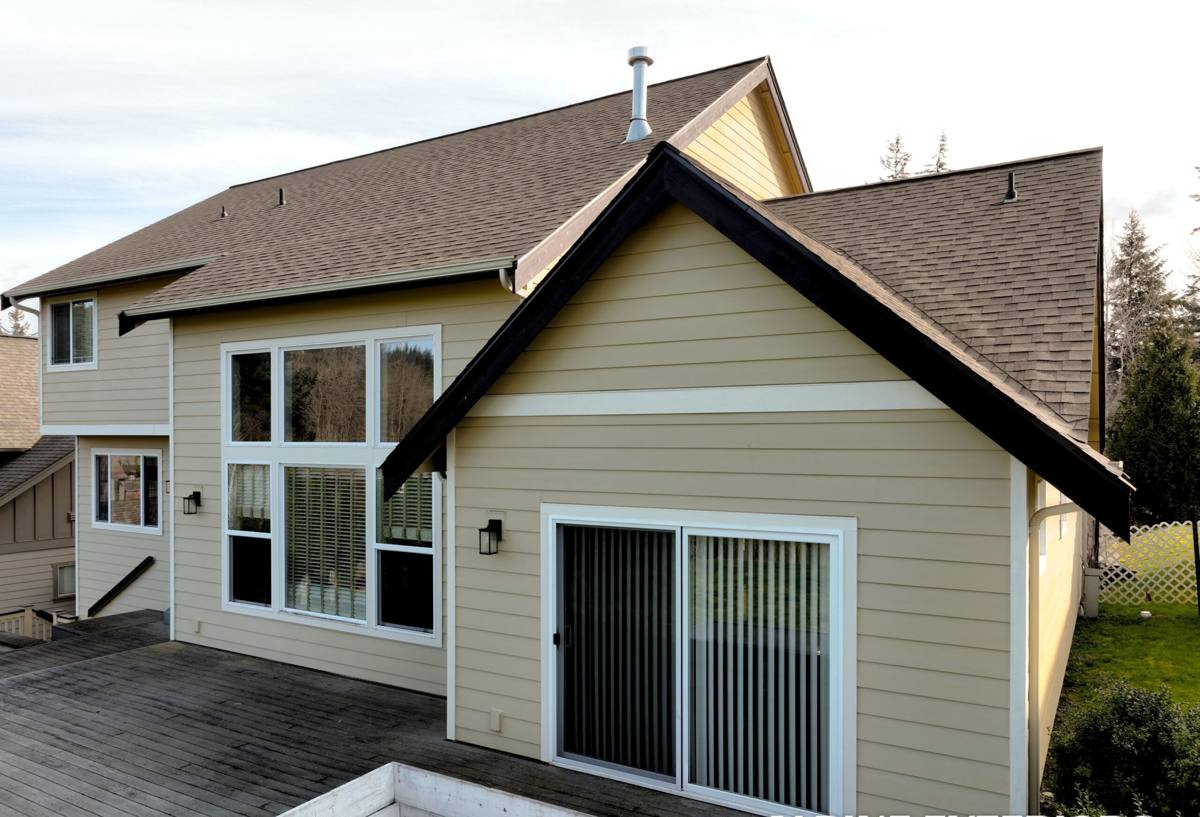
Proximity to Puget Sound means airborne salt settles on exterior surfaces and works into any seams, fastener heads, or finish weaknesses. On wood and wood-composite products, that moisture cycling accelerates swelling, checking, and paint failure at the surface. On metal fasteners and trim that aren't rated for coastal exposure, it accelerates corrosion, which shows up years later as rust streaking and loosened fasteners.
James Hardie's fiber cement doesn't absorb and swell the way wood-based products do, and its ColorPlus factory finish is baked on under controlled conditions rather than field-applied, which gives it better resistance to the fading and chalking that salt air and UV exposure cause over time. We also use fasteners and flashing components rated for the exposure, not whatever is cheapest to have on the truck.
Driving Rain and Wall Assembly Behavior
Puget's weather pattern isn't just wet — it's wind-driven wet, meaning rain gets pushed into laps, joints, and penetrations that would stay dry in a calmer climate. A siding product that's dimensionally unstable when it gets damp will telegraph that movement into open joints and cracked caulk lines within a few seasons. Fiber cement holds its dimensions through wet-dry cycles far better than wood-based alternatives, which is a big part of why it has become the standard choice for this region's coastal and near-coastal neighborhoods.
But the product only performs as well as the water management behind it. Correct installation means:
- Proper drainage plane and weather-resistive barrier behind the siding, not just siding over sheathing
- Rain-screen gap or drainage mat where the assembly calls for it, so incidental moisture has somewhere to go
- Flashing integrated at every window, door, and horizontal trim transition — not caulk used as a substitute for flashing
- Correct fastener placement and butt-joint treatment so water can't wick into the plank ends
- Manufacturer-specified clearances from grade, roof lines, and decks
The Long Moss Season and Why It Matters for Siding
Whatcom County's combination of moisture, mild temperatures, and shaded exposures on many lots means moss, lichen, and algae growth isn't a seasonal nuisance here — it's close to year-round on north-facing walls and areas with tree cover. Growth on siding does two things: it holds moisture against the surface longer than it would otherwise sit there, and it's cosmetically stubborn once it establishes in a porous or textured surface.
James Hardie's factory finish is smoother and more consistent than field-painted surfaces, which gives organic growth less to grip onto and makes routine cleaning more effective. It won't make a wall immune to moss in a shaded, damp yard, but it holds up to washing far better than a porous or absorptive surface would, and it doesn't feed a moisture problem the way a swelling substrate can.
What Correct James Hardie Installation Involves in Puget
A Hardie install that's going to actually earn its keep against this climate isn't just nailing planks to a wall. Here's what we treat as non-negotiable on every Puget-area project:
| Step | Why It Matters Here |
|---|---|
| Weather-resistive barrier inspection/repair | Any gaps or damage here become the entry point for wind-driven rain |
| Rain-screen or drainage gap | Lets incidental moisture drain and dry instead of sitting against the panel |
| Flashing at all penetrations and transitions | Prevents the water intrusion that caulk alone won't stop long-term |
| Correct fastener type, spacing, and depth | Coastal-rated fasteners resist corrosion from salt air exposure |
| Manufacturer clearances from grade, roofs, decks | Keeps splash-back and ponding moisture away from panel edges |
| Factory-finished ColorPlus product, field-touched only per spec | Preserves the finish's resistance to fading, staining, and moss adhesion |
Choosing the Right Hardie Product Line for the Site
James Hardie makes climate-engineered HZ product lines suited to different exposure profiles, and Puget's coastal-influenced, high-moisture conditions point toward the HZ5 line, which is engineered for wetter, harsher climates rather than hot-dry regions. We also look at the specific lot — how exposed it is to wind off the water, how much tree cover it has, which walls get the least sun — and adjust detailing (not just product selection) accordingly. A south-facing wall with full sun exposure and a shaded north wall on the same house can have genuinely different moisture and growth behavior, and a good installer accounts for that rather than treating all four walls identically.
Plank, Shingle, or Panel
Most Puget homes we work on use horizontal lap plank for the field of the house, sometimes with Hardie shingle siding as an accent on gables or dormers. The choice is mostly aesthetic, but shingle profiles have more seams per square foot, which means the flashing and fastening detail work matters even more in a driving-rain climate — it's not a place to cut corners on labor to save a little on the estimate.
Our Process for a Puget Job
- On-site assessment — we look at current siding condition, wall orientation, moisture staining, moss patterns, and any existing water damage before quoting anything
- Tear-off and sheathing inspection — old siding comes off and we check the sheathing and weather barrier underneath for rot or gaps before anything new goes up
- Water management install — barrier repair, drainage gap, and flashing at every penetration, done before a single plank is hung
- Hardie installation to manufacturer spec — correct fastening, clearances, and joint treatment for the HZ5 product line
- Final inspection and walkthrough — we go over the finished work with the homeowner and explain the warranty coverage
Why Hire a Crew That Already Works Puget
A siding crew that mostly works drier inland areas or hasn't installed much fiber cement near the water can get the product right and still get the details wrong — skipping a rain-screen gap, under-flashing a window, or using standard fasteners instead of coastal-rated ones. None of those mistakes show up on installation day. They show up two, five, or ten years later as staining, soft spots, or premature finish failure, usually right around when a warranty claim gets complicated by improper installation.
We install Hardie in this specific climate regularly enough that the drainage plane, flashing, and fastener decisions aren't guesswork — they're standard practice on every job. That consistency is what actually protects the investment, not just the brand name on the plank.
Cost Factors for a Puget Hardie Project
| Factor | How It Affects the Job |
|---|---|
| Current siding removal | Wood or vinyl tear-off adds labor; multiple layers add more |
| Sheathing/moisture repair | Rot found during tear-off needs to be repaired before new siding goes on |
| Wall complexity | More corners, gables, and penetrations mean more flashing and cut waste |
| Product line and profile | HZ5 plank vs. shingle accents vs. trim packages price differently |
| Color and finish | Factory ColorPlus finish vs. field-painted primed product |
We give a specific number after walking the property — broad averages online rarely account for tear-off condition or wall complexity, and we'd rather quote what your house actually needs.
Maintenance Expectations After Install
- Periodic gentle washing to keep moss and algae from establishing, especially on shaded or north-facing walls
- Visual check of caulk lines at trim and penetrations every year or two
- Prompt attention to any gutter or downspout issues that could direct extra water onto a wall section
- No need for repainting on schedule the way field-painted wood siding requires
If you're planning a siding project in the Puget area and want a straight answer on what your home actually needs, we're happy to walk the property and give you a free, no-pressure estimate — no obligation, just an honest look at the job.