 Bellingham Siding
 Lynden Decks Wear Differently Than Decks Elsewhere
Lynden sits in the Nooksack River lowlands, and that low, flat ground holds moisture longer than the hillier parts of Whatcom County. Add in the marine air that moves through the whole county off the Pacific, months of driving rain, and a moss season that can start in October and not really let go until May, and you've got conditions that are hard on any exterior wood structure. A deck takes more of that punishment than almost anything else on a house, because it's horizontal. Rain doesn't run off a deck the way it runs off a wall or a roof — it sits, soaks in through end grain and fastener holes, and dries slowly if it dries at all before the next system rolls through.
We've built and replaced decks all over this end of the county, and the failure pattern in Lynden is pretty consistent: framing and ledger connections rot from the inside out long before the surface boards look bad enough to worry most homeowners. By the time decking is visibly cupping or spongy underfoot, the structure underneath has usually been compromised for a while. That's the gap a proper deck replacement is meant to close — not just new boards on top of old problems, but a structure built to actually shed water in this climate instead of trapping it.
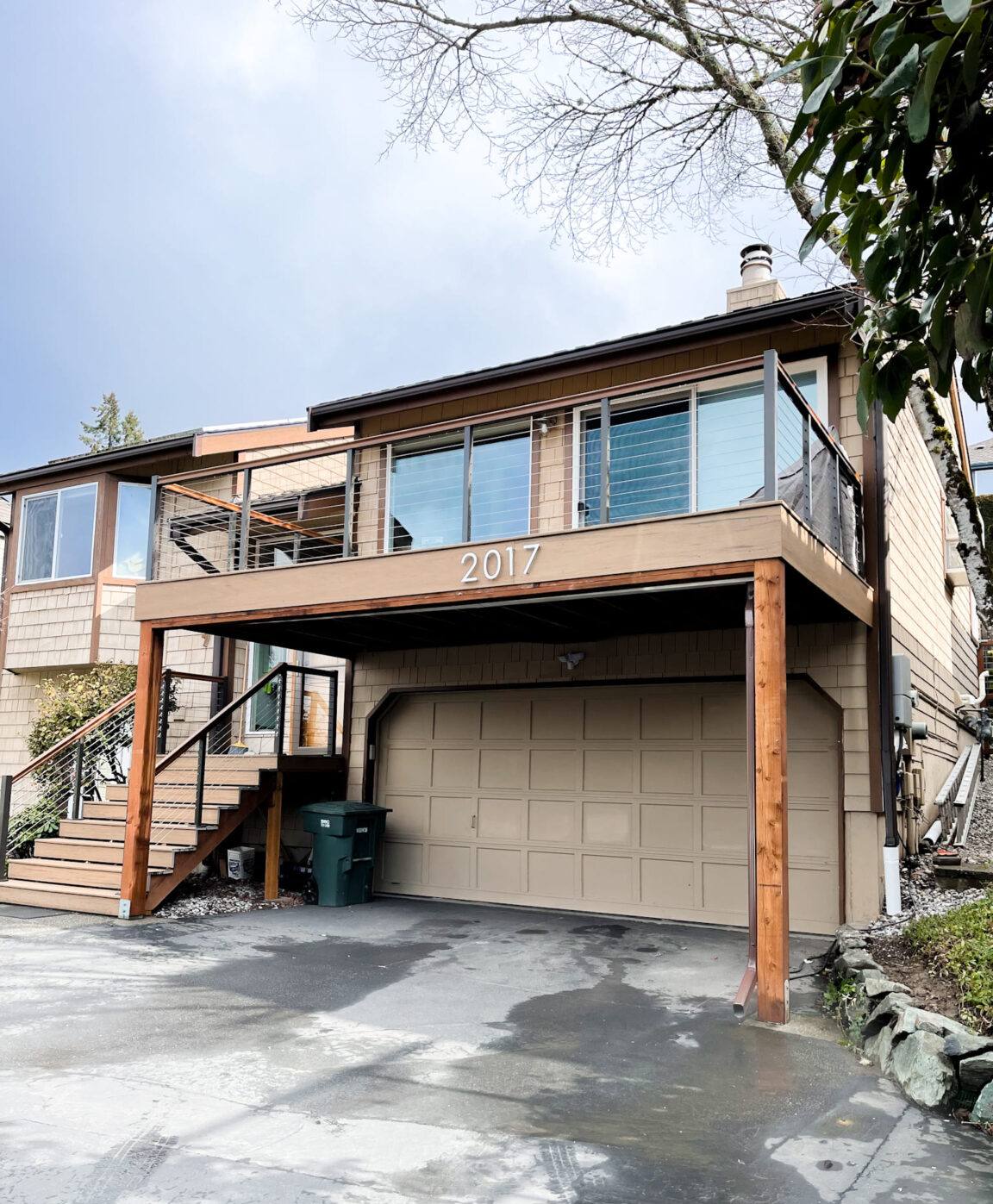
Signs a Lynden Deck Needs Replacement, Not Just Repair
Repair makes sense when the framing is sound and the damage is isolated — a few boards, a rail section, a stair tread. Replacement is the honest answer when the structure itself has been compromised, because patching new decking onto rotten framing just hides the problem for another season or two. Here's what we look for during an inspection:
- Soft, spongy, or bouncy decking, especially near the house or around post locations
- Rot or dark staining where the deck attaches to the house (the ledger board) — often the first place water gets trapped
- Rusted, black-streaked, or failing fasteners, which usually means moisture has been sitting in the wood for years
- Posts that are soft or crumbling at the base, near ground contact or old concrete footings
- Persistent moss or slick green film on the deck surface that comes back within weeks of cleaning
- Visible gaps widening between boards, cupping, or splintering across most of the deck rather than a few spots
- Railings that flex or wiggle when leaned on — a safety issue, not just a cosmetic one
- A deck built without proper flashing at the ledger, common on older Lynden homes built before current attachment standards
If you're only seeing one or two of these in a small area, repair is often the right call and we'll say so. If the framing is failing in multiple places or the ledger connection is compromised, replacement is the more honest recommendation, because a rebuilt surface on a rotten frame is a safety liability, not a fix.
What a Correct Deck Replacement Actually Involves
It Starts Below the Surface
The decking boards you walk on are the least important part of a deck's durability. What actually determines how long a deck lasts in this climate is the framing underneath: the ledger board attachment, the joists, the posts, and the footings. A replacement that only swaps the decking and leaves compromised framing in place isn't really a replacement — it's a resurfacing job with a shorter lifespan than it should have.
The Ledger Board Is the Most Common Failure Point
Where a deck attaches to the house is the single most water-vulnerable connection on the whole structure, and it's also where siding and deck work overlap directly. If the ledger flashing wasn't installed correctly — or wasn't installed at all, which was common on older builds — water works its way behind the band board and into the house framing itself, not just the deck. Any deck replacement we do includes correcting ledger flashing to modern standards: proper step flashing, a water-resistive barrier detail behind it, and hardware rated for exterior ground contact. This is the part of the job that doesn't show once it's finished, and it's also the part that matters most.
Structural Framing and Footings
Joists, beams, and posts get inspected for rot, undersizing, and spacing that doesn't meet current code — a lot of older Lynden decks were framed to standards that have since tightened up, especially around joist spacing and beam sizing for snow and live loads. Footings get checked for frost depth and bearing; if a footing is undersized, cracked, or was never poured to depth in the first place, we address it before anything gets rebuilt on top of it. Building on a bad footing just moves the failure a few years down the road.
Choosing Decking Material for Whatcom County Conditions
There's no single right answer here — it comes down to how much maintenance you want to take on versus what you're willing to spend up front. Given the amount of rain and moss pressure decks see in this area, we walk every homeowner through the real trade-offs rather than pushing whichever material has the best margin.
| Material | Moss & Moisture Behavior | Maintenance | Typical Lifespan |
|---|---|---|---|
| Pressure-treated wood | Absorbs moisture; needs regular sealing to resist moss and rot | Annual cleaning and re-sealing recommended | 10–15 years with upkeep |
| Cedar | Naturally rot-resistant but still absorbs surface moisture; can gray and support moss without care | Periodic cleaning, occasional staining | 15–20 years with upkeep |
| Capped composite | Sheds surface moisture well; won't rot but can still grow surface algae in shaded, damp spots | Occasional washing, no sealing or staining | 25+ years |
| PVC decking | Fully moisture-resistant surface; least hospitable to moss and mildew | Lowest maintenance of the group | 25–30+ years |
In a climate with this much sustained dampness, we generally steer homeowners away from budget pressure-treated lumber for the visible decking surface unless upfront cost is the deciding factor — it's the material that demands the most upkeep to keep moss and slickness under control, and skipped maintenance shows up fast here. Composite and PVC cost more initially but hold up with far less annual work, which matters when a deck spends half the year damp. Cedar sits in the middle: a good-looking natural option if you're willing to stay on top of cleaning and sealing on a real schedule, not just when it starts to look bad.
The framing underneath, regardless of what decking you choose, should always be pressure-treated or structural-grade material rated for ground contact and exterior exposure — that part isn't optional and isn't where we'd recommend cutting cost.
Railings, Stairs, and Code Compliance
Deck replacement is also the point where a lot of older Lynden decks get brought up to current safety code, since railings and stairs are often the most out-of-date part of an aging deck. Common corrections we make during replacement include:
- Guardrail height brought up to current code minimums, since older decks were often built to lower standards
- Baluster spacing tightened so the gap won't pass a 4-inch sphere test — a common child-safety fail point on older railings
- Stair stringers resized or reinforced where spans exceed current allowances
- Handrail requirements addressed on stairs with more than a few risers
- Post-to-frame connections upgraded from toe-nailed to properly bolted or bracketed hardware
None of this is about upselling extras — it's what a permitted deck replacement in Whatcom County actually requires to pass inspection, and it's the difference between a deck that's cosmetically new and one that's genuinely safer than what was there before.
Our Deck Replacement Process
1. On-Site Inspection and Honest Assessment
We look at the decking, the ledger connection, the framing, and the footings before recommending replacement over repair. If repair genuinely covers it, we'll tell you that.
2. Permitting
Deck replacements of most sizes require a permit through the local jurisdiction. We handle the permit application and coordinate inspections so you're not the one chasing paperwork.
3. Demolition and Disposal
The old deck comes out, including any framing or footings that don't meet current standards, and we haul away debris rather than leaving it on-site.
4. Framing and Flashing
New or repaired footings, posts, beams, and joists go in to current code, with ledger flashing detailed correctly against the house — the step that protects both the deck and the wall it's attached to.
5. Decking, Railing, and Stairs
Decking is installed with proper fastening and gap spacing for drainage and material expansion, followed by code-compliant railings and stairs.
6. Final Inspection and Walkthrough
We coordinate the final building inspection and walk the finished deck with you before calling the job done.
What Drives Cost on a Lynden Deck Replacement
Every deck is different, so we won't quote a number without seeing the site, but these are the factors that move the price the most:
| Factor | Why It Matters |
|---|---|
| Deck size and footprint shape | More square footage and complex angles mean more material and labor |
| Decking material chosen | Pressure-treated, cedar, composite, and PVC all sit at different price points and installation labor |
| Height off the ground | Taller decks need more substantial framing, bracing, and often stairs |
| Condition of existing footings | Reusing sound footings costs less than excavating and pouring new ones |
| Railing style and material | Cable, glass, and composite rail systems cost more than standard wood or metal baluster railings |
| Ledger and structural repair needed | Hidden rot at the ledger or main beam adds scope once the old decking is off |
| Demolition and disposal | Multi-layer or heavily rotted old decks take longer to remove and haul away |
We'll flag likely hidden issues during the initial inspection where we can see or probe for them, but some framing problems only become fully visible once the old decking is off. We communicate before doing any additional work beyond what was quoted, not after.
Keeping a New Deck Ahead of Moss Season
A correctly built deck still needs some seasonal attention in this climate — no material is entirely maintenance-free when it's wet for months at a time. A few habits go a long way:
- Sweep leaves and debris off the surface regularly in fall, since trapped organic material is what feeds moss growth
- Rinse or lightly wash the deck surface a couple of times a year, more often in shaded areas that stay damp longer
- Keep gutters and downspouts near the deck clear so runoff isn't draining directly onto the deck surface or framing below
- Check the ledger flashing area annually for any sign of water staining on the house siding just above the deck attachment
- Reseal wood decking on the schedule the manufacturer recommends — skipping a year is when moss and rot get a foothold
Why a Crew That Already Works in Lynden Makes a Difference
Deck work in this part of Whatcom County isn't the same job as deck work in a drier climate, and it isn't the same permitting process as a different county. A crew that already works in Lynden knows the local building department's expectations, has already dealt with the frost depth and footing requirements that apply here, and has seen firsthand how ledger flashing failures and moss buildup actually play out on homes in this area over time. That's not something you can fully substitute with a general contractor who occasionally takes a deck job — it comes from doing this specific work, in this specific climate, repeatedly.
If your deck is showing rot, sag, persistent moss, or you're just not sure whether it needs repair or full replacement, we're happy to take a look and give you a straight answer. Reach out for a free, no-pressure estimate using the form below.