 Bellingham Siding
 Roof Replacement Built for Lynden's Weather, Not a Catalog Spec Sheet
Lynden sits far enough inland from Bellingham Bay that homeowners sometimes assume salt air isn't part of their roofing equation. It still is, carried in on marine westerlies along with the near-constant damp that defines a Whatcom County winter. Add in a moss season that can run eight months out of the year and driving rain that finds every weak lap and fastener, and a roof here is doing more work than the same roof would in a drier climate. A correct replacement accounts for that from the first shingle to the last flashing detail — not as an upsell, but as the baseline for a roof that actually lasts its rated life in this environment.
We're a Bellingham-based crew that works Lynden regularly, alongside the rest of Whatcom County. That matters more than it sounds like it should, because roofing problems here aren't generic — they're shaped by this specific climate, and a crew that sees the same failure patterns week after week catches things a one-time visiting contractor won't.
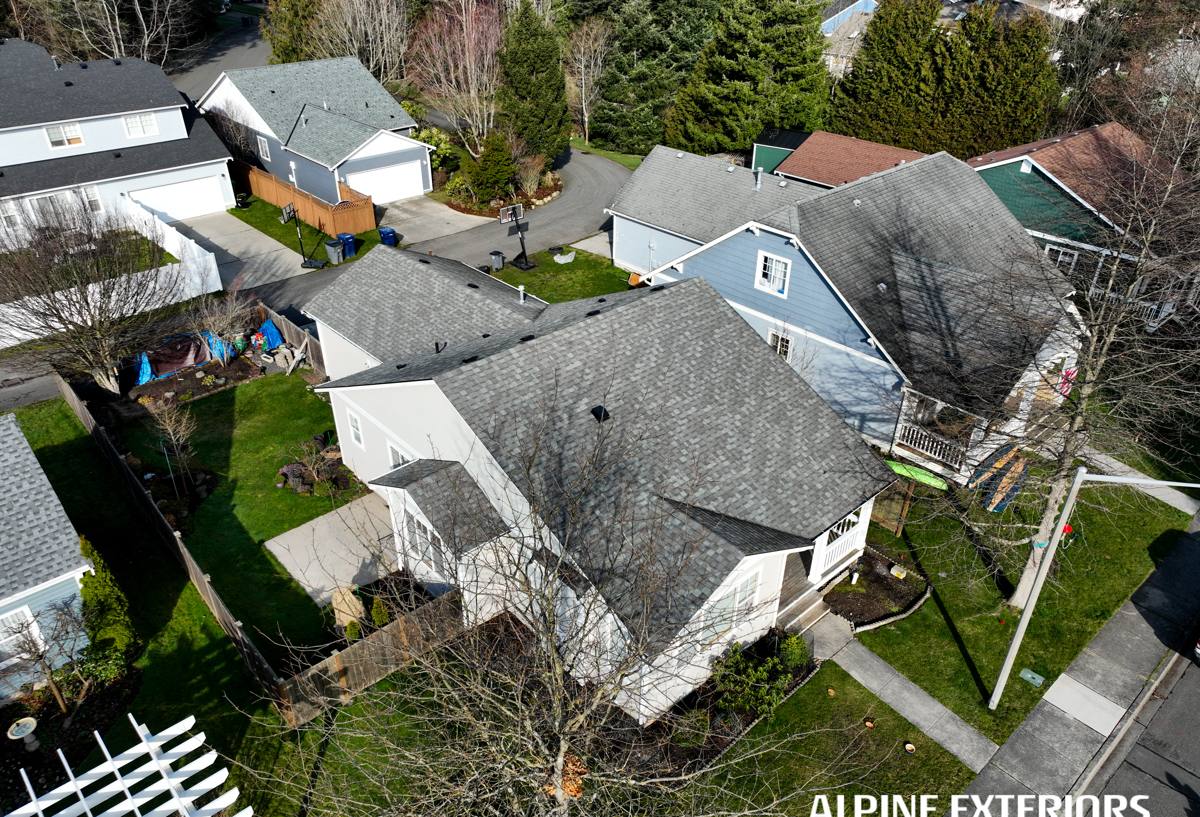
What Lynden's Climate Actually Does to a Roof
Moss and Organic Growth
Shaded roof planes, north-facing slopes, and anything under tree cover in and around Lynden are prone to moss and algae growth for most of the year. Moss isn't just cosmetic — its root structure lifts shingle edges and holds moisture directly against the roofing material and the deck underneath. Left unaddressed over multiple seasons, that trapped moisture accelerates granule loss, softens decking, and shortens the roof's usable life well below its rated expectancy.
Driving Rain and Wind-Driven Water
Whatcom County storms don't always arrive as straight-down rain. Wind-driven rain pushes water sideways and upward under laps, around penetrations, and along valleys and edges that a fair-weather installation might not have sealed as tightly as it should. This is where underlayment choice, flashing detail, and fastening pattern separate a roof that holds up from one that develops slow leaks nobody notices until there's a stain on a ceiling.
Salt Air and Metal Fatigue
Lynden is inland, but it's not immune — moist, salt-tinged air off the Sound and the bay travels with weather systems across the county. Over years, that air accelerates corrosion on unprotected metal flashing, fasteners, and vents. Using corrosion-resistant materials in these components isn't overbuilding; it's matching the roof to what it's actually exposed to.
Signs a Lynden Roof Needs Replacement, Not Another Repair
- Granules collecting in gutters or at downspout outlets in noticeable amounts
- Moss or algae established across multiple roof planes, not just isolated patches
- Shingles that are cupping, curling, or cracking, especially on south- and west-facing slopes
- Soft spots or noticeable sag when walking the roof or viewed from the attic
- Daylight visible through the roof deck from inside the attic
- Flashing around chimneys, skylights, or vents that's rusted, lifted, or separated from the surface
- Recurring leaks in the same area despite prior spot repairs
- A roof approaching or past 20-25 years old (asphalt) with no major work done
One or two of these on their own might mean a targeted repair is enough. Several together, especially on an older roof, usually means the underlying materials are worn out system-wide and repairs are just delaying an inevitable full tear-off.
What a Correct Roof Replacement Involves
Tear-Off and Deck Inspection
A proper replacement starts with a full tear-off, not a layover. That's the only way to actually inspect the deck underneath for soft spots, rot, or damage from long-term moisture intrusion — problems that are common on older Whatcom County roofs where moss and trapped moisture have been doing quiet damage for years. Any compromised decking gets replaced before anything new goes down; roofing over a bad deck just guarantees a shorter life for the new roof.
Underlayment and Ice-and-Water Protection
Given how much of the year Lynden sees rain, we don't treat underlayment as a formality. Synthetic underlayment across the full roof, with ice-and-water shield at eaves, valleys, and around penetrations, gives the roof a real second line of defense against wind-driven rain that gets under the primary roofing material.
Flashing Detail
Flashing around chimneys, skylights, walls, and vents is where most leaks actually originate, not in the field of the roof itself. We use corrosion-resistant flashing and take the time to properly step, counter-flash, and seal these transitions rather than relying on caulk as a substitute for correct metalwork.
Ventilation
Balanced intake and exhaust ventilation keeps the attic from trapping moisture, which matters in a climate where humid air is already working against the roof from outside. Poor ventilation shortens shingle life from underneath, regardless of how good the roofing material on top is.
Material Selection
We'll walk through options honestly, including the trade-offs of each, rather than pushing whatever has the best margin. The right choice depends on the home's roof pitch, exposure, budget, and how long the homeowner plans to stay in the house.
Roofing Material Options for Lynden Homes
| Material | Typical Lifespan | Moss/Moisture Behavior | Best Fit |
|---|---|---|---|
| Architectural Asphalt Shingle | 25-30 years | Good with proper ventilation and periodic moss treatment | Most homes; best value for the climate |
| Standing Seam Metal | 40-50+ years | Sheds moisture fast, highly moss-resistant | Homeowners planning long-term ownership, steeper budgets |
| Synthetic/Composite Shingle | 30-40 years | Resists moisture absorption better than organic materials | Homes wanting a specific look with lower maintenance |
| Cedar Shake | 20-30 years with upkeep | Requires consistent maintenance to manage moss and rot in this climate | Homeowners committed to ongoing maintenance for the aesthetic |
We don't install every product on that list, and we'll say so plainly when asked — cedar shake in particular demands a maintenance commitment that doesn't fit how most homeowners actually want to spend their weekends, given how aggressively moss and moisture behave here. That's a standard we hold based on what we see fail and succeed in this climate, not a knock on the material itself.
What Drives Roof Replacement Cost
- Roof size and number of planes, valleys, and penetrations
- Existing layers to tear off (multiple layers add labor and disposal cost)
- Roof pitch and accessibility
- Deck condition and how much replacement decking is needed
- Material selection, from standard architectural shingle up to standing seam metal
- Ventilation and flashing upgrades required to bring the roof up to current standards
Because of these variables, we don't publish blanket per-square pricing — a number that doesn't account for your roof's actual condition isn't useful to you. What we can say honestly is that a full tear-off replacement is a significant investment, and a free on-site estimate is the only way to get a number that means anything.
Our Process for Lynden Roof Replacements
- On-site inspection — we walk the roof, check the attic, and assess deck and ventilation condition, not just the shingles from the ground
- Written estimate — a clear scope of work and pricing, with material options explained rather than a single take-it-or-leave-it number
- Scheduling around weather — we plan installation windows with Whatcom County's rain patterns in mind to protect an open deck
- Tear-off and deck repair — full removal of old roofing, with any compromised decking replaced before new material goes down
- Underlayment, flashing, and installation — installed to the standard this climate requires, not the minimum code allows
- Final walkthrough — we go over the completed work with you before calling the job done
Why Hire a Crew That Already Works Lynden
A roofing crew based in Bellingham that regularly works Lynden and greater Whatcom County isn't guessing at what this climate does to a roof — we're dealing with it on every job. That means we're not learning on your roof how moss establishes on a north-facing plane, how wind-driven rain finds a poorly lapped valley, or how quickly unprotected metal corrodes near the water. Local presence also means we're reachable after the job is done, not a name that did one job in the area and moved on. If a flashing detail needs a look five years down the road, we're still here.
Get a Free, No-Pressure Estimate
If your Lynden home's roof is showing its age, or you just want an honest read on how much life it has left, we're happy to come take a look. Use the form below to request a free estimate — no pressure, no obligation, just a straight assessment from a crew that knows what this climate does to a roof.